I must admit I had never heard of World Book Night until a work colleague mentioned it to me yesterday. This morning when I arrived at work there was a copy of Escaped from Camp 14 by Blaine Harden placed in front of my keyboard. I shall read it and pass it on…
So what is World Book Night?
World Book Night is an annual celebration of reading and books that takes place on 23 April. It sees passionate volunteers give out hundreds of thousands of books in their communities to share their love of reading with people who don’t read regularly or own books. World Book Night is run by The Reading Agency, a national charity that inspires people to become confident and enthusiastic readers to help give them an equal chance in life.
The name took its lead from the well-established and successful children’s reading celebration in UK and Ireland called World Book Day. So as day is for children, then night is for adults and night is also when we traditionally think about celebrations.
If I had known about it earlier I would have got myself organised to share around some of my preloved books on the day. I have been planning for a while to pass on books that I am not likely to read again through a local BookCrossing Zone.
Tags: Book Review, Books, Reading, World Book Night
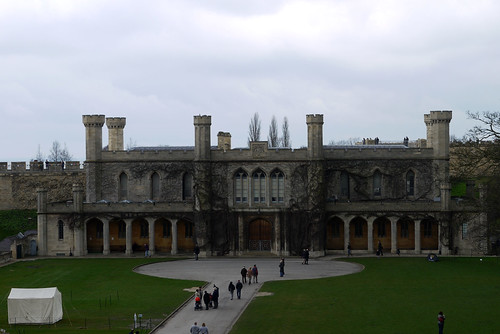
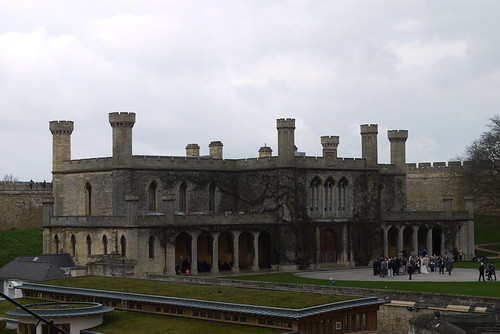
The fine Gothic building near the West Gate was built as an administrative centre for county business and a court of law in 1826.*
It replaced an earlier court house dating from 1776, which suffered from subsidence, and which in turn replaced the old shire hall which stood in the middle of the bailey. It was built for the twice-yearly sittings of the Lincolnshire Assizes, visiting judges who heard the most serious cases. The criminal Assize Court dealt with major crimes such as murder, rape, theft and forgery, and punishments included hanging and transportation.*
*Lincoln Castle guide book – Scala Arts & Heritage Publisher Ltd 2015
Tags: Court House, Lincoln, Lincoln Castle, Weekend away
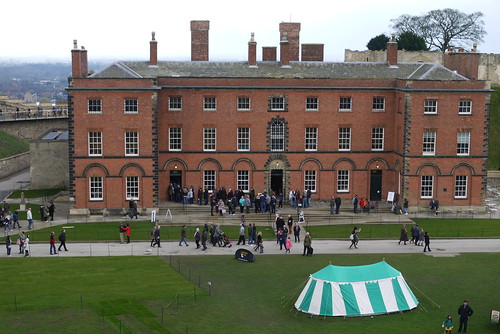
Lincoln Castle served as a prison from the outset but earlier prison buildings within the bailey have come and gone, leaving no visible trace. The present building dates from 1788, with a Victorian extension designed by W. A. Nicholson and completed in 1848, and it remained in use until the prison was closed in 1878.
The Georgian gaol initially held both debtors and criminals, but in 1848 the felons’ block was replaced with the forbidding Victorian gaol, designed for the separate system, which was supposed to keep the prisoners in almost total isolation from each other, although it was never fully introduced in Lincoln. The intention of the separate system was to prevent ‘the evils of association’ and to encourage rehabilitation, and so the new cells were well-equipped, with toilet, basin, hammock table and stool. The chapel most closely reflects the potentially chilling effect of the separate system; it was ingeniously designed so that each prisoner occupied a seat enclosed by the tall hinged screens. The prisoners filed in one by one, and the warder then locked the screens in place so that no human contact was possible and only the pulpit was visible.*
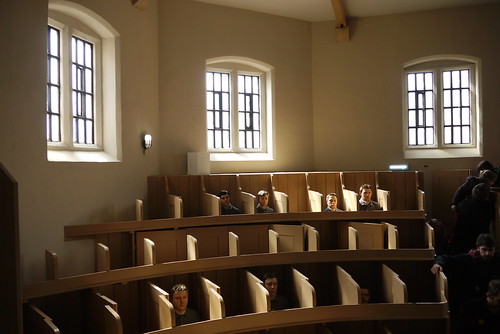
Prison Congregation – To avoid daily prayers and Sunday service some prisoners pretended to by Roman Catholics or feigned sickness. But for others, attendance at chapel relieved monotony of the day.
The Prison Chaplain found his prison congregation generally well behaved. Some prisoners, however, were caught passing notes or scratching their names on the wooden stalls. The Prison Governor complained that the chapel’s design made it difficult to see what the prisoners were up to. **
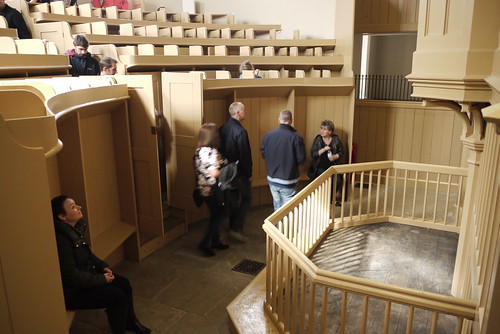
*Lincoln Castle guide book – Scala Arts & Heritage Publisher Ltd 2015
**From a sign board in the prison chapel
Tags: Lincoln, Lincoln Castle, Victorian Prison, Weekend away
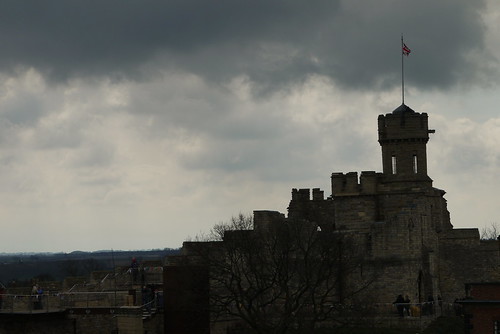
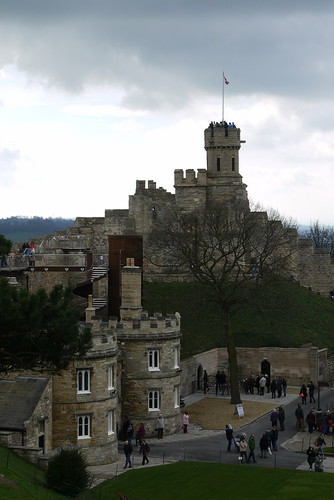
The Observatory Tower is built on the smaller of the two mounds that abut the south curtain wall, which is dated a little later than the Lucy Tower. Excavation through the tower floor and into the mound itself showed that the rubble core of the mound and original tower foundations had been constructed in a single sequence in 12th-or possibly 13th-century masonry work.*
So when was the second tower built? A possible clue lies in the charter that King Stephen issued Ranulf, earl of Chester, which gave him leave to ’strengthen one of his towers in the castle of Lincoln’, apparently distinguishing this from the Lucy Tower.*
The quirky turret was added in the early 19th century, possibly as part of the then prisoner governor, John Merryweather’s rebuilding work here and on the Cobb Hall. Merryweather was a keen amateur astronomer.*
He had a handsome mounted telescope, and frequently spent whole nights in star-gazing, a very proper employment, I though, for the governor of a prison. One or two desperate attempts at escape had been promptly foiled by his vigilance…
Samuel Bamford, Passages in the Life of a Radical, 1840-44.*
*Lincoln Castle guide book – Scala Arts & Heritage Publisher Ltd 2015
Tags: Lincoln, Lincoln Castle, Obervatory Tower, Weekend away
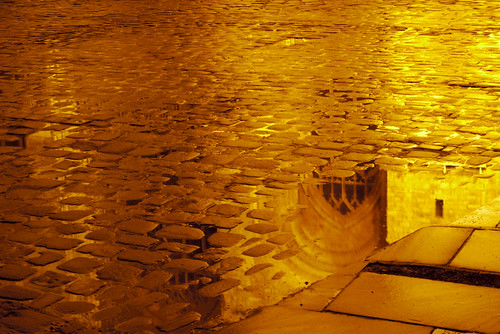
If you go on working with the light available, you will meet your Master, as he himself will be seeking you.
Ramana Maharshi
Tags: Cherie's Place Thought, Light, Lincoln, Lincoln Cathedral, Weekend away
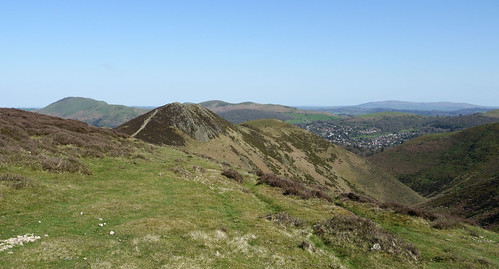
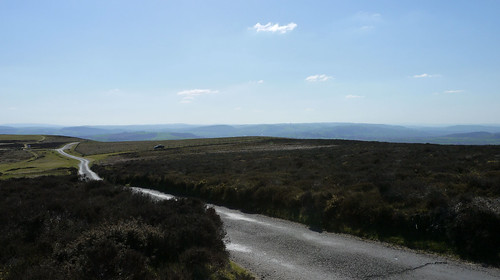
Today was a perfect spring day so after lunch we set off into the Shropshire countryside in order to drive up the steeps slopes to the top of the Long Mynd. As we drove along the country lanes the scenery was outstanding in the spring sunshine and we were provided with clear views from the summit of the hill. We took the longer route back down from the summit and a different countryside route home. This route took us towards Clun, along a road where we followed not one but two Morgans, one black and one silver, both gleaming in the sunshine.

The Long Mynd is one of two prominent hills in this part of the Shropshire landscape, the other being the Stiperstones ridge:
Visually, these two ‘hills’ are very different – the Long Mynd is a large and long plateau, while the rugged outline of the Stiperstones ridge is unmistakable. Together, they make up the largest area of heathland in the Shropshire Hills. Come late summer these hilltops are a sea of purple and not to be missed. Along with the heather a variety of other plants flourish here including bilberry (known locally as whinberry), and this in turn attracts many insects and birds – look out for a green hairstreak butterfly or stonechat on the gorse.
As well as a wealth of wildlife, the area is steeped in history and folklore. Shooting Box is one of sixteen Bronze Age burial mounds found on the Mynd and the 5,000 year old ridge-way, the Portway, once carried Neolithic traders high and dry above the wet and wooded valleys.
Tags: Countryside, Shropshire, The Long Mynd
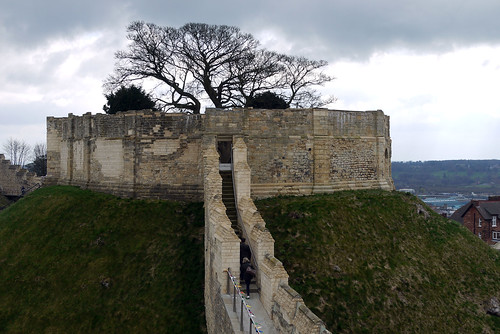
The Lucy Tower is a polygonal keep, a stone wall surrounding open space at the top of a mound. Shell keeps are relatively early transitional stage from a wooden palisade, and this fits with the latest thinking that the Lucy Tower’s mound is the original Norman one, set in a dominant position on the cliff-edge in the south-west corner of the castle bailey. Timber buildings would probably originally have been built against the inside of the wall. Although the name ‘Lucy is first associated with this tower in documents from the 18th century, it is assumed to be the tower ‘fortified by the countess Lucy’ mentioned King Stephen’s charter to Lucy’s son, the earl of Chester.
The surviving walls have been reduced in height, but they still contain two original entrances: the main gate on the north-east side, and a smaller one to the south.*
By the early 19th century the interior of the keep was derelict and the space began to be used as a burial place for the unfortunates who had been executed in the prison or had died of natural causes there, even though it was not a consecrated area.*
*Lincoln Castle guide book – Scala Arts & Heritage Publisher Ltd 2015
Tags: Castle Keep, Lincoln, Lincoln Castle, Lucy Tower, Weekend away