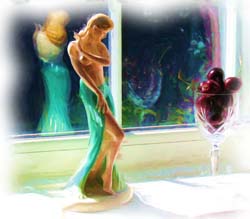
Strolling along the River Dilje on our way back to Hotel Klooster I noticed the side view of this rather striking statue. The statue caught my eye because it was set off by the neighboring tree trunk which to me presents a similar profile and this intrigued me.
When I moved round to the [...]
During the middle ages, jesters had to liven up things. They were often either deformed (e.g. a lump), small of posture, and had a big mouth and ears. Paep Thoon, who lived in Leuven during the 15th century (1430-1487), was such a character. He was an organist at the fraternity of the Holy Sacrament at [...]
Sint-Jan-de-Doperkerk (Saint John the Baptist Church) is situated within the Groot Begijnhof.
The construction of the current Early Gothic church was started in 1305 and was completed between 1421 and 1468. The Saint John the Baptist Church is built in the local Rural Gothic style of Leuven but also has several Roman chatacteristics, such as heavy [...]
Founded in around 1230, the Groot Gegijnhof was one one of the largest beguinages in Belgium and home to several hundred beguines. The complex of 72 charming red-brick cottages, dating mostly from the 17th century, is set around grassy squares and cobbled streets near the River Dijle. The university in Leuven bought it in 1962 [...]
In the Middle of the 12th century, this church of the former Saint Gerturde’s Abbey was nothing more than a simple but impressive prayer room. The church was built between the 13th and 15th century. In the church you can find remarkable late Gothic choir stalls. The open spire known as the ‘tower’ without securing [...]
A beguine community rose up by the St. Gertrude’s Abbey. This Small Beguinage is mentioned for the first time in 1272. The district consists of a street and two blind alleys where women who served in the nearby abbey lived. The small beguinage had few financial resources and the buildings rapidly fell into decay. The [...]
…we find ourselves back at Martin’s Klooster.