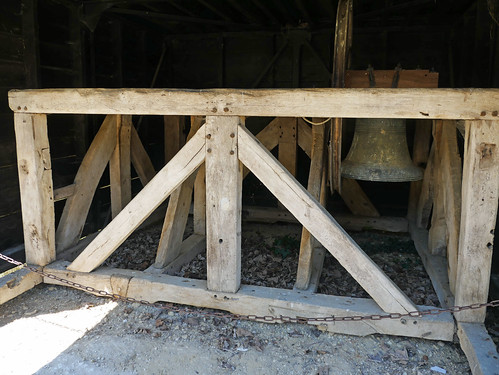
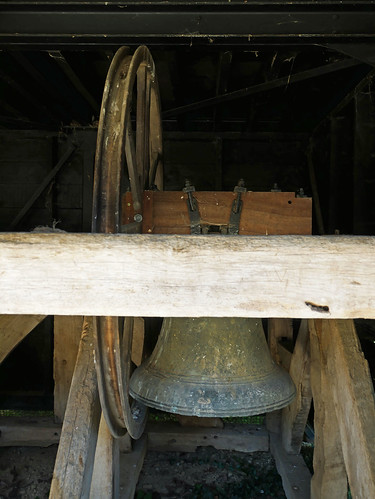
This bell frame dates from the seventeenth century and allows for the hanging of three bells. It is constructed of oak, and several of the timbers have been re-used from an earlier frame. It cam from the church of St Mary, Stoughton, West Sussex.*
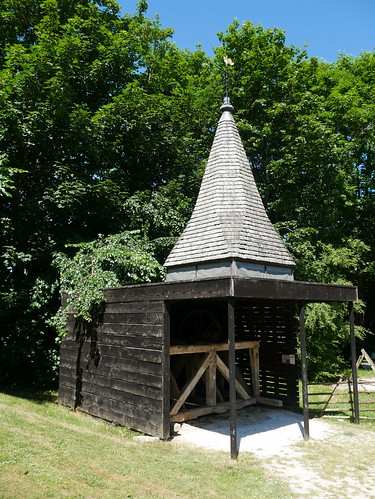
The spire over the bell frame was constructed in 2009, to illustrate best practice in fixing hand-cleft shingles. Both the framing and the shingling of the spire were partly carried out students learning these important crafts.*
*from the Weald & Downland Living Museum souvenir guide
Tags: Bell Frame, Bell Tower, Vacation, Weald & Downland Living Museum, West Sussex
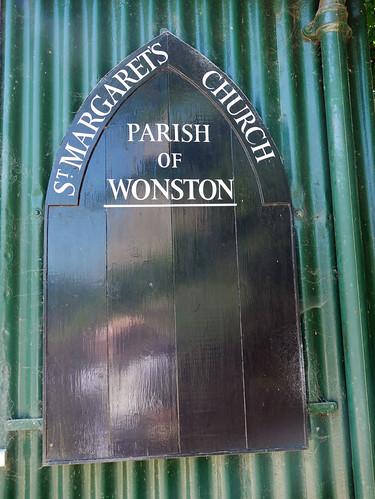
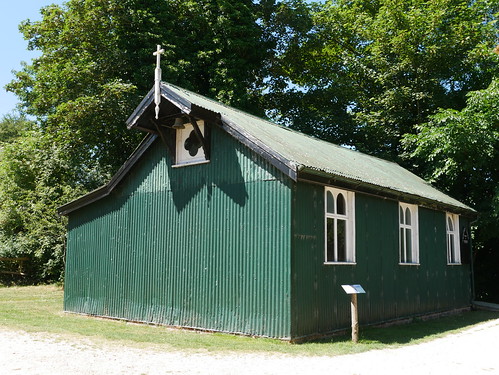
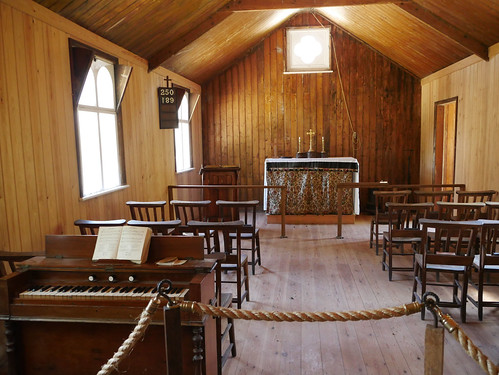
This church was built in 1908 so serve the residents of the new village of South Wonston. It is 30 feet long by 15 feet wide (9 m by 4.5 m), with a porch and vestry. A short extension to the roof at the east end forms a cowl for a bell with a pulley in the vestry for ringing.
The village of South Wonston – part of the parish of Wonston – was created in 1892. Initially, the growth of the village was slow, but the Rector of Wonston thought it important to establish a spiritual base for the community. In 1908 he paid £8 of his own money for a small plot of land for the purpose of erecting a ‘mission room’ and an order was soon placed with Humphreys Ltd of Knightsbridge, suppliers of pre-fabricated corrugated iron buildings.
Money was raised by public donations and from a jumble sale, a concert and two offerories, amongst other fundraisers. The building was purchased for £89 10s and the foundations cost £13. The church, navmed St Margaret’s Mission Church, was first used on Sunday 7 February 1909.*
*from the Weald & Downland Living Museum souvenir guide
Tags: Portrait, Private Sector, Self Portrait, The Weald & Downland Living Museum, West Sussex
Therefore I say unto you, What things soever you desire, when ye pray, believe that ye receive them, and ye shall have them.
Mark 11:24
Tags: Cherie's Place Thought, Chichester, Vacation, West Sussex
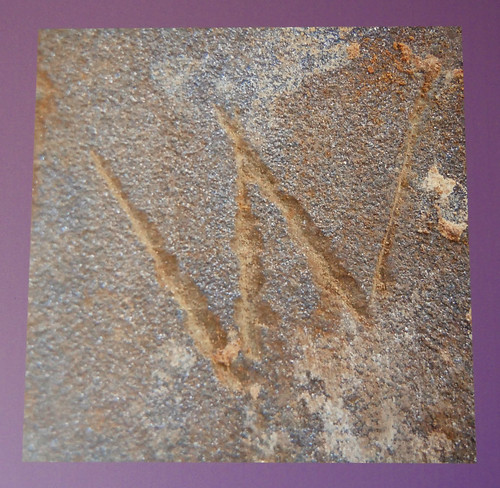
This photograph shows a carving of a double V ritual mark. This stands for Virgo Virginum – Virgin of Virgins – i.e. the Virgin Mary. It is not uncommon and is used on a wide variety of building materials and locations as a charm to ward off evil spirits and invoke good luck on the dwelling.*
*Information from a signboard in the Weald & Downland Living Museum
Tags: The Weald & Downland Living Museum, Vacation, Virgo Virginum, West Sussex
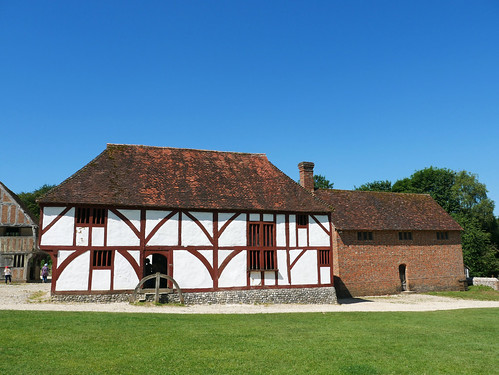
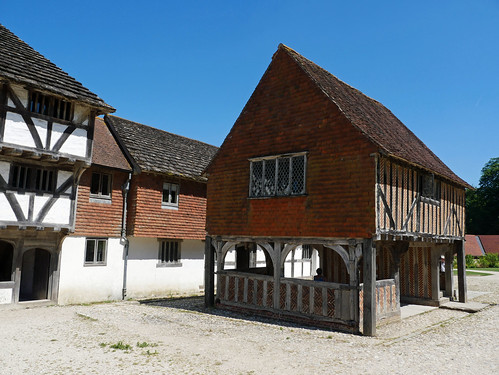
The Weald and Downland Living Museum (formerly known as the Weald and Downland Open Air Museum until January 2017) is an open-air museum in Singleton, West Sussex. The museum is a registered charity.[1]
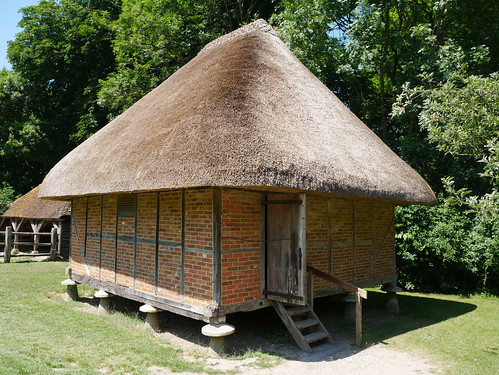
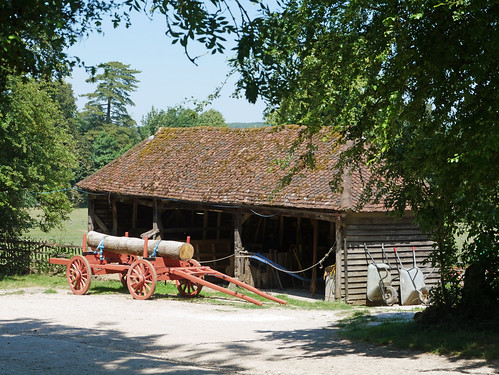
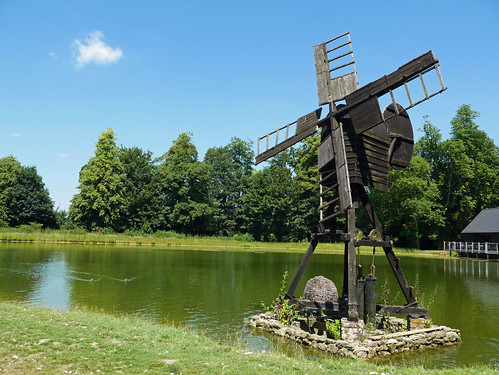
The museum covers 40 acres (16 ha), with over 50 historic buildings dating from 950AD to the 19th century, along with gardens, farm animals, walks and a mill pond.
The principal aim at the foundation of the museum was to establish a centre that could rescue representative examples of vernacular buildings from South East England, and thereby to generate increased public awareness and interest in the built environment.
The Museum principally promotes the retention of buildings on their original sites unless there is no alternative, and encourages an informed and sympathetic approach to their preservation and continuing use.
The buildings that are located at the museum were all threatened with destruction and, as it was not possible to find a way to preserve them at their original sites, they were carefully dismantled, conserved and rebuilt in their historical form at the museum.
These buildings, plus two archaeological reconstructions, help the museum bring to life the homes, farmsteads and rural industries of the last 950 years. Along with the buildings, there are “hands-on” activities, like cooking, and weaving, and a number of yearly activities, including seasonal shows, historic gardens weekend and Tree Dressing.
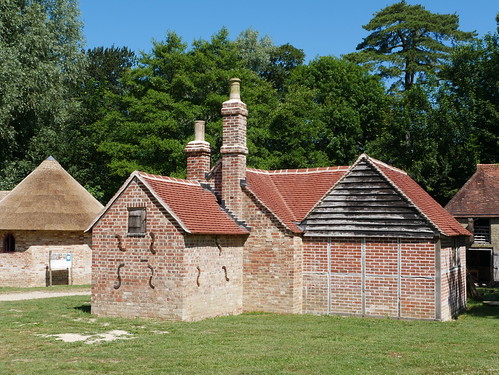
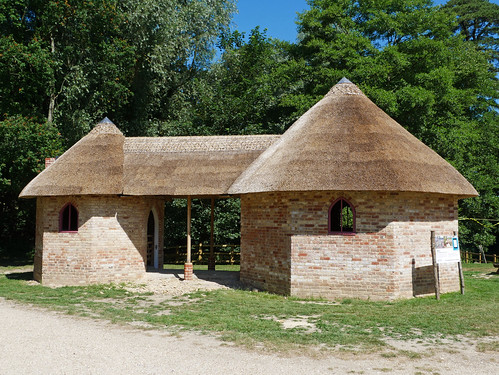
Pictured below are some of the many buildings located within the museum site. I will Post other buildings in more detail in subsequent posts.
Tags: Vacation, Weald & Downland Living Museum, West Sussex
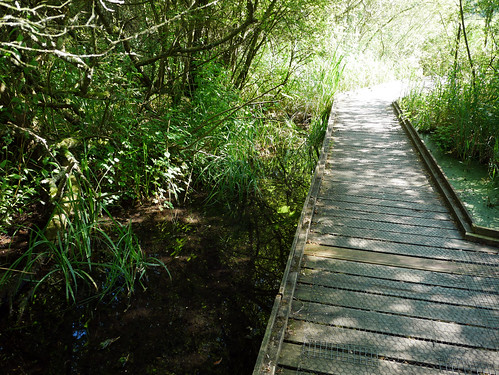
WWT Arundel is one of nine wildfowl and wetland nature reserves managed by the Wildfowl and Wetlands Trust, a nature conservation charity in the United Kingdom. The 60 acre (240,000 m2) reserve is situated at the foot of the Offham Hangar, a part of the Arun valley in Arundel, West Sussex, England.
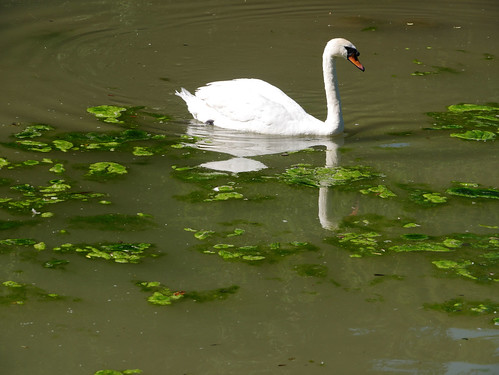
One of the endangered species protected at the centre is the Hawaiian goose, or nēnē, the rarest goose in the world, and state bird of Hawaii. Many species of duck, goose and swan can be seen at the reserve.
The centre provides a variety of habitats from around the world for its various ‘residents’ such as its re-creation of Mývatn, a volcanic lake in Iceland.
With hand feeding and hides situated all over the centre, visitors can get close to many of the ducks. These features, as well as the large number of habitats and different species, are common in WWT centres.


Tags: Arundel, Vacation, West Sussex, Wetlands Centre
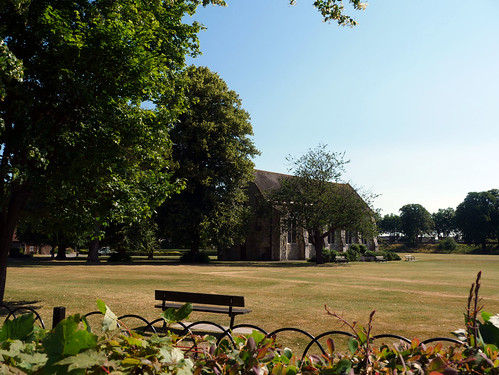
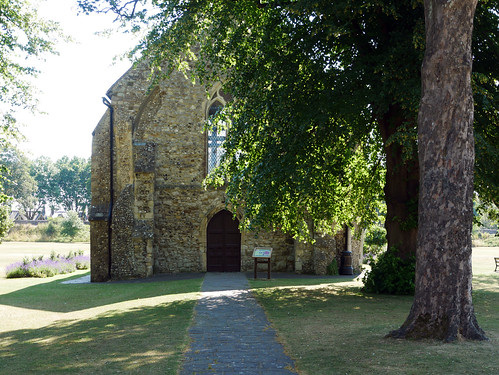
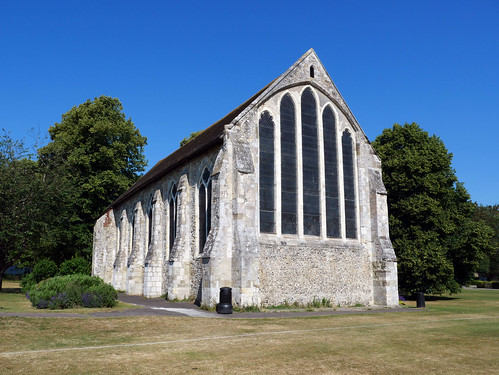
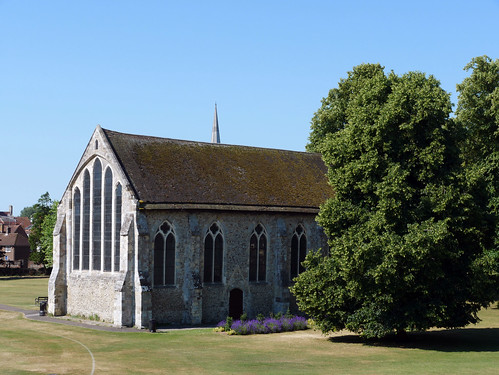
These photographs show the only surviving remains of a late 13th Century Franciscan friary that once dominated Priory Park.
Timeline of the guildhall:
- 1269 – 1282 A Franciscan Friary is constructed in Priory Park. Believed to have been the chancel of the friary, it contained the high alter and would only have been used by the resident Greyfriars who remained in Priory Park for more than two centuries until the dissolution of monasteries in the 16th Century.
- 1538 The friary was closed under the reign of King Henry VIII. With the exception of the chancel, all buildings belonging to the friary were demolished. The site was given to the Mayor of Chichester.
- 1541 The City Corporation buys the chancel from the Mayor of Chichester. The building is used as law courts and the Town Hall, or Guildhall. During this time some famous trials were held here including the trial of the Hawkhurst gang of smugglers in 1749 and the trial of the poet & artist William Blake in 1804.
- 1850 The building stops being used as a Guildhall and is used by the Sussex Rifle Volunteers as an Armoury and Drill Hall.
- 1947 The Guildhall becomes Chichester’s first museum site and is used to display historic artefacts for the people of Chichester.
- 2007 – 2009 The Guildhall undergoes a major repairs programme and becomes a hire venue for community events.
- 2015 The Guildhall is granted a license to host civil ceremonies and becomes a wedding venue for the first time in its history.
Tags: Chichester, Priory, Priory Park, The Guildhall Chichester, Vacation