Random thoughts and photos of my journey through life…
4 Comments CherryPie on Jul 9th 2016
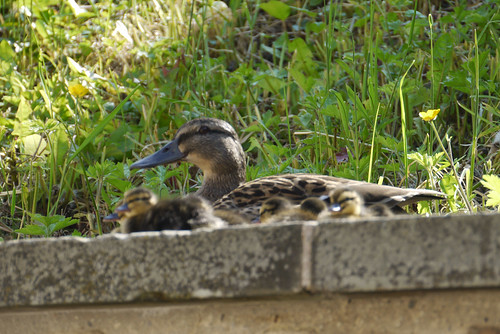
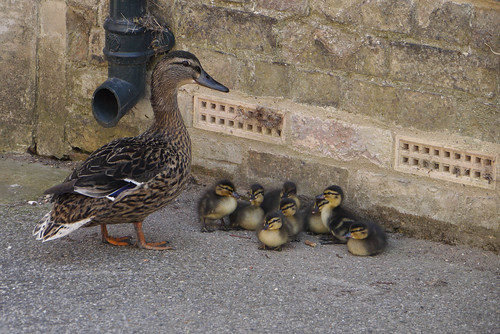
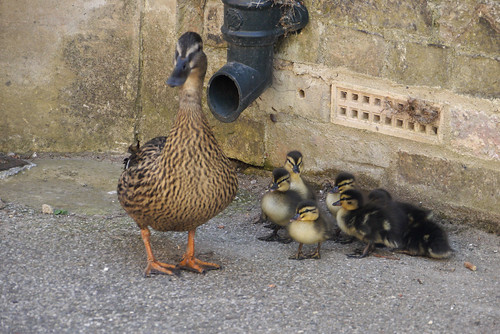
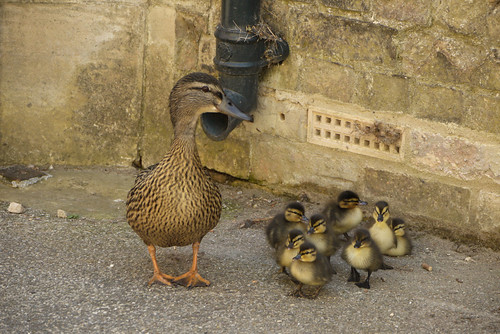
On my recent visit to Lincoln Castle, to view the art instalation ‘Poppies Wave’ I noticed a mother duck and her cute ducklings sitting at eye level on a wall.
By the time I got back from looking at the poppies the mother duck and some of the ducklings were on the ground below the wall. Four ducklings however were running frantically backwards and forwards on the top of the wall squeaking loudly whilst mum waited patiently.
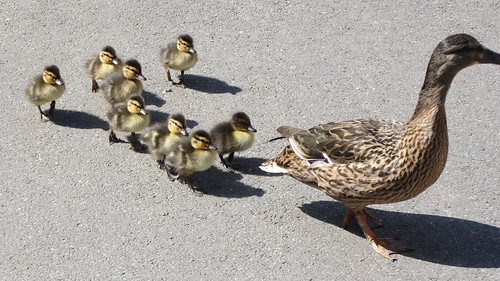
A Lincoln Castle grounds attendant gently herded the ducklings along the wall towards mum, when all but one wildly jumped off the wall to join the others. The last one eventually launched itself off the wall landing on its back needing a little assistance to right itself. For a few moments it looked like it was wounded, but all of a sudden it joined the back of the line of ducklings following mum. Eventually the eight ducklings lined up in a row following their patient mum.
I was so relieved to see that the last duckling was not harmed and was able to walk in line behind mum as she led her offspring through the castle grounds. In fact I was so relieved that the little one didn’t come to any harm, I watched the ducklings walking off rather than take any photos 
The last photo is courtesy of Mr C who had not witnessed the unfolding drama of the ducklings and their mum.
14 Comments CherryPie on Jul 7th 2016
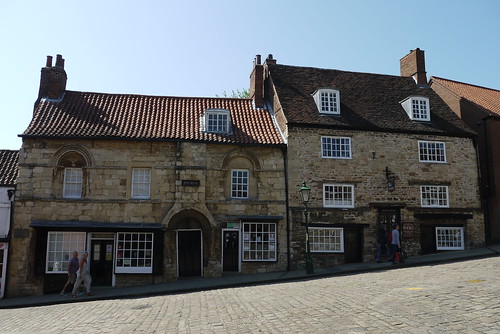
The Jew’s House is one of the oldest surviving domestic dwellings in the country.
Built around 1150, the house was almost certainly occupied by a merchant who would have lived upstairs and traded downstairs. One name linked with ownership is Belaset of Wallingford, a woman executed in 1287, possibly on a trumped up charge, for clipping coin – paring the edges of coins to acquire illicit gold or silver.*
The Jews’ Court next door was built much later and probably takes its name from a synagogue that is thought to have been situated near by. The Jew’s Court is currently headquarters of the county’s historical society.
During the 11th and 12th centuries Lincoln was very prosperous, largely through its wool trade. The Jewish community played a big part in the city’s development, especially as money-lenders – an occupation forbidden to Christians. Jews even helped fund the building of the cathedral. However their wealth and the fervour of the Crusades inspired resentment. Persecution in 1266 was followed by expulsion in 1290. Many saw this as an opportunity to rid themselves of their debts.*
*From the Pitkin City Guide to Lincoln
14 Comments CherryPie on Jul 6th 2016
14 Comments CherryPie on Jul 5th 2016
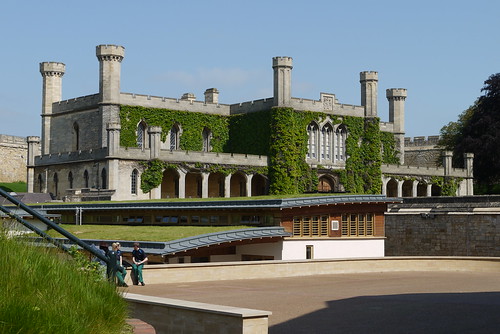
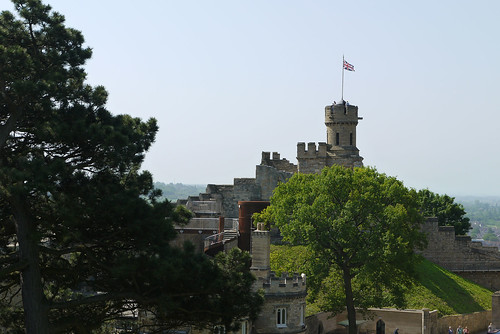
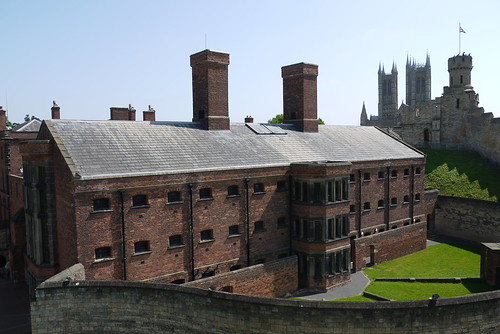
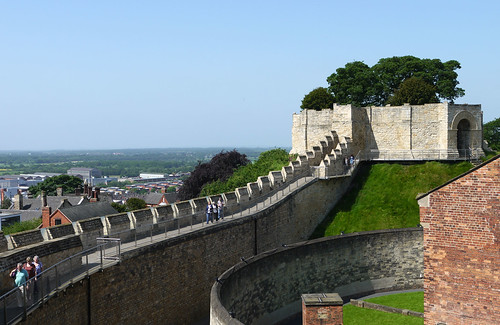
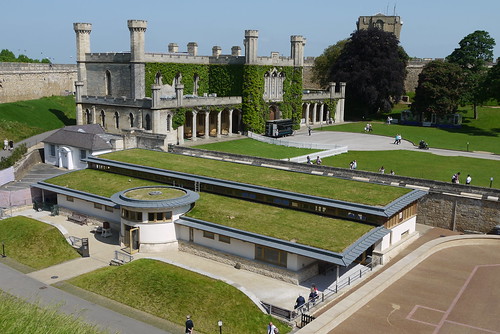
Courts have been held at Lincoln Castle since it was first built. Back then the sheriff, who was William the Conqueror’s right hand man in Lincolnshire, presided over the castle’s shire court. Today the Gothic Revival courthouse, built in 1826 for the Lincolnshire Assizes, is still a working building where criminal trials are heard by Lincoln Crown Court.
15 Comments CherryPie on Jul 4th 2016
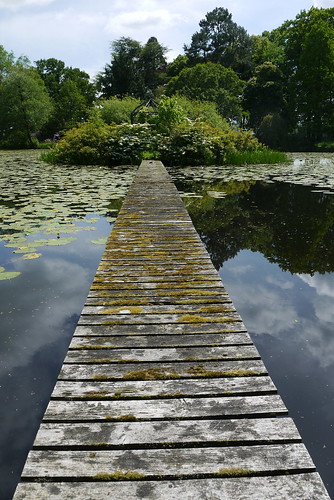
Does the walker choose the path, or the path choose the walker.
Garth Nix
8 Comments CherryPie on Jul 3rd 2016
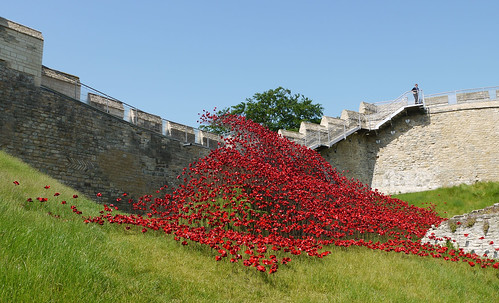
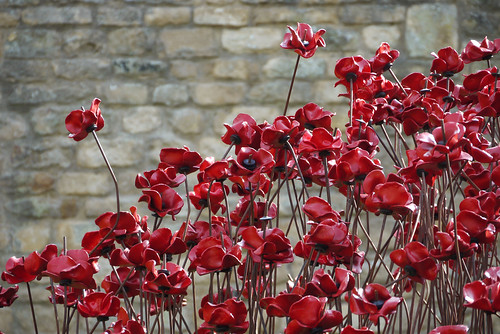
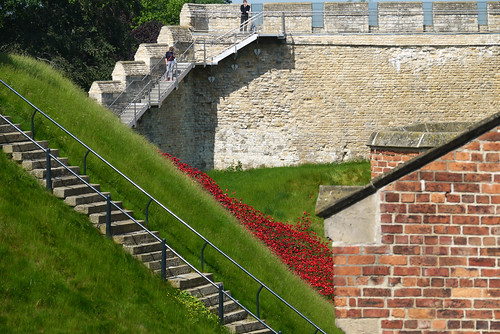
Wave opened at Lincoln Castle on Thursday 26 May, specially presented by 14-18 NOW to mark the centenary of the First World War.
A sweeping arch of bright red poppy heads suspended on towering stalks, the sculpture is from the extraordinary installation Blood Swept Lands and Seas of Red by artist Paul Cummins and designer Tom Piper.
Wave and its sister sculpture Weeping Window were initially conceived as the key dramatic sculptural elements in the installation, which was shown at the Tower of London in 2014.
Now, the two breath-taking sculptures are being brought to audiences at venues across the country. And for the remainder of 2016, Lincoln Castle is the only place in England to host the poppies.
As with all 14-18 NOW projects, the presentation of these sculptures to new audiences across the United Kingdom aims to prompt a new, nationwide dialogue around the legacy of the First World War.*
Lincoln County’s War-Time Connections
Lincolnshire will be commemorating 1916, a turning point within the four terrible years of the First World War, that saw this country to begin to change in every conceivable way.
Lincolnshire has strong connections with both world wars and, during the first, Lincoln Castle was used by the Lincolnshire Regiment and for fundraisers and parades.
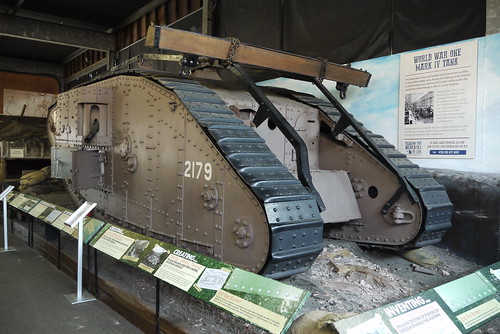
Lincolnshire engineering companies who had formerly revolutionised agricultural machinery carried on innovating, moving from tractors to tanks.
It was during this period that the first operational tank was developed by Fosters of Lincoln, went into full production, and was first used on the Somme battlefield. Between 1915 and 1919 Lincoln became one of the largest centres of aircraft production in the world.
A veritable army of Lincolnshire women – the munitionettes – many as young as 14, moved into the towns and factories of Gainsborough, Grantham, Grimsby and Lincoln to make tanks, aircraft and munitions.
There were also 37 military aerodromes across the county by 1918 and this number grew in WWII. Many aviation heritage sites remain, including the Battle of the Britain Memorial Flight.*

*From 14-18 NOW leaflet
6 Comments CherryPie on Jul 2nd 2016