PS: The photos are less than perfect because the lighting had dropped before I had chance to go and take some photographs.
Random thoughts and photos of my journey through life…
PS: The photos are less than perfect because the lighting had dropped before I had chance to go and take some photographs.
18 Comments CherryPie on Jul 21st 2016

Yesterday I returned from a lovely but all to brief weekend away in Wells. Shortly after we arrived home we were visited by the gentleman who is organising the next phase of work in our garden so that he could confirm what work needed to be done.

The men who were going to do the garden work turned up around lunchtime today. The workmen were given instructions by their supervisor and left to get on with the work. They made good progress in extreme temperature (Summer has arrived), although they did not get to the point that was expected. They were very noisy (loud conversation) in their work so I was forced to retreat to the front room so I could relax on my day off work.


The garden workers will be back tomorrow to continue with their work… I am liking the progress so far 
I have plans 


In addition to this I have been informed that the server where my blog is hosted will be turned off soon. This means that I have to make sure all my files are saved properly so that I can upload them to a new server/new host.
Blog posting may be a little infrequent whilst I get my new hosting in place…
8 Comments CherryPie on Jul 19th 2016

Situated in Lincolns historic Cathedral Quarter directly opposite Lincoln Castle, the hotel enjoys an enviable location and is surrounded by 8 acres of landscaped gardens which include the Sir Joseph Banks conservatory, a 5000 sq ft tropical glasshouse with exotic plants and running water features and the beautiful John Dawber walled gardens. The Art Deco style building offers some of the finest accommodation available in Lincoln.

The hotel has 14 individually designed bedrooms and suites:
Including the luxurious ‘Willis’ Bridal Suite with it’s super king size four-poster bed, separate lounge (both with 42” plasma televisions) and huge luxury en-suite bathroom including contemporary free standing bath for 2 and Raindance Shower.


During our stay in the hotel we were lucky enough to have been accommodated in the Willis Suite. Breakfast as I mentioned before was nice, but served in an unusual way.

The Sir Joseph Banks conservatory is impressive and surprisingly had plant life growing from within and without!!

The John Dawber walled gardens are a quiet oasis, a lovely place to sit and rest a while.
5 Comments CherryPie on Jul 18th 2016
I love them that love me; and those that seek me early shall find me.
Proverbs 8:17

Comments Off CherryPie on Jul 17th 2016
4 Comments CherryPie on Jul 16th 2016
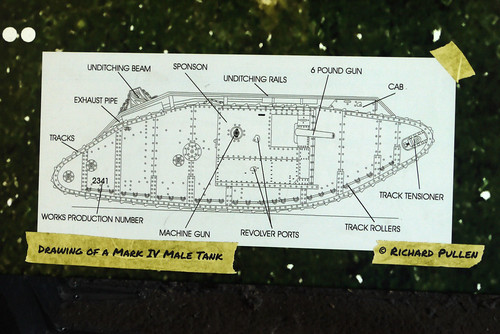
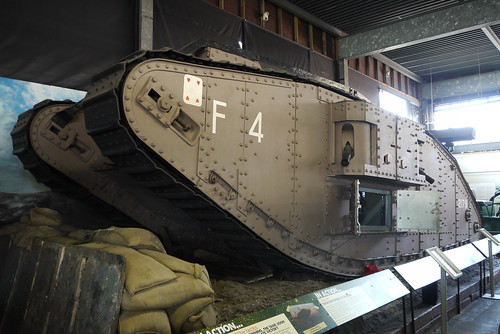
According to information at the Museum of Lincolnshire life, tanks are classes as either male or female. Daphne in the previous post is apparently female and the above diagram shows a male tank.
The information at the museum informed that a female tank has five machine guns whereas a male tank has three machine guns and two 6-pounder guns (cannon).
The difference would be easier to visualise if the diagram was in the same orientation as the tank display.
4 Comments CherryPie on Jul 15th 2016
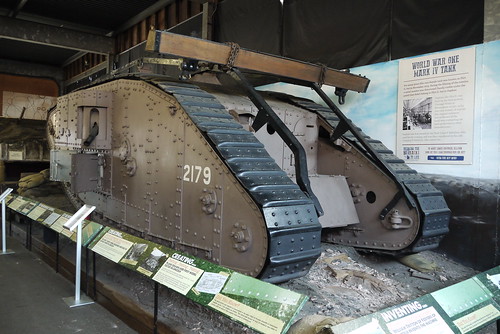
Lincoln was at the forefront of the invention of the ‘tank’, playing a vital role in the development of the fighting machine that changed the face of warfare.*
William Foster & Company was the pioneer of the tank. It was from the designs and drawings made by William A Tritton, then marketing director of the company , that all the tanks were made. The first prototype was known as Little Willie. The design was begun on 2 August 1915; construction started on 11 August; the machine was able to move by 8 September; and performance trials began on 14 September… only 45 days after Tritton first produced his sketches! Early trials proved less than successful. Fortunately Tritton had anticipated some of the problems and, with the assistance of Lieutenant WG Wilson, the Admiralty Overseer, was already working on the successor to Little Willie.
The design of Big Willie, was begun on 24 August 1915. Later re-christened Mother, Tritton’s revised tank was able to move under its own power by 6 January 1916. The design prove to be a tremendous success and almost one month later , on 2 February, a trial took place in the presence of a very distinguished audience that included Field Marshal Lord Kitchener. Following the trial an order was placed for 100 Big Willies. Throughout the war Tritton continued to improve on the design of the of the tank. Contracts were dispersed to other factories, including Marshall Sons & Company, of Gainsborough, for the production of the tank. By the end of the war, 2696 tanks had been delivered to the British Army, with a further 8000 more having been ordered. For his contribution to the development of the tank, William Tritton was knighted by King George V on 13 February 1917. The directors and workers of William Foster & Company presented Sir William with a magnificent illuminated address.*
The tank in the picture is named Daphne:
She was built in Wednesbury, West Midlands from plans drawn in Lincoln. For many years she was believed to be Flirt II, until her original serial number was discovered in 2013. Daphne was damaged by German artillery on 21st August 1917 at the Ypres Salient and taken away for repair.
At the end of the war Daphne was presented to the city of Gloucester, where she stood in Gloucester Park until 1940. During the Second World War Daphne served as a pillbox on Hucclecote airfield, until she was transported to Bovington Camp in Dorset in the mid 1940s.
Bovington Camp museum acquired Daphne in 1947 and, after being restored in 1983 by apprentices at Rustons Gas Turbines, loaned her to the Museum of Lincolnshire Life in 1989 where she remains today.*
*From signboards in the Museum of Lincolnshire Life
8 Comments CherryPie on Jul 14th 2016