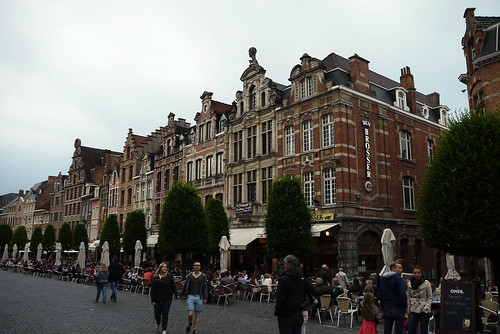
This handsome, cobblestoned square is flanked by a tasteful ensemble of high-gabled brick buildings. Some of these date from the 18th century, while others are comparatively new. At ground level, these buildings house the larges concentration of bars and cafes in town, and as such, attract the town’s university students in droves. *
We passed through the square on several occasions and felt the lively vibrant atmosphere but I didn’t feel the urge to dwell and soak it up. I preferred the vibrant but calmer atmospheres of other parts of Leuven.
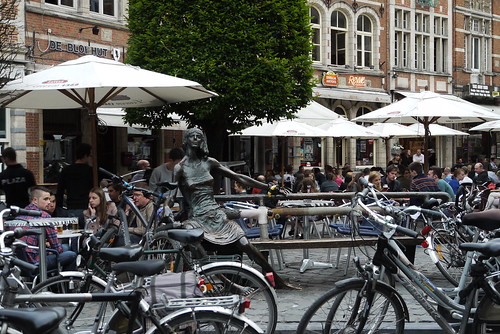
Within the square is one of the numerous Leuven statues:
Statue by Fred Bellefroid built in 1984 in honour of the kotmadam. “Kot” is Flemish slang for a student room, and the “kotmadam” is the landlady of the building, who would prepare meals for the students, tidy their rooms and help them when help was needed.
*from the Eyewitness Travel Guide to Belgium and Luxembourg
Tags: Belgium, Leuven, Oude Markt, Vacation
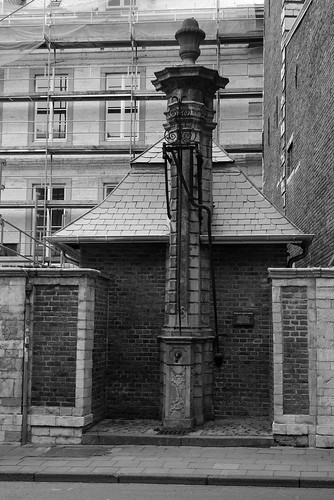
The Louis XV-style pump dating from 1754 was restored and moved in 1887.
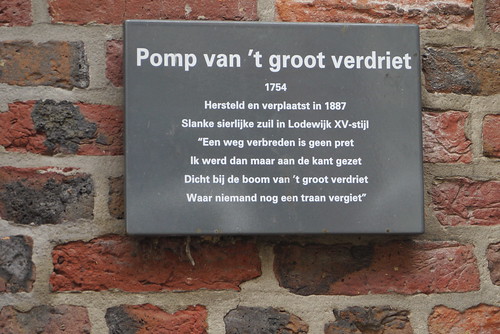
By the side of the pump is a poem:
“A road widening is not fun. I was put aside. Close to the tree ’s great sorrow. Where no one sheds a tear. “
I did not notice the tree but you can see it here.
Tags: Belgium, Leuven, Pomp Van 't Groot Verdriet, Vacation, Water Pump
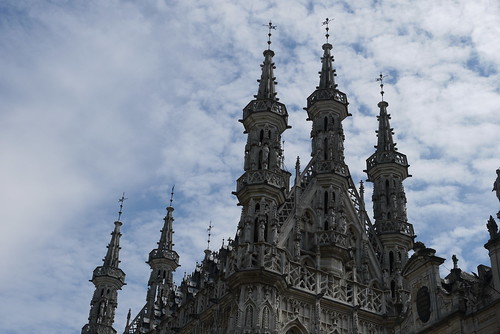
The inside of the Staduis provides as much interest as the outside. Here are some of the many interesting rooms within.
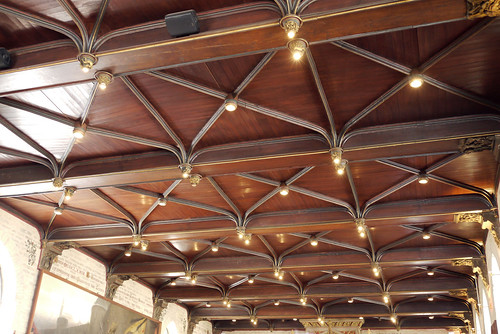
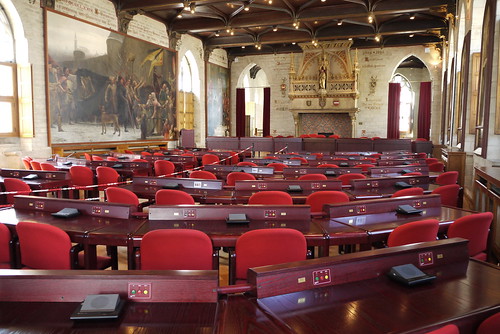
The Gothic Hall
This is the room where Leuven town council meets, even after the relocation of all the municipal services and the councillors’ offices to newer premises.
The beam blocks on the market side are 15th century old, gothic and were carved by the Brussels sculptor William Ards. They illustrate the life of Maria and Christ, the example of clemency and justice. The foyer underneath the gothic hall features scenes from the Old Testament: so that the New Testament has been literally built on top of the Old. A number of cornerstones between the beams are perhaps the work of Joes Beyaert; animals symbolise good and evil, symbols of the evangelists, prophets and church fathers etc.*
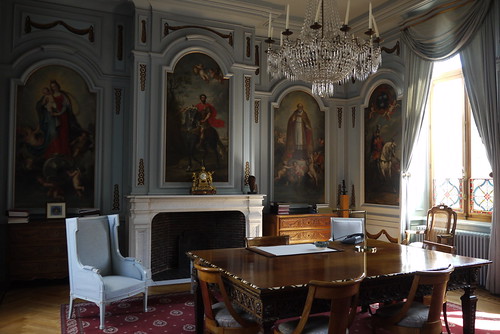
The Mayor’s Office
In the beginning this is where the ‘Saint Peter’s Lords of the Seven Noble Families’ used to meet. Until a few years ago this served as the mayor’s office. It is decorated in and 18th century style.*
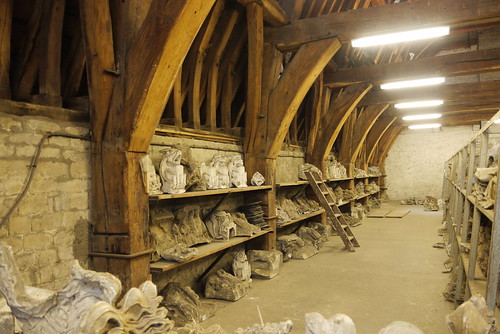
The Attic
The attic is reached by way of a spiral staircase. When you arrive at the top of the stairs you are greeted with a stunning view of roof beams of oak and rows of original sculptures from the building stadhuis facade.
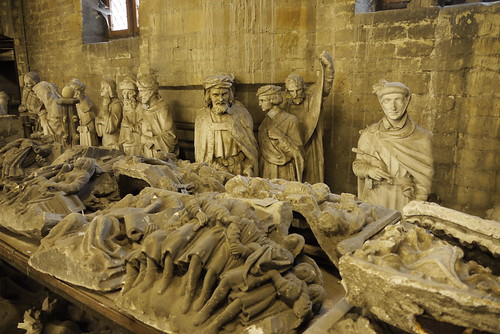
The sculptures you see today on the richly ornate facade are not the originals! In 1828-1841, during restoration work, around 200 weather-damaged sculpted bases of the niches of the ‘front house’ and other 15th century sculptures in Avesnes stone were replaced by new sculptures in a different kind of stone. The original pieces ended up in the attic. But it turned out that the new pieces were not so weather resistant, so they were replaced again. Some of the sculptures from the 19th and 20th century are here because they have since been replaced.*
It was fascinating to be able to see close up, both the original and 19th century sculptures.
*From the Tourism leaflet -The Town Hall; The Pride and Joy of Leuven
Tags: Belgium, Leuven, Stadhuis, Town Hall, Vacation
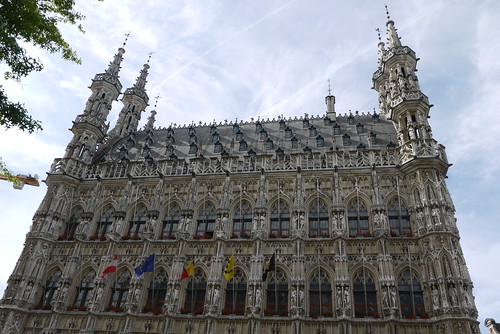
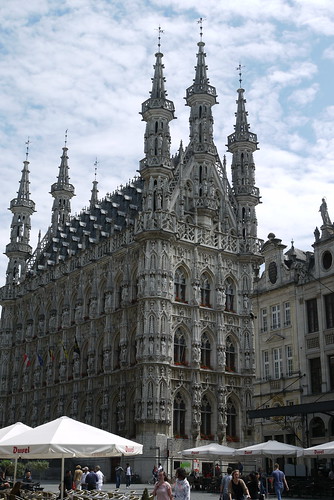
Built between 1439 and 1463 from the profits of the cloth trade, Leuven’s Stadhuis was designed to demonstrate the wealth of the city’s merchants. This tall and distinctive building is renowned for its lavishly carved and decorated facade. A line of narrow windows rises up over three floors beneath a steeply pitched roof adorned with dormer windows and pencil-thin turrets. *
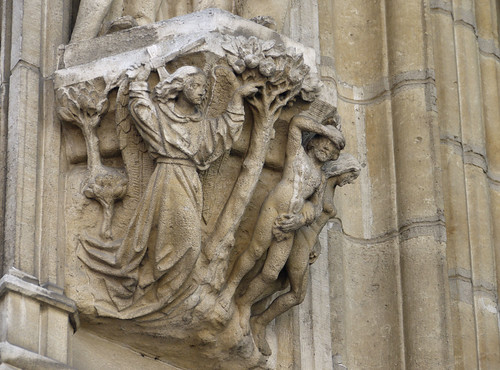
However, it is in the exquisite quality of its stonework that the building excels, with delicately carved tracery and detailed medieval figures beneath 300 niche bases. There are grotesques of every description as well as representations of folktales and biblical stories, all of which are carved in an exuberant style. Within the niche alcoves are 19th-century statues depicting local dignitaries and politicians. *
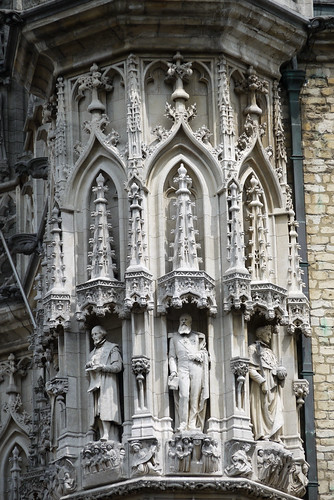
*From Eyewitness Travel Guide to Belgium and Luxembourg
Tags: Leuven, Stadhuis, Town Hall, Vacation
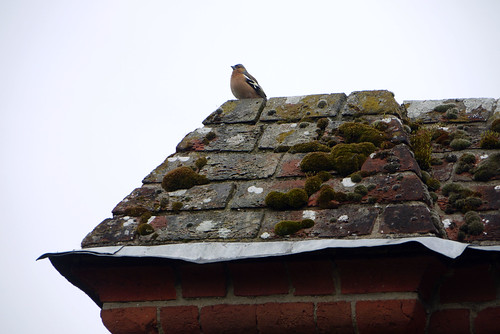
I am the song
I am the song that sings the bird.
I am the leaf that grows the land.
I am the tide that moves the moon.
I am the stream that halts the sand.
I am the cloud that drives the storm.
I am the earth that lights the sun.
I am the fire that strikes the stone.
I am the clay that shapes the hand.
I am the word that speaks the man.
Charles Causley
Tags: Cherie's Place Thought, IamHe, National Trust, Packwood House
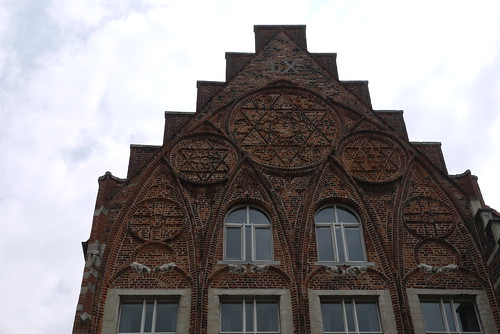
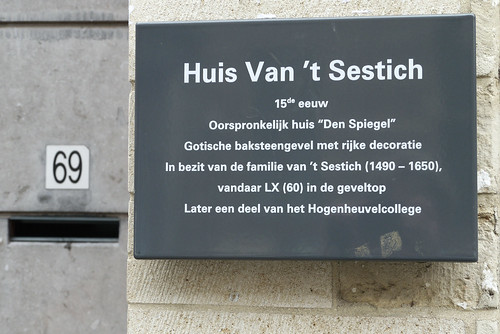
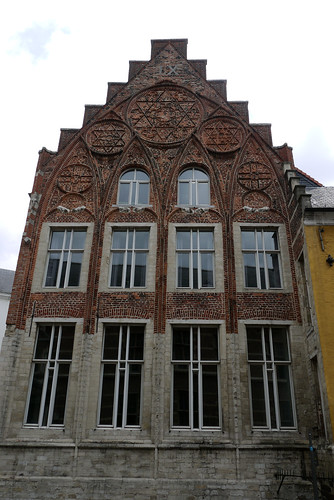
The house of Van’t Sestich is named after the Louvain patrician family of that name. High up in the wall the Roman numeral LX can be seen; a play on the surname.
The facade of Van ‘t Sestichhuis is quite striking and intriguing. The architectural style of the brick patterns show kinship with with the architecture in Bijloke, Ghent and numerous town houses in Bruges. The gable is adorned with hakstenen motives which we can recognize as the Star of David.
Tags: Huis Van't Sestich, Leuven, Star of David, Vacation
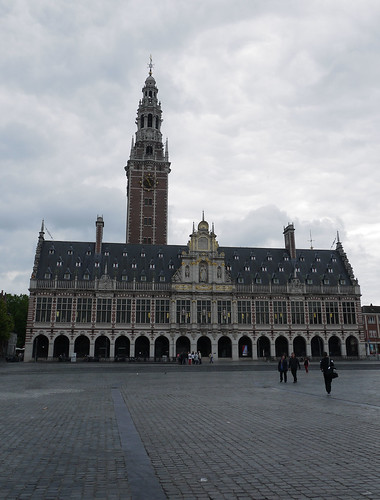
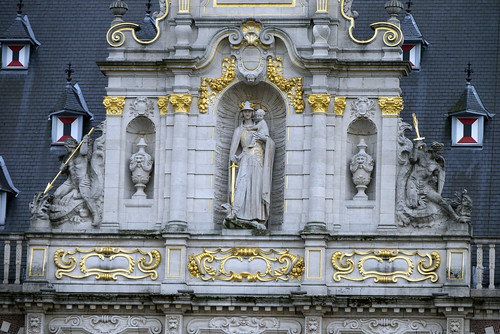
During WWI the Germans set the University Hall ablaze. The centuries-old library, which held hundreds of thousands of often rare books, went up in flames. With support from the Americans, a new library was built in the 192o’s in the Flemish Renaissance style. Impressive about this building are the many stones engraved with inscriptions from the hundreds of American technical and engineering schools that contributed to its reconstruction. The carillon in the tower, with its 63 bells – one of the largest in the country – was a gift from 16 American engineering societies.*
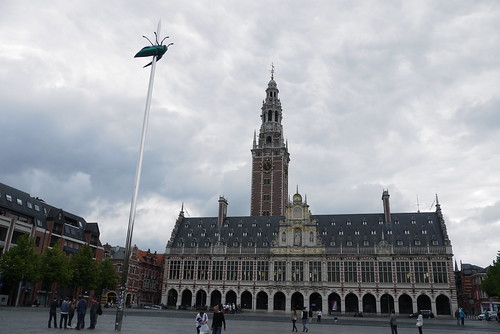
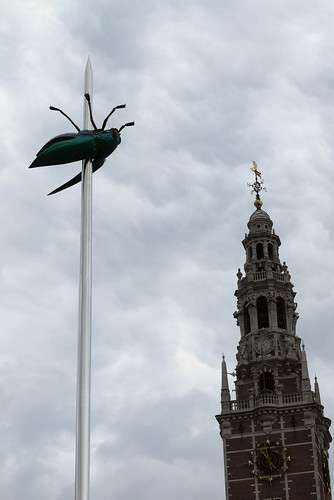
In front of the library, in Ladeuze square stands a monument entitled Totem; a giant beetle impaled on a needle. The strange spectacle left me wondering why and what it was supposed to signify.
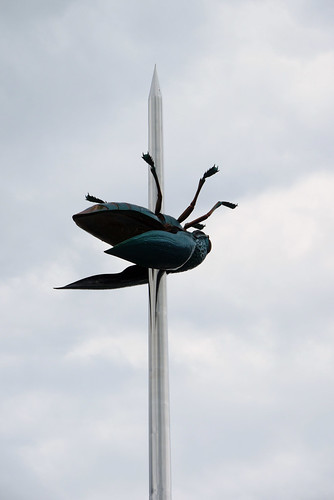
The truth behind the story is that it was a gift to the city of Leuven by a Belgium-based artist Jan Fabre. Fabre is a well known sculptor, but also a playwright, choreographer, designer. This is not the first time he creates animal figures. In Nieuwpoort he has made a giant turtle monument, named ‘Searching for Utopia’. Similar works in the open are exhibited in Bruges. He also exhibited his works in The Louvre.
The ‘beetle-monument’ was unveiled in 2000, the year of the 575th anniversary of K.U. Leuven. The name of the work of art is the Totem. In the artist’s own words, this work symbolizes a lot of things: nature, radar for human existence and so on. The other meaning refers to a bigger collection Fabre made. He has actually made a whole collection of upside-down insects pinned on needles.
Fabre also says that he had a lot of help from professionals at K.U. Leuven without whose expertise he would have not done the job proper. Most importantly, he was roaming around Leuven a lot, looking for a perfect location for the monument. He choose the Ladeuze square because it is in front of the library and, as he claims: Totem is a tribute to knowledge, to beauty, to the poetry of existing/being.
*From Out and About in Leuven walks leaflet
Tags: Belgian, Leuven, Totem, University Library, Vacation