Random thoughts and photos of my journey through life…
12 Comments CherryPie on Jul 2nd 2011

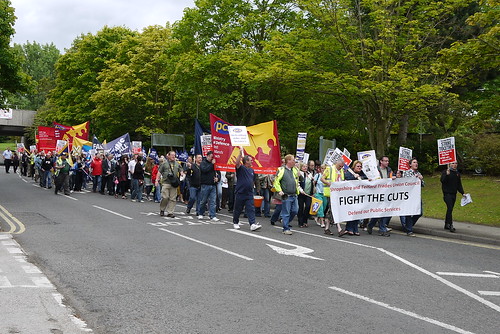
 Yesterday was extremely busy and involved me getting up at the crack of dawn, which is unheard of for me. The Public and Commercial Services (PCS) union took joint industrial action with three teachers unions (National Union of Teachers (NUT), University and College Union (UCU) and Association of Teacher and Lecturers (ATL)). These unions are trying to persuade the government that changes to public sector pensions and the sweeping cuts to the public sector are unnecessary and avoidable. The one day strike could have been avoided if the government had engaged in meaningful negotiations and given ground on some of the key issues on the proposed changes to pensions. Pension contributions of public sector workers are set to double or triple and the proposed age for claiming the pension could rise from 60 to 65 and eventually 68.
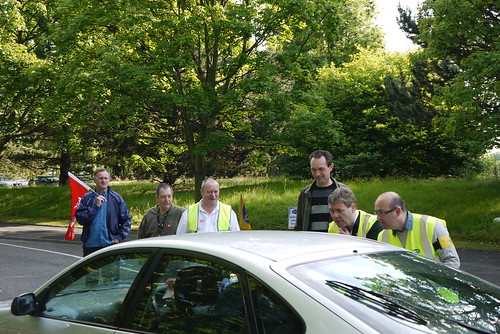
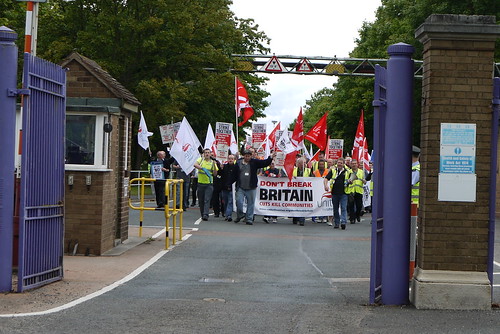
Yesterday saw picket lines outside schools and Civil Service establishments. My workplace had picket lines outside each entrance and as I am on the PCS branch committee I was there, camera in hand.
PCS and Unite (who have a large membership in government pension schemes) have recently signed an agreement to take part in joint campaigning. Unite were unable to ballot their members in the time frame so they were unable to take part in the joint industrial action although they were able to show their support and help out in other ways. There are a large number of Unite members at my workplace, a considerable number of them stopped their cars on the way into work so that they could talk the people on the picket lines. This caused further disruption by causing the traffic to queue at times.
At lunch time the Unite members marched out of work to join the trade unionists who had been taking strike action and members of the public for a short march. This was followed by a lunch time rally, which was so well attended that people spilled out from the main hall into adjoining rooms. The rally was addressed by speakers from each of the unions including Gail Cartmail, Assistant General Secretary of Unite. Gail exposed many myths that are pedalled by the media about public sector pensions and public sector cuts, after each exposé she got the room chanting “Its a big fat lie“.
The day was a huge success both locally and nationally. The estimated turn out for my branch was 88% of members, with around 500 people taking part in the march
More information on the myths about the public sector can be found here.
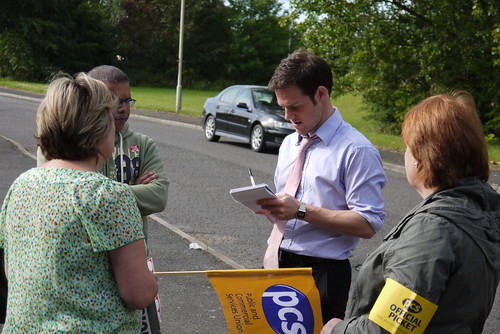
For more of this weeks PhotoHunt pictures check out tnchick.
24 Comments CherryPie on Jul 2nd 2011
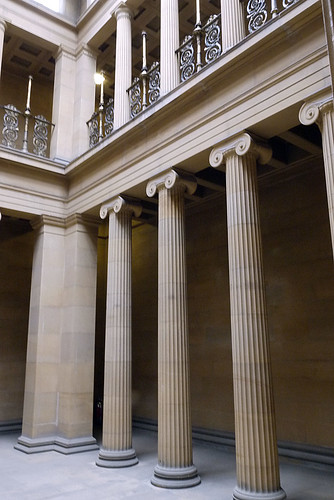
The spectacular Pillar Hall occupies the centre of the house.
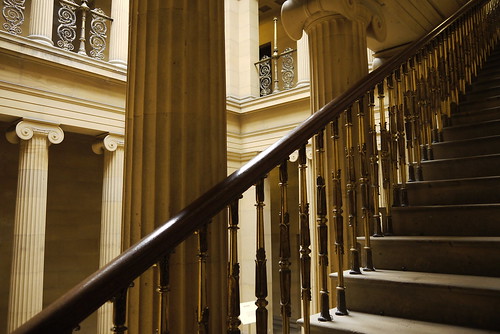
It is meant to evoke the open-roofed atrium, or central courtyard, of a classical villa – a Roman architectural precedent rather than a Greek one. The Northumberland climate meant that it had to be roofed, with natural lighting being provided by roof lights and a clerestory, or upper level of windows. The Pillar Hall functioned both as a reception and a circulation space, giving access to the different parts of the house.. On the ground floor are closely spaced lonic columns with Doric columns on the floor above – a reversal of the usual arrangement in classical buildings.*
The stairs and the gallery have brass balustrades which were designed by Sir Charles’ sister Isabella. The artificial lighting on the upper level was provided by brass lamp stands, which screwed into the top of the balustrade between the Doric columns.
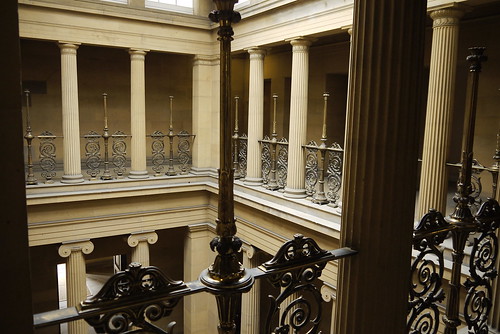
*From the English Heritage guidebook.
14 Comments CherryPie on Jun 30th 2011
Belsay Hall was a modern villa with a comfortable library, drawing room and dining room built to overlook a romantic prospect to the south. But its owner, Sir Charles Monck, was obsessed by ancient Greece and owned every book published on Greek architecture. So the details inside and out were derived from the Classical buildings which he had seen on his honeymoon in Athens. Work began on the house in 1807 and finished in 1817. *
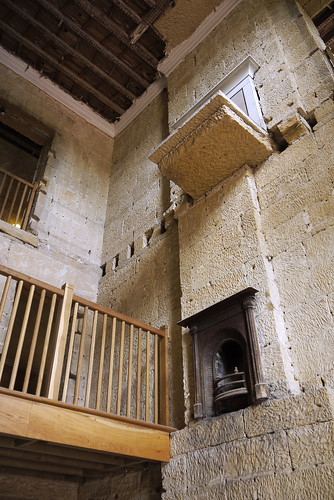
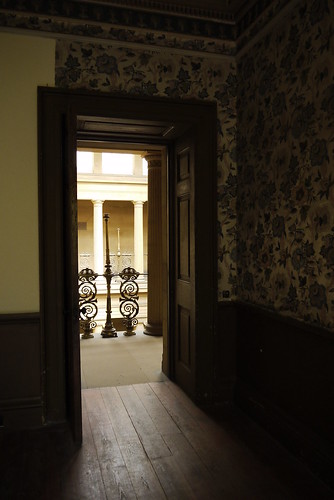
*From the English Heritage guide book.
4 Comments CherryPie on Jun 29th 2011
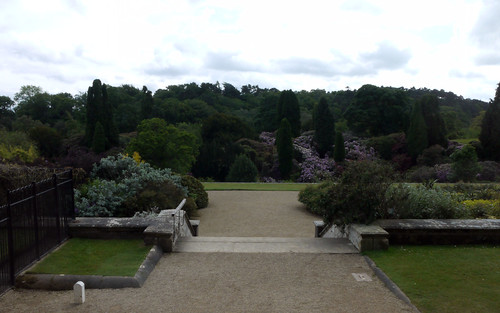
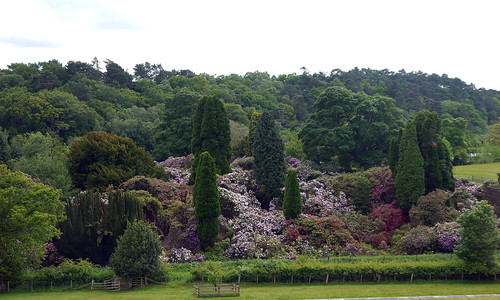
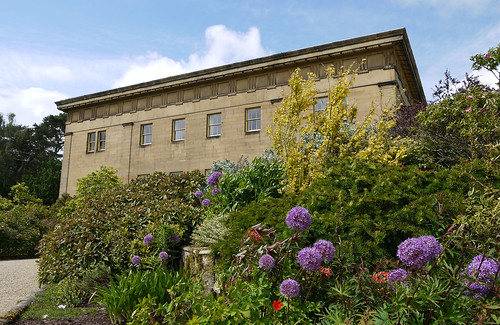
This was my first visit to Belsay and it has a bit of everything and comprises of three different elements. A hall inspired by the architecture of ancient Greece, a medieval castle with rare wall paintings and magnificent gardens. The hall was enlarged in the early 17th century and subsequently superseded by a Greek Revival mansion. The two buildings are linked by a garden, much of which was created out of the quarries that supplied the stone for the new house.
Belsay is the creation of the Middleton family, over more than seven centuries. The Middletons were first recorded as owning Belsay in 1270 and although they moved out of the hall in 1962, the estate that surrounds the historic nucleus of the hall, castle and garden remains in their possession. the great fortified tower that still dominates the castle was built both as a statement of family pride and as a response to the conflict and unrest in this border region between England and Scotland. It was then extended into a rambling country house after the union of the tow kingdoms under King James 1 in 1603 brought relative peace. The Middletons lived in the castle until the completion of the new mansion, which was designed by the then owner Sir Charles Monck (1779-1867).*
Under the guardianship agreement which passed the care of the hall into government care in 1980, the hall is displayed without furnishings so that it reveals the fine craftsmanship that went into its construction.
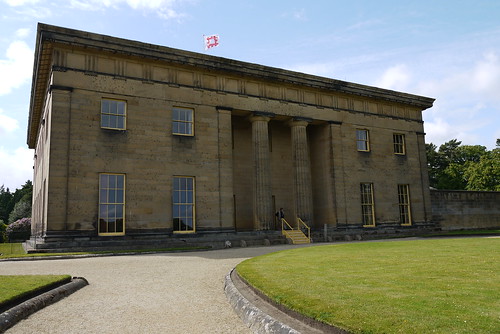
*From the English Heritage guide book.
6 Comments CherryPie on Jun 28th 2011
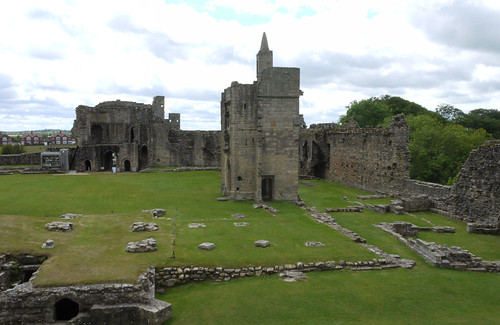
At the bottom of the photo you can see the foundations of a church laid out in a cruciform.
12 Comments CherryPie on Jun 27th 2011
A managed democracy is a wonderful thing… for the managers… and its greatest strength is a ‘free press’ when ‘free’ is defined as ‘responsible’ and the managers define what is ‘irresponsible’.
Robert A. Heinlein

8 Comments CherryPie on Jun 26th 2011