The Altazimuth Pavilion is topped with an unusual weather vane.
It is modelled on Halley’s Comet, as depicted in the Bayeux Tapestry. It was erected in June 1901, a few years after the building was completed but in time for the comet’s return in 1909. There is a clear link with the Observatory’s history since Halley [...]
This modern structure placed alongside the old observatory buildings draws the eye. It is only on closure inspection that all is revealed…
The truncated bronze cone covering the planetarium dome. Its form and orientation reflect the local meridian and latitude.
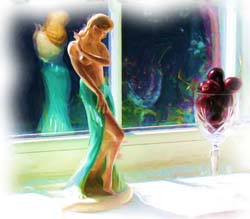
One of the Royal Observatory buildings is decorated with terracotta tiles and sculptures. Astronomia, a figure representing Astronomy particularly caught my eye.
The terracotta tiles and decorative sculpture are the work of Doulton & Co, of Lambeth. An art nouveau-inspired figure of Astronomia on the northwest side at the bottom of the old staircase is signed `WJ Neatby 1895′. [...]
The Royal Observatory in Greenwich is the home of Greenwich Mean Time (GMT) and the Prime Meridian of the world.
What is a meridian?
A meridian is a north-south line selected as the zero reference line for astronomical observations. By comparing thousands of observations taken from the same meridian it is possible to build up an accurate [...]
…The Observatory Time-Ball
The first public time signal was broadcast from the roof of Flamsteed House in 1833. The idea of dropping a ball at a predetermined time was the brainchild of Captain Wauchope, RN, and was tested at the Naval College at Portsmouth before Maudslay & Field were commissioned to install the first Greenwich time-ball [...]
The gnomon or pointer of the sundial is formed by the tips of two dolphins’ tails, which almost meet. The tails cast a shadow onto the dial plate, which is engraved with thick curved lines representing the hours. Thinner lines indicate 10-minute intervals between each hour.
The dial plate has curved lines rather than straight ones, [...]