Filed under Anecdotes

New Years Eve

#Walk1000Miles

After a few last minute preparations for our New Years Eve guests there was just enough time for a quick walk before preparing the evening meal.

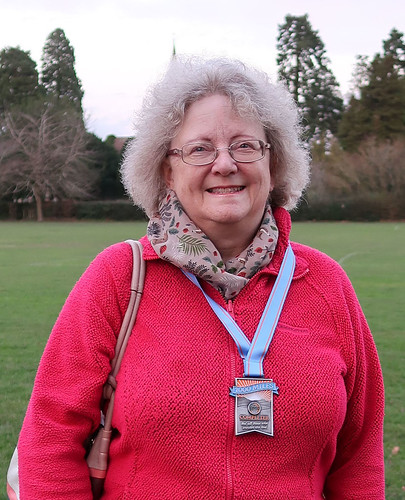
I left the route to Mr C, he chose ‘Wellington’ as a walk… After a while I realised he meant a walk ‘around Wellington’ not in the town, taking in familiar places from his younger days. The walk included the presentation of my #walk1000miles achievement medal in the Bowring Park.

Photographing my achievement was problematic, firstly waiting for people to walk by so that we didn’t get in their way. Then a cute little dog came to say hello, he seemed to think there might be something interesting in my handbag. After extracting my medal from my bag I put my bag back on my shoulder. The dog got even more friendly, hopping up with waggy tale and little paws on my leg to say ‘Hello’.
Photo opportunity complete, Mr C proceeded with his chosen route home (a long way round). Two hours and 5.5 miles later we were back home and a little behind schedule for guest preparations…

The walk was fab and so was our family get together in the evening :-)

6 Comments CherryPie on Jan 1st 2022

The Church of St Mary the Less

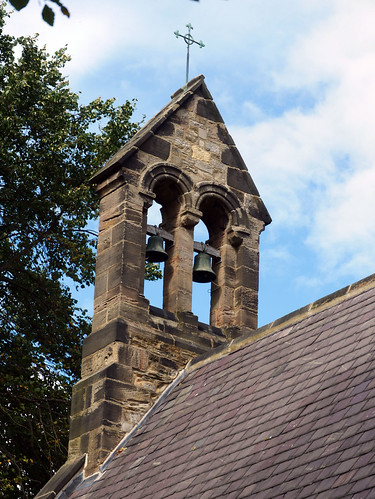
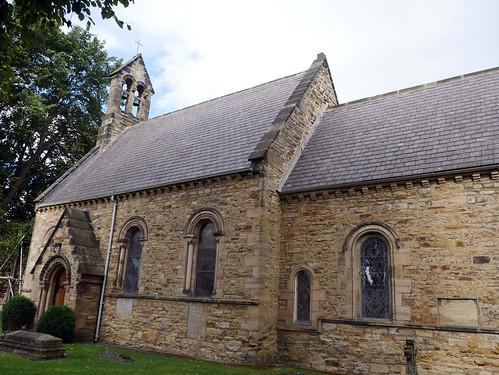
Now the chapel of St. John’s College, the church of St. Mary The Less was founded in the 12th century as a garrison chapel for soldiers stationed on the nearby city walls.

Its name is believed to have been chosen to distinguish it from Durham Cathedral, which is dedicated to Christ, Blessed Mary the Virgin and St. Cuthbert of Durham.

Features include a rare 13th century sculpture depicting Jesus Christ and a memorial to the ‘Little Count’ Joseph Boruwlaski (1739-1837), a Polish-born dwarf who entertained European courts and lived in a house close to the church.

His Royal Highness, Charles Prince of Wales is directly connected to the church through his seven times great grandmother, Dame Elizabeth Bowes (1651-1736). She and two of her daughters, Jane and Elizabeth, are buried in a vault in the chapel.

Sadly it was closed, as were many of the churches when we visited Durham in September 2021.

The Church of St Mary the Less

The Church of St Mary the Less

14 Comments CherryPie on Dec 23rd 2021

Wigmore Castle

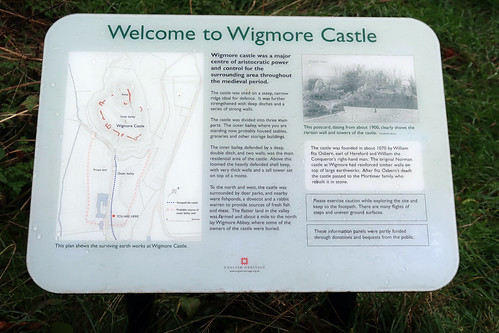
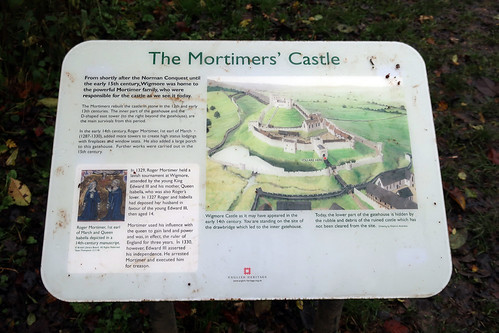
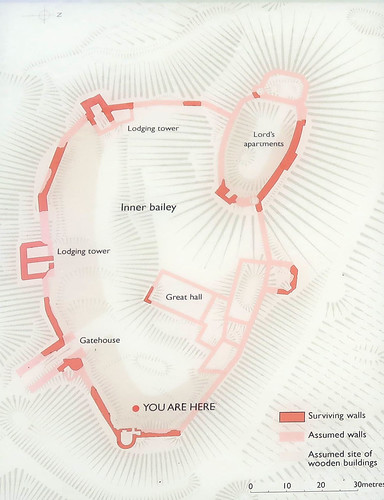
Wigmore was one of many castles built close to the England–Wales border after the Norman Conquest. Founded in 1067 by William Fitz Osbern, it was a major centre of power for over 500 years, and played host to several kings and queens. It was held by the Mortimer family from about 1075 to 1425, when it passed to the Crown. Roger Mortimer is perhaps the family’s best-known figure. He became virtual ruler of England after he and his lover, Isabella, Edward II’s estranged queen, had engineered the king’s deposition and murder in 1327.

In 1329 Mortimer held a lavish tournament at Wigmore, attended by the young King Edward III and his mother. His influence was shortlived, however: in 1330 Edward III asserted his authority, arrested Mortimer and had him executed for treason.

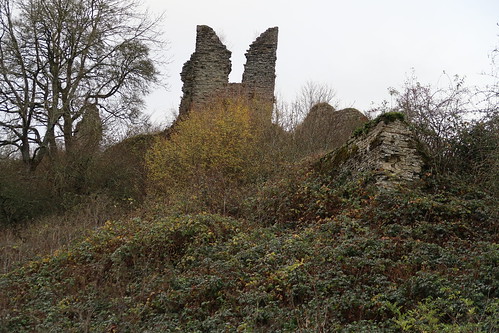
The castle fell into ruin after the Civil War and remained an untouched ruin until the 1990s, when English Heritage conserved it in a way that ensured the castle’s natural environment was preserved.

Wigmore Castle

Wigmore Castle

Wigmore Castle

Wigmore Castle

Wigmore Castle

Wigmore Castle

Wigmore Castle

6 Comments CherryPie on Dec 20th 2021

Hay-on-Wye

Hay-on-Wye is a little town whose northern and eastern boundaries border England. The spectacular countryside which surrounds Hay is just a few steps away from wherever you are in town. Stroll along the banks of the River Wye or in the foothills of the Black Mountains and unwind in the tranquil setting. Crossing the border, over the Dulais Brook, will take you through the fertile fields of the Golden Valley.

Across the River Wye are the rolling green hills of Radnor. A short drive away from Hay, up a single track road, will take you to the base of Hay Bluff which rises 2,227ft, and rom where there are spectacular, uninterrupted views over the Brecon Beacons National Park, Radnorshire and Herefordshire.

Nestling amidst all this splendour is Hay-on-Wye, the jewel in the crown of Wales and known throughout the world as the ‘Town of Books’. Richard Booth, self-proclaimed King of Hay, opened his first second-hand bookshop in 1962 and proceeded to create the largest second-hand and antiquarian book-selling centre in the world. *

Hay-on-Wye

Hay-on-Wye

Hay-on-Wye

The Swan at Hay

The Swan at Hay

*Information from a 2018 Tourist Information booklet

6 Comments CherryPie on Dec 18th 2021

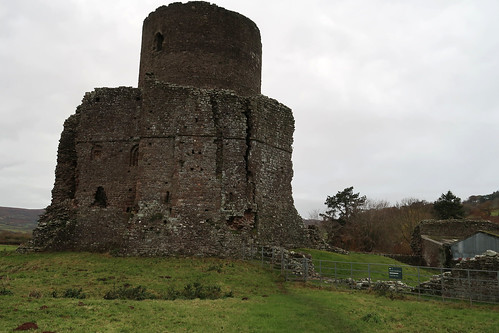
Tretower Castle

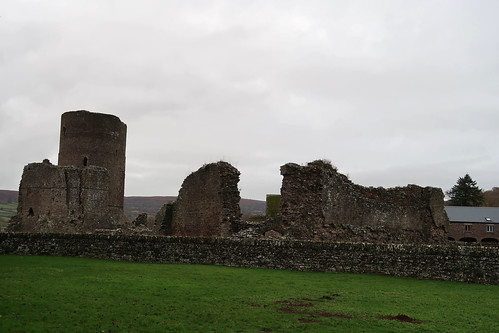
So striking was the massive circular tower built by Roger Picard II that his castle became known as Tretower – or ‘the place of the tower’.

Over two centuries, from about 1100, the Picards transformed themselves from invading Norman adventurers to powerful Welsh lords.

So this monumental tower with four storeys and stone walls nine feet thick wasn’t merely for protection. It was social climbing made visible, an open imitation of the castles at Pembroke and Skenfrith.

It would be remarkable enough on its own. But Tretower is two wonders in one. Just across the castle green lies an entire medieval court that became a byword for magnificence.

It was the creation of Sir Roger Vaughan and his descendants. During the Wars of the Roses Sir Roger became one of the most powerful men in Wales – and Tretower reflected his fame.

It became a magnet for medieval Welsh poets who drank its fine wines and sang the praises of its generous host. Now, thanks to meticulous restoration, you can vividly imagine being one of Tretower’s most honoured guests.

You’ll find the great hall laid out just as it might have been for a lavish feast in the 1460s. In the recreated 15th century garden you can stroll among fragrant white roses that symbolise Sir Roger’s passionate Yorkist sympathies.
Tretower Castle

Tretower Castle was first built in the 11th century by the Norman family of Picard. It underwent three successive phases of development before the more spacious court house was established close bya as the main residential focus of the site in the 14th century.

The 11th century castle was a small mound and bailey, with timber defences. In the mid 12th century the defences on the mound were replaced in stone: residential quarters were ranged around an encircling protective stone wall with a gatehous – an arrangement know as a Shell Keep.
In the earlier 13th century most of the buildings inside the shell keep were demolished to make room for a high circular tower: this contained the Picards’ private accomodation; it was entered at first-floor level and linked to the earlier curtain by bridge. At the same time the defences of the bailey were replaced in stone, with circular angle towers.*

Tretower Court

The Vaughan family abandoned Tretower Court shortly after 1700. So began its slow decline under a series of tenant farmers.

Rooms once graced by lords and ladies suffered the ultimate indignity – they became a home for pigs. Tretower was in a truly sorry state when it was bought for the nation in 1934.

The original conservation effort lasted for four long decades and saved the fabric of the buildings. In 2010 a further major restoration by Cadw brought the interiors vibrantly to life.

Now all the rooms of the west range – from the medieval kitchen, buttery and pantry to Sir Roger Vaughan’s great hall – are equipped as they would been in their 1460s heyday.

Every piece of furniture and all the furnishings, even the pots and pans in the kitchen, are modern replicas. All especially made. All based on authentic 15th-century evidence.

Under the glorious wooden roof of the great hall Sir Roger’s high table is laid with the finest linen and tableware. Look out for the impressive oak dresser and a cupboard painted in green earth or ‘terre verte’. It’s adorned with the strange heraldic device of the Vaughan family – a boy with a snake around his neck.

Most eye-catching of all is the painted cloth behind the high table. It depicts four scenes from the eventful lives of the Vaughans, starting with the battle of Agincourt in 1415 and ending with the siege of Harlech Castle in 1468.

Tretower Court

Tretower Court

Tretower Court

Tretower Court

Tretower Court

*From a signboard at the castle

12 Comments CherryPie on Dec 16th 2021

Bridleway

With just half a mile to go I made sure I went for a quick walk before an emergency food shopping trip to pick up a missing ingredient for our evening meal with a friend. Before dining we enjoyed playing Wingspan, a board game that I purchased at the beginning of our first lockdown to keep us entertained.

I walked a local route that gave me the opportunity to take a December photograph for my bridleway project, completing two challenges in one walk.

10 Comments CherryPie on Dec 13th 2021

The fundamental delusion of humanity is to suppose that I am here and you are there.

Yasutani Roshi

Infinity

6 Comments CherryPie on Dec 13th 2021

« Newer Posts - Older Posts »