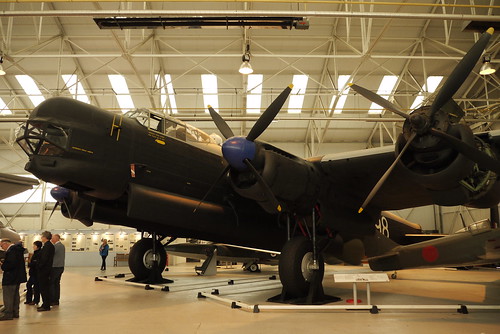
Lincoln Bomber

Just too late to see service during the Second World War, the Lincoln became the mainstay of Bomber Command post-war, but was destined for a short front line career as the Cold War and the jet age brought the shortcomings of its performance into sharp relief.

The RAF’s lack of an aircraft with sufficient range to be deployed in the Pacific led the Air Ministry to suggest that AV Roe Limited design an enlarged Lancaster to meet the requirement. The resulting Lincoln first flew in June 1944. However, the need to maintain supplies of Lancasters delayed production until 1945; the first production Lincolns reaching No.57 Squadron in August. Lincolns were intended to join the Tiger Force in the bombing of Japan but the war ended before they were needed.

583 Lincolns were built to equip around twenty squadrons. However, inferior performance in the face of jet fighters and the need to be able to reach targets behind the Iron Curtain saw their partial replacement with Boeing Washingtons from 1950. The type saw action against communist terrorists in Malaya in 1950 and Mau-Mau dissidents in Kenya from 1953, but Lincolns were finally superseded by the jet V-Bomber force from 1955.

The last Lincolns in RAF service were those engaged in radar development trials with No.151 Squadron, Signals Command until May 1963.
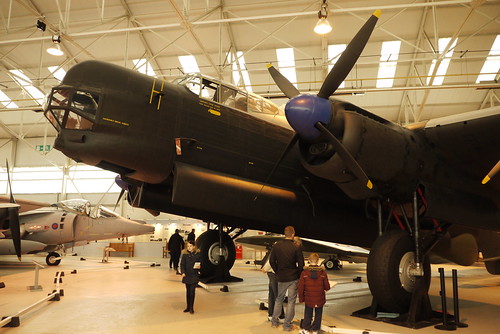
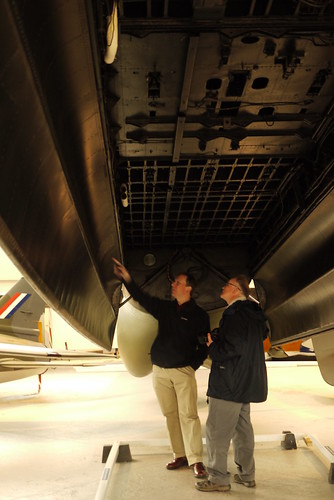
Lincoln Bomber

Inspecting the Bomb Bays

My Australian readers might be interested in reading the Radschool Associations post about the `Long Nose` Lincoln Mk 31 that was unique to Australian manufacture. Below is an extract from the article, but it is well worth reading the full post and viewing the accompanying photographs.

The Lincoln was designed as a Lancaster replacement, initially for use on long range missions into Eastern Europe and ultimately to equip the Royal Air Force in the Pacific war against Japan. Originally dubbed the Lancaster Mk 4, the extent of the redesign was such that a new type number and name was justified. Apart from Australia, the only export customer for the Lincoln was Argentina. It was also the largest aircraft to be built in Australia. The `Long Nose` Lincoln Mk 31 was unique to Australian manufacture being modified for anti-submarine, anti-shipping and general reconnaissance. It had a 1.9 metre extension to the nose designed to accommodate a tactical navigator, and three sonobuoy operators. Direct opening observation windows which slid up and down on tracks were also in the nose. These windows were fitted with adjustable deflectors which would eliminate wind interference when the windows were open. Four 1680 HP Rolls Royce Merlin Mk 102 liquid cooled power plants were installed.

The bomb bay was modified to carry two homing torpedos, two racks of active sonobuoys and two 188 imperial gallon (855 litres) long range fuel tanks that could be jettisoned. Several freight panniers inside the bomb bay were available if needed. Total fuel capacity including bomb bay tanks was 3226 imperial gallons (14,666 litres). With an average fuel consumption of 230 imperial gallons (1045 litres) per hour the Lincoln had approximately 14 hours endurance. Maximum all up weight was 82,000 lbs (37,200 kgs).

In July 1952 the RAAF Aircraft Research and Development Unit (ARDU) conducted a test flight on a Lincoln Mk 31. The following selected extracts give some interesting insight into the role of the test pilot and into Lincoln flying generally.

Summary

Apart from poor visibility while handling on the ground, there was no great difference in handling from the normal `short nose` Lincoln. It was extremely difficult to taxy on narrow taxy tracks as the edge of the sealed surface could only be seen abeam the aircraft. From the nose position, although the bomb aimer could see ahead, he could not see the wheels so little assistance could be obtained from the front. When lined up on the runway, from either pilot’s position the edge of the runway was observed to intersect the part of the field of vision obscured by the fuselage approximately 100 yards ahead of the aircraft. This lack of visibility made the aircraft difficult to operate at night-time and with the tail down nothing ahead could be seen. The aircraft behaved generally in a very similar manner to the standard Lincoln bomber, however in a yawing or steep sideslip attitude, there was a sudden snatch on the rudder control which resulted in a complete rudder lock. The rudder would lock in the full port or starboard position according to the direction of yaw or skid. Increasing speed would relieve the problem.
12 Comments CherryPie on Mar 7th 2017

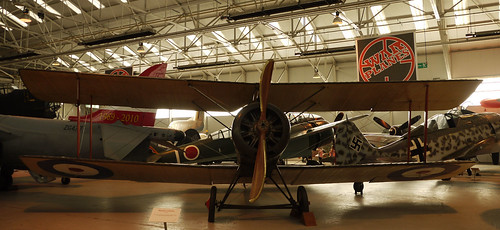
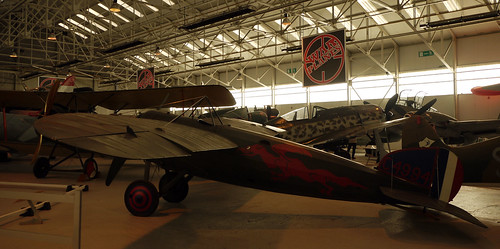
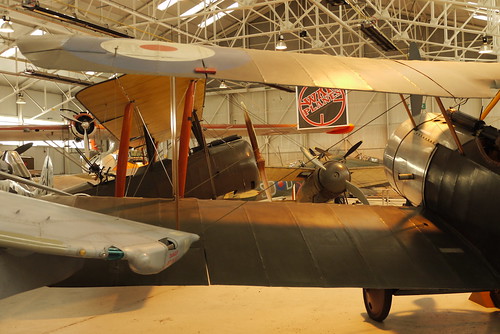
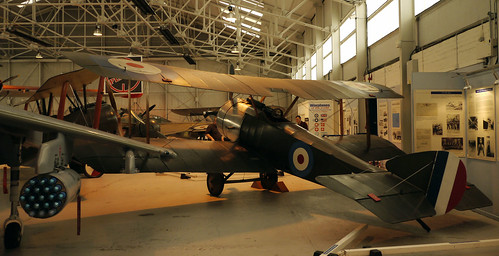
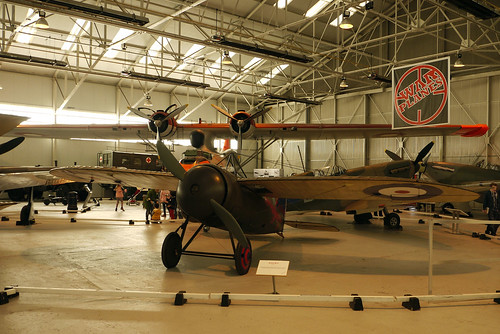
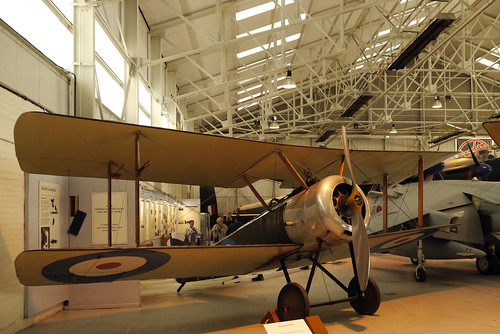
WW1 Display

WW1 Display

WW1 Display

WW1 Display

WW1 Display

WW1 Display

8 Comments CherryPie on Mar 6th 2017

Do not accumulate wealth while millions are hungry… Live simply and share time, energy, and material resources with those who need.

Thich Nhat Hanh

Energy & Life

8 Comments CherryPie on Mar 5th 2017

Preparing for a New Fence

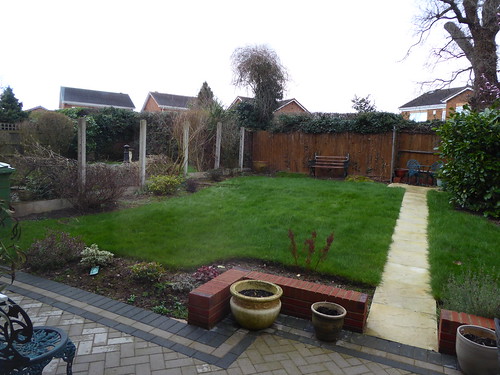
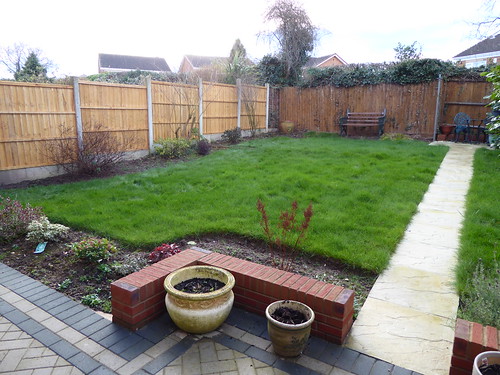
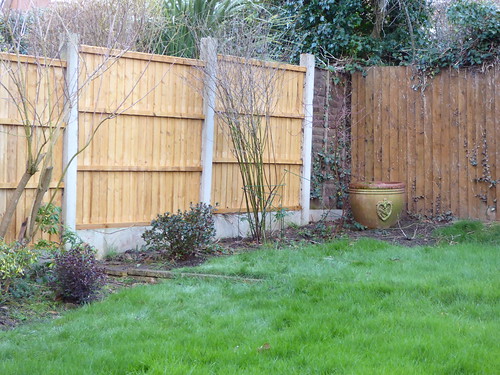
After Storm Doris damaged some of our neighbours fence panels they  removed almost all their fence panels and replaced them with something more robust. The new fencing has improved the look of our garden and has advanced our garden project ;-)

Fence Restored

Fence Restored Almost

There is however one small unsightly panel left in the corner. This part of our garden I plan to be a small seating area, under the Hawthorn Tree above. So now I need to think of the best way to hide this part of their garden fence…

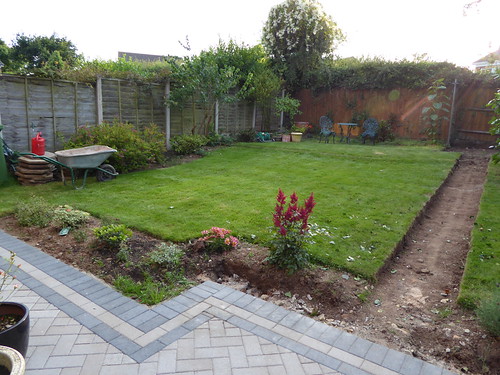
Fence Prior to Storm Doris

The fence before Storm Doris at the time our Garden Project was beginning to take shape.

Smoked Salmon, Prawn & Dill Rissotto

I couldn’t resist one last photo of this evening’s meal; Smoked Salmon, Prawn & Dill Risotto.

I know, I know I have posted too many food photos this week. But it is a week that despite Mr C having some long days commuting away from his office; We, I, He were able to experiment with some new recipes :-)

6 Comments CherryPie on Mar 4th 2017

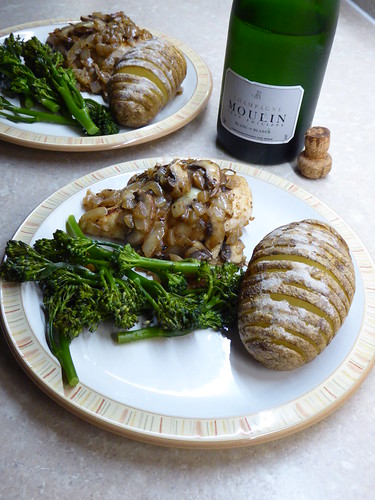
Parmesan Chicken with Mushroom Wine Sauce

I  arrived home this evening with thoughts of cooking this evening’s dinner and plans for the weekend ahead. I had only been home a few minutes when Mr C came to sit with me, after a few minutes he started to study a piece of paper. I enquired about what he was looking at and he gave an enigmatic reply; a recipe. After further discourse it transpired that he had found a suitable recipe for an impromptu celebratory dinner and that he was going to cook it!

Earlier in the day he learned that he had got promoted at work. Congratulations Mr C :-)

As Mr C started to cook dinner I enquired if he would like a pre dinner sherry, he didn’t seem too keen on the idea. I wondered why until he confessed that he had put a bottle of Champagne in the fridge in the anticipation of the good news.

The meal was Parmesan Chicken with Mushroom Wine Sauce, hasselback potato and broccoli. It was delicious.

12 Comments CherryPie on Mar 3rd 2017

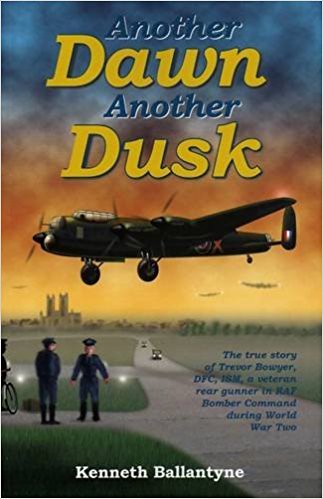
Another Dawn Another Dusk by Kenneth Ballenyne

The true story of Trevor Bowyer, DFC, gunner in RAF Bomber Command during World War Two

Synopsis (from the book cover):

This vividly powerful and absorbing biography of an RAF rear gunner during World War Two is told with both sensitivity and humour.

With accounts from some of Trevor’s contemporaries, including Marshal of the Royal Air Force, Sir Michael Beetham, himself a WW2 bomber pilot and survivor of the ill-fated Nuremburg raid, this latest book by Kenneth Ballantyne, meticulously researched, lavishly illustrated and written in his now familiar easy style, is enthralling from start to finish.

Born in Shropshire, Trevor’s story embraces his childhood and early career on the TPO. Living through the London Blitz he volunteered for Bomber Command aircrew. Sent on the first 1,000 bomber raids, he later cheated death when his turret was riddled by cannon fire. Shot down over the North African desert, for three days he walked back through enemy lines. A second tour followed in Lancasters, flying from Lincolnshire into the heavily defended German heartland, where night fighters relentlessly stalked the bomber stream every mile across occupied Europe.

Review:

This is a well written personal account of the traumas of life as gunner in Bomber Command during World War Two. It left me wondering how both Trevor and the other crew members were able to endure the terror and problems they faced during their missions.

The book is illustrated throughout with black and white photographs. It also gives a personal account of life in the small rural town of Shrewsbury in the run up to World War Two.

I thoroughly recommend this book.

8 Comments CherryPie on Mar 2nd 2017

Filed under Heritage

SunnyCroft

Untitled

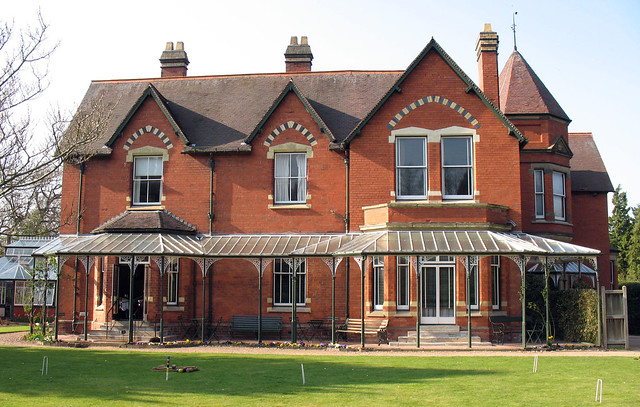
A comfortable home telling the story of a brewer, a widow and three generations of the Lander family

Tucked away on the edge of Wellington is this rare suburban villa and mini-estate. As you walk up the large avenue of Wellingtonia trees the red-brick villa is unexpectedly revealed offering a chance to immerse yourself in a past era.

The time capsule, which is furnished with original wallpapers, Maw’s tiles and gold medal winning fireplaces, transports you back to the pre-First World War ‘country house’ lifestyle. Packed full with everyday items belonging to the families who lived here, you are sure to feel the familiarity and comfort of this home despite all the features of a grander house, such as the Billiard Room, Drawing Room and impressive Staircase Hall.

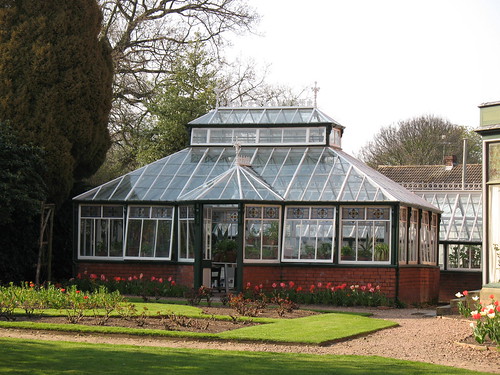
The 5 acres of garden is complete with glass houses, conservatory, kennels, pigsties and stables and is perfect for a wander or a game of croquet. You are welcome to take refreshments in our Edwardian tea-room or out on the veranda.

Untitled

Untitled

Untitled

16 Comments CherryPie on Mar 1st 2017

« Newer Posts - Older Posts »