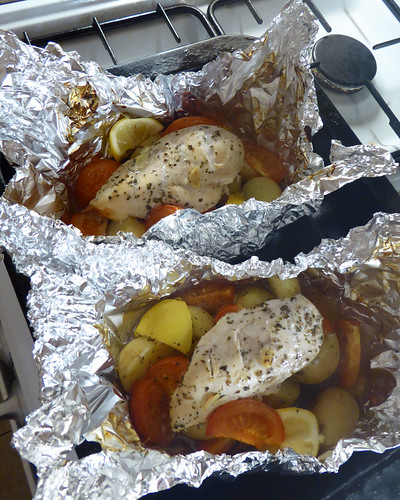
Pancake Day, or Shrove Tuesday, is the traditional feast day before the start of Lent on Ash Wednesday. Lent – the 40 days leading up to Easter – was traditionally a time of fasting and on Shrove Tuesday, Anglo-Saxon Christians went to confession and were “shriven” (absolved from their sins). A bell would be rung to call people to confession. This came to be called the “Pancake Bell” and is still rung today.
Shrove Tuesday always falls 47 days before Easter Sunday, so the date varies from year to year and falls between February 3 and March 9. In 2016 Shrove Tuesday will fall on the 9th February.
Shrove Tuesday was the last opportunity to use up eggs and fats before embarking on the Lenten fast and pancakes are the perfect way of using up these ingredients.
8 Comments CherryPie on Feb 28th 2017
After checking our system this morning the engineer declared the system was working perfectly and that it was operator failure our thermostat was set too low. I wondered about this diagnosis as I originally thought that was the problem too. After we had our new door fitted Mr C had turned the thermostat down a degree because the house seemed hot. I think this was because the actuator was running on after the thermostat said the heating should shut down keeping the house hotter than it should have been.
After the new actuator was fitted a couple of weeks ago we noticed that the downstairs of the house felt rather cool. Before Mr C called out an engineer I turned up the thermostat up a degree to where it had originally been, but I wasn’t convinced there was much of difference in temperature downstairs.
When I got home from work this evening the house seemed warm enough but I was cooking dinner rather than sitting down. Over dinner I noticed the dining room seemed rather on the cool side so I went to check the thermostat. It had been turned down again one degree from where it has always been previously set. I turned it back up again!
For me the jury is out on whether the heating system is really working properly. Mr C had artificially raised the temperature of the house by turning the thermostat up to full this morning just to check if the engineer was really needed after all! I was so overheated on the upper floor of our house whilst getting ready for work that I had to open the window to cool off. I enjoyed the wintery blasts more than the heat within!
The second engineer (electrician) arrived and sorted out the plug socket that had been identified as not being earthed. So now I can dry my hair in complete safety, without the chance of ending up with an Afro Frizz.
After all these adventures we were able to book a few days away at Colwall Park for our anniversary. We tried to get the same room we stayed in last time but it was not available that week, leaving us to choose another to enjoy, which is probably for the best
20 Comments CherryPie on Feb 27th 2017
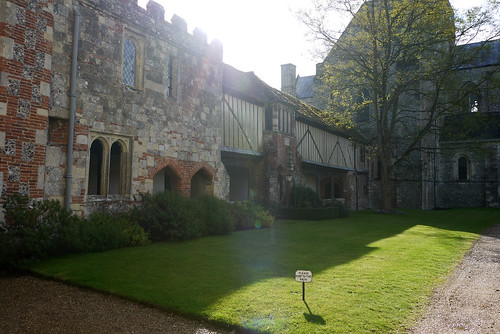
Sometimes, the love we are looking for is right in front of us, too close for the eyes to see.
Let your heart do the searching.
From ‘a Thousand Paths to love’ by David Baird
PS; The sign in the photo states ‘PLEASE KEEP TO THE PATH‘
12 Comments CherryPie on Feb 26th 2017
Our heating system hasn’t been right since it was drained after a radiator pipe was broken whilst our ‘smallest room in the house‘ was being refitted in December last year. After the refit our heating system was full of air; the radiators required bleeding for several weeks and some rooms were cooler than they should be.
Even before the refit the heating system had been noisy for some time which finally resulted in the system failing (again), the heat was permanently on although the timer was off. We called out the engineer who identified the problem within a few minutes and fixed it. It is a part of our heating system that fails regularly.
We thought that was the end of all the problems until the weather turned chilly a couple of days ago. The downstairs of the house (which is usually warmer than upstairs) was distinctly chilly. When I touched the radiators they were cold at the bottom which made me think that there is an airlock or limescale debris restricting the free flow of water. An engineer has been called out to investigate on Monday. At the same time an electrician will come and fix the plug socket that had been identified as not being earthed during the last engineer visit.
Apart from that I had a relaxing couple of hours in the hairdressers followed by a delicious evening meal
12 Comments CherryPie on Feb 25th 2017
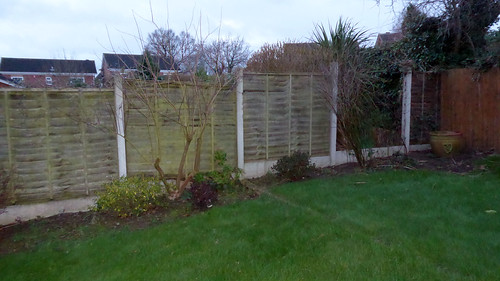
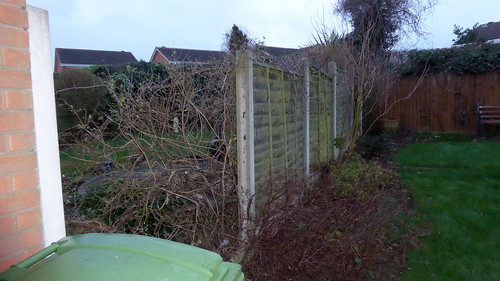
When I got up this morning Mr C was peering out of one of the back bedroom windows and I wondered what he was doing. He informed me that one of next doors fence panels had blown out. A little while later he announced that two more panels had blown out. Storm Doris was swirling in different directions and I was a little worried that the panels might get blown about and cause some damage.
I was not able to give this problem as much thought and attention as it needed because Mr C had booked an early morning appointment with the company who had fitted our new back door. Before the door was fitted we discussed in length our exact requirements with the person who came to measure and assess the fitting; he knew exactly what we wanted. He suggested that a blank panel was fitted so that exact measurement could be taken when the door was in place. When the top glass panel arrived it was not at all what we wanted or asked for,and was something that we could not live with.
The door should have had Georgian bars to match the windows. The new glass panel had huge squares at the bottom with smaller ones at the top. It seems to have been a miscommunication (and a badly drawn diagram by the fitter) between Mr C and the fitter who came to measure the window. Apparently the glassmaker had queried the design when asked to make the unit! The best laid plans… Now we await a new glass panel at additional expenditure!!
After the fitter had gone, just as I was leaving for work there was a knock at the door. It was our next door neighbour who had noticed that the fence panel nearest to his house had blown into our garden. Mr C took him to assess the situation. Our neighbour was quite surprised to find that two other panels, which were obscured by shrubs in his garden had also blown into our garden. He had come round to say that his son was coming later in the day when the wind had subsided to help him move the panel. After seeing the extent of the damage he was also considering that all the fence panels need replacing.
I was rather preoccupied in the morning so I didn’t think of taking photographs. When I had regained my equilibrium I texted Mr C asking if he could take some when he got home, if it was still light enough. You can’t see the extent of the damage from these photos that Mr C took. Two of the panels had partly collapsed, the two that are missing from these photos. The third panel has for now, been put back in place.
This photo of mine from last autumn shows two of the panels are ready to disintegrate.
22 Comments CherryPie on Feb 23rd 2017
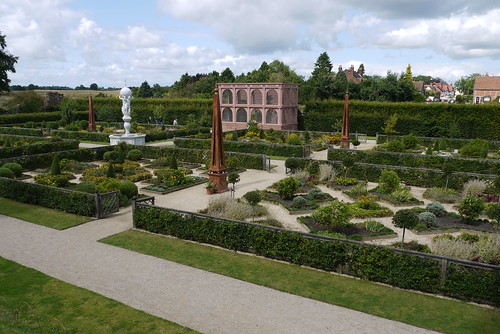
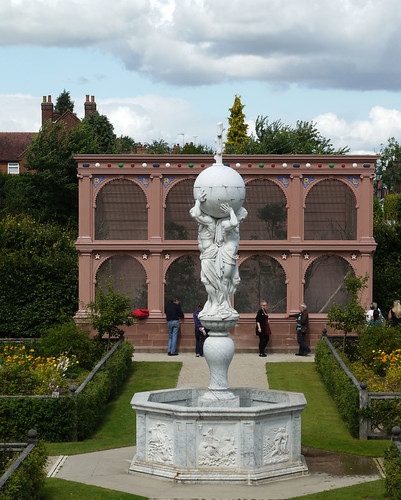
Much of the right-hand court is occupied by the privy garden created by Dudley for the queen. Now known as the Elizabethan Garden, it has recently been recreated on the basis of archaeological evidence and an account of the 1575 festivities by Robert Langham.
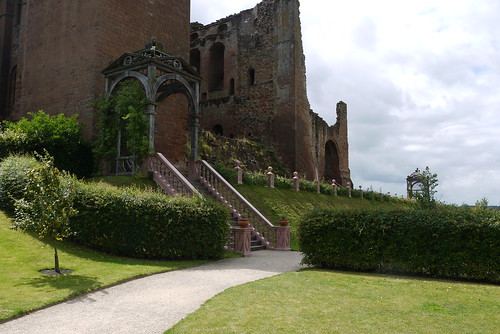
Like the queen, visitors approach through the keep’s forebuilding, which was remodelled in classical style for her 1575 visit. This gives onto a terrace with views of the garden below, as well as of the mere and chase to the north. The two arbours, one at each end of the terrace, described by Langham as ‘perfumed with sweet trees and flowers’, are now planted with scented plants (vines, honeysuckle, sweet musk rose).
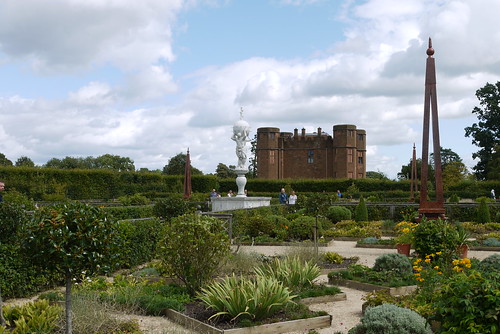
The garden below is divided into quarters, with a pierced obelisk at the centre of each. Each quarter is subdivided into two knots, defined by low privet hedges, with intricate geometrical patterns of planting based on contemporary Flemish drawings. All the flowering plants used are known to have been popular in Elizabeth’s day (carnations, pinks, stocks, wallflowers) and the focal points of the knots are small trees and shrubs (bay, holly, juniper, viburnum, rose).
At the centre of the garden is a spectacular fountain in Carrara marble, created on the basis of Langham’s description. The faces of the octagonal basin are carved with scenes from Ovid’s Metamorphoses.
On the northernmost side of the garden is an aviary, again constructed after Langham’s description, and now home to domesticated birds.
18 Comments CherryPie on Feb 22nd 2017
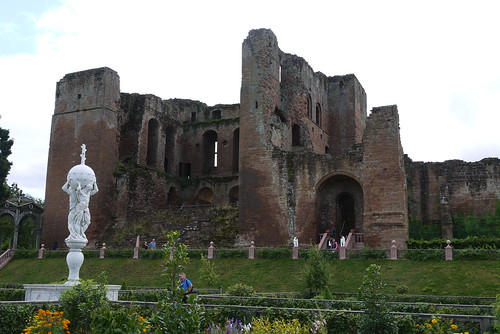
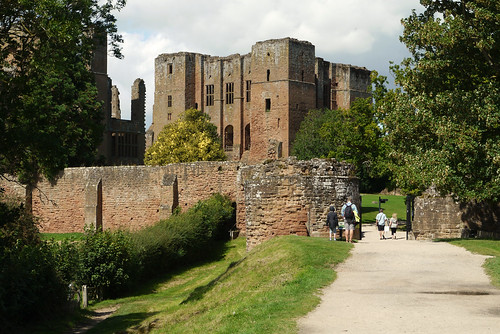
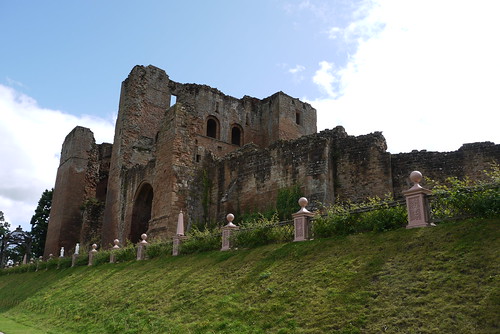
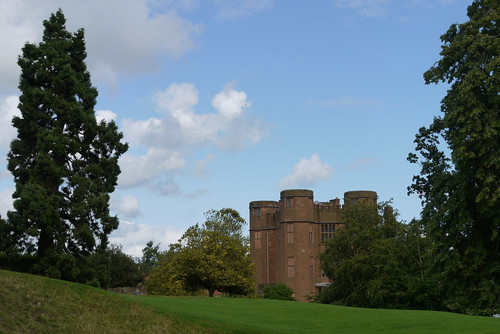
Kenilworth Castle stands on a low hill that was once at the heart of a 1,600 hectare (4,000 acre) park and surrounded by a vast man-made lake. The spectacular ruins, built mostly from the local red sandstone, reveal much of its medieval and Tudor past.
The castle is approached from the south by a causeway that acted initially as a dam for a lake (the mere) and later also as a tiltyard (jousting arena). At its outer end are the remains of the Gallery Tower, which guarded the entrance and later served as a spectators’ gallery for the tiltyard. Beyond is a large defensive earthwork known as the Brays.
At the further end of the causeway is Mortimer’s Tower, the main medieval entrance to the castle. It was built as part of King John’s ring of stone defences for the outer bailey between about 1210 and 1215, in front of a simpler, 12th-century gatehouse. Even in their ruined form, both gatehouses are remarkable survivals.
The outer curtain wall to the west and south has many buttresses but only two towers – Mortimer’s Tower at the south-east angle and the Swan Tower at the north-west. The north curtain wall was deliberately destroyed during the Civil War to make the castle indefensible, and only Lunn’s Tower at the north-east angle survives. To the east, between Lunn’s Tower and Mortimer’s Tower, is the semi-octagonal Water Tower.
Within the castle, on the higher ground to the west, lies the inner court, which is now enclosed by buildings on three sides. The apartments that formerly closed the inner court to the east, ‘King Henry’s Lodgings’, no longer survive.
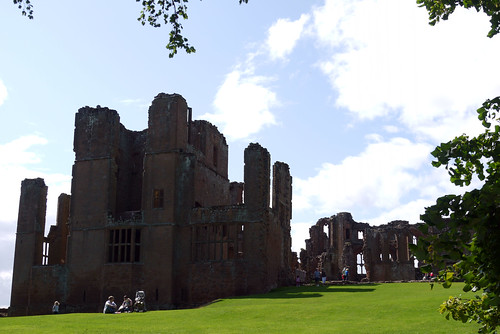
On the north side is the massive sandstone keep or great tower, the defensive heart of the castle as well as the main residence during the 12th century. The two main floors were probably built in the 1120s, most of the top stage being added by King John about 1210–15. Robert Dudley, Earl of Leicester, introduced the large grid windows on the first floor in about 1570–71 to light a great room for entertaining. The north wall was demolished in 1649–50. On the west side is the forebuilding, which Dudley remodelled as an approach to the privy garden (see below).
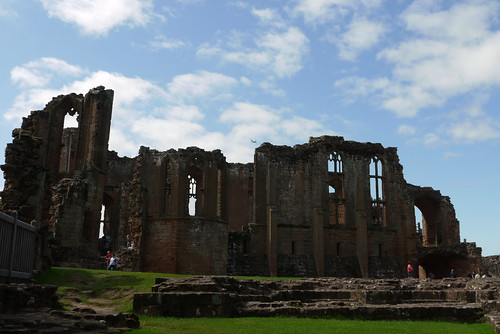
To the west of the forebuilding is the magnificent sweep of buildings constructed from 1371 by John of Gaunt. His great hall is the centrepiece, an architectural masterpiece intended to convey his princely status and aspirations. The interior has vast traceried windows and a huge bay, and originally had no fewer than six fireplaces. The walls are decorated with stone panelling and would have displayed prized tapestries.
To the right are the remains of the kitchen, twice the size of a normal aristocratic kitchen, and the Strong Tower, which housed larders and lodgings. At the south end of the great hall are the Saintlowe Tower and the site of the state apartments. The apartments, which were on the first floor, are now lost, but their elegant entrance oriel survives.
At the east end of the state apartments and juxtaposed with the great tower to the north is the four-storey block known as Leicester’s Building, constructed by Robert Dudley in 1571–2 specifically to accommodate the queen during her progresses through the country. Elizabeth I used the building in 1572 and again in 1575. The block featured large glazed windows with superb views, huge fireplaces, and a luxuriously decorated and furnished chamber for dancing, a passion shared by Elizabeth and Dudley.
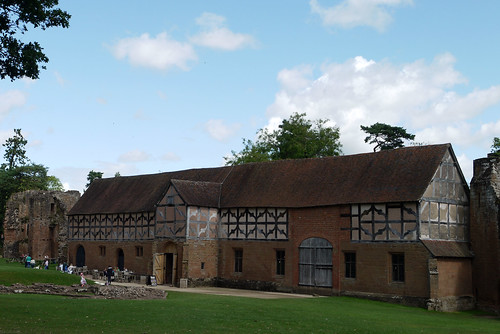
The rest of the castle’s interior, the outer court, is divided into three areas: the left-hand court, running south-west around the inner court; the right-hand court, north-west of the inner court; and the base court, stretching north from Mortimer’s Tower. Within the base court are the 16th-century stables built by John Dudley, Duke of Northumberland, and an early 14th-century collegiate chapel.
Leicester’s Gatehouse, built by Robert Dudley on the north side of the base court, provided a grand new entrance to the castle, and gave access via a long bridge to the hunting ground created by Dudley north of the mere. After the Civil War, the building was converted into a residence, using stonework and interiors from elsewhere in the castle.
12 Comments CherryPie on Feb 21st 2017