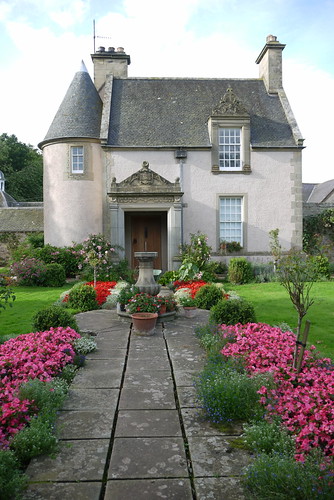
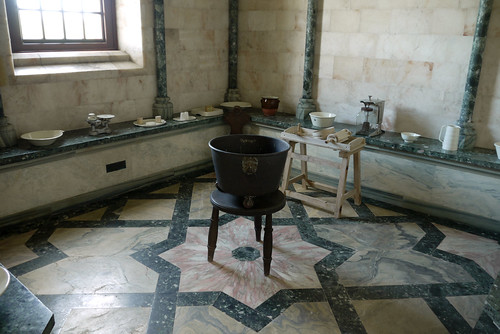
Situated next to the marble dairy featured in a previous post is the Head Gardener’s House.
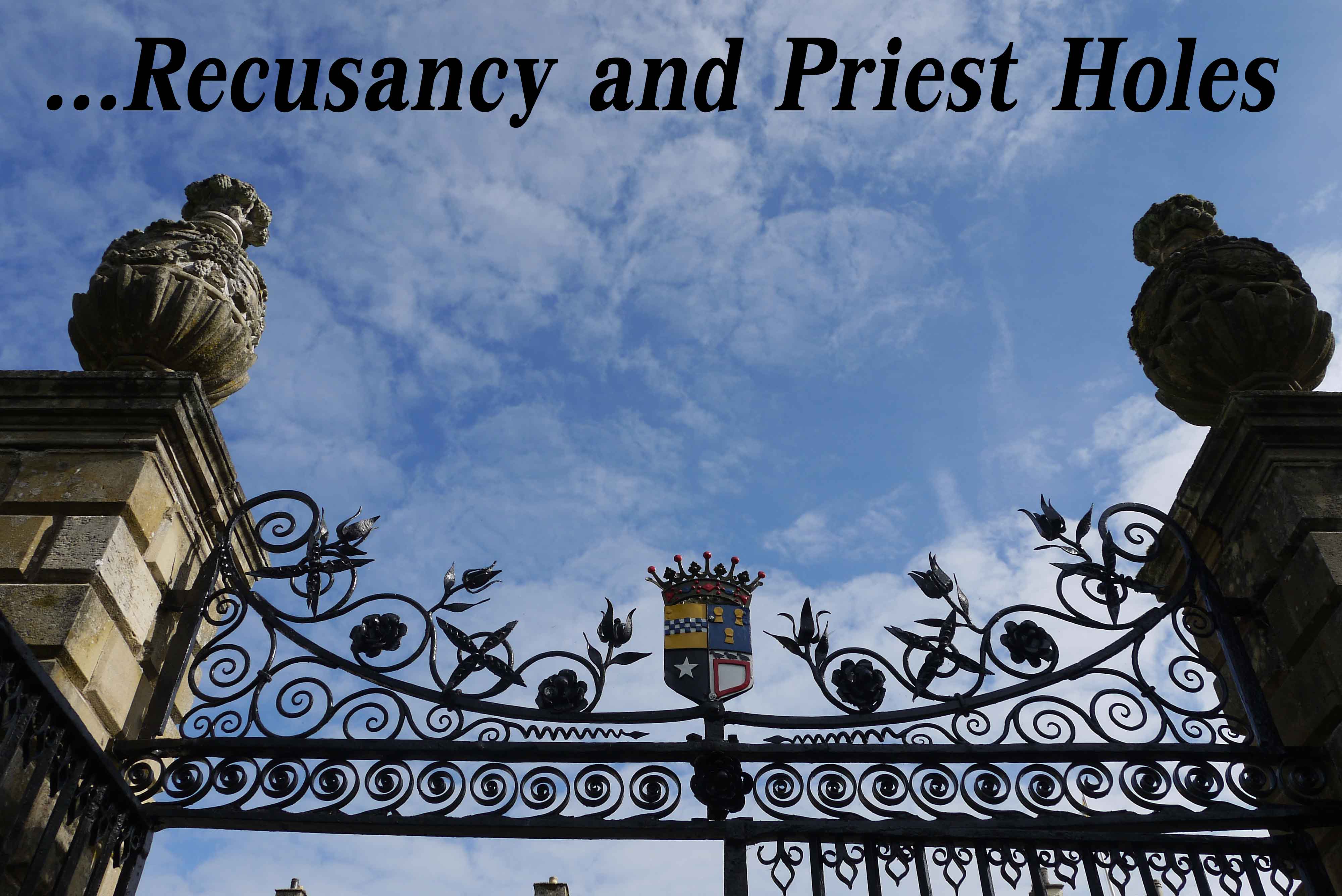
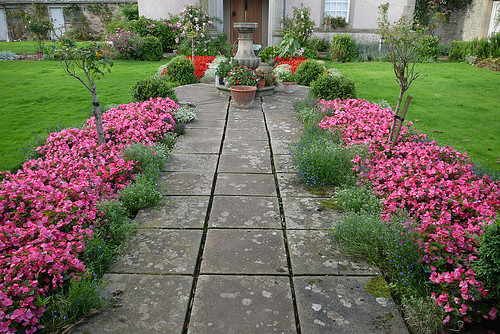
Beside the dairy is the ornate Scottish seventeenth-century style Head-Gardener’s House of 1897, directly inspired by Argyll’s Lodging in Stirling, and surrounded by its neat garden behind a fine wrought-iron gate. The high status of the head-gardener in the estate hierarchy is obvious from such a residence, including even a decorative dolphin fountain and sundial.
Tags: Manderston, Scotland, Vacation
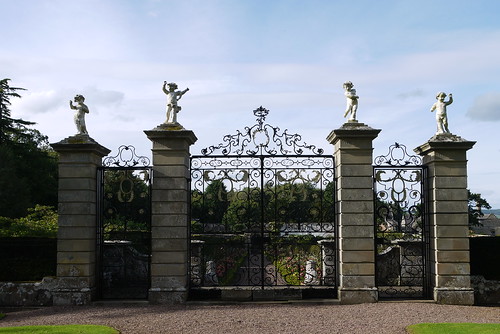
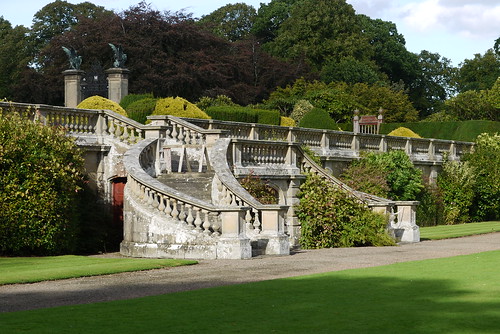
On the south side of the house, Kinross designed four formal garden terraces still planted in Edwardian style. A geometric terrace is now stocked with floribunda roses and hostas, To one side is a small grass terrace, edged by four large stone vases. Below it, through a wrought-iron gate with griffins adorning the piers, is a tennis lawn, and below that, a croquet lawn. There is a stone dovecote on the far side of the elevated terrace provided for.
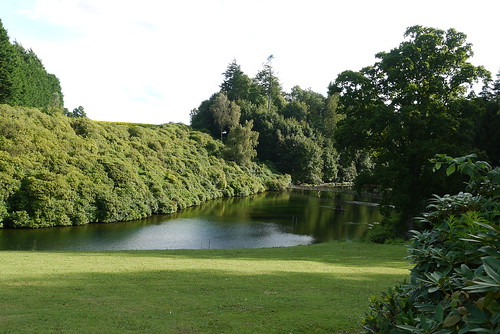
The lower terraces are surrounded by a bank of rhododendrons down to the lake, smoothly achieving the transition from nineteenth-century formal gardens to eighteenth-century picturesque landscape.*
The lower terrace and the lake can be viewed in my previous post.
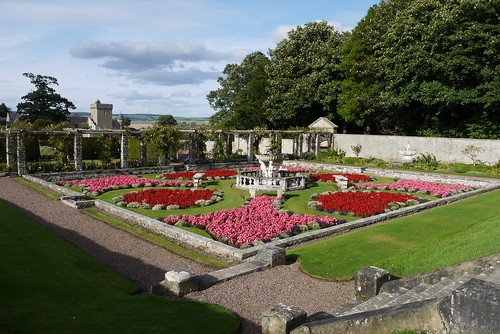
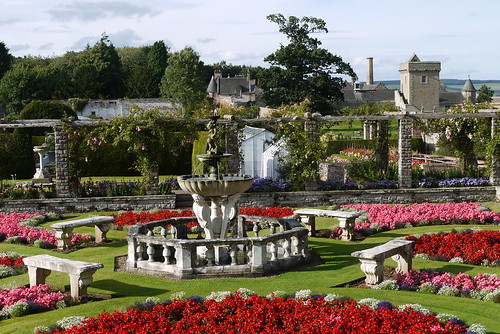
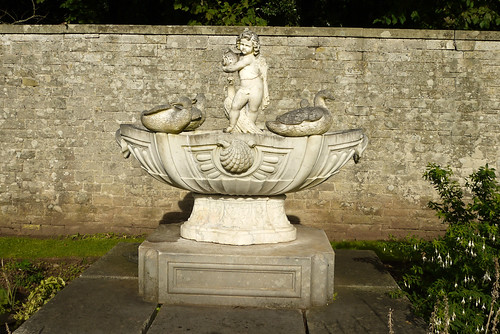
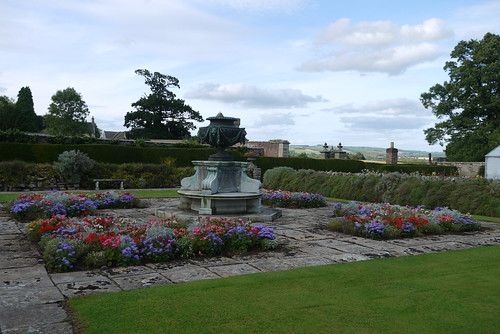
*From the Manderston guidebook
Tags: Duns, Garden, Manderston, Scotland, Vacation
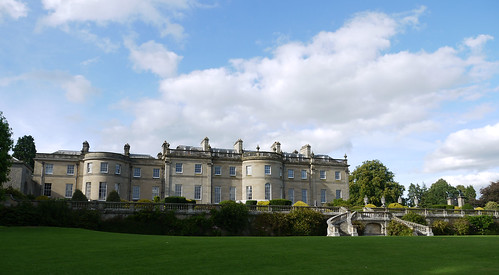
The Home of Lord Palmer, Manderston is the Edwardian House par excellence. It was built with no expense spared and with every modern convenience of that era. Here you can see sumptuous staterooms and a silver staircase, the only one in the world. Coupled with the elaborate domestic quarters, it gives an intriguing insight into the daily life of the Edwardian Country House.
Outside there a princely stables, octagonal marble dairy and fifty six acres of garden immaculately kept to enjoy.*
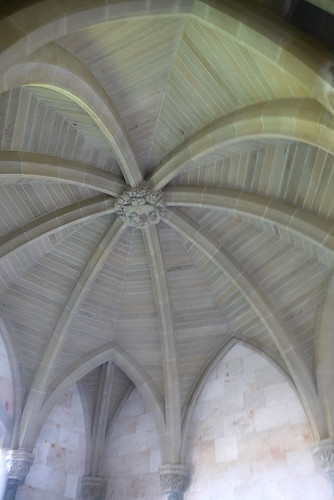
*From a leaflet advertising the house
Tags: Duns, Manderston, Scotland, Vacation
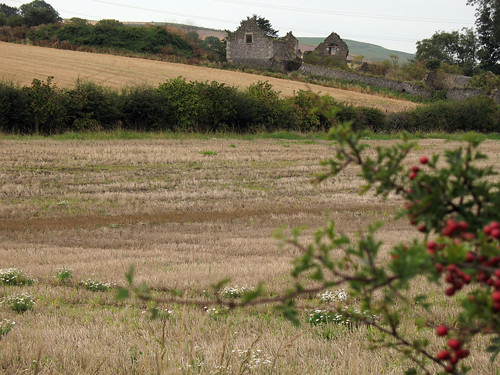
Vision without action is a daydream. Action without vision is a nightmare.
A Japanese Proverb
Tags: Cherie's Place Thought, Crookham, Flodden, Flodden Field, Northumber- land, Vacation
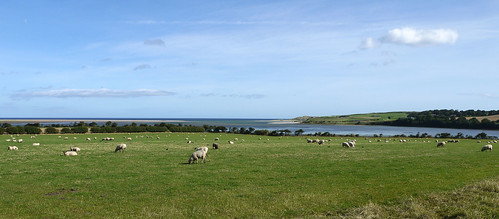
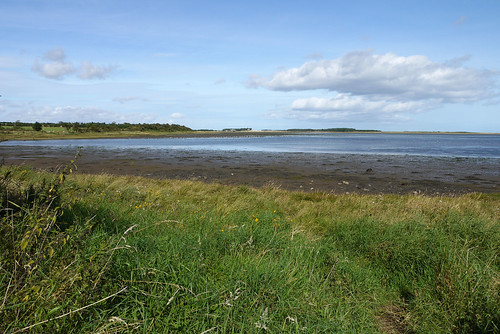
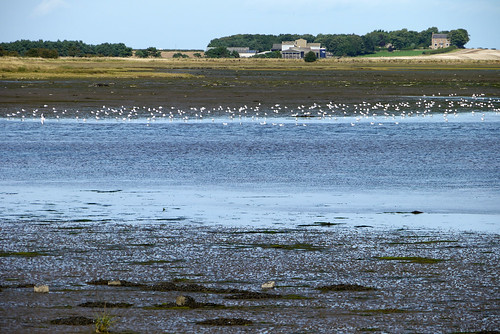
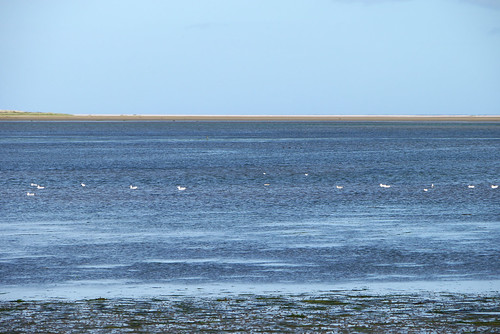
Budle Bay is in North Northumberland and is a beautiful and important bird sanctuary, with huge mud flats that are exposed at low tide. The whole area is part of the Lindisfarne National Nature Reserve and is very popular with birdwatchers, particularly in the winter when thousands of wildfowl and waders spend their winter on the bay’s mud flats.
The Bay itself has an industrial past, it was once an extremely busy port in the times of King Henry III in the 13th Century. The harbour has now disappeared beneath the rising silt of the bay, but some of the remaining buildings still hint towards the past. There was a corn-mill here, which is how the hamlet got its name, in 1187 and current building dates back to 1780. This building was abandoned for many years but has recently been redeveloped and turned into luxury apartments, all of which offer stunning views over the bay.
Tags: Budle Bay, Estuary, Northumber- land, Sea, Vacation
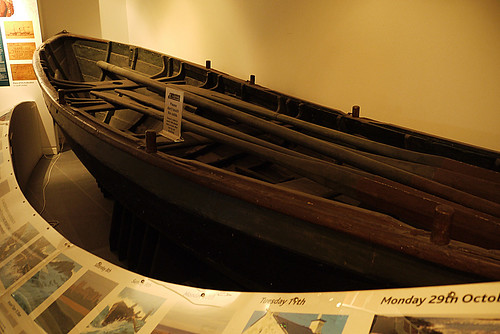
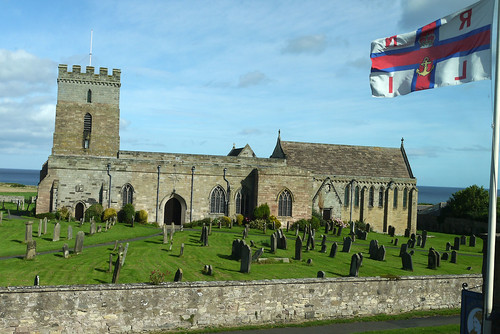
The photo above shows the coble in which Grace and her father launched in atrocious weather to rescue survivors from the steamship Forfarshire which had struck the Big Harcar rock on the Farnes. The photo below shows St Aidan’s church as viewed from the Grace Darling museum with rather calmer seas in the background.
Tags: Bamburgh, Coble, Grace Darling, Northumber- land, RNLI, Sea, St Aidans Church, Vacation