Random thoughts and photos of my journey through life…
14 Comments CherryPie on Jul 5th 2016
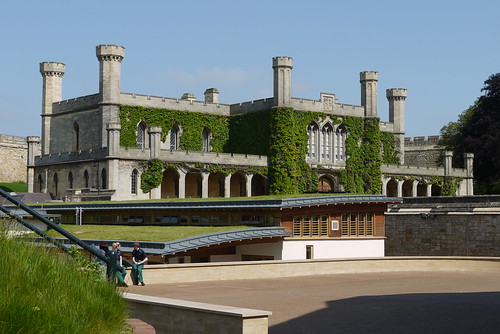
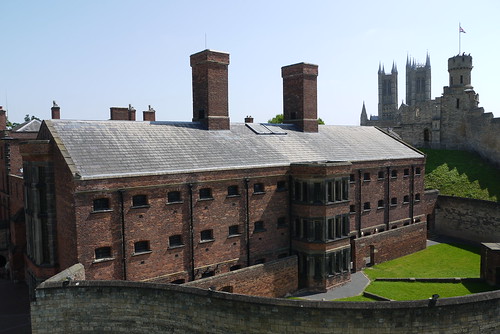
Courts have been held at Lincoln Castle since it was first built. Back then the sheriff, who was William the Conqueror’s right hand man in Lincolnshire, presided over the castle’s shire court. Today the Gothic Revival courthouse, built in 1826 for the Lincolnshire Assizes, is still a working building where criminal trials are heard by Lincoln Crown Court.
15 Comments CherryPie on Jul 4th 2016
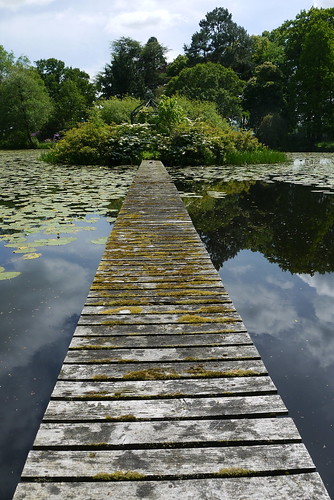
Does the walker choose the path, or the path choose the walker.
Garth Nix
8 Comments CherryPie on Jul 3rd 2016
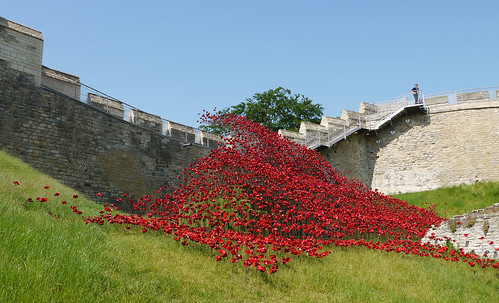
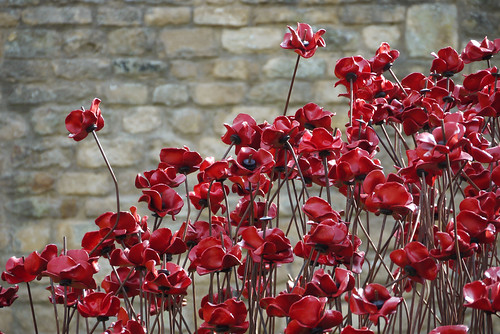
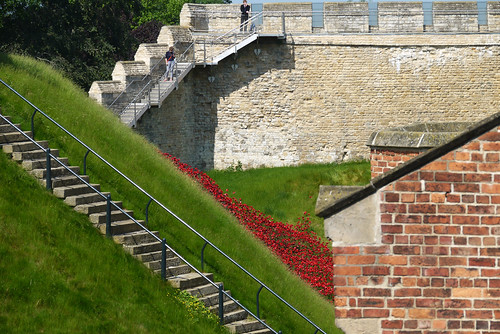
Wave opened at Lincoln Castle on Thursday 26 May, specially presented by 14-18 NOW to mark the centenary of the First World War.
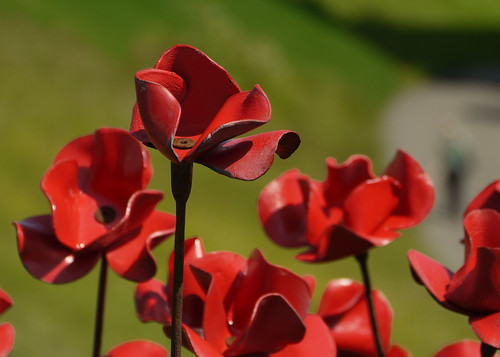
A sweeping arch of bright red poppy heads suspended on towering stalks, the sculpture is from the extraordinary installation Blood Swept Lands and Seas of Red by artist Paul Cummins and designer Tom Piper.
Wave and its sister sculpture Weeping Window were initially conceived as the key dramatic sculptural elements in the installation, which was shown at the Tower of London in 2014.
Now, the two breath-taking sculptures are being brought to audiences at venues across the country. And for the remainder of 2016, Lincoln Castle is the only place in England to host the poppies.
As with all 14-18 NOW projects, the presentation of these sculptures to new audiences across the United Kingdom aims to prompt a new, nationwide dialogue around the legacy of the First World War.*
Lincoln County’s War-Time Connections
Lincolnshire will be commemorating 1916, a turning point within the four terrible years of the First World War, that saw this country to begin to change in every conceivable way.
Lincolnshire has strong connections with both world wars and, during the first, Lincoln Castle was used by the Lincolnshire Regiment and for fundraisers and parades.
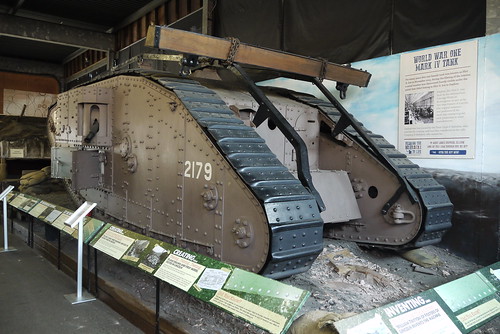
Lincolnshire engineering companies who had formerly revolutionised agricultural machinery carried on innovating, moving from tractors to tanks.
It was during this period that the first operational tank was developed by Fosters of Lincoln, went into full production, and was first used on the Somme battlefield. Between 1915 and 1919 Lincoln became one of the largest centres of aircraft production in the world.
A veritable army of Lincolnshire women – the munitionettes – many as young as 14, moved into the towns and factories of Gainsborough, Grantham, Grimsby and Lincoln to make tanks, aircraft and munitions.
There were also 37 military aerodromes across the county by 1918 and this number grew in WWII. Many aviation heritage sites remain, including the Battle of the Britain Memorial Flight.*
*From 14-18 NOW leaflet
6 Comments CherryPie on Jul 2nd 2016

The 1st July marks the beginning of the Battle of the Somme, one of the most important battles of the First World War. The losses incurred on just this day were terrible: some 57,000 British and Commonwealth soldiers were made casualty including 19,000 killed; the French suffered 20,000 losses. Never had Great Britain and its allies from the Commonwealth been involved in such a conflict and never had they experienced such a military catastrophe. When the battle came to an end in late November 1916, more than one million French, German, British and Commonwealth soldiers had been killed, wounded, reporting missing or captured.

6 Comments CherryPie on Jul 1st 2016

The High Bridge was built around 1160 at the point where Lincoln High Street crosses the River Witham.
High Bridge is the oldest bridge in Britain to have buildings actually constructed on it. Soon after being built, it was extended east to accomodate a chapel in memory of the martyred archbishop Thomas Becket, which stood here until 1763. In medieval times the bridge became the city’s main point for meat and fish trading. The river here is shallow, however, preventing larger boats getting through. It was only the cost of demolition that saved the bridge from being pulled down in 1803.*
*From the Pitkin City Guide to Lincoln
14 Comments CherryPie on Jun 30th 2016

Where the Waterside Shopping Centre (built 1987-91) now stands was originally marshy ground, which the Romans reclaimed, building piers and creating inlets. Here Stephen Broadbent’s Empowerment sculpture spans the River Witham from City Square. Its theme is God empowering mankind in the form of Adam. Privately funded, the sculpture reflects the city’s engineering heritage.*
*From the Lincoln Pitkin City Guide
10 Comments CherryPie on Jun 29th 2016