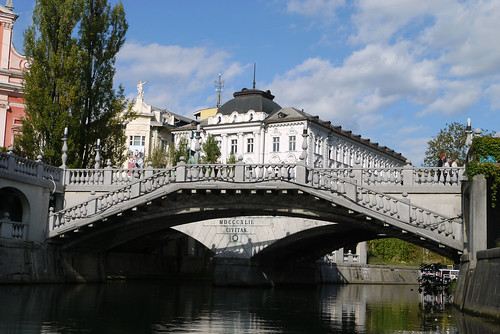
If the capital city has one immediately recognizable landmark, it is probably the Triple Bridge, the three-lane crossing designed in 1929 by the city’s most prolific architect, Joze Plecnik. Faced with the problem of how to widen the city’s main crossing point to accommodate increasing traffic levels, Plecnik decided to retain the 19th-century bridge in the middle, adding two angled side bridges for pedestrians. It was an inspired piece of town planning, turning Presernov trg into the focal point of the city and bringing life to both banks of the river.*
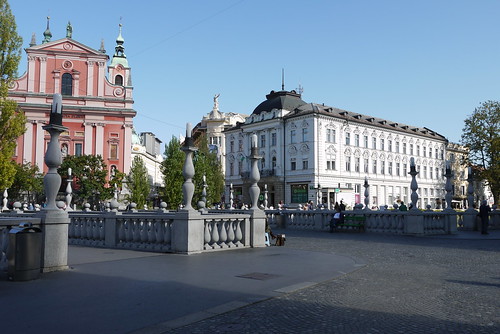
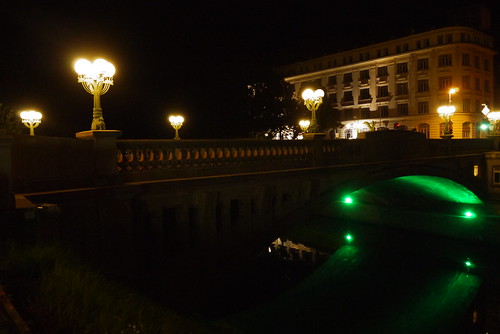
The bridge is embellished with the kind of decorations typical of Plecnik, with stone baubles sprouting from the parapets alongside curvy lampstands tipped with buds of milk-coloured glass. The elegant ballustrades bring a Venetian sense of style to the whole ensemble.*
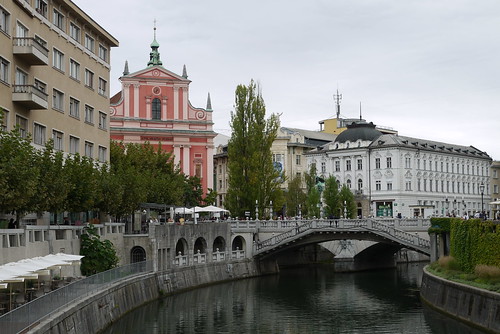
*From the Eyewitness Guide to Slovenia
Tags: Ljubljiana, Slovenia, Triple Bridge, Vacation
I hope you find joy in the great things of life – but also in the little things. A flower, a song, a butterfly on your hand.
Ellen Levine
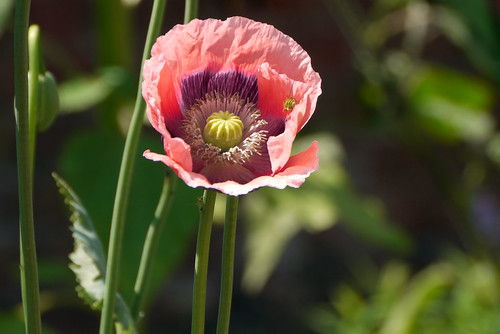
Tags: Attingham Park, Cherie's Place Thought, National Trust
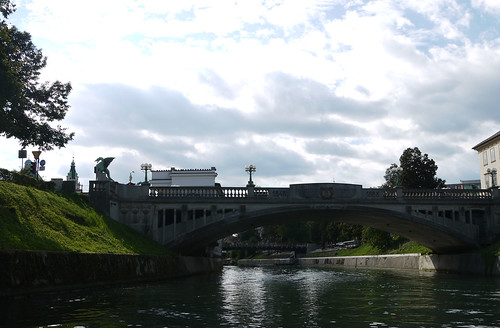
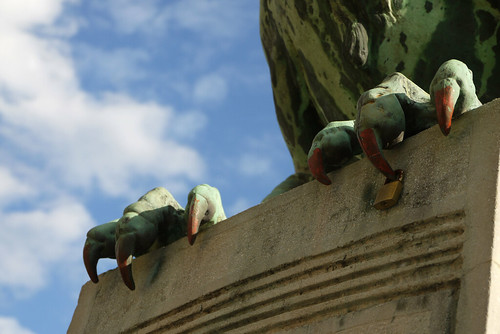
Located just beyond the market’s eastern boundary the Dragon Bridge was the first major Art Nouveau project to be built in the city. Designed by the architect Jurij Zaninovic, it was built in 1901 to mark the 60th birthday of Austro-Hungarian Emperor Franz Josef I. The bridge gets its name from the bronze dragons that stand guard over its ends. It is said that the legendary voyagers, Jason and the Argonauts, fought with and killed a dragon in the marshes south of Ljubljana before continuing on their journey towards the Adriatic.*
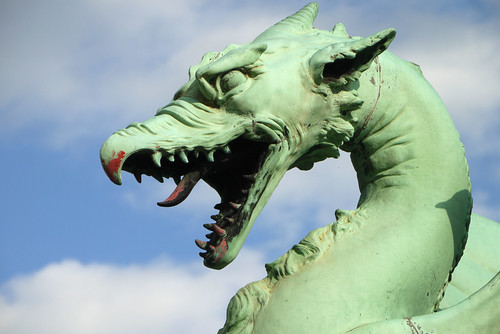
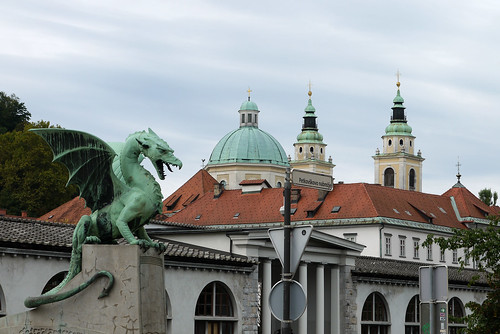
Rising from the bridge’s parapet is a line of Art Nouveau lampposts, decorated with griffin motifs and crowned with full fruit-like clusters of glass globes. A plaque halfway along the bridge honours Ivan Hrbar (1851 – 1941), the mayor of Ljubljana who oversaw the bridge’s construction. The western end of the bridge provides a fine view of Ljubljiana’s market halls, with the twin towers and dome of the cathedral rising in the distance.*
*From The Eyewitness Travel Guide to Slovenia.
Tags: Dragon, Ljubljana, Slovenia, The Dragon Bridge, Vacation
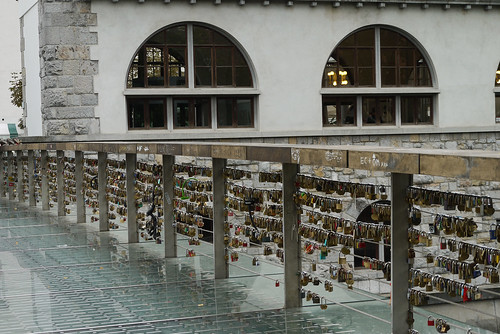
The old city of Ljubljana lies alongside the river Ljubljianca which is noted for its many bridges. One of the more recent additions is Butchers’ Bridge.
The construction of a bridge with the same name, Butchers’ Bridge, was planned already in the late 1930s by the architect Jože Plečnik. According to his plans, the bridge was to be covered, and was a part of the Ljubljana Central Market. However, due to the outbreak of World War II, the bridge was never built. For more than fifty years, an empty spot in the middle of the Ljubljana Central Market marked the place where the bridge was meant to be built.
In the 1990s, the first proposals of building the bridge and thus completing Plečnik’s project of the Ljubljana Market were advanced. Some proposed that the bridge should be built according to original plans, while others suggested that a modern bridge should be built.
In 2009, the city administration under the mayor Zoran Janković launched the construction of the current bridge, which cost 2.9 million euros and was completed the following year.[1] The unveiling took place on 10 July 2010.[3] Although a bridge was envisaged on the site already in the 1930s by the architect Jože Plečnik, who arranged his Water Axis along the Ljubljanica, Plečnik’s bridge would be far more monumental and the current bridge is rather an antithesis than a completion of his plans.[1] With its length of 33 metres (108 ft) and the width of 17.3 metres (57 ft),[1] it functions as a square on water and is in this regard similar to Plečnik’s bridges.[4]
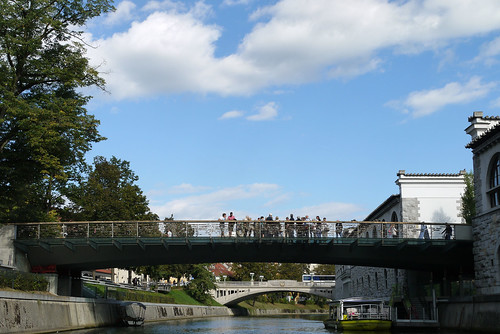
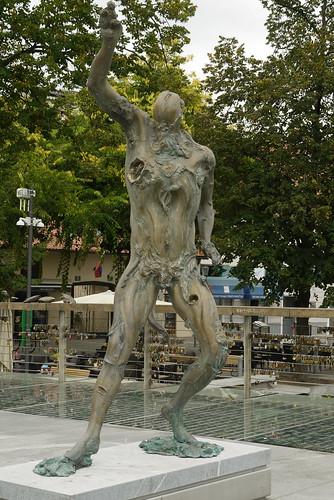
The bridge features many sculptures, the largest of which represent figures from Ancient Greek and Christian/Jewish mythology:
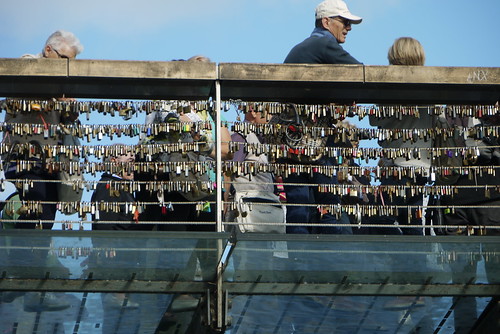
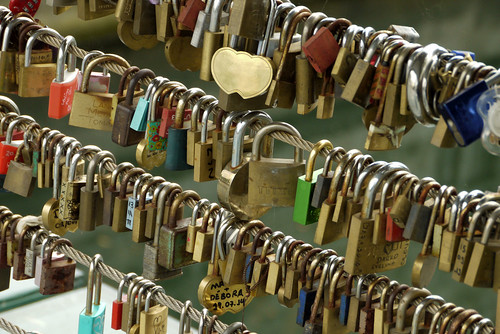
Shortly after the bridge was completed, it was adorned by padlocks, the so called ‘Love Locks’ that adorn bridges in many European cities. As I walked through Ljubljana I saw several shops selling ‘fancy’ padlocks that were obviously intended to be added to the many that were already attached to the bridge.
Tags: Butchers' Bridge, Ljubljana, Love Locks, River Ljubluanica, Slovenia

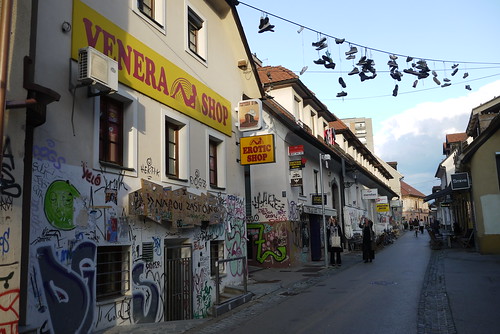
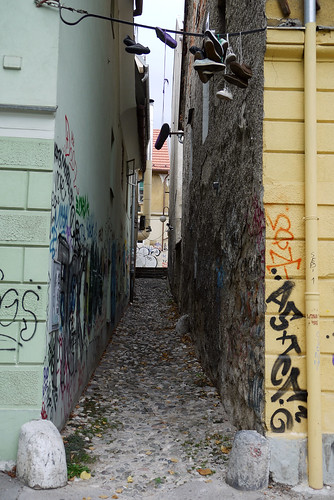
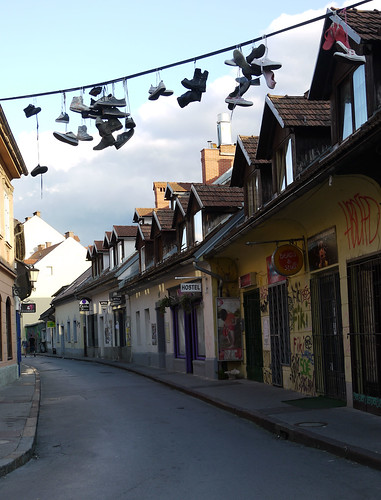
As I walked around Ljubljana I noticed (what to me) was an unusual sight of shoes dangled across overhead cables and wires. I had never seen anything like it before and was curious to find out why they had been placed in that way. My searches have not revealed how or when this behavior started but according to local folklore…
In Ljubljana, there are many streets with shoes on a wire. The origins were explained in another Ljubljana spot where shoes were hung up over the Cobblers’ bridge in the city centre. But lately each and every one of them was removed by the municipality, even though they were popular tourist attraction. On Trubarjeva cesta, exactly the same street where the Dežnik shop is as well (check the Dežnik article), there are several wires spanned across the street where hanging shoes remain present. The origins of the latter were unknown to me until recently.
I visited a shoe-maker, who lives next to the Umbrella-maker in this street. Her story behind the hanging shoes was fun to get to know. She explained that the first pair of shoes were hung by herself and instantly her shop became regularly visited. The second pair were hung by a lawyer and the next day he got his first job. The third one by a ballet dancer, and the rest followed. The custom spread fast and nowadays nobody knows anymore whether they appear due to life changing situations of their late wearers or because of any other state of mind. I think the shoe-maker may be hiding some details, we ought to know. 
Recently the “shoe-hanging” custom became quite a hit as pairs multiply from day to day. As for me, I once hung a pair of my worn out shoes and left barefoot. For the time being nothing has changed yet, but one ever knows.
Tags: Ljubljana, Shoes, Slovenia, Vacation