This lovely photo of four generations, celebrating Queen Elizabeth II’s 90th birthday was commissioned by the Royal Mail:
To celebrate the Queen’s 90th Birthday, Royal Mail has issued an official new Miniature Sheet of four First Class Stamps. Featuring the complete line of succession, it includes Prince George for the very first time on a British issue.

The chapel is one of the oldest parts of Ljubljana Castle.
According to the emperor’s document from 1489 the chapel was consecrated to St. George, St. Pancras and the emperor Helena. The original chapel entrance was on the northern side, leading up thirteen steps, which are still in use today. Later the entrance to the chapel was from the southern side. The original Gothic chapel had open roofing, four Gothic pointed windows and an emporium, where the noblemen attended holy mass. It was rebuilt in Baroque style, and 1747 painted with the coat of arms of the land governors. The function of province governors enters the historical scene accompanied by the formation of the provinces at the end of the 13th century. In Habsburg lands they represent the person acting as substitute to the province duke and as a military commander of the army and chairman of the province.*


In the 16th century, the governors changed every two to five years; only later did this service become permanent. Among the names are also Herman and Ulrik the count of Celje, Henrik count of Gorica, Devin noblemen, representatives of family Turjak (Auersperg), etc. The ceiling also contains the coat of arms for the provinces Carniola and Istria, Slovenian marks and five Austrian rulers. Only rarely do we come across paintings with secular content in churches, therefore this chapel is truly a European pearl. During the last renovation (1992), the original Gothic painting was discovered – borders around the altars, entrance and window openings. The walls display dedicatory crucifixes in Gothic style, symbolising the Stations of the Cross.*

* From the Ljubljana Castle guide book.
Tags: Chapel of St George, Ljubljana, Ljubljana Castle, Slovenia, Vacation
My mind withdrew its thoughts from experience, extracting itself from the contradictory throng of sensuous images, that it might find out what that light was wherein it was bathed. . . . And thus, with the flash of one hurried glance, it attained to the vision of That Which Is.
SAINT AUGUSTINE

Tags: Cherie's Place Thought, Croft Castle, Light, Trees
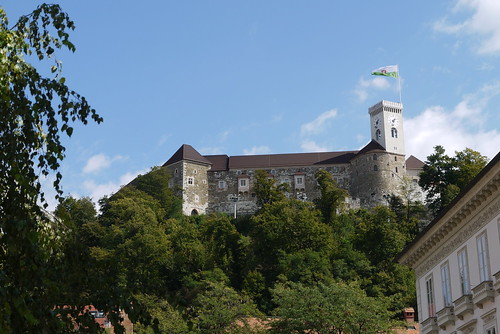
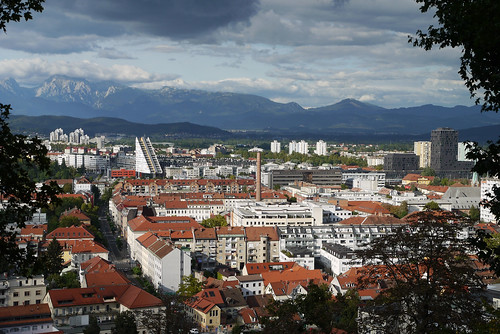
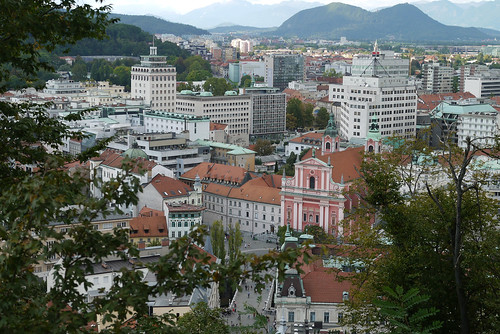
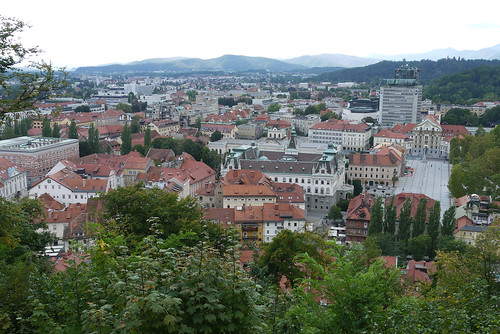
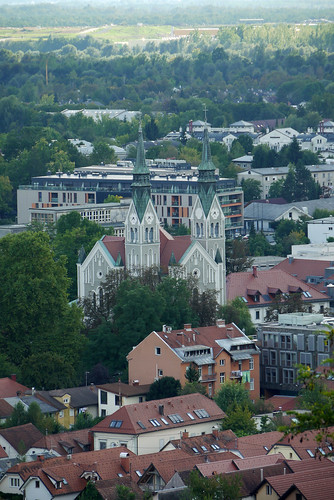
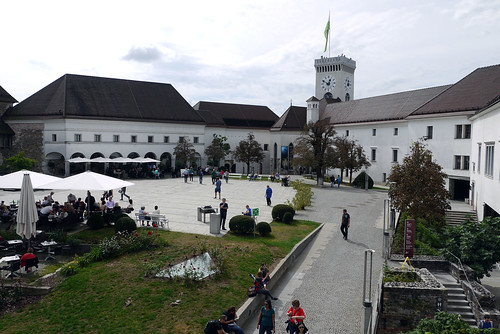
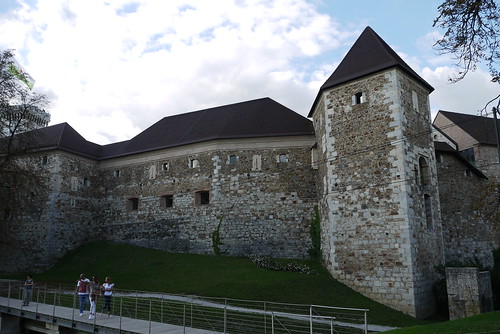
When in 1335 the Habsburgs took over the area of today`s Slovenia, they demolished the fortress of the Spanheim family, which stood on the hill, and in the second half of the 15th century started building a new one that still stands today. At first it consisted of only walls, towers and wooden barracks but through centuries the castle got the shape that it has today. Its main purpose was to defend against Turkish invasions, which were the most frequent in the 15th and 16th century. Besides, peasant rebellions were not rare as well. In the 17th and 18th century the castle had the function of a military hospital and an arsenal. When in 1809 Napoleon brought freedom and cultural and national enlightment to the citizens of Ljubljana, the war with the Habsburgs broke out. During this war the Pipers tower was demolished and a new wooden one erected on the place of today`s stone one. After the French had left, the Habsburgs used the castle for jails. The jail period lasted until the end of the Second World War, when first Italians and after their capitulation Germans took over the management of the castle. Until 1963 ostracized citizens of Ljubljana lived on the castle in terrible conditions. In the 70s the renovation began and today the castle is a popular tourist destination for home and foreign visitors.
Tags: Ljubljana Castle, Ljublljana, Slovenia, Vacation