Ljubljana Town Hall

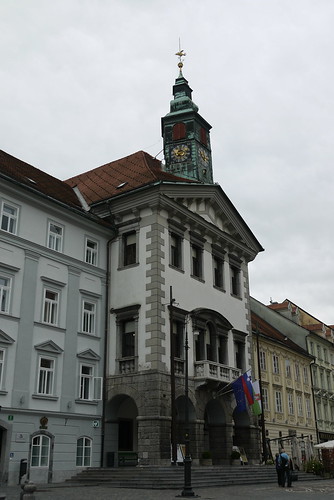
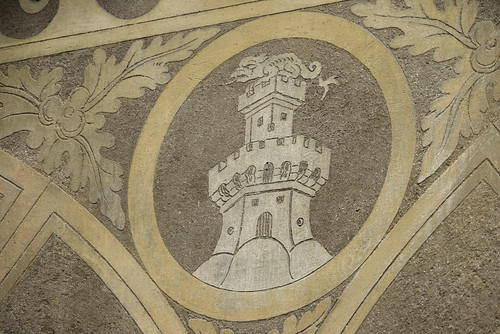
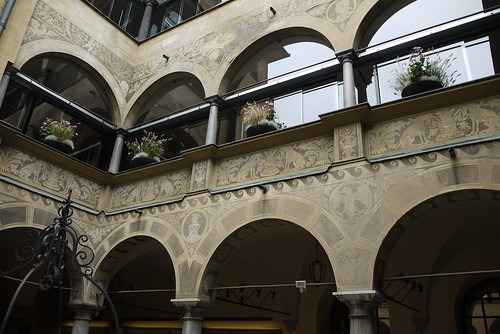
Ljubljana Town Hall (Slovene: Ljubljanska mestna hiša, also known as Ljubljanski rotovž or simply Rotovž or Magistrat) is the town hall in Ljubljana, the capital of Slovenia, is the seat of the City Municipality of Ljubljana. It is located at Town Square in the city centre close to Ljubljana Cathedral.

The original building was built in a Gothic style in 1484, probably according to plans by the Carniolan builder Peter Bezlaj.[1] Between 1717 and 1719,[2] the building underwent a Baroque renovation with a Venetian inspiration by the builder Gregor Maček, Sr.,[3] who built based on plans by the Italian architect Carlo Martinuzzi and on his own plans (the gable front, the loggia, and the three-part staircase).[4] In the mid-1920s, a monument to the Serbian and first Yugoslav king Peter I was erected in the entrance of Town Hall. The monument, designed by the architect Jože Plečnik, was removed and destroyed by the Fascist Italian occupation authorities of the Province of Ljubljana in April 1941.

Ljubljana Town Hall

Ljubljana Town Hall

Ljubljana Town Hall

Ljubljana Town Hall

8 Comments CherryPie on Apr 12th 2016

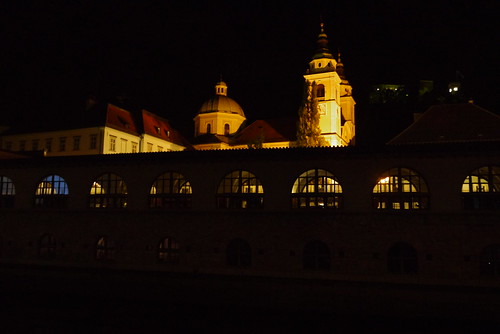
Untitled

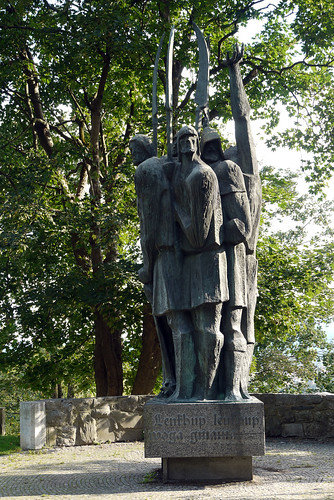
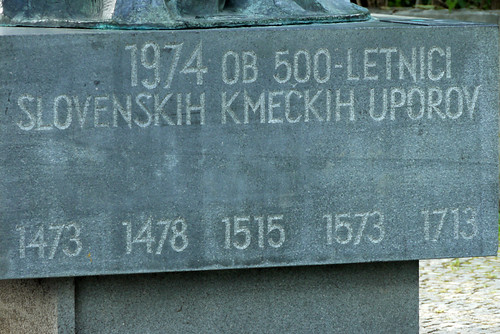
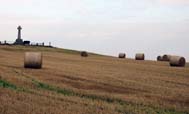
Monument to the Peasant Uprisings

10 Comments CherryPie on Apr 11th 2016

Set your minds on things above, not on earthly things.
Colossians 3:2 (NIV*)

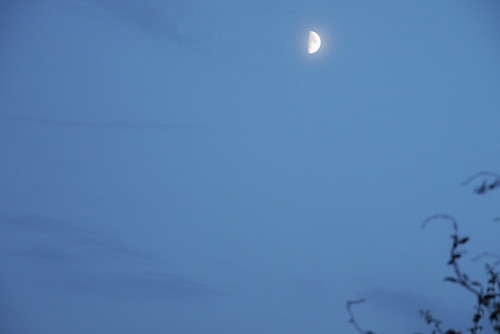
Half Moon

*NIV® Copyright ©1973, 1978, 1984, 2011 by Biblica, Inc.®

12 Comments CherryPie on Apr 10th 2016

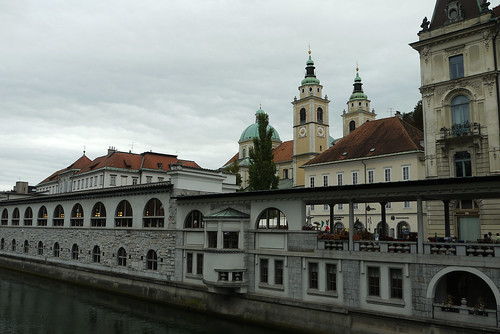
The Market Hall

Until the earthquake of 1895, the Vodnikov trg square, now the site of Ljubljana’s central Market, had been occupied by a diocesan college. Later, the Municipality of Ljubljana intended to build a new town hall there, but the plan was changed after it had been established that the existing meat market halls, situated at a nearby river embankment, no longer complied with hygiene regulations.

The present market, built by the architect Jože Plečnik between 1940 and 1944, was conceived as a two-storey range of riverside market halls following the curve of the river. On the side overlooking the river, the market halls were furnished with large semi-circular windows, and on the side overlooking the street adorned with a colonnade. The whole complex, reflecting Renaissance influences, was covered with a roof of massive concrete tiles. Plečnik planned to fill the gap in the range of market halls with a monumental covered bridge to connect the market-side embankment with the Petkovškovo nabrežje embankment, but the bridge, which was supposed to be called the Butchers’ Bridge, was never built.

When a little later a decision was taken to connect the market with the Triple Bridge, Plečnik built a flower shop resembling the temples of classical antiquity next to the bridge and connected it with the market by adding another roofed colonnade. The additional colonnade now provides shelter for stalls selling herbs, spices, and art and craft items.

The Market Hall

8 Comments CherryPie on Apr 9th 2016

National Museum of Contemporary History

Cekin Mansion shown in my previous post, now houses the National Museum of Contemporary History.

In 1996, after several years of preparations, we opened a permanent exhibition, Slovenes in the 20th century. We present in it the most important events and all forms of living and working on Slovene territory, from the start of the First World War to today. With the method of presentation, we want to invoke an emotional and intellectual response from each visitor and encourage them to seek additional answers in other media to the questions and problems that have been presented with the resources of the Museum.

The 20th century is one of the most turbulent periods of Slovene history. During this time, the Slovenes changed states and state arrangements several times; we survived two world wars, were included in the technological revolution and, in the last war, for independence, achieved an independent state.

The political and social framework is the basis of the exhibition narrative, which leads the visitor from First World War trenches through the Kingdom of Serbs, Croats and Slovenes to personal tales and experiences from the Second World War and onward into the period of socialism and industrialisation, the economy in the former common state of Yugoslavia. The exhibition guides the visitor through the democratic turmoil of the eighties to independence in the nineties and life in independent Slovenia. It concludes with accession to the European Union and Slovenia’s presidency of the EU Council in 2008.*

National Museum of Contemporary History

National Museum of Contemporary History

National Museum of Contemporary History

Anthem of the Republic of Slovenia:

The Anthem of the Republic of Slovenia Act of 28 March 1990 specified as the national anthem the seventh verse of the poem Zdravljica (A Toast). It was written in 1844 by the great Slovene poet France Preseren and later set to music by Stanko Premrl.

The anthem reads:

God’s blessing on all nations,
Who long and work for that bright day,
When o’er earth’s habitations
No war, no strife shall hold its sway;
Who long to see
That all men free
No more shall foes, but neighbours be!**

*From a National Museum of Contemporary History leaflet.
** From a signboard in the museum

6 Comments CherryPie on Apr 7th 2016

Museum of Contemporary History

Cekin Mansion is located on the edge of Tivoli Park in Ljublljana. The baroque mansion was built between 1752 and 1755, supposedly to the plans of the architect Johann George Schmidt by Count Leopold Karl Lamberg. Stylistically, it derives from the Carniolan building tradition, in which, especially in the first half of the 18th century, Mediteranian initiatives met with northern artistic ideals Leopoldsruh Mansion, as it was then known, is a rare example of a suburban villa intended for the relaxation and entertainment of the mobility of the baroque period. It was created on the example of Austrian mansions after the collapse of Turkish power. The fashion  of organising grand balls and banquets, in particular for such constructed buildings, which were intended to charm those invited with their splendour, reached Ljubljana a good half century after Vienna.*

Cekin Mansion

Cekin Mansion

Cekin Mansion

*From a National Museum of Contemporary History leaflet.

10 Comments CherryPie on Apr 6th 2016

Tivoli Park

The leafy Tivoli Park in Ljubljana is situated west of the city centre.

Named after the Jardins de Tivoli in Paris, it was first laid out during the period of Napoleonic rule in the early 19th century. Today it offers an appealing mix of order and wilderness, with well-tended lawns and trimmed shrubs alternating with wildflower meadows and thickets of trees. The park’s main avenue, Jakpeicevo sprehajalisce, is lined with display stands where outdoor exhibitions of art and photography are held.*

Photography Exhibition

There's Always One

*From The Eyewitness Travel Guide to Slovenia

11 Comments CherryPie on Apr 4th 2016

« Newer Posts - Older Posts »