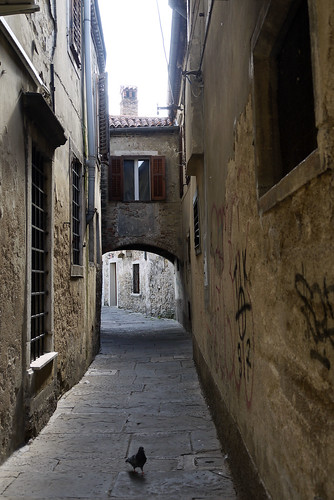
Koper is one of the oldest and most (unjustifiably) overlooked Slovene towns. The majority of people speeding past Koper on their way to Piran and Portorož only see the unattractive cranes of the Koper port from the road. But they do not know that a wonderful and lively old town center hides there. The long-standing rule of the Venetian Republic has left a fantastic architectural heritage, which is definitely worth a visit. Explore the narrow streets of Koper, discover its numerous squares and mingle with the locals, which are far more common here than tourists.
Koper or Capo d’Istria (the head of Istria) used to be an island and a salt panning town. Its origins go as far back as the Roman era; but the Venetian Republic has left the most prominent stamp, which was the time when this town economically and culturally blossomed. With the downfall of the Venetian Republic and the construction of the railway Trieste-Vienna, Koper lost its significance slightly. Nevertheless, after the 2nd World War it started to develop persistently and in time it has become the economic capital of the coastal region and an important port town.
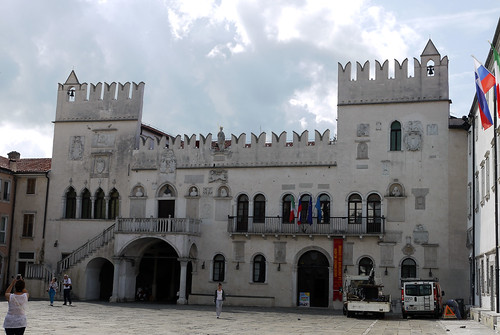
The main attraction in Koper is Tito Square which is surrounded on all four sides by beautiful architecture, one of which is the former Praetorian Palace.
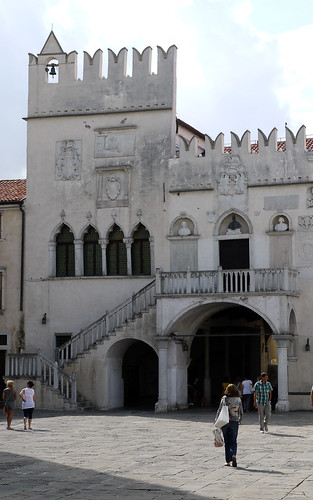
The Praetor’s Palace closes off the south edge of the central Koper Square. A storey palace with an exterior staircase and two elevated tower-like wings on the east and west dominates the side of the square.
It is the most representational secular building in the city. With its late Gothic Renaissance facade and different inner areas it reaches the top of secular palaces of its time in Slovenia. The building was constructed on the location of two older houses from the middle of the 13th century. In the second half of the 13th century the buildings were connected by a loggia and were later rebuilt several times and finalised as a building with characteristics of Venetian Gothic and all posterior remakings.
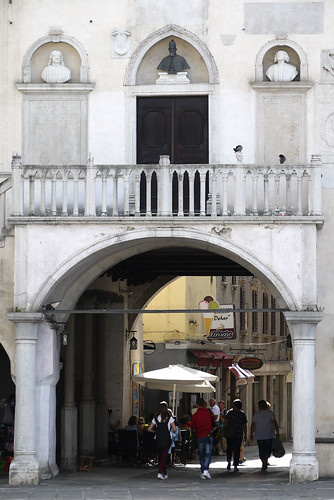
Between the tower-like edge areas there is a wide storey facade with a series of windows, a staircase and a `rizalit` balcony on the arch and two supporters, and a balcony by the hall with numerous decorative coats-of-arms, the engraved history of Koper. The cogged Ghibbeline addition was placed above the main facade in 1664. There stands Justice in stone, armed with a sword. In the building structure, the ground floor loggia is recognisable, while on the floor above we can decipher the halls of the large and small councils, several additional halls, rooms and former living quarters. The interior has been arranged for the representational needs of the municipality and fitted with period furniture in the celebration hall, offices and exhibition areas on the ground floor.
At the corner of the side facade of the palace there is a chiselled plaque with an opening, a typical Venetian “bocca del leone”, where anonymous messages for the mayor were left.
Tags: Koper, Praetorian palace, Slovenia, Tito Square, Vacation
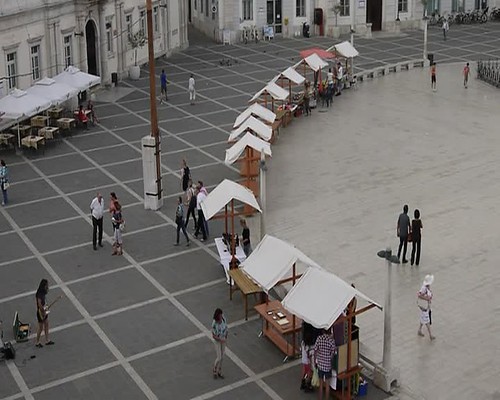
Click picture for a short video
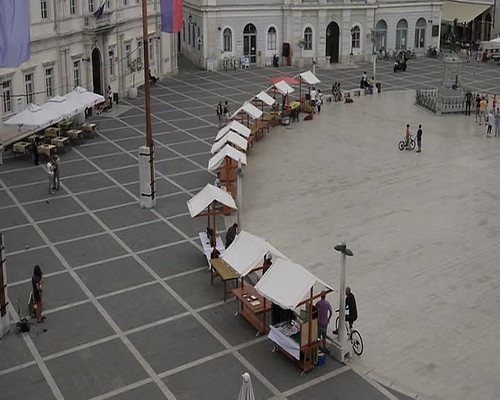
Click picture for a short video
Tags: Hotel Tartini, Lumix Video, Piran, Slovenia, Tartini Square, Vacation
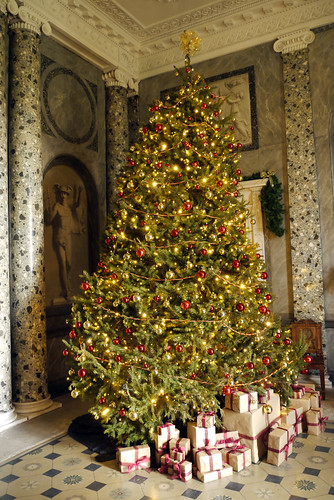
We had some complications along the way but both Christmas trees are finally up and decorated. As I was going to bed on Saturday evening I noticed that even though the heating was turned off it still appeared to be running. It is only a few weeks since we had a similar problem fixed. This meant we had to call out a service engineer to come and look at it, he phoned just as we were about to get the decorations down from the loft. This meant it was better to leave the decorations where they were until he called to fix the problem.
After he had departed we brought the decorations down and proceeded to set up the tree in the dining room which is at the front of our house. After the tree was put together it was time to drape the lights around the tree. We always check them spread out on the floor before putting them on the tree and they seemed to be working fine. However once they were draped around the tree one of the colours failed, which I suspected was terminal. Mr C fiddled with them on the tree and then at my request took them off again so they would be easier to check out. He changed the fuses and some of the bulbs and still they refused to work. I was beginning to feel uncomfortable about them and suggested that we used a spare set that we had.
One tree was adorned with the spare set of lights and decorations it was time to work on the tree in the sitting room which is at the back of the house. As I was assembling the tree Mr C looked for the lights which were nowhere to be found. He went up in the loft to see if he had left them up there by mistake. It was only when he came back down that I had the vague recollection of this set of lights failing last year. One of the colour strands had gone and as it was the type where the bulbs cannot be replaced we had binned it!! By this time it was too late to pop to the garden centre to pick up a new set up lights. That had to be done this evening and now the second tree is all sparkle and glow.
I have not had time to take any photographs yet so I will leave you with a couple from previous years.
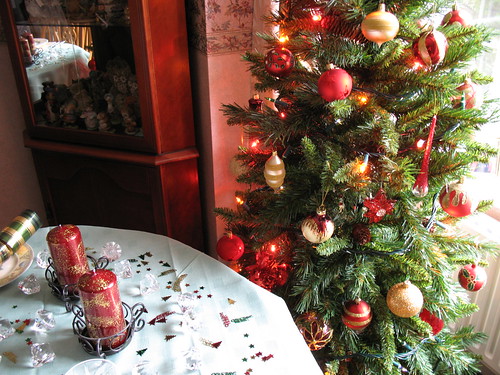
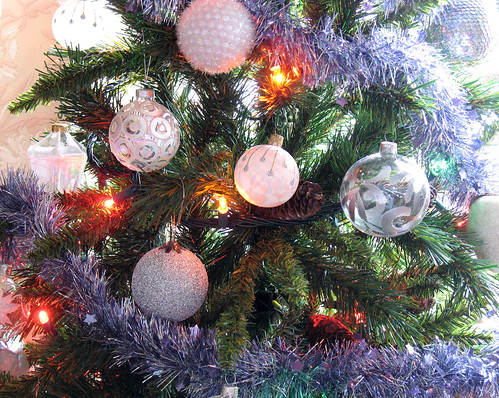
Tags: Attingham Park, Cherie's Place, Christmas, Christmas Tree, Decorations, Tree
They that are whole have no need of the physician, but they that are sick: I came not to call the righteous, but sinners to repent.
Mark 2:17
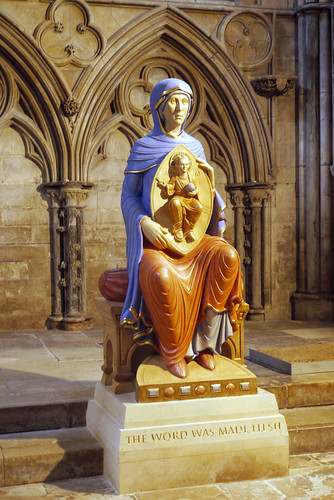
Tags: Cherie's Place Thought, Child, Jesus, Lincoln, Mary, Mother, Weekend away
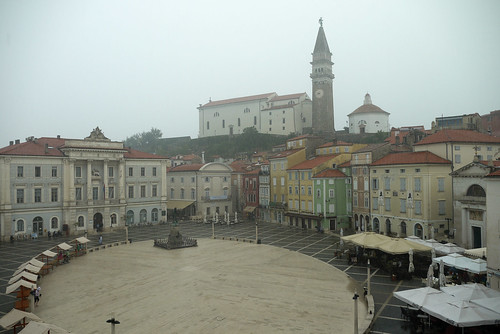
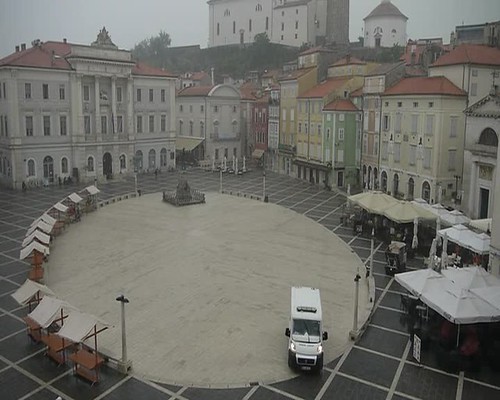
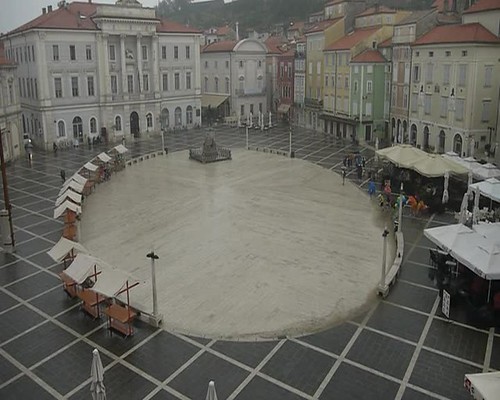
This is what happened when when the wind changed direction and the light rain turned into a torrential downpour. You can now see why we left the breakfast table in a hurry…
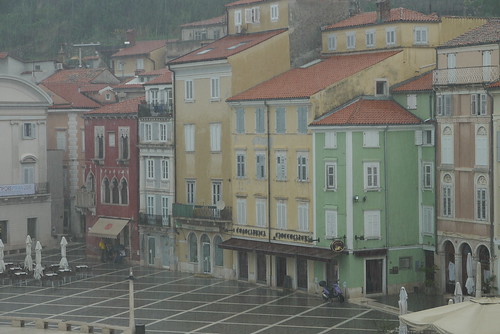
Click on picture for a short video
Click on picture for a short video
Tags: Piran, Rain, Slovenia, Vacation
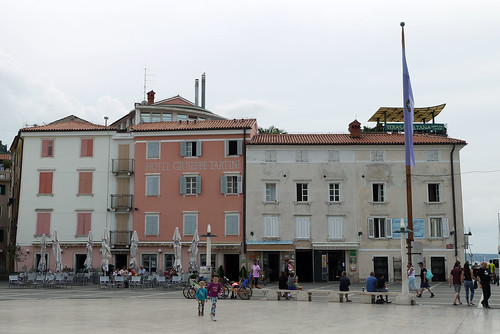
Hotel Tartini is perfectly situated with a choice of a view over Tartini Square or a balcony view towards the harbour and the sea beyond. On arrival at the hotel we found we had a room with a birds eye view of the square, a perfect room with a perfect view. During our stay we had time to enjoy the day and night time view of the square.
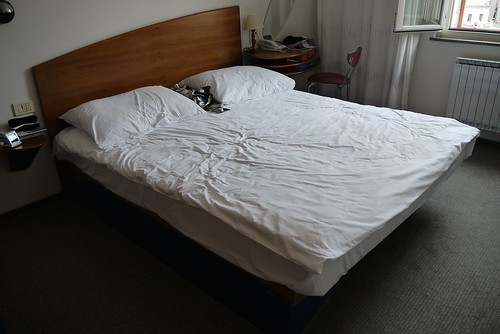
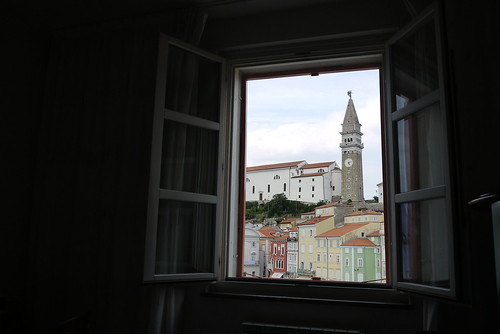
On one occasion when the warmth of the early morning sunshine made it possible for us to eat breakfast outside on the hotel terrace. We lingered a while enjoying the atmosphere even after it had started to rain. After a while the wind changed direction and drove the rain underneath the covered area, in our direction. We beat a hasty retreat inside and as we did so the light rain turned into a torrential downpour. There was no point in going out in such weather so we returned to our room where we could enjoy watching the rain and the comings and goings in Tartini Square whilst keeping dry.
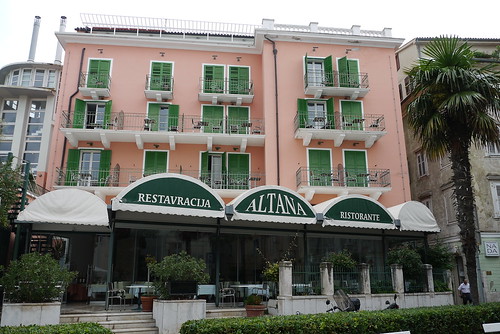
Hotel Tartini was named after a famous violinist virtuoso and composer Giuseppe Tartini who was born in a bourgeois house on the present day Tartini Square in the immediate vicinity of the hotel. In our hotel one will find everything either for a romantic weekend, a pleasant vacation in a relaxed atmosphere, or a business event, seminars or a celebration in a friends’ circle.
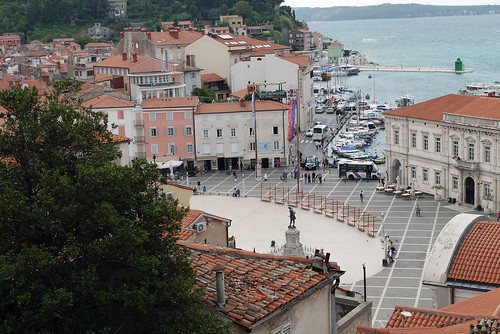
Hotel Tartini is part of the old town centre on the main Tartini square located just a few steps from the sea and the port.*
Hotel reassures well-being and comfort to the individual guests who appreciate intimacy and personal touch of small hotels and enjoy staying in the central location at the same time. *
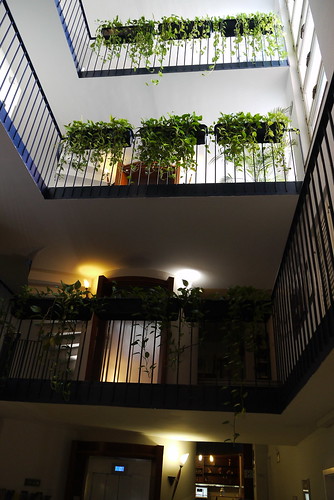
*From Hotel Tartini leaflet
Tags: Hotel Tartini, Piran, Piran Square, Slovenia, Tartini Square, Vacation
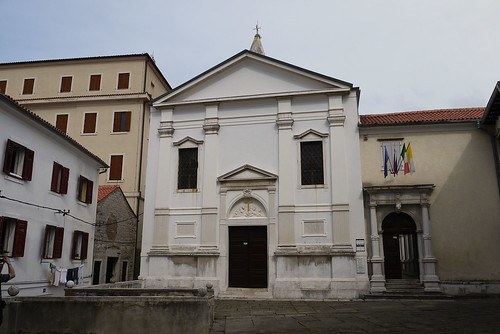
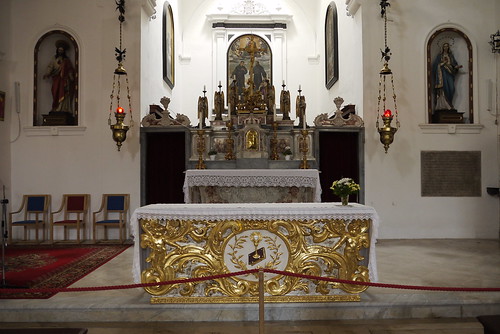
St. Francis Church is situated next to the Franciscan monastery. In front of it there is a small square, formerly used as a cemetery. The construction of the church and the monastery reaches back to the year 1301. Despite many restorations, traces of the period in which the church was built can still be seen in the presbytery.
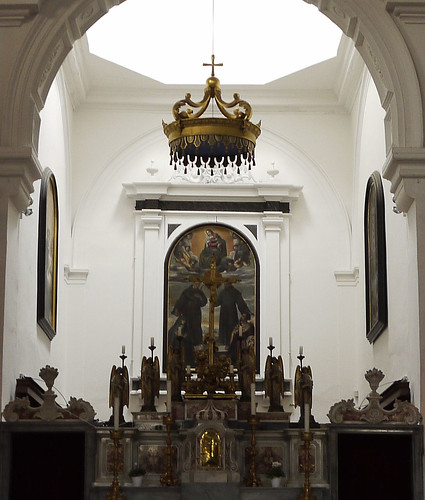
The present interior dates from the 17th century and the exterior from the 19th century. The left corner of the church is decorated in the Lombard style. The baldachin in front of the central altar dates from the 16th century. It was removed in the 18th century and restored to its original dwelling in the 19th century.
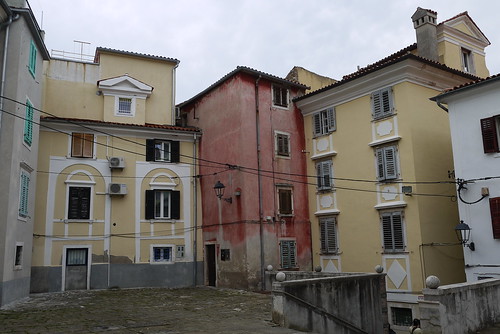
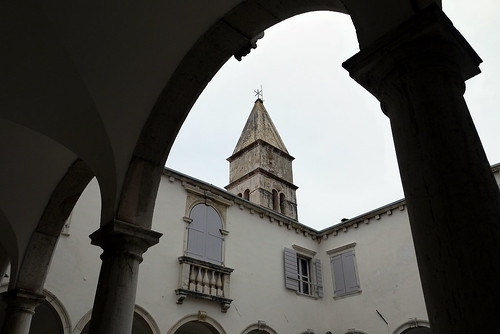
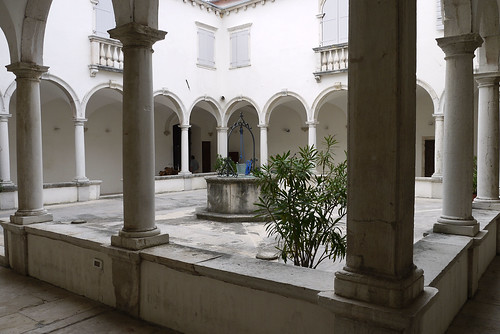
Next to St. Francis Church is a Franciscan monastery with a gracefully designed atrium, the Cloister, which represents one of the best Cloister atrium designs in the coastal area. Leading to the Cloister there is a half-arched portal adorned with richly carved columns, bearing an architrave with an inscription and coats of arms.
In its entirety as well as its detail, the portal is considered to be the best example of stone carving art from the end of the 17th century in Piran. Due to its beautiful atmosphere and good acoustics, the Cloister has for many decades been the setting for the Musical Evenings of Piran.
Tags: Franciscan Monastery, Piran, Slovenia, St Francis Church, Vacation