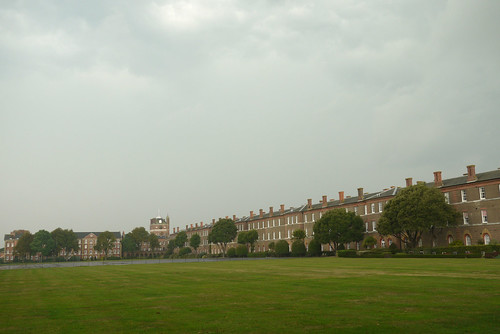
Work started on Eastney on the construction of a barracks to house the Royal Marine Artillery Division in 1862. Before then the Artillery companies attached to Portsmouth Division had been stationed at Gun Wharf and Clarence Barracks in Old Portsmouth, but most of their training and equipment was at Fort Cumberland. In the move to Eastney, the musketry and gunnery training fields were retained while the large parade ground and eventually a gymnasium, theatre and drill shed, made the division self contained. Along the beach lines was a long curtain with two forts at either end mounting several guns. The construction of the main barrack block was completed in 1864 and the first detachment of men marched in at the end of that year. Occupation by the whole Artillery Division did not take place until 1867.
The barracks were extended and added to over the years and the nature and role of the Marines housed there changed. When the barracks closed in 1991, it was occupied by less than 200 men. Following closure, it was sold and many of the principle buildings were converted to residential use.
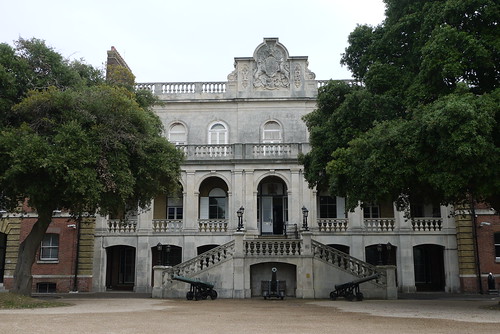
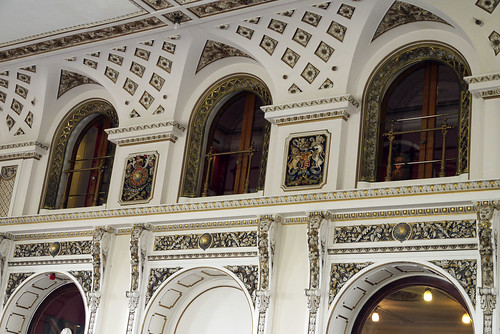
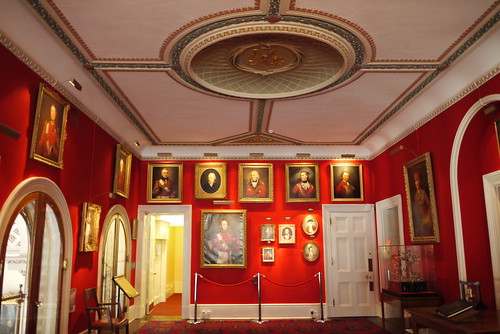
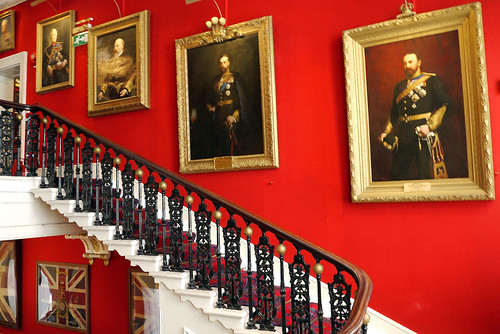
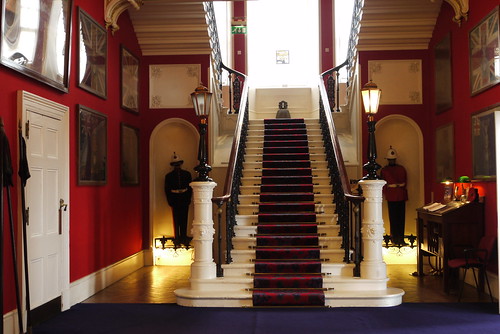
By far the most prestigious building within the barracks is the Old Officers’ Mess, which is now occupied by the museum. The centre position of this lavish building contained the public rooms whilst the officers’ bedrooms were in the wings. The officers dined and held their receptions and dances in what is now the Mountbatten Room and, on formal occasions, the landing upstairs was used as a minstrels gallery. Next door was the billiard room and library, now respectively the Medal Room and Band Room. The building was used as an Officers’ Mess until 1973 when, due to a decline in numbers, it was closed. Two years later the Museum, which had started its life in 1958 in the Division School by the old barrack gate, moved in and has occupied it ever since.
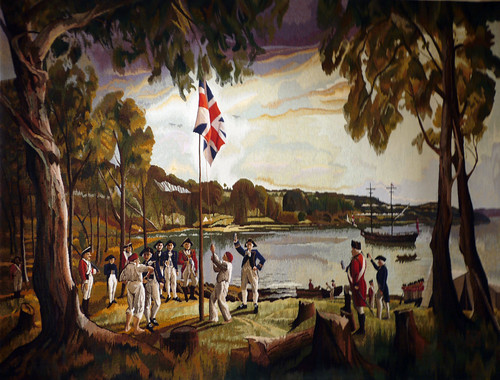
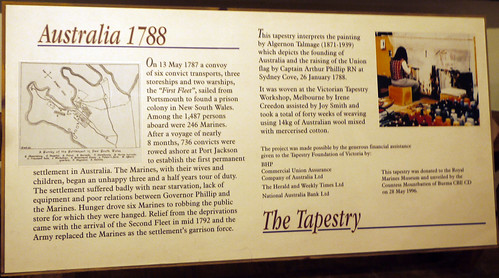
This tapestry interprets the painting by Algernon Talmarge (1871-1939) which depicts the founding of Australia and the raising of the Union flag by Captain Arthur Philip RN at Sydney Cove, 26 January 1788.
On 13 May 1787 a convoy of six convict transports, three storeships and two warships, the “First Fleet“, sailed from Portsmouth to found a prison colony in New South Wales. Among the 1,487 persons aboard were 246 Marines. After a voyage of nearly 8 months, 736 convicts were rowed ashore at Port Jackson to establish the first permanent settlement in Australia. The Marines, with their wives and children, began an unhappy three and a half years of tour duty. The settlement suffered badly with near starvation, lack of equipment and poor relations between Governor Phillip and the Marines. Hunger drove six Marines to robbing the public store for which they were hanged. Relief from deprivations came with the arrival of the Second Fleet in mid 1792 and the Army replaced the Marines as the settlement’s garrison force.
On Monday, June 23, proceedings began with a selection of military music at the Buttercross, High Street, by The Band & Bugles of the Rifles.
They then marched to St Maurice’s Covert where they were met by a contingent of service personnel drawn from the Royal Navy, the Army and Royal Air Force.
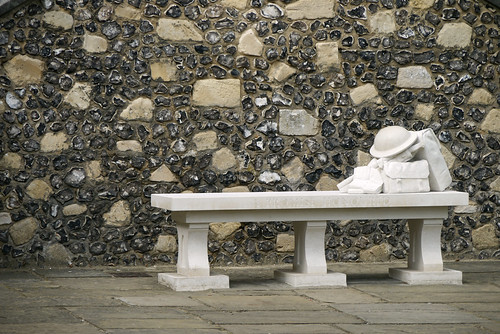
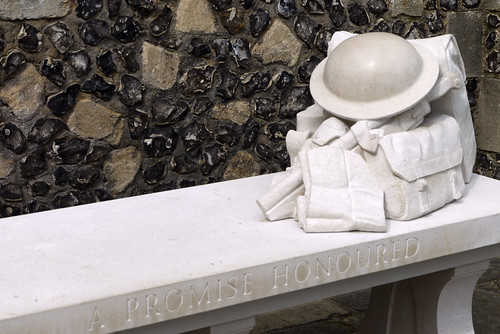
Together they proceeded up the High Street to the Great Hall for the ceremony and unveiling of the ‘To Honour a Promise’ memorial, which marks the centenary since the outbreak of WWI in 1914.
It sits at the base of the steps in the courtyard by the Great Hall, and throughout the ceremony was covered in a cloth made by textiles students from Peter Symonds College.
Simon Smith’s brief was not to create a standard memorial, but something to represent those who had passed through the camp. The memorial sensitively shows the kit as if it has been left on the seat- but where is the soldier now?
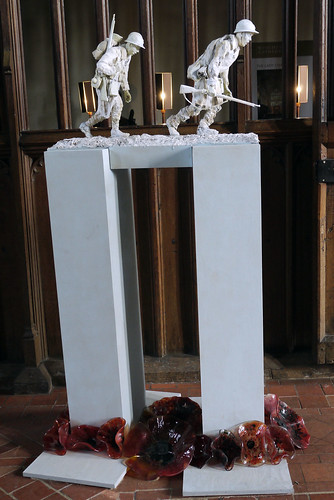
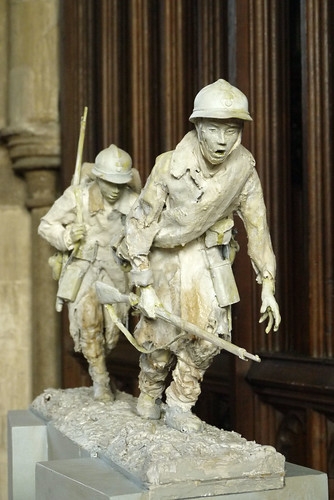
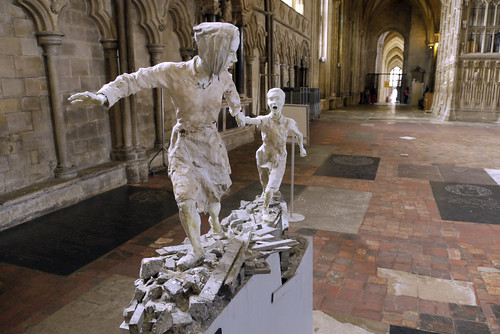
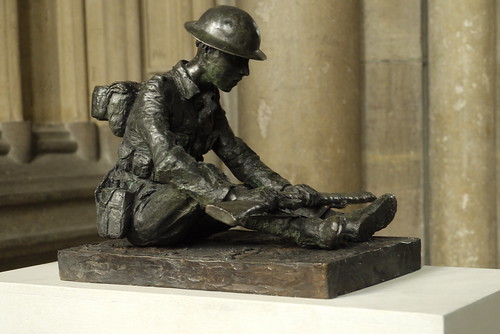
One of the things that caught my eye when I visited Winchester Cathedral was an art and poetry exhibition (The Tenderness of Patient Minds) commemorating the First World War.
The glass poppies in the first photograph were made by Year 7 pupils at Lakeside BESD school in Chandlers Ford.
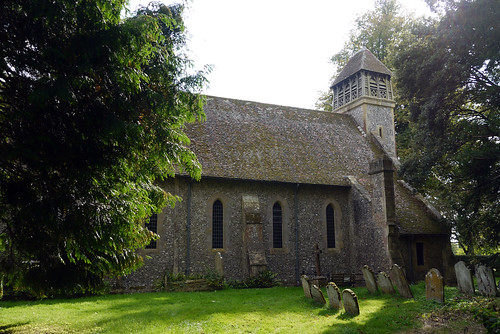
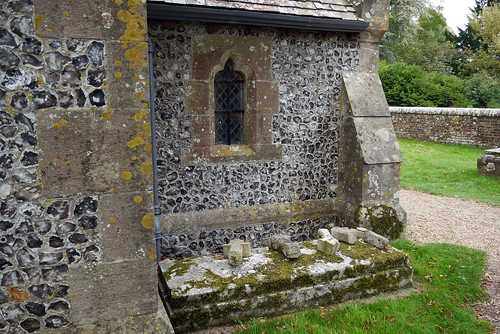
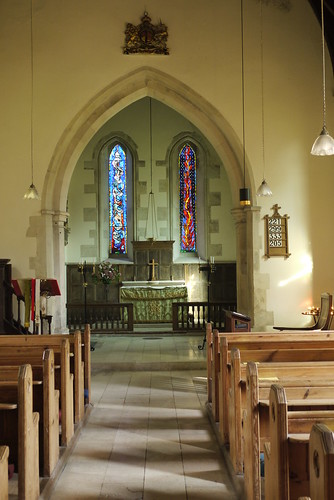
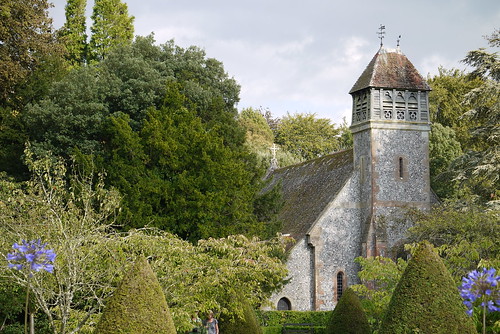
The church of ALL SAINTShas suffered from ‘restoration’ more severely than many of its neighbours, (fn. 14) but is still of great interest as preserving its pre-Conquest plan and a few details of that date. It has a chancel 15 ft. 8 in. wide by 21 ft. long, and a nave 21 ft. 10 in. wide by 47 ft. with walls 2 ft. 6 in. thick of flint rubble with ashlar dressings.
There are three bells, the treble inscribed: ‘Serv God I W 1603.,’ the second ‘Fere God I W, 1603.,’ and tenor ‘In God is my hope, 1610.’ The latter is by the unidentified founder I.H. (possibly John Higden), the other two by John Wallis of Salisbury.
If you cannot read all your books…fondle them—peer into them, let them fall open where they will, read from the first sentence that arrests the eye, set them back on the shelves with your own hands, arrange them on your own plan so that you at least know where they are. Let them be your friends; let them, at any rate, be your acquaintances.
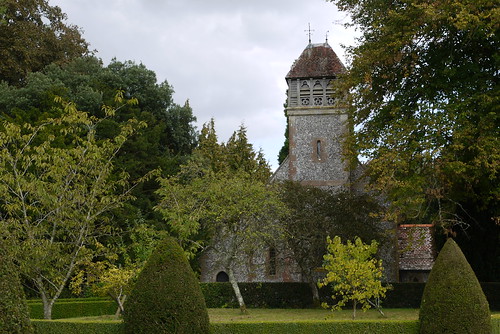
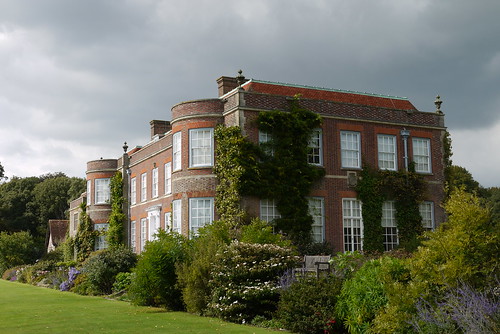
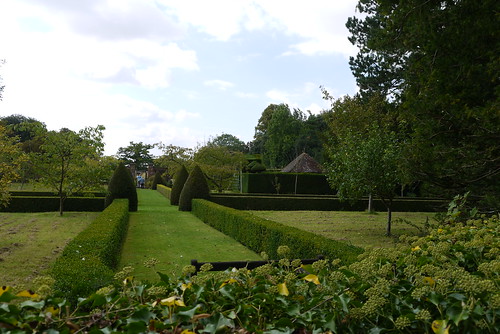
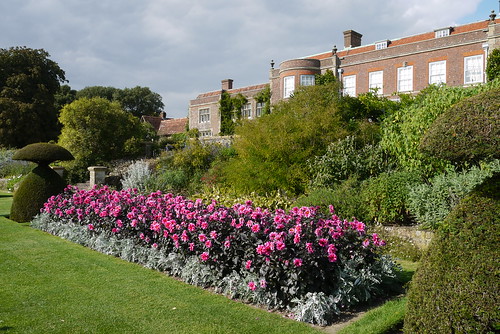
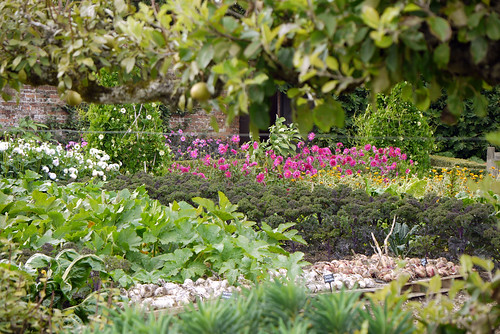
When we visited Hinton Ampner the first floor of the property was closed due to storm damage to the roof on February 2014. This was more than made up for by the gardens, the orchard and the parish church of All Saints.
A restored eighteenth century house with a twentieth century garden. The garden was made by Ralph Dutton (Lord Sherbourne), who wrote a book on Hinton Ampner: A Hampshire Manor (Batsford, 1968). He also wrote a history of the English Garden (1937). Mea Allen described its ‘one of Britain’s great gardens to be seen if you can. A classical beauty of layout and ornament’. Ownership then passed to the National Trust. The garden has walks and terraces with hedges, topiary, ornaments and excellent planting. Dutton explained that ‘my interest lies more in shrubs than in flowers’ what above all I want from a garden is tranquility’.