Untitled

I blogged a while ago that I was looking forward to the proposed changes to the Stonehenge visiting arrangements which aimed to reconnect the stones with their environment. I would provide you with the link, but the post seems to be hiding in the mystic ether…

The project is nearly complete and my recent visit lived up to my expectations. The new visitor centre is placed in a dip 1.5 miles away from the stones and is a vast improvement on the old one. I wasn’t sure how the new building would look but having seen it, it works perfectly in the environment.  From the outside the willow structures obscure the building within and from inside the cafe you are drawn to look at the surrounding landscape. Trees have been strategically placed so that in time the building will blend into the surrounding environment.

The timed ticket arrangement is quite painless and even though we arrived at peak time, there was no queue unlike my previous visits. The gentle journey using the land train to the stones was pleasant. There is also the option to stroll up to the stones. At the drop off point near to the stones there is the beginnings of a natural screen to hide the train from view.

On my visit work was currently underway to completely demolish the old visitor centre (which was a blot on the landscape), fill in the tunnel and grass over the closed portion of the road. Even though the work was not complete the area around the stones was a vast improvement and less intrusive than on previous visits. I am looking forward to visiting again when this part of the project is complete.

Before we set off for the stones we enjoyed lunch in the cafe. The food is also available as a takeaway option to enjoy in the Stonehenge environment, maybe next time ;-) Next to the cafe is the museum which is currently displaying archaeological treasures which were used or buried at Stonehenge. There is also a wonderful circular audio visual display showing Stonehenge through the ages and seasons.

4 Comments CherryPie on Jun 24th 2014

Dunham Massey

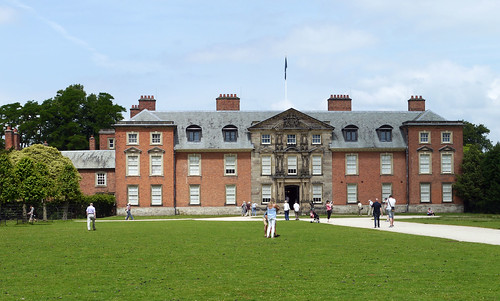
The weather has been glorious the past few days, so yesterday we took advantage of a sunny Sunday and went out for the day. We chose to visit Dunham Massey, a place we have not been before. As part of the WWI centenary commemorations some of the rooms are currently transformed back to how they would have looked when Dunham Massey served as a military hospital between 1917 and 1919.

Sanctuary from the Trenches – Stamford Hospital at Dunham Massey Hall

We’re marking the centenary of the First World War by telling the story of the Stamford Hospital, the convalescent hospital in the hall in which 282 soldiers were treated between April 1917 and January 1919.

So how will your visit be different this year?

Well, the elegant Edwardian interiors have gone. In 1917 the Saloon was turned into a ward with 25 beds for ill and injured ‘other ranks’ soldiers – the Stamford Hospital was for Tommies, not officers. In the ward discover the story of some of the soldiers, their injuries and illnesses and how their conditions were treated almost 100 years ago.

The large space in the Great Hall became the soldiers’ recreation room, where they spent time out of bed, had their meals, played games and listened to music. Photographs also show the soldiers out of doors in the inner courtyard and garden, benefiting from the ‘fresh air cure’ whatever the temperature! You’ll find out about how the soldiers spent their time during convalescence, and perhaps enjoy a game of cards yourself.

The billiard room was the nurses’ station, and here you’ll find out about the group of women who cared for the soldiers. The social changes brought about by the First World War impacted on the Grey family of Dunham Massey – Lady Jane became a Voluntary Aid Detachment nurse aged 17 and helped in the hospital. You’ll discover an aspect of her story at the bottom of the grand staircase, the area that was used as the operating theatre.

Family life went on at Dunham but would never be the same again. Head upstairs to find out about Lady Stamford’s role as the commandant of the hospital. A prolific letter writer, much of what we know of the hospital comes from her correspondence with her family, soldiers and soldiers’ families.

What’s happened to the objects that have moved?

During the First World War, the Great Gallery was used as a storeroom and that’s what we’re using it for too. Some objects have gone into store and some for conservation. One of the biggest things to plan was the picture-hang, where we rearranged lots of the paintings to fit in the ones that had moved from the Great Hall and Saloon. Some objects were selected for the ‘Treasures from the Collection’ exhibition allowing individual pieces to shine whilst also showing the eclectic nature of a country house collection.

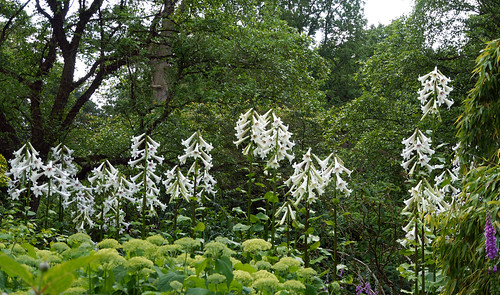
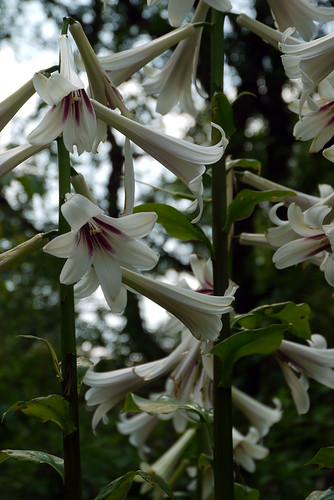
After we had visited the reconstructed Stamford hospital we took a walk round the garden.  The newly planted rose garden was a delight and we were treated to a rare display of cardiocrinum gigantium.

To see this giant lily is a rare sight as it flowers for barely a week and only once in a lifetime.

The cardiocrinum grows very slowly for the first six years of its life. In its seventh year it quickly escalates to a height of up to 3.5 metres before producing a spectacular display of flowers for a short period in June.  It then dies, leaving behind brown seed pods.

The plant is found in parts of China, Burma and the Himalayas. This is one of the largest plantings in the United Kingdom.*
Cardiocrinum Gigantium

Cardiocrinum Gigantium

We arrived home late so we decided to go out for a meal rather than cook.  We chose with care so that we could still enjoy a Sunday roast, after which we returned home to enjoy the last of the sunshine sitting on the patio with a glass of wine.

As the light dimmed I noticed a movement out of the corner of my eye. Thinking it was a bird I turned to look and realised it was a hedghog making its way along the side of our neighbours house. Then he disappeared into our flower bed noisily snuffled and crunching leaves as he made his way around the three sides of our garden borders. He then casually sauntered across the grass in front of the patio where we were sitting before disappeared back down the side of our house. Nature is a wonderful thing :-)

It was the first time I have seen a hedgehog for a very long. After doing a bit of research I realise why.  They are now an endangered species.

*From a sign board next to the plants

10 Comments CherryPie on Jun 23rd 2014

How grand! How wonderful! How incomprehensible!

Sir Richard Colt Hoare, ‘The Ancient History of Wiltshire’, Vol I, 1812

Untitled

17 Comments CherryPie on Jun 22nd 2014

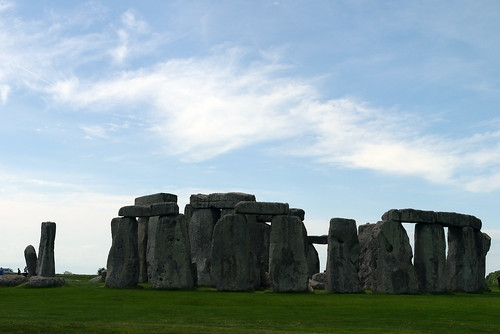
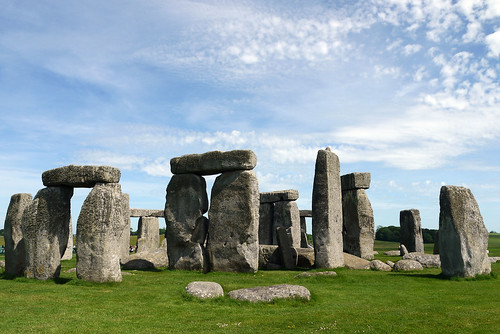
Stonehenge

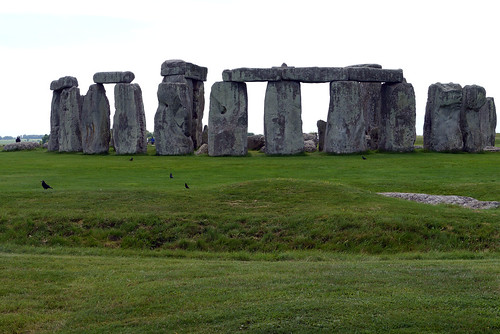
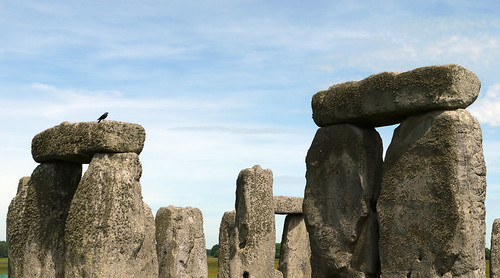
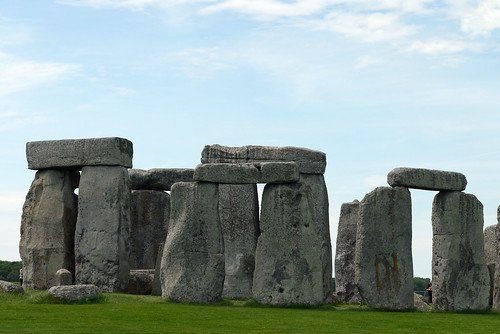
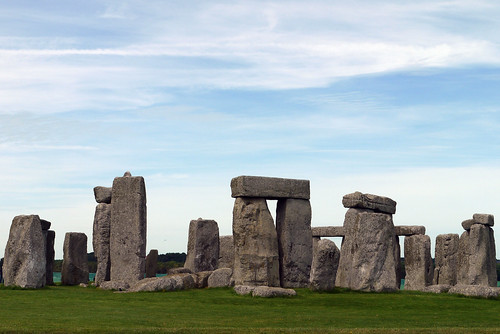
Today visitors experience Stonehenge as a wonder of ancient achievement and enduring symbol of mystery. But Stonehenge was built as a temple – a place of ceremony, of burial and of celebration. The first Stonehenge was simple – just a circular ditch and bank, perhaps with a few small upright timber posts or stones – and was constructed about 5,000 years ago, in the period of prehistory known as the Neolithic or New Stone Age.

By about 2500 BC more and much larger stones had been brought to the site, huge sarsen stones from north west Wales. This marked the beginning of over 800 years of construction and alteration stretching into a period known as the Bronze Age, when the first metal tools and weapons were made. By this time Stonehenge was the greatest temple in Britain, its banks, sophisticated alignments to mark the passage of the sun and the changing seasons. But Stonehenge was just one part of a remarkable ancient landscape. Hundreds of burial mounds clustered on the surrounding hilltops, while smaller temples and other ceremonial sites were built nearby. Stonehenge and these other ancient structures from an archaeological landscape so rich that it is classified as a World Heritage Site.

Stonehenge has inspired people to study and interpret it for centuries. Medieval writers suggested magic as an explanation of how it was created; early antiquarians, like William Stukely in the early 18th century, guessed – wrongly – that the Druids had built it. archaeology still provides the best hope of answering some of these fundamental questions about Stonehenge: how and when it was built, who built it and, perhaps most difficult of all, why it was built. But even with the evidence that archaeology and modern science provide, not all the questions can be answered. Stonehenge will always keep some of its secrets.*

More detailed information can be found in the excellent English Heritage guidebook.

Stonehenge
Stonehenge

*From English Heritage Guidebooks – Stonehenge, step into England’s story, published 2013

4 Comments CherryPie on Jun 21st 2014

Solstice Stones

Stonehenge is an ancient prehistoric site and has been a place of worship and celebration at the time of Summer Solstice since time immemorial. Hopefully today it will by a Sunny Solstice sunrise :-)

14 Comments CherryPie on Jun 21st 2014

Avebury

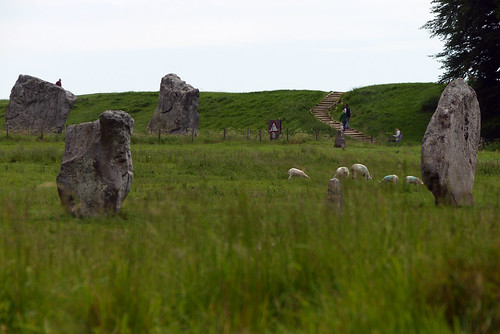
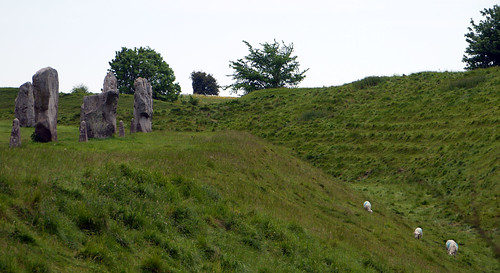
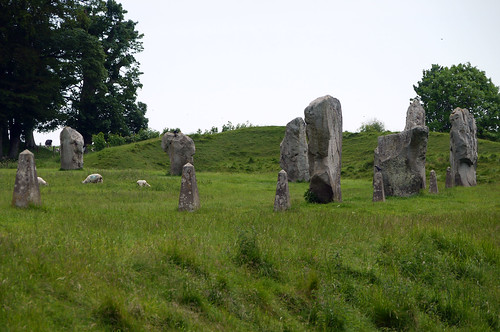
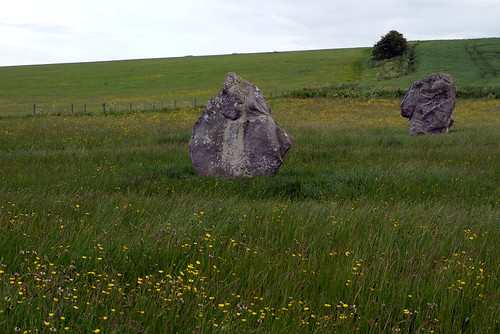
As I mentioned in my previous post, we miscalculated the time we needed to enjoy Avebury.  I have the strong urge to visit the site again as soon as possible. On my brief visit I managed to capture a few photographs of some of the stones.  I hope you enjoy them.

Avebury is a fascinating site that connects to other prominent features in the ancient landscape.  What remains of the Avebury Circles is largely reconstructed. In the 1930s Alexander Keiller having purchased the site of Avebury and part of West Kennet Avenue started to excavate the site and in time restore the site to some of its former glory.  Where stones had been removed he placed concrete plinths to mark their former position.  The outbreak of WWII put a stop to the excavations and restoration. Sadly the excavations have never been resumed.

The monuments of Neolithic Avebury form one of the most complete prehistoric complexes in Europe.

The Avebury Circle (c2600 – 2100BC) is one of the largest henges in Britain. The monument, although undated by modern dating methodss, was probably constructed between the first and second phases of Stonehenge (3100 and 2100BC), and is roughly contemporary with the henges of Durrington Walls and Woodhenge. Unlike Stonehenge, the local Sarsen stones of Avebury Circles are of natural unworked stone.

The earliest monument in the complex is Windmill Hill, which was first occupied in c3700BC, during the Earlier Neolithic. The enclosures of the cause-wayed ‘camp’ were constructed c3250BC, and are contemporary with the earliest constructions at The Sanctuary.

The West Kennet Long Barrow (c3700 – 3500BC), is one of the largest and best-preserved chambered tombs in Britain. It was in use for over 1000 years.

Despite the detailed excavations at Silbury Hill (2700BC), the purpose of this larges man-made mound in Europe remains a mystery.

The West Kennet Avenue of standing stones (c2300-2000BC) was constructed as a ceremonial route linking the Avebury Circles with the structures of the Sanctuary.

The Alexander Keiller Museum at Avebury forms the interpretive centre of the complex. It contains many exciting finds and displays from excavations at Avebury and provides a graphic history of the monuments. *

Avebury

Avebury

*From ‘The Prehistoric Monuments of Avebury’ by English Heritage – 1994 edition.

18 Comments CherryPie on Jun 20th 2014

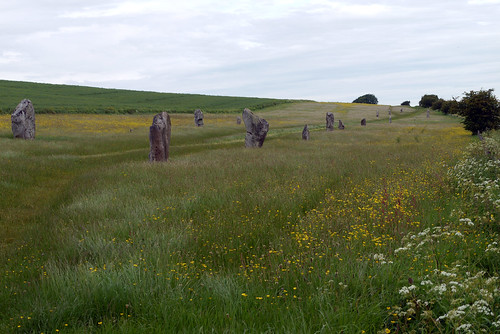
West Kennet Avenue

West Kennet Avenue follows a winding course of 1.5 miles, linking the Avebury Circles with the Sanctuary.

Originally consisting of about 100 pairs of stones, the Avenue followed a sinuous course.  The stones were about 15 m (49 ft) apart and there was a span of about  24 m (80 ft) between the pairs. Several had been buried in medieval times, and others had been removed altogether. Of those remaining none were very large, between c1.4 m (5 ft) and 3 m (10 ft) high.*

The dating of the Avenue is probably slightly later than the main henge and circles, probably c 2300BC, although no absolute dating is yet available.*

West Kennet Avenue up Close

*From ‘The Prehistoric Monuments of Avebury’ by English Heritage – 1994 edition.

22 Comments CherryPie on Jun 19th 2014

« Newer Posts - Older Posts »