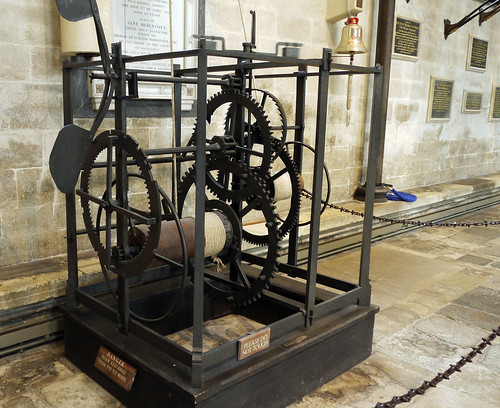
This clock was made in or before 1386 and was originally located in a separate Bell Tower (demolished 1792) just to the north of the Cathedral. It is probably the oldest working clock in existence – and like all clocks of that date had no face but struck the hour on the bell (now located in the Cathedral roof space.)
In 1956 it was repaired and restored to its original condition by The Friends of Salisbury Cathedral and set up here.*
*From an information board next to the clock
Tags: Clock, Salisbury, Salisbury Cathedral, Weekend away, Wiltshire
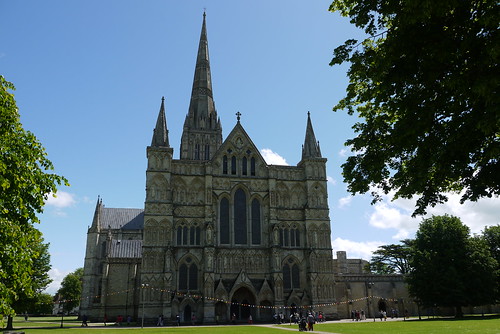
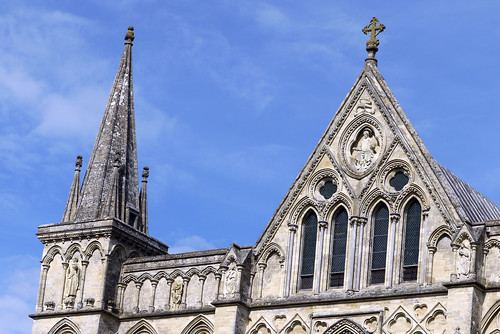
On 28th April 1220 the foundation stones for a new Cathedral were laid here at ‘New Sarum’ (Salisbury). The church was consecrated in 1258, with the Chapter House and Cloisters completed in 1266. What is now the tallest spire in Britain (123m/404ft) was added between 1310 and 1330.
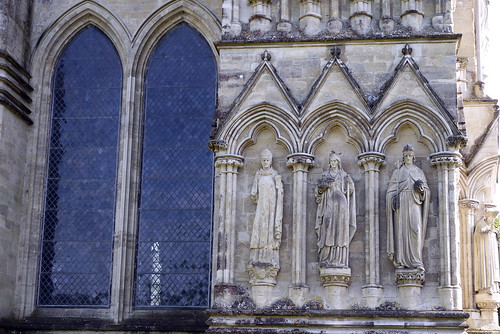
With its soaring pointed arches and slender columns, Salisbury is unique in being built almost entirely in one architectural style – Early English Gothic.
Originally answerable to the Pope, the Cathedral has been part of the autonomous Church of England since 1534 when Henry VIII split from the Church of Rome.*
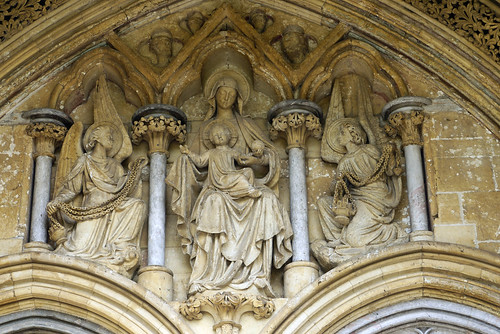
*From Salisbury Cathedral – A Pocket Tour
Tags: Cathedral, Salisbury, Salisbury Cathedral, Weekend away, Wiltshire
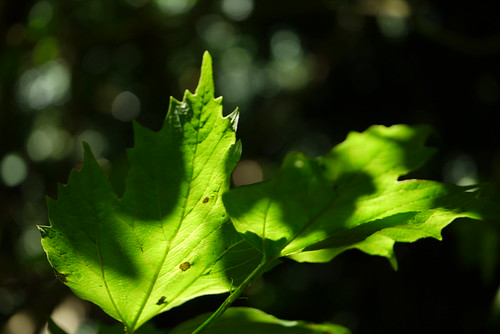
Life presents us with sunshine if we remember to look.
Cherie
Tags: Cherie's Place Thought, National Trust, Snowshill Manor, Weekend away
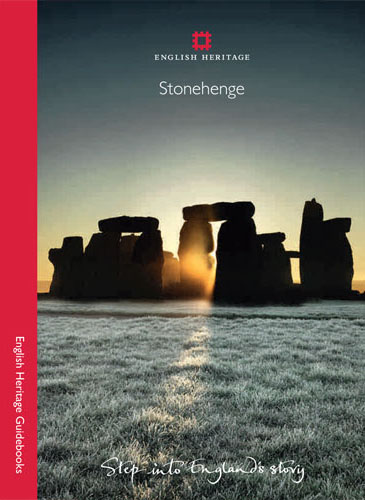 Synopsis (From the English Heritage website):
‘Stonehenge, where stones of wonderful size have been erected after the manner of doorways … no one can conceive how such great stones have been so raised aloft, or why they were built there’From Henry of Huntingdon’s History of the English People, written in about 1130
Stonehenge is one of the best-known ancient monuments in the world and its global importance is reflected in its World Heritage Site status. Although its exact purpose remains a mystery, this magnificent monument was created in the Neolithic period with banks, ditches and iconic standing stones aligned to mark the passage of the sun and the changing seasons at the solstices.
This comprehensively revised and superbly illustrated guidebook reflects the recent changes to the site and its surrounding landscape and takes account of the latest research and analysis. It discusses the key questions of when, how and why Stonehenge may have been built, and who might have built it. The guidebook includes an innovative and newly commissioned timeline that places Stonehenge and the surrounding monuments in historical context, and the site and landscape are explored through brand new maps, diagrams, photographs and reconstruction drawings.
Review:
The latest Stonehenge guidebook published in 2013 was published to co-incide with the opening of the the new visitor centre and facilities. The guidebook has been brought up to date with the latest knowledge and theories. In addition to the Stonehenge monument all the other nearby features of the Stonehenge environment are included along with its history and archaeology. The book is illustrated with supportive photographs and maps.
I found the guidebook very interesting and informative.
Tags: Ancient History, Archaeology, Book Review, Books, English Heritage, History
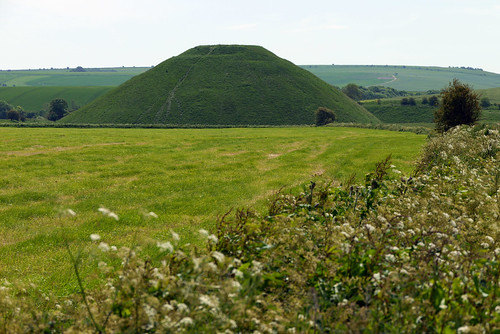
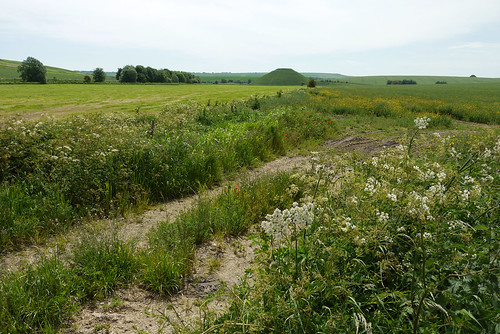
I have always been fascinated by Silbury Hill which is the largest man-made mound in Europe. Mysterious Silbury Hill compares in height and volume to the roughly contemporary Egyptian pyramids. Probably completed in around 2400 BC, it apparently contains no burial. There are many theories as to why the hill was built but the hill still refuses to give up its secrets.
The photos are from my recent visit but the text below is an article I wrote about Silbury Hill in 2008:
The May edition of Heritage Today has a very interesting article on the latest discoveries regarding the mysterious Silbury Hill. The hill is near Marlborough just on the edge of the A4.
In 2000 a large hole opened up and archaeologists and engineers teamed up to find a solution. The hole was caused by a shaft that had been sunk by the Duke of Northumberland in 1776. Furthermore the soil was seeping into various tunnels that had been channeled into the hill over the years. The largest tunnel was created by Professor Richard Atkinson in 1968. The BBC sponsored him to carry out the dig and Magnus Magnusson presented a programme from within. The entrance can be seen in the following picture (from Heritage Today magazine). To repair the hill all the voids had to be filled from the middle outwards with bags of chalk followed by a chalk and water mixture. The door to the entrance has now been placed in the nearby Alexander Keiller Museum in Avebury.
There have been many theories as to the significance of the hill; burial chamber for an ancient king, a platform for druid sacrifices and astronomical observatory are among the suggestions. The stabilising of the structure enabled archaeologists to shed a bit more light on the hill. It is now certain that there was no burial beneath the mound. A piece of pottery at the site has also established that the Romans had a settlement there.
Due to radiocarbon dating using pieces of antler it has now been established that the hill was started around 2400BC and probably went on for several hundred years. It is composed of a series of layers secured by stakes, then gradually built on top of. The mound eventually got covered by different layers of local material; clay, chalk, topsoil, turf and even some sarsen stones. Whilst looking in the main tunnel the archaeologists realised that the hill had started off as several mounds which later joined into the single mound, initially it stood 5 metres high. The mound grew to 25 metres high, the top part consisting of chalk that had been quarried from an adjacent ditch. At this stage it appears that the mound was left for a while as there is a layer soil showing signs that grass had colonised it. After this rest period more chalk was piled on top until the hill eventually stood at 37 metres high. It is the largest prehistoric mound in the whole of Europe that has been hand made by humans.
I shall leave you with the final paragraph from the article.
Silbury Hill has been called the British equivalent of the pyramids, but why did Stone Age man build it? Nobody knows, exactly. Quite apart from any ritualistic significance Silbury may have had for its builders, just constructing it would have been its own reward. Having such a great shared purpose would have helped the community to cohere. Perhaps future generations will say something similar of the people who came to repair the monument in the early twenty-first century. why has Silbury been mended? Because our nation is strengthened through doing it.
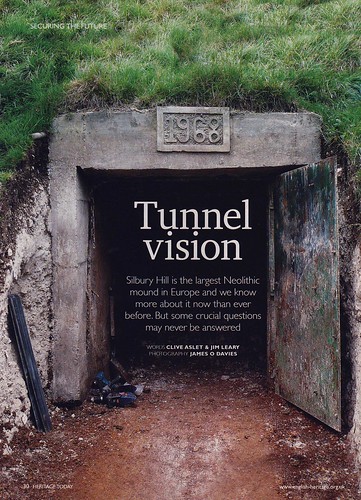
The last picture is a photograph taken of the cover of the May 2008 edition of Heritage Today, the magazine of English Heritage.
Tags: English Heritage, Silbury Hill, Weekend away, Wiltshire
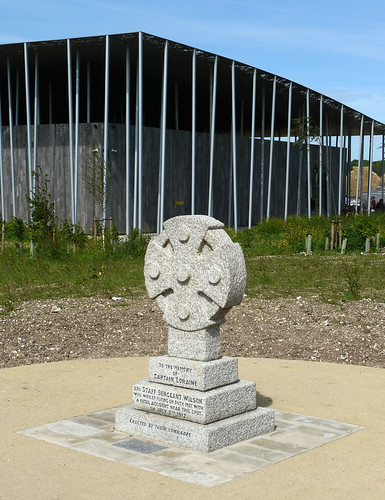
The grade II listed Airman’s Cross at Airman’s Corner was moved to a more fitting site as part of the changes to the Stonehenge access. The memorial is now placed where it is more accessible, where more people will be able to learn about this aspect of local aviation history. The Earl and Countess of Wessex attended the rededication service of the cross earlier this year.
This cross was erected in memory of two pioneering airmen who were killed in a flying accident near here in 1912. It marks this area as the cradle of British military aviation.
The open grassland around Stonehenge made it particularly suitable for flying early aircraft, and military flying began here in 1911. Within a year the Royal Flying Corps had been created.
Captain Eustace Loraine and Staff Sergeant Richard Wilson were flying a Nieuport monoplane from Larkhill airfield north of Stonehenge, on a routine training flight on 5 July 1912. They were executing a steep turn when, unaccountably, the aircraft crashed. The two men were the first members of the Royal Flying Corps to lose their lives on duty.
Captain Loraine’s enthusiasm for flying was infectious. Only weeks before the accident, he inspired his friend and former commanding officer Hugh Trenchard to learn to fly, which he did shortly after Loraine’s death. Trenchard would go on to command the Royal Flying Corps in France during the First World War and to become the founder of the Royal Air Force in 1918.*
*From a sign board next to the memorial cross.
Tags: Memorial, RAF, Stonehenge, Training
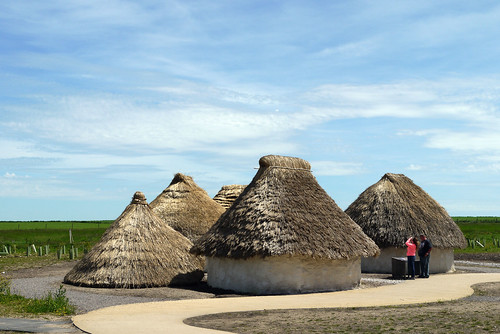
Just outside the Stonehenge visitor centre are five newly constructed Neolithic Houses. For some time I have been following a blog that showed the houses being constructed and I enjoyed seeing the finished result.
From the English Heritage website:
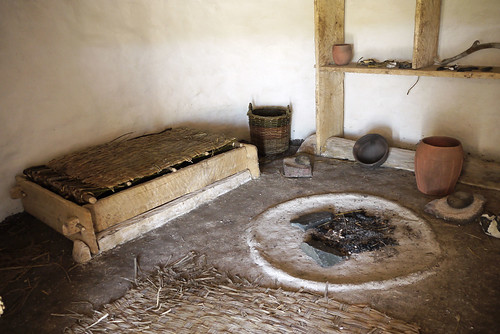
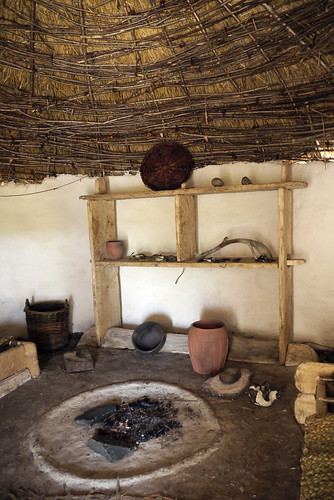
Five Neolithic Houses furnished with replica Neolithic axes, pottery and other artifacts, reveal the type of homes that the builders of the ancient monument might have lived in four and half thousand years ago.
The dwellings situated just outside the visitor and exhibition centre, are surprisingly bright and airy spaces and consist of a single room measuring 5 metres on each side with white chalk walls and floors designed to reflect sunlight and capture the heat from the fire. When fires are lit, the smoke from the hearth filters up through a thatched roof – knotted or tied straw carefully secured onto a hazel woven frame. Around the walls stands wooden or woven furniture – beds, seating, storage and shelving.
The Neolithic Houses help to re-connect the ancient stones with the people that lived and worked in the Stonehenge landscape. Visitors can step through the door of these houses and get a real sense of what everyday life might have been like when Stonehenge was built.
The re-created houses are closely based on the remains of Neolithic houses discovered during excavations in 2006 and 2007 at Durrington Walls, a large ceremonial earthwork enclosure, just over a mile to the north-east of Stonehenge. Radiocarbon dating showed that these buildings were built at around the same time as the large sarsen stones were being put up at Stonehenge, in approximately 2,500 BC.
Tags: Neolithic Houses, Salisbury, Stonehenge, Weekend away