 The polling stations are now closed and the die has been cast on whether the public have chosen to try an Alternative Voting (AV) system. When I arrived at my local polling station they estimated that around two thirds of the ward had either turned out to vote or cast a postal vote which was a lot higher than normal (with three hours still to go). Interesting…
My consideration when deciding how to vote was which choice is the most democratic. The latest ‘Wallbook Weekly‘ post by Christopher Lloyd explains that democracy first evolved 100 million years ago:
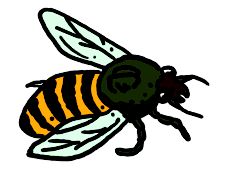
Bees make a collective colony-wide decision each year on where is the best location for their next nest. This is a critical decision – the very survival of the colony depends on it – so inevitably natural selection has determined that the best possible decision making process is the one that has stood the test of time.
I shan’t go into the intricacies of exactly how the bees do their voting – you can read all out it here or refer to the Honey Bees chapter on pages 152-3 of What on Earth Evolved? 100 Species that Changed the World.
But in summary, a team of scouts will identify various potential nesting sites and then report back the location of each one to the rest of the community by means of their various dances. Other bees check out the sites before returning to the nest and scoring each one based on the length of the dance they perform in the direction of the site they think is best. After about two weeks the site with the best score is the winner and the colony swarms. It has been estimated that using this form of range voting, bees will choose the best location approximately 90% if the time.
If such excellent decision-making already exists in nature, why don’t we humans follow the same pattern in our own fledgling democracies?
One view is that bees have had millions of years to learn – through trial and error – what works best, while human forms of democracy are still very much in their infancy. Another is that modern humans are an arrogant species usually incapable of learning and listening to nature – at least in our modern, urban form.
So what does all this have to do with the choice we made today?
Well, the idea of scoring votes is clearly much closer to AV than is our traditional system of first-past-the-post. And the reason bees use scoring rather than first-past-the-post isn’t just because it tends to make better decisions. It’s also because a colony of bees has evolved to behave like a super organism not an aggregation of individuals.
What that means is that no single bee is precious of its own right to an individual vote, or is in the least bit concerned about how effectively the colonies government suits its own individual self-interest. Instead, bees do what is best for the survival of their genes throughout the generations to come. The absence of fertility in many individual bees is another aspect of this super efficient decision making body. In the same way, individual cells in our bodies sacrifice themselves for the good of our corporate whole through a process called apoptosis. When they do not, we get cancer.
Range voting therefore tends to be about making decisions that are best for the community as a whole – regardless of any individual’s self-interest. Conversely, first-past-the-post systems tend to have more to do with the inalienable right of an individual voter to cast their vote exclusively for a single candidate (or party), regardless of whether that candidate counts for more or less than 50% of the votes cast.
Mother nature always knows best 
You can read the full article here.