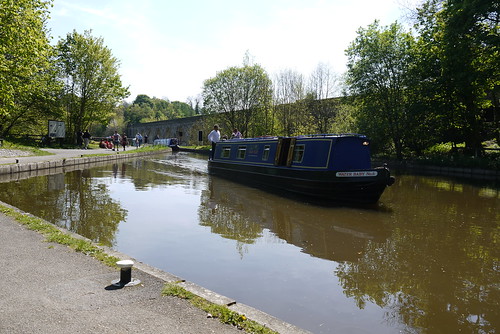
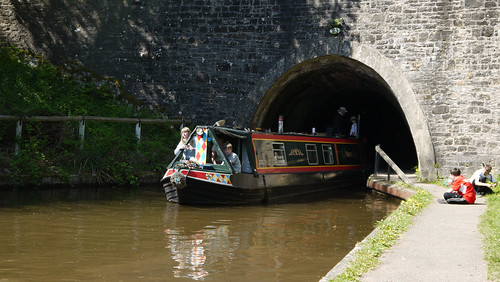
Chirk Tunnel is 420m (459 yards) in length and is one of two tunnels at Chirk; the other is the shorter Whitehurst Tunnel. The tunnels are significant in that they were the first tunnels in Britain to incorporate a tow-path.
Random thoughts and photos of my journey through life…
Chirk Tunnel is 420m (459 yards) in length and is one of two tunnels at Chirk; the other is the shorter Whitehurst Tunnel. The tunnels are significant in that they were the first tunnels in Britain to incorporate a tow-path.
14 Comments CherryPie on May 28th 2011

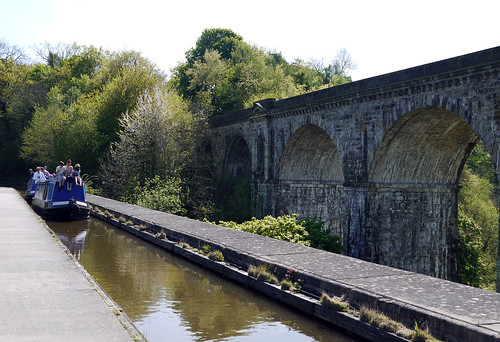
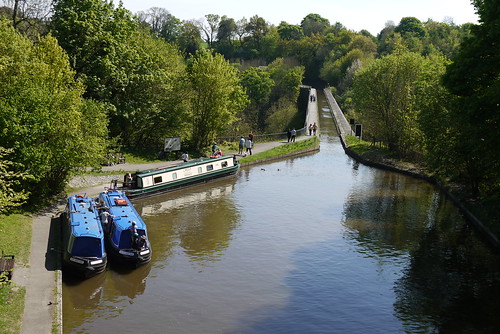
Chirk aqueduct is 70 feet high and was built between 1796 and 1801 by Thomas Telford and William Jessop.
The ten circular masonry arches of the structure, each spanning 40 feet, have piers carried between them as pilaster strips. There is no cast iron trough carrying the water of the canal, as at Pontcysyllte. Instead, the bed is of iron plates, bolted together, with the side walls built of stone quarried locally at Pont Faen.
The relationship of the sets of arches running parallel with one another conjures up images of “Roman grandeur” as the architect, Edward Hubbard says in “Buildings of Wales, Clwyd” and one perhaps thinks particularly of the aqueduct at Tarragona, Spain. The view as one walks towards them is certainly romantic, particularly in strong sunlight and has caught the imagination of artists and writers in the past. There are drawings of the aqueduct by G.Pickering and Henry Gastineau of the early 19th century.
The viaduct that stands along side the aqueduct stands 100 feet high.
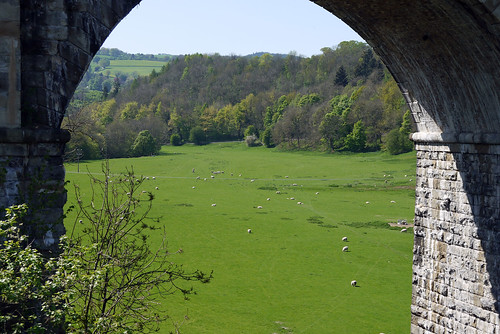
The railway viaduct at Chirk which was erected in 1846-8 and rebuilt in 1858 was the work of the Scottish engineer Henry Robertson. The 100 feet high stone structure was built for the Shrewsbury and Chester Railway and has ten spans with round arches between pedimented abutments containing niches. Three further arches at either end of the viaduct replace former timber spans and are dated 1858-9. The viaduct stands some 30 feet above the adjoining aqueduct.
For more of this weeks PhotoHunt pictures check out tnchick.
22 Comments CherryPie on May 27th 2011
8 Comments CherryPie on May 27th 2011
Today was a bit of a messy day. It included sorting out complicated emergency requirements (at work) and meetings (at work) and a dentist appointment (at lunch time). I also seemed to get caught up in a strange time-warp. I left the office at 16.40 to arrive at Weight Watchers at 17.00. As I was parking my car outside the meeting place I noticed that the clock on my car said 15.57. I checked my watch and and it displayed the same time 15.57…
I had an hour to spare, so what did I do? I read the book I was carrying in my bag, it is called ‘Mapping Time‘. The truth is always stranger than fiction 
Weight loss… The graph speaks for itself.

6 Comments CherryPie on May 26th 2011
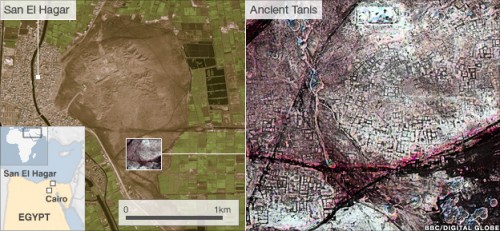
A new satellite survey of Egypt has discovered 17 lost pyramids. The work has been pioneered at the University of Alabama at Birmingham by US Egyptologist Dr Sarah Parcak. The BBC report that more than 1000 tombs and 3000 ancient settlements were also revealed by the infra-red images. The satellites orbited 700km above the earth and were equipped with cameras that are able to pin-point objects less than 1m diameter on the earth’s surface. Following the observations, test excavations took place:
Ancient Egyptians built their houses and structures out of mud brick, which is much denser than the soil that surrounds it, so the shapes of houses, temples and tombs can be seen.
“It just shows us how easy it is to underestimate both the size and scale of past human settlements,” says Dr Parcak.
And she believes there are more antiquities to be discovered:
“These are just the sites [close to] the surface. There are many thousands of additional sites that the Nile has covered over with silt. This is just the beginning of this kind of work.”
8 Comments CherryPie on May 26th 2011
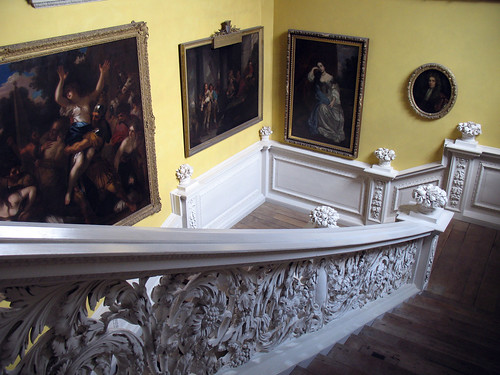
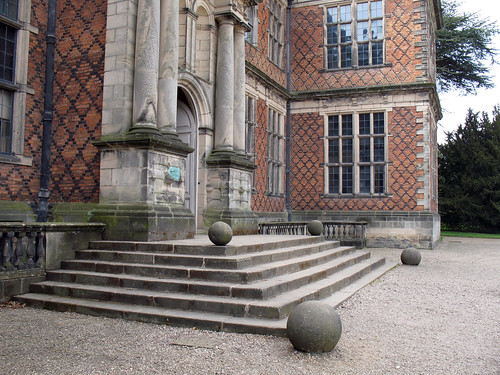
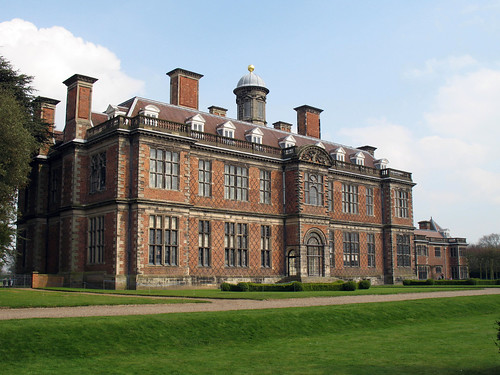
Sudbury Hall is largely the creation of George Vernon who succeeded to the estate in 1660 and subsequently began to rebuild the home the old manor house of his ancestors, probably to his own designs:
Of all the great houses built in Charles II’s reign, Sudbury Hall is one of the most idiosyncratic: a marriage of old-fashioned Jacobean features (particularly on the exterior_ with carved stone, wood and plasterwork in the up-to-date classical style of Sir Christopher Wren’s City Churches. Some of the magnificent interior decoration was not completed until 30 years after the house was begun, and as time progressed, prvincial craftsmen, like the plastere Samual Mansfield and the carver William Wilson, were replaced by the more fashionable London men, including Edward Pierce, Gringling Gibbons, Thomas Young and the plasterers Bradbury and Pettifer. The finishing touches came only in the 1690s, with Louis Laguerre’s Baroque murals and painted ceilings to the Staircase, Saloon and other rooms.*
Sudbury remained the home of the Vernon family until it was given to the Treasury in 1967 in part payment of the 9th Lord Vernon’s death duties. Ownership was subsequently transferred to the National Trust.
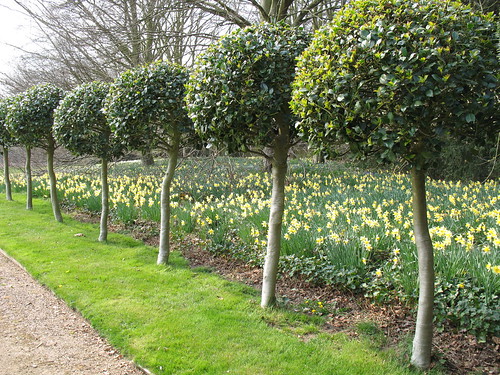
*Information from the National Trust guidebook.
12 Comments CherryPie on May 25th 2011
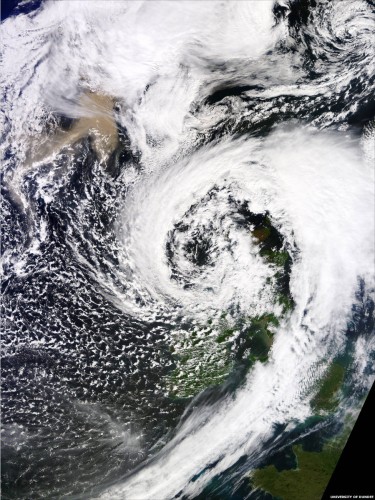
From the BBC:
The ash cloud from the Icelandic volcanic eruption is captured on a satellite image as it approached the UK.
The pink-coloured drifting ash, in the top left of the picture, was taken by Nasa’s Terra satellite on Monday afternoon and has been published by Dundee University’s Satellite Receiving Station.
The white cloud sitting over north west Scotland is a low pressure system which has brought high winds and heavy rain to many areas of Britain.
The winds are coming from a north-westerly direction, blowing anti-clockwise round the low pressure system, drawing the ash plume from the volcano towards the northern half of Britain.
From Jon Gustafsson on 21st May 2011:
Haven’t really had time to watch the video. Volcano season keeps me pretty busy. I cut it on board the helicopter on the way back from the eruption. Threw some music from the fantastic composer Veigar Margeirsson (veigar.com) on it and posted it here.
It took us 90 minutes to fly to Grimsvotn with a strong wind against us. The eruption looked magnificent in the sunset. Once we landed 5 miles away from the crater the cold glacier air hit us like a truck. We tried to work outside but I only lasted for a couple of minutes. Pilot Reynir Petursson also didn’t want to stay on the ground for too long since it was very windy and the ash fall was unpredictable. The light was also disappearing and he needs visual reference which is difficult on a white glacier. Once we got off the ground again we had to stay low because there were so many lightnings all around the eruption. Getting hit by a lightning in that strong wind, extreme frost and next to a live volcano was not desirable. We made it back to Reykjavik at 2am. Now the airspace has been closed in a 20 nautical miles radius because of ash.
Volcanic Eruption in Grimsvotn, Iceland May 21 2011 from Jon Gustafsson on Vimeo.
12 Comments CherryPie on May 24th 2011