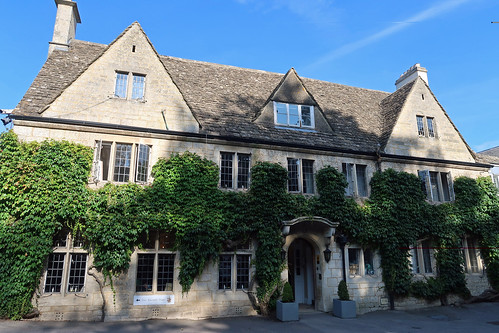
In Brighton we stayed in a fabulous room with a view, just perfect for our special celebration.
6 Comments CherryPie on Jul 15th 2023
Bignor Roman Villa was discovered by George Tupper, a farmer in 1811 when his plough hit a large stone. The discovery led to the site being excavated by John Hawkins who lived in the nearby Bignor Park, and Samuel Lysons. The site, still owned by the Tupper family opened to the public in 1814.
The villa is situated just north of the South Downs close to Stane Street, about nine miles northeast of Chichester (the Roman city of Noviomagus Reginorum) and the nearby and much larger Fishbourne Roman Palace.[1] It is on the south-facing slope of a ridge of greensand which provided better conditions for agriculture than the nearby chalk; this fact and its proximity to Roman Chichester meant that the owners were able to become wealthy from farming.[1]
The existence of a Romano-British farmstead on the site by the end of the 1st century is indicated by finds,[1] but the earliest structural remains are of a simple timber farm structure dating to around 190 AD.[2] A four-roomed stone building was built in the middle of the 3rd century AD, and this was extended between c.240 and 290 AD by the addition of a few new rooms, a hypocaust, and a portico that faced east towards Stane Street. *
This building became the western wing when north and south wings were added at the turn of the fourth century.[2] In its final form, the villa consisted of some sixty-five rooms surrounding a courtyard, with a number of outlying farm buildings.[2] The latest phase of building involved additions to the north wing between c.300 and 350 AD, and it is here that most of the fine mosaics are located.
The later history of the villa is not well known, but it appears to have gradually declined in status,[2] rather than suffering a catastrophic fate, such as the fire that destroyed most of Fishbourne Palace.*
* Information from Wikipedia
8 Comments CherryPie on Jul 14th 2023
There are nearly 1,000 years of history at this great castle, situated in magnificent grounds overlooking the River Arun in West Sussex and built at the end of the 11th century by Roger de Montgomery, Earl of Arundel.
The oldest feature is the motte, an artificial mound, over 100 feet high from the dry moat, and constructed in 1068: followed by the gatehouse in 1070. Under his will, King Henry I (1068-1135) settled the Castle and lands in dower on his second wife, Adeliza of Louvain. Three years after his death she married William d’Albini II, who built the stone shell keep on the motte. King Henry II (1133-89), who built much of the oldest part of the stone Castle, in 1155 confirmed William d’Albini II as Earl of Arundel, with the Honour and Castle of Arundel.
Apart from the occasional reversion to the Crown, Arundel Castle has descended directly from 1138 to the present day, carried by female heiresses from the d’Albinis to the Fitzalans in the 13th century and then from the Fitzalans to the Howards in the 16th century and it has been the seat of the Dukes of Norfolk and their ancestors for over 850 years. From the 15th to the 17th centuries the Howards were at the forefront of English history, from the Wars of the Roses, through the Tudor period to the Civil War.
The building we see now owes much to Henry, 15th Duke of Norfolk (1847-1917) and the restoration project was completed in 1900. It was one of the first English country houses to be fitted with electric light, integral fire fighting equipment, service lifts and central heating. The gravity fed domestic water supply also supplied the town.
8 Comments CherryPie on Jul 13th 2023
6 Comments CherryPie on Jul 13th 2023
The garden is a memorial to the 14th Earl of Arundel, an avid art collector. The garden has a central canal with a domed pergola and fountains. The centrepiece of the garden is a rockwork mountain planted with palms and ferns to represent another world. A green oak version of ‘Oberon’s Palace’ flanked by two oak obelisks has a shell lined interior with a stalagmite fountain with a gilded coronet ‘dancing’ on a jet of water.*
* Information from Arundel Castle by John Martin Robinson
8 Comments CherryPie on Jul 11th 2023
The idea of seeing the sea – of being near it – watching its changes by sunrise, sunset, moonlight, and noonday – in calm, perhaps in storm – fills and satisfies my mind.
Charlotte Bronte
4 Comments CherryPie on Jul 9th 2023
The Fitzalan Chapel is the chancel of the church of St Nicholas in the western grounds of Arundel Castle.
The church of St Nicholas is one of the very few church buildings that is divided into two worship areas, a Roman Catholic area (the chancel) and an Anglican area (the nave and transepts). The chancel of the Fitzalan Chapel, is used as the private mausoleum of the Dukes of Norfolk. It is a Grade I listed building.[1]
Richard FitzAlan, 3rd Earl of Arundel, was responsible for the building of the Chapel posthumously according to his will. The original Fitzalan Chapel consisted of the entire building, and was built as the Collegiate Church of the Holy Trinity in 1380 by commission of Richard FitzAlan, 4th Earl of Arundel, whose family owned Arundel Castle. It is an example of Perpendicular Gothic architecture, and the architect and mason is believed to have been William Wynford. A number of noted Fitzalan and Howard family members are buried in the chapel, many in tombs adorned with sculpted effigies. Most of the recently deceased Dukes of Norfolk are buried there.[2]
6 Comments CherryPie on Jul 8th 2023