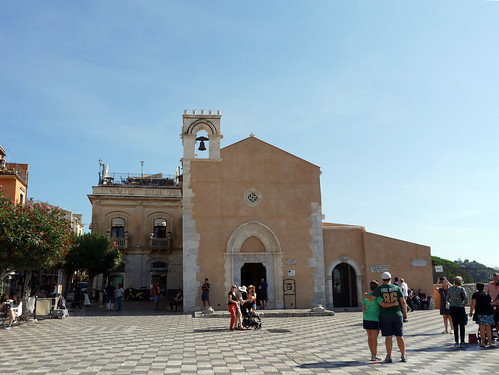
Church of Sant' Agostino

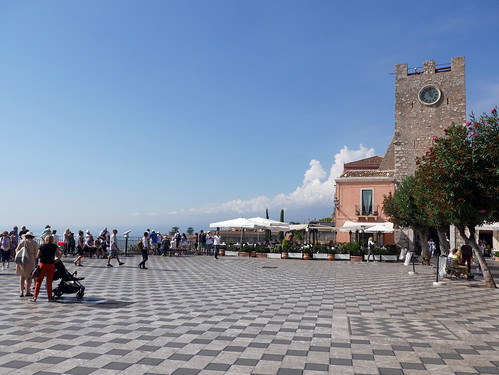
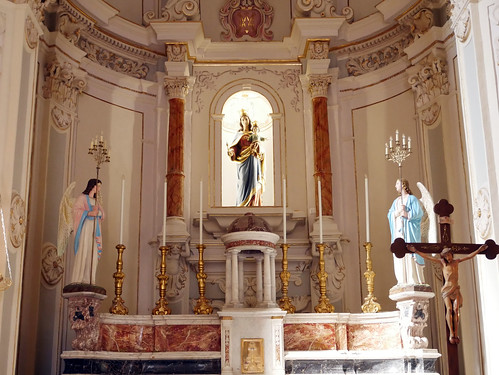
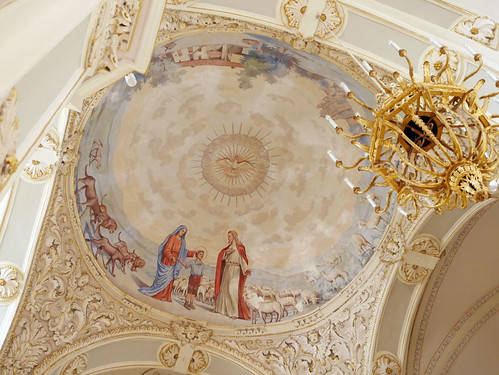
The Church of St. Augustine is located in one of the loveliest corners of Taormina. We are talking of the famous Piazza IX Aprile reached along the equally famous Corso Umberto that runs through the city of Taormina. From here you can admire the Gulf of Taormina and the imposing profile of Etna which dominates the eastern area of Sicily. Built in 1448, the Church of St. Augustine was founded after the city was liberated from the plague, as a sign of devotion to Saint Sebastian. With the arrival of the Augustinian friars of Taormina, the church was enlarged and took on the appearance of a convent no longer facing San Sebastiano but in St. Augustine. Entering inside the church will immediately notice the ceiling characterized by the presence of wooden beams with the side arches and Corinthian columns fake. The original Gothic-Sicilian style late through a transformation phase around 1700, when the great pointed arch of the main entrance was replaced with a stone lintel of Taormina. Today, the original facade, it remains only a small rosette and the top of the arched portal. The church of St. Augustine is now used as a library.

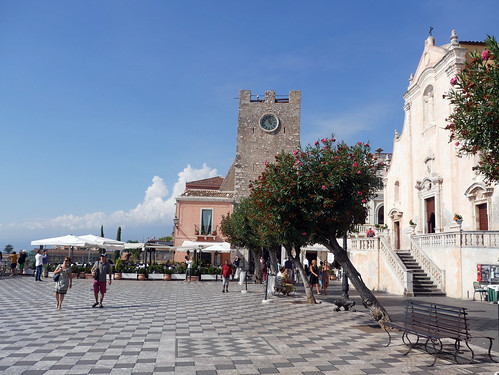
Church of Sant' Agostino

8 Comments CherryPie on Feb 1st 2020

Piazza IX Aprile

The square is known for the breathtaking view of the azure Ionian Sea and of the Mount Etna.

Lined with pricey cafés and brimming with visitors and caricature artists, it’s the best place to sit back with a cappuccino and enjoy the relaxed resorty ambience of Taormina.

The square was named after the 9th of April, 1860, when mass in the Taormina cathedral down the street was interrupted to announce that Garibaldi had landed at Marsala (on the far side of the island) to begin his conquest of Sicily that made it part of Italy

Actually, the news proves false. In fact Garibaldi landed at Marsala exactly one month later, on 9 May 1860. However, the inhabitants of Taormina wanted to recall  that date dedicating the most beautiful square.

Piazza IX Aprile

4 Comments CherryPie on Jan 31st 2020

Church of San Giuseppi

This church, dedicated to St. Joseph, is located next to the Clock Tower and faces out onto Piazza IX Aprile. A double staircase, with a balustrade of Syracuse stone, leads up to the entrance.

The gable façade in the baroque style, has a large central portal that leads into the church, and two small side portals, of which the right places in the sacristy and the left one leads to a recreation room that is often used for exhibitions of painting.

The monumental main portal is made with marbles of Taormina from different varieties, jambs and architrave in white, grey and pink in the other decorative pieces.

On the right side of the church stands the great bell tower, the lower part of which is made from large blocks of Taormina stone.

The interior, decorated with stucco work of the eighteenth century reproducing floral motifs and heads of winged angels, has a single nave with a transept that has at its center a dome where you can admire a fresco depicting St. John Bosco child between Madonna and Jesus.

The main altar of the church is made with Taormina marble. Under the tabernacle there is inlaid the Madonna rises above the souls in Purgatory.
Behind the altar, in a niche of the apse there is the statue of Maria Ausiliatrice.

Above the main altar, on the right, there is in a niche the statue of St. John Bosco with two boys, while to the left  there is a statue of St. Joseph.

Beside the altar of St. Joseph  there is another niche which houses the wood and glass urn with the statue of the Dead Christ, which is carried in  procession on Good Friday.

The pulpit is located at the base of the arch before the main altar. Next to the pulpit there is a small marble statue of Saint Dominic Savio, the saint of mothers and cradles, which holds a chart in the left hand with the words: “Death rather than sin – Domenico Savio 1857“, while in the right hand he is holding a crucifix on his chest.
In the sacristy of the church is remarkable a Taormina pink marble fountain  placed in a niche surrounded by a round arch; at the top of the arc there is depicted the Virgin Mary with the souls in the flames of Purgatory at her feet, which is identical to that shown on the front of the main altar.

Church of San Giuseppi

Church of San Giuseppi

Church of San Giuseppi

12 Comments CherryPie on Jan 29th 2020

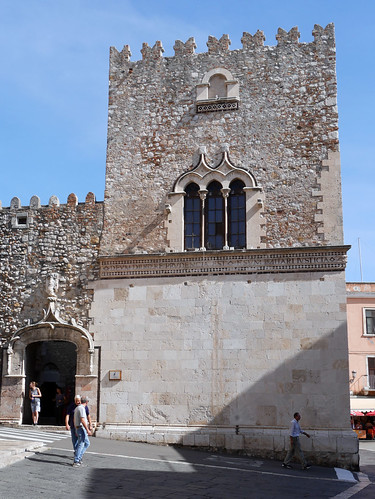
Palazzo Corvaja

The first part of this medieval palace was built in the 10th century, when Arabs conquered the city from Byzantine Imperium. It was a cube-shaped tower that was used for defending the town.

The tower was extended in the 13rd and 14th century assuming the current characteristic mix of styles: Arabic (the tower), Norman (the fifteenth-century hall where the Parliamentary meeting were held), and Gothic (the shape of the façade windows).

In 1411 the building housed the Sicilian Parliament that chose the King, in the presence of Queen Bianca of Navarra, regent of the Kingdom of Sicily.

The mansion is named after the Corvaja family, one of the oldest and most noble families in Taormina. This powerful aristocratic family owned the palace from mid-16th through mid-20th centuries giving it its final shape.

On the South-West side there is the entrance portal with a staircase that goes from the courtyard to the first floor. On the landing there are three magnificent panels in Siracusa stone scuplted in high-relief: the first one pictures the creation of Eve; the second panel, the originai sin; and the third is of the expulsion of Adam and Eve from Paradise.

The 15th century hall, where the Sicilian Parliament meetings were held, is all in Norman style. On the left there is a small room with fine frescos. At the center is represented Daniel in the lions’ den. On the South-West side is the fresco of the Mother of the Maccabees, on the South-East side the Ahasuerus and Esther with the scaffold prepared by Aman for Mardoche, while on the northeast side the flight into Egypt.

Palazzo Corvaja was in a pitiful state of total neglect with several families living there at the one time until the end of the Second World War in 1945. That same year the first mayor of Taormina had the building dispossessed and Armando Dillon, a Neapolitan architect, restored it all from 1945 until 1948.

Today, the Corvaja Palace houses the tourist office and the Museo di Arte e Tradizioni Popolari, which has a collection of Sicilian puppets and folk art and carts.

Palazzo Corvaja

16 Comments CherryPie on Jan 29th 2020

Walks. The body advances, while the mind flutters around like a bird.

Jules Renard

Pathway

12 Comments CherryPie on Jan 27th 2020

Palazzo dei Duchi di Santo Stefano

The Palazzo Duchi S. Stafano is located on the Via de Spuches right next to the town gate Porta Catania in Taormina.

It was the residence of the spanish aritocratic family De Spuches, dukes of Santo Stefano. The palazzo was built in the 14th century and exhibites fine examples of Sicilian Romanesque and Gothic style, fitted with Arabic-Norman elements.

During the second world war it was damaged in large parts, yet it was completly restored in the 1960s after it becane property of the city.

A small room on the ground floor is often used for exhibitions while the first floor presents a permanent exhibition of the sculptor Guiseppe Mazzullo.

Palazzo dei Duchi di Santo Stefano

Palazzo dei Duchi di Santo Stefano

Palazzo dei Duchi di Santo Stefano

Palazzo dei Duchi di Santo Stefano

Palazzo dei Duchi di Santo Stefano

Palazzo dei Duchi di Santo Stefano

Palazzo dei Duchi di Santo Stefano

12 Comments CherryPie on Jan 24th 2020

Fungi

A couple of days ago a local lady member of the #walk1000miles challenge led a fascinating history walk around Telford Town Park and beyond, not to mention the secret watery delights hidden just out of sight.

I enjoyed meeting my fellow Badgers (participants of the #walk1000miles challenge) and it was an added bonus to have a mini reunion with two of my former work colleagues.

Slag Works

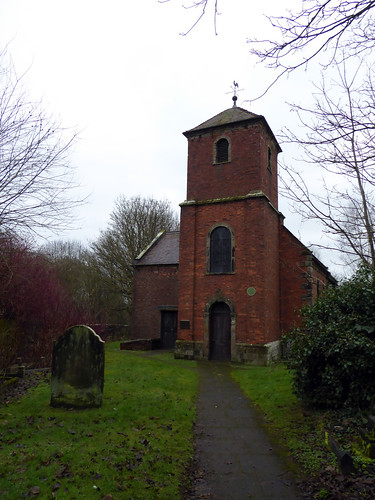
St James' Church, Stirchley

St James' Church, Stirchley

St James' Church, Stirchley

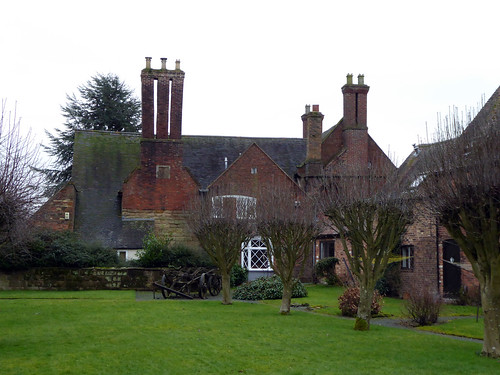
Stirchley Hall

Stirchley Hall

Walkers

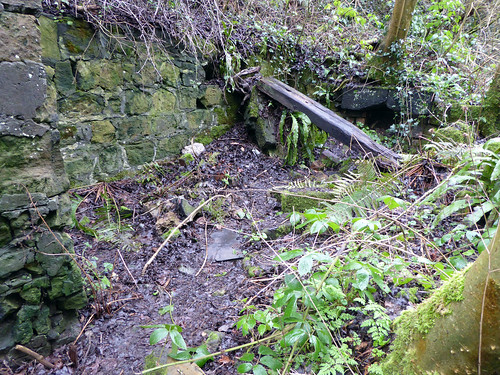
Remains of a Building

Nature Reclaiming Her Own

The Shropshire Canal

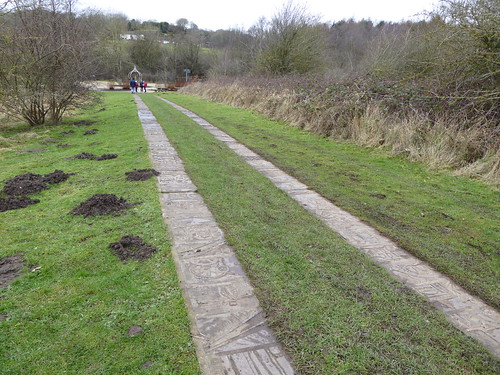
Thomas Telford Memorial Pathway

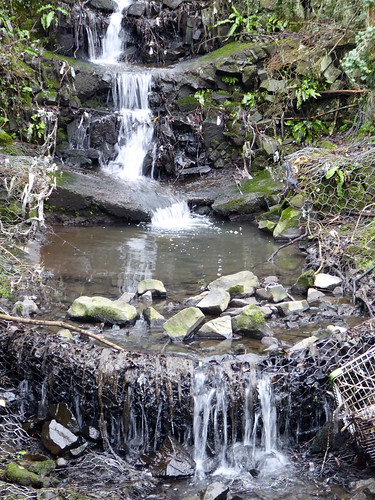
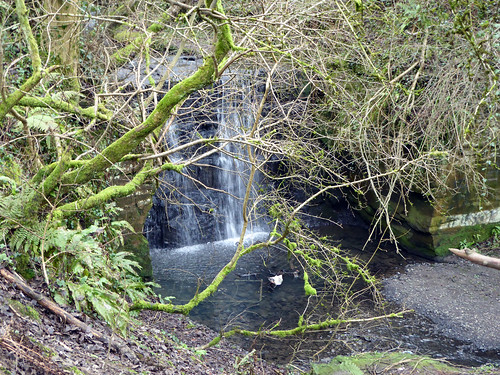
Hidden Waterfall

Hidden Waterfall

The Shropshire Hills Shrouded in Mist

14 Comments CherryPie on Jan 23rd 2020

« Newer Posts - Older Posts »