

Random thoughts and photos of my journey through life…
16 Comments CherryPie on Aug 16th 2019
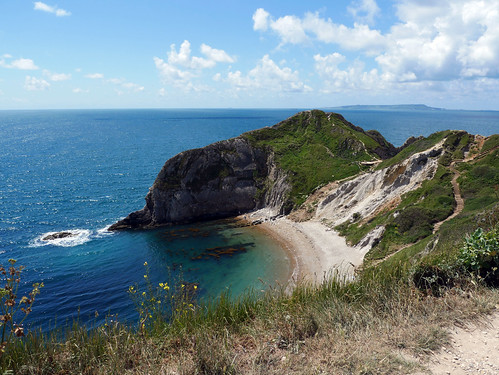
Durdle Door is probably the most famous stone arch anywhere in the world. It was created when the sea pierced through the Portland limestone around 10,000 years ago. Looking west over the beach, isolated stacks out at sea show where an older coastline once lay. This part of the coast is formed from merged bays and shows how Lulworth Cove and Stair Hole may look in several thousand years time.
By following the natural cliff path down to Durdle Door beach, or the steps to Man O’War beach, the tilted Purbeck Beds are clearly visible. At the base of the chalk cliffs a number of caves can be seen which have been carved out by the sea (wave cut notches).
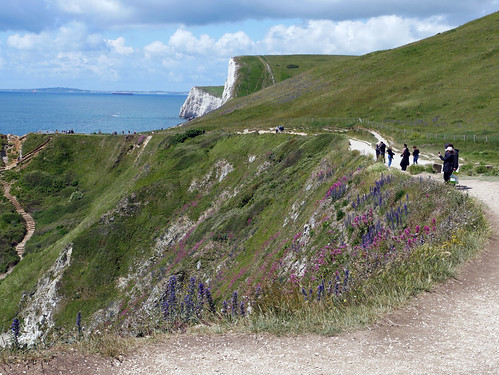
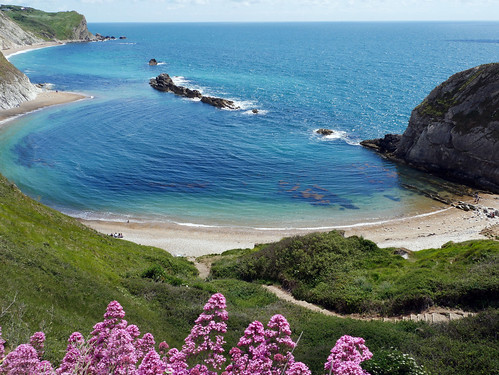
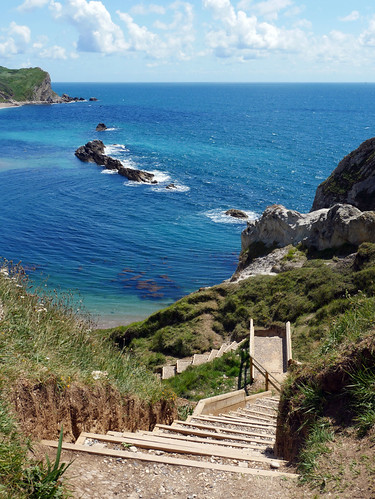
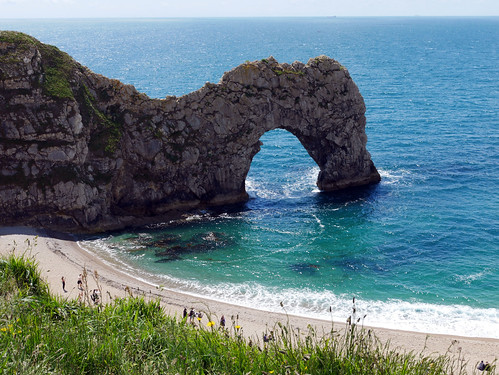


The caves should not be entered as cliff falls are common. Since our visit in June there has been ground movement in Man O’War Bay so there is currently no access to that beach area.
18 Comments CherryPie on Aug 14th 2019

Today I had to wait in for a delivery. But later, in the afternoon I was able to go out for a brief walk on one of my local pathways which was lovely (as always).
I love the little downwards path in this photograph. Today it looked as if autumn had arrived early but in reality the trees are a little parched causing the leaves to drop.
The walk was followed by ‘Fine Dining’, although sadly not alfresco on the patio. Just at the wrong moment the sun became obscured by cloud.

10 Comments CherryPie on Aug 13th 2019

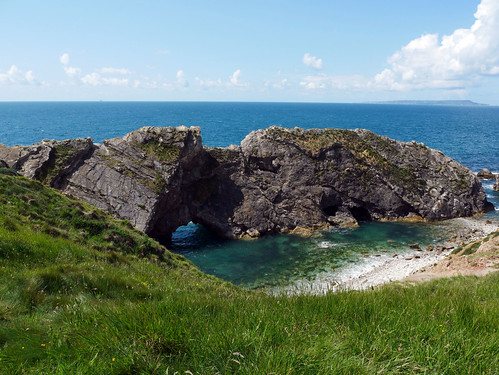
Formed by the combined forces of the sea and a river swollen by melting ice at the end of the last Ice Age. Lulworth Cove is world famous for its unique geology and landforms including the Lulworth Crumple and Stair Hole.


Lulworth Cove, Dorset, is a small, almost circular bay with a narrow opening to the sea.
Together with the adjacent cliffs and St Oswald’s, Mupe and Worbarrow Bays it is the best example in Europe of the interaction of marine erosion on an alternating sequence of hard and soft rocks.


Stair Hole is a minor landform to the west of Lulworth Cove. It has formed due to the concordant nature of the coast (geological structure runs parallel to the coast), and shows how coves (shell-shaped bays) are likely to develop in their initial stages. The rock types found in Stair Hole are the Portland Limestone, the Purbeck Beds and the Wealden Clay.

12 Comments CherryPie on Aug 12th 2019
Peace I leave with you, my peace I give unto you: not as the world giveth, give I unto you. Let not your heart be troubled, neither let it be afraid.
John 14.27

10 Comments CherryPie on Aug 11th 2019

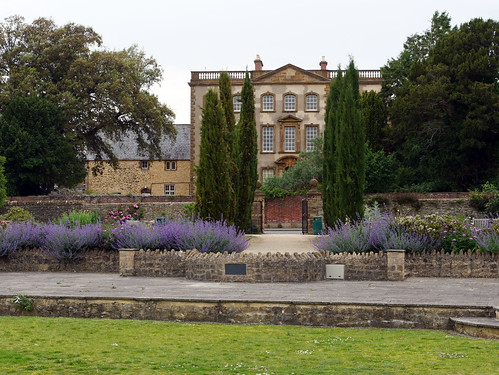
In October 2005, Mr Alan Titchmarsh, the well known gardening celebrity, officially opened the first new public garden in Sherborne for 100 years commemorating 1300 years since the founding of Sherborne Abbey and town.

The open space that is now Paddock Garden was once occupied by a row of cottages facing onto Newland. These were destroyed around 1735 to open the view across the valley to the hills for the owner of Sherborne House and the ground was used as a Paddock for his household. The foundations of the original cottages still lie beneath the present garden.
Lord Digby’s School for Girls moved to Sherborne House in November 1931 and two grass courts and the three hard courts were laid out in the Paddock to provide tennis and netball facilities for the girls. The three hard courts were destroyed on 30th September 1940 when German bombers dropped their bombs during a raid on Sherborne and those were not fully repaired until 1947.
In 2005 Sherborne Town council became the owners of the Paddock and held a public competition to find the best garden design.*


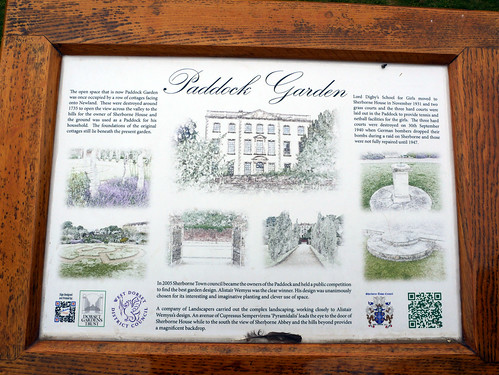
*from an information board in the garden
4 Comments CherryPie on Aug 11th 2019
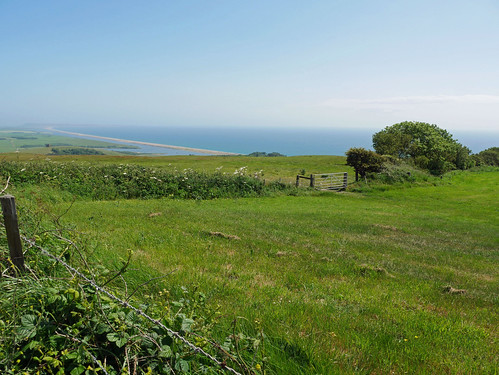
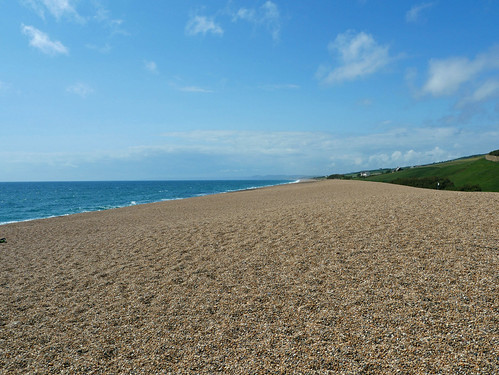
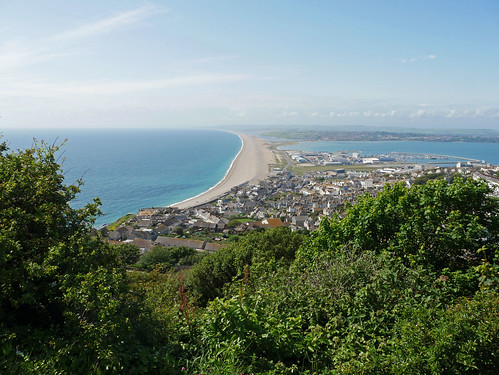
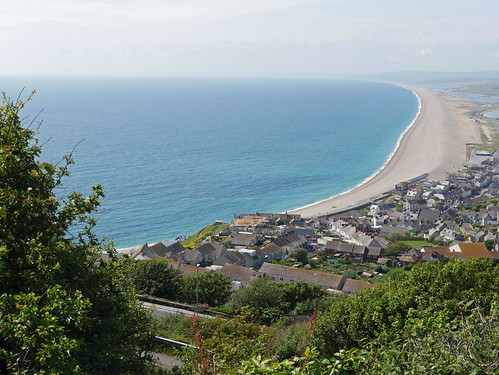
After visiting West Bay (see previous post) we drove along the Jurassic coast that reveals views of Chesil Beach. We stopped off near Abbotsbury to briefly step out onto the pebble beach before continuing along the coastal route to the Isle of Portland where we viewed Chesil Beach from just outside The Heights Hotel.
Chesil Beach is 18 miles (28 kilometres) long and on average is 160 metres wide and rises to 12 metres in height.
It is a pebble and shingle tombolo connecting Portland to Abbotsbury and then continuing north-westwards to West Bay near Bridport.
It is the largest tombolo in the UK.
The pebbles are graded in size from fist-sized near Portland to pea-sized at Bridport.
The pebbles are mainly a mix of flint and chert, with some quartzite pebbles from Buddleigh Salterton.
The origin of the beach continues to be argued over with some proposing it is actually two beaches.
The stretch from West Bay to Abbotsbury appears to have different characteristics to the stretch from Abbotsbury to Portland.
Chesil Beach shelters Weymouth from the prevailing wind and waves and prevents the area being eroded by wave action.
Evidence suggests that Chesil Beach is no longer being replenished by natural means.
The beach forms part of the Dorset and East Devon World Heritage Site, known as the Jurassic Coast.


15 Comments CherryPie on Aug 8th 2019