Untitled

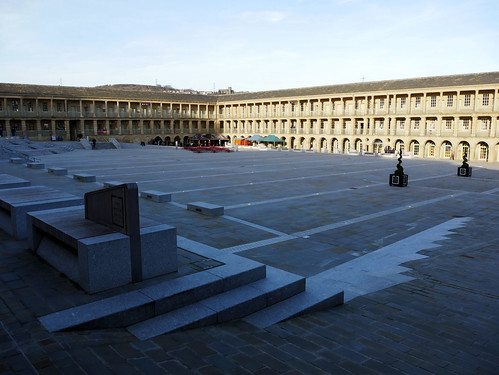
The Grade I listed Piece Hall, Halifax is a rare and precious thing, an architectural and cultural phenomenon which is absolutely unique. It is the sole survivor of the great eighteenth century northern cloth halls, a class of buildings which embodied the vital and dominant importance of the trade in hand woven textiles to the pre-industrial economy of the West Riding of Yorkshire, from the Middle Ages through to the early nineteenth century.

Dating from 1779, when it was built as a Cloth Hall for the trading of ‘pieces’ of cloth (a 30 yard length of woven woollen fabric produced on a handloom), The Piece Hall was the most ambitious and prestigious of its type and now stands in splendid isolation as the only remaining example. It is one of Britain’s most outstanding Georgian buildings.

It is impossible to overstate the scale and importance of this trade, not just to the history of Halifax and the West Riding, but to the nation as a whole over some 800 years between the twelfth and eighteenth centuries.

When it was built, The Piece Hall was a highly visible statement of the great wealth, pride and ambition of the cloth manufacturers. Although built for trade, it also embodied the most cultured sensitivities of the Enlightenment; these bluff northern manufacturers deliberately chose a design for their building which adapted the neo-classical orders of architecture derived originally from the Romans.

From its inception, The Piece Hall was a stunning combination of commerce and culture, an icon of hard business but also a broader statement about the history, the lives and the values of its surrounding community. This fascinating mix of purpose and idealism – business, arts and people, continues to influence and drive The Piece Hall’s role today. A direct link back over almost a quarter of a millenium of history.

Untitled

Untitled

Untitled

Untitled

8 Comments CherryPie on Apr 5th 2019

Leeds Dock

Leeds Dock

12 Comments CherryPie on Apr 2nd 2019

A photograph is neither taken nor seized by force. It offers itself up. It is the photo that takes you. One must not take photos.

Henri Cartier-Bresson

Sunset

6 Comments CherryPie on Mar 31st 2019

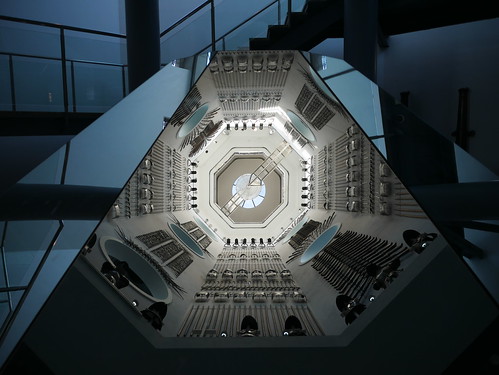
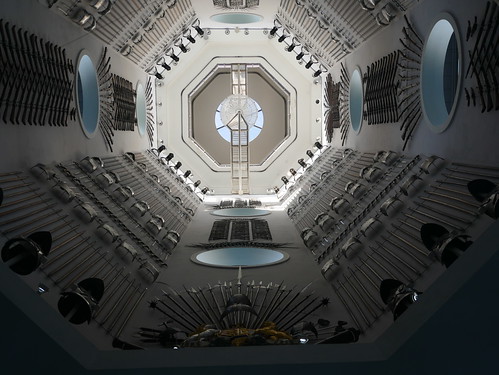
The Hall of Steel

The Hall of Steel is the architectural centerpiece of the Royal Armouries Museum in Leeds. This elegant steel and glass tower is unusual in that the double-glazed glass panels are fixed to an external stainless steel frame.

The displays on the stairwell consist mainly of 17th-century armour and 19th-century military equipment. There are over 2,500 items and they represent the largest mass display of arms and armour assembled since the 19th century.

The fashion for displaying arms and armour in geometrical patterns dates back to the late 17th century, when decorative displays were installed at the Tower of London, Windsor Castle and Hampton Court. The Hall of Steel display is based on those designs. *

The Hall of Steel

* Information from the Royal Armouries Souvenir guide book

12 Comments CherryPie on Mar 27th 2019

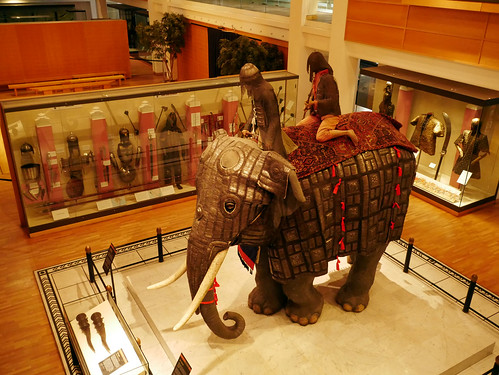
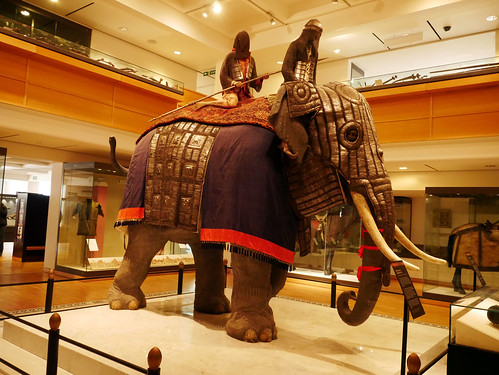
Elephant Armour

Elephants played a role in warfare from the first millennium BC until the 19th century. They were used mainly in India and Southeast Asia but also occasionally in western Asia, north Africa, Spain and Italy.

During battles trained war elephants were able to trample men and horses or pick them up and throw them. They also performed an important function as intimidating vantage platforms from which rulers and high-ranking officials could direct their forces.

Elephants were prominent targets on the battlefield and their protections was important. From at least the 11th century AD until well into the Mughal period, sources from across the Indian subcontinent describe or illustrate war elephants equipped with different types of bargustavan-i-pil (elephant armour).

The reputation of war elephants was so fearsome that their true military value is difficult to assess. *

Elephant Armour

Elephant Armour

Elephant Armour

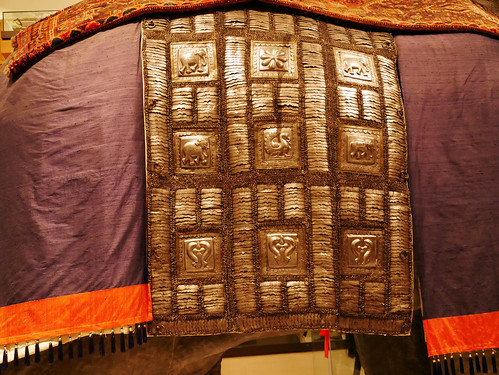
This example of elephant armour  (bargustavan-i-pil) is from India and probably dated late 16th – 17th century.

This is the only known surviving example of a near-complete mail and plate elephant armour in any public collection in the world. It was probably made in an Indian arsenal in the late 16th or 17th century, but it is difficult to be certain exactly where or for whom.

The mail and plate structure for body armour was used mostly in northern and central India during this time, and is often associated more with the equipment of Muslim states. Yet this armour is decorated with peacocks, lotus blooms and fish, perhaps suggesting it was produced in an area which retained elements of Hindu culture.

The armour would originally have been formed of eight panels, three at either side of the body and one each for the head and the throat. Two of the main sections from the right side of the elephant are missing. *

Elephant Armour

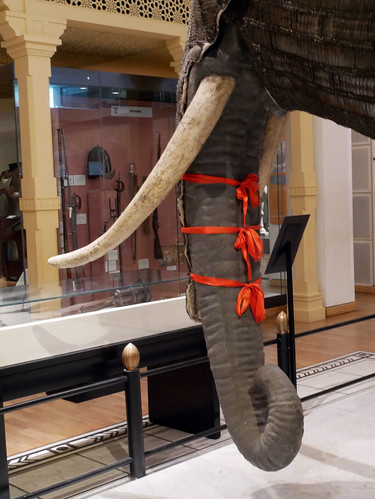
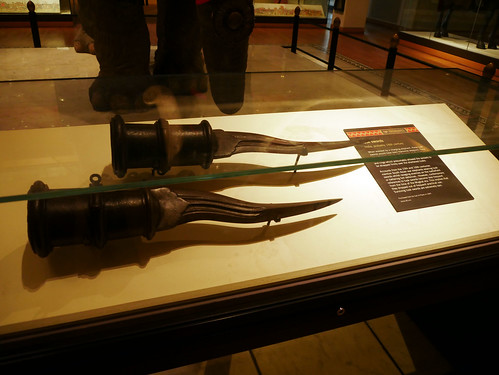
The armour also has a pair of tusk swords that attached to the sawn-off tusks of the elephant.

When wielded by a charging elephant, these tusk swords would have been fearsome weapons. They are extremely robust with massive reinforced points and rings which presumably allowed the sockets to be strapped firmly over the shortened tusks.

Accounts from the 15th and 16th centuries mention South Asian war elephants wearing tusk swords whilst ravaging enemies on the battlefield or battering fort defences. However, contemporary references to tusk swords become less frequent from the time of the Mughal era. This implies that they dropped out of frequent practical use. Surviving tusk swords are extremely rare.*

*from information boards next to the exhibit

16 Comments CherryPie on Mar 25th 2019

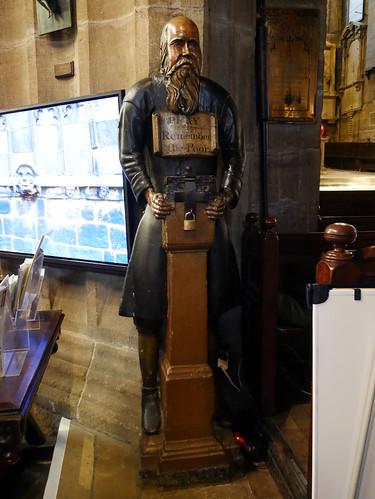
Wealth gotten by vanity shall be diminished: but wealth gathered by labour shall increase.

Proverbs 13:11

Remember the Poor

6 Comments CherryPie on Mar 24th 2019

… I have a post (on war elephants) ready to share but I am unable to upload the photos to accompany it.

Grrr!

Hopefully normally service will be resumed soon…

8 Comments CherryPie on Mar 23rd 2019

« Newer Posts - Older Posts »