This exhibit is a fiberglass model used to create the bronze statue that now stands in Whitehall Place, London. The London statue was unveiled by the Royal Tank Regiment’’s Colonel in Chief, Her Majesty the Queen, on the 13th of June 2000.
The memorial depicts a Comet Tank Crew and is a permanent tribute to those who have served in the Royal Tank Regiment and its antecedents.*
The bronze figures shown here represent (from left) the Hull Machine Gunner holding a BSA machine gun, Turret Gunner, Commander with binoculars, Loader/Radio Operator and Driver of a Comet Tank.
Comets entered service in 1945, as a 32 ton Cruiser Tank armed with a 77mm gun. They served with the 11th Armoured Division for the last few months of the war in Europe.*

Take these men as your example.
Like them remember
That prosperity can only be for the free,
Who alone have the courage to defend it.
Pericles 490 – 429 B.C.

*from an information board next to the statue
Tags: Bovington, Bovington Tank Museum, Cherie's Place Thought, Defence Matters, Household Cavalry, Memorial, Royal Armoured Corps, The Tank Museum, Vacation, WW11, WW2

The garden is laid out into areas separated by walls and hedges.
The garden layout was developed in the early 20th century, by Dr. Price, including laying down triangular and diamond shaped flagstone paths. The ornamental domes of box were planted in the 1920s.[9] The early landscaping was expanded and planted starting in 1933 by Phyllis Reiss in a Arts and Crafts “Hidcote” style.[3] The 1.5 acres (0.61 ha) garden is separated into “rooms” by Yew hedges and walls.[10] The different areas include Eagle Court (the former courtyard), Middle Garden, Fountain Garden and Pool Garden.[3] The pool garden is the site of a former tennis court.[9]
In 1954 Reiss gave the house and garden to the National Trust, but continued to live in the house and care for the garden until her death in 1961. From then on, the Trust let the house to a variety of tenants, including the garden designer and writer Penelope Hobhouse and her husband Prof John Malins from 1980 to 1993.[11]
The gardens are included in the National Register of Historic Parks and Gardens and include small pools and an azelea garden.[12]


Tags: #walk1000miles, Dorset, National Trust, Tintinhull Garden, Vacation
There is no fear in love; but perfect love casteth out fear; because fear hath torment. He that feareth is not made perfect in love.
1 John 4:18

Tags: #walk1000miles, Cherie's Place Thought
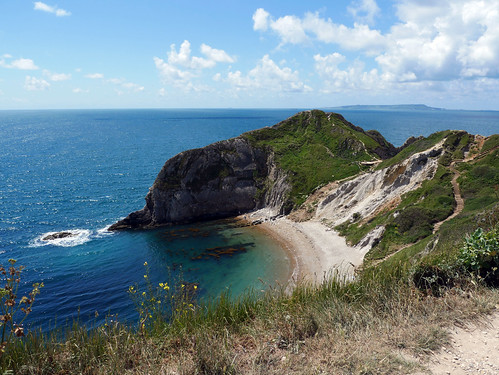
Durdle Door is probably the most famous stone arch anywhere in the world. It was created when the sea pierced through the Portland limestone around 10,000 years ago. Looking west over the beach, isolated stacks out at sea show where an older coastline once lay. This part of the coast is formed from merged bays and shows how Lulworth Cove and Stair Hole may look in several thousand years time.
By following the natural cliff path down to Durdle Door beach, or the steps to Man O’War beach, the tilted Purbeck Beds are clearly visible. At the base of the chalk cliffs a number of caves can be seen which have been carved out by the sea (wave cut notches).
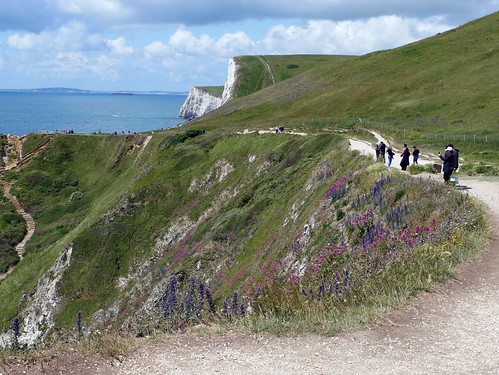
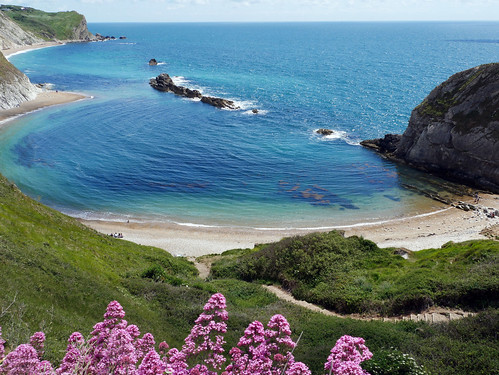
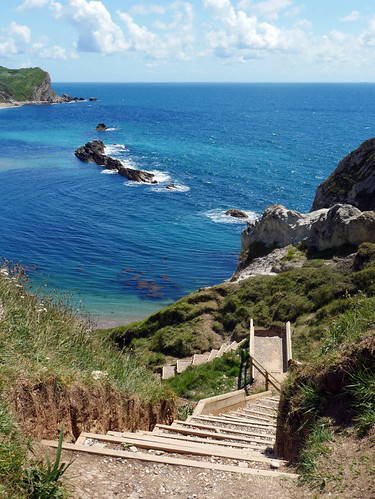
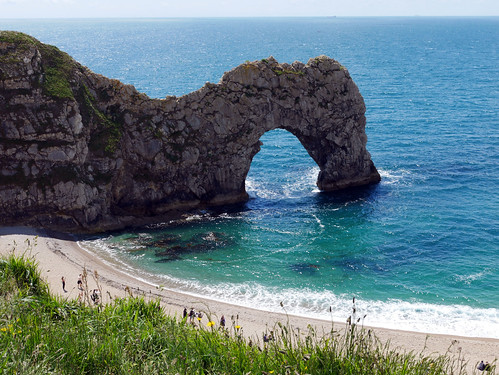


The caves should not be entered as cliff falls are common. Since our visit in June there has been ground movement in Man O’War Bay so there is currently no access to that beach area.
Tags: #walk1000miles, Clouds, Dorset, Durdle Door, Erosion, Land Movement, Man O'War, Sea, Sky, Vacation

Today I had to wait in for a delivery. But later, in the afternoon I was able to go out for a brief walk on one of my local pathways which was lovely (as always).
I love the little downwards path in this photograph. Today it looked as if autumn had arrived early but in reality the trees are a little parched causing the leaves to drop.
The walk was followed by ‘Fine Dining’, although sadly not alfresco on the patio. Just at the wrong moment the sun became obscured by cloud.

Tags: #walk1000miles, Cherie's Place, Life, Silkin Way