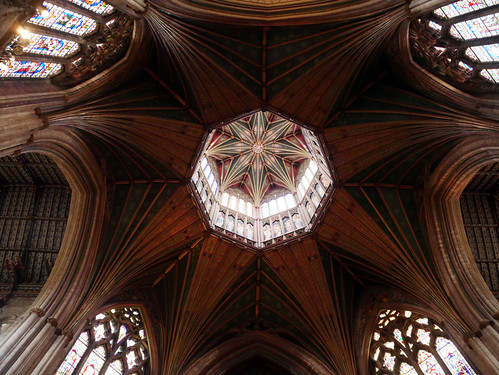
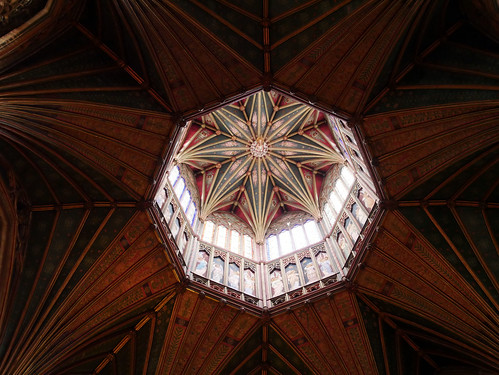
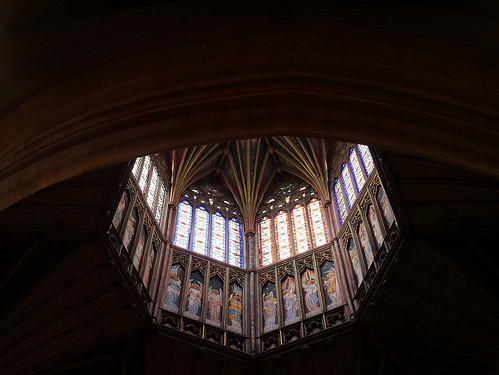
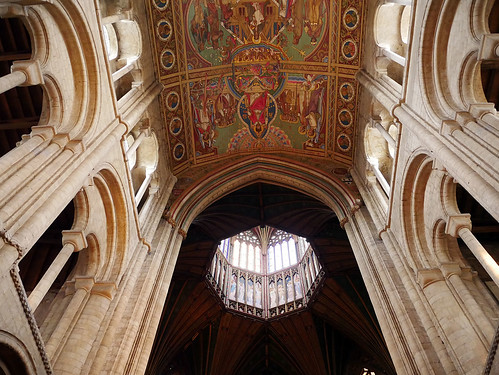
Due to low light levels in early November these photos are not the best quality. Despite this I hope you enjoy my views the octagon.
Random thoughts and photos of my journey through life…
Due to low light levels in early November these photos are not the best quality. Despite this I hope you enjoy my views the octagon.
22 Comments CherryPie on Nov 29th 2018
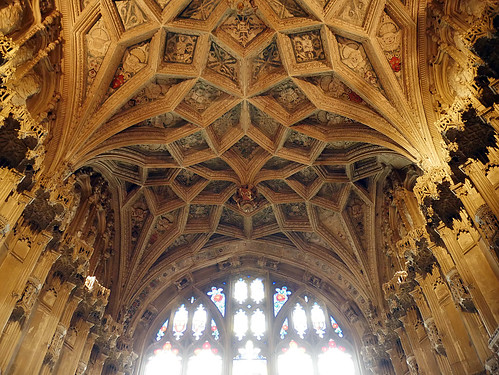
Nicholas West was Bishop of Ely between 1515 – 1534:
Although in his undergraduate days he had a reputation as a trouble maker, Nicholas West made good. He was employed by King Henry VII as his Chaplain, and by King Henry VIII as a diplomatic envoy, until he took up the cause of Queen Catherine and opposed the divorce. It is recorded that ‘he lived in the greatest splendour of any Prelate in his time’, yet he fed ‘warm meat and drink to the excess of 200 people per day’ (recorded by Robert Steward, Prior of Ely). He was a learned man who, despite his largesse, died a very rich man; on his death he was recorded as having 250 books and 5,000 ounces of silver and silver gilt – more than Ely Monastery had on its dissolution.
He gave large gifts to King’s College where he had been an undergraduate and he built this Chantry, on the walls of which he cause do be carved ‘Gratia Dei sum id quod sum’ (By the grace of God I am what I am) I Corinthians 15:10.*
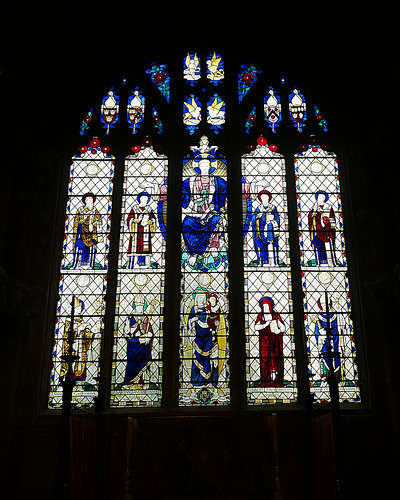
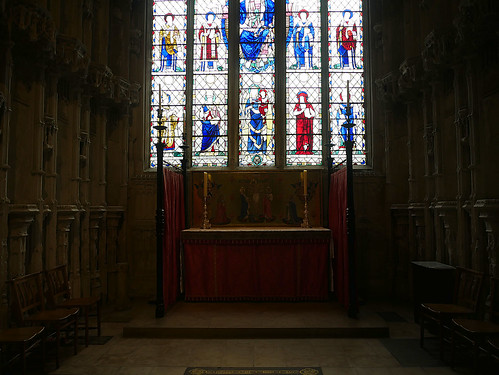
‘When anyone is joined to Christ, there is a new creation: the old is gone, the new has come.’ 2 Corinthians 5:17*
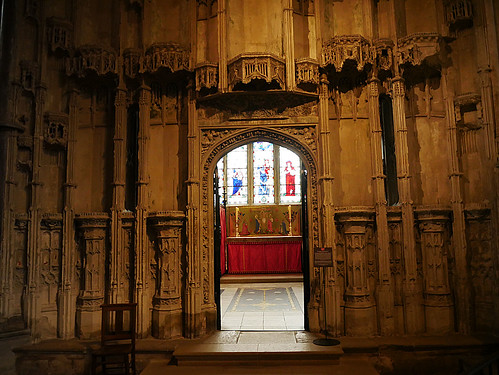
Bishop Woodford, whose memorial I showed in my recent post is buried within Bishop West’s Chapel:
Bishops Greene (d. 1738), Keene (d. 1781), Sparke (d. 1836), and Woodford (d. 1885) are all buried in this chapel. On the south side, within a shrine-like receptacle, have been placed the relics of seven early benefactors of the church. Originally buried in the Saxon church, they have been several limes removed. They were placed here in 1771. The names are carved in seven shallow niches. One was an archbishop, five were bishops, and the seventh was Alderman Brithnoth. The dates range from 991 to 1067.
*From an information board next to the Chapel
10 Comments CherryPie on Nov 28th 2018
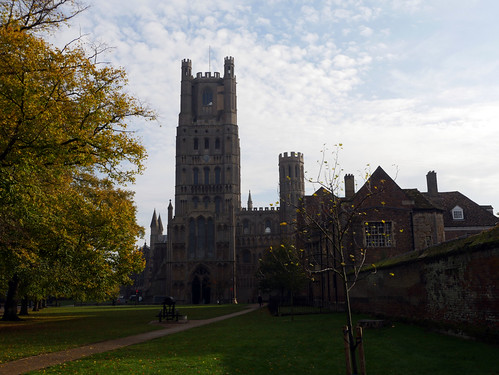
Etheldreda (Æthelthryth, Ediltrudis, Audrey) (d.679), queen, foundress and abbess of Ely. She was the daughter of Anna, king of East Anglia, and was born, probably, at Exning, near Newmarket in Suffolk. At an early age she was married (c.652) to Tondberht, ealdorman of the South Gyrwas, but she remained a virgin. On his death, c.655, she retired to the Isle of Ely, her dowry. In 660, for political reasons, she was married to Egfrith, the young king of Northumbria who was then only 15 years old, and several years younger than her. He agreed that she should remain a virgin, as in her previous marriage, but 12 years later he wished their marital relationship to be normal. Etheldreda, advised and aided by Wilfred, bishop of Northumbria, refused. Egfrith offered bribes in vain. Etheldreda left him and became a nun at Coldingham under her aunt Ebbe (672) and founded a double monastery at Ely in 673. (from FARMER, David: The Oxford Dictionary of Saints, 3rd ed. OUP, 1992.)
Etheldreda restored an old church at Ely, reputedly destroyed by Penda, pagan king of the Mercians, and built her monastery on the site of what is now Ely Cathedral. After its restoration in 970 by Ethelwold it became the richest abbey in England except for Glastonbury.
Etheldreda’s monastery flourished for 200 years until it was destroyed by the Danes. It was refounded as a Benedictine community in 970.
Etheldreda died c.680 from a tumour on the neck, reputedly as a divine punishment for her vanity in wearing necklaces in her younger days; in reality it was the result of the plague which also killed several of her nuns, many of whom were her sisters or nieces. At St Audrey’s Fair necklaces of silk and lace were sold, often of very inferior quality, hence the derivation of the word tawdry from St Audrey.
17 years after her death her body was found to be incorrupt: Wilfred and her physician Cynefrid were among the witnesses. The tumour on her neck, cut by her doctor, was found to be healed. The linen cloths in which her body was wrapped were as fresh as the day she had been buried. Her body was placed in a stone sarcophagus of Roman origin, found at Grantchester and reburied.
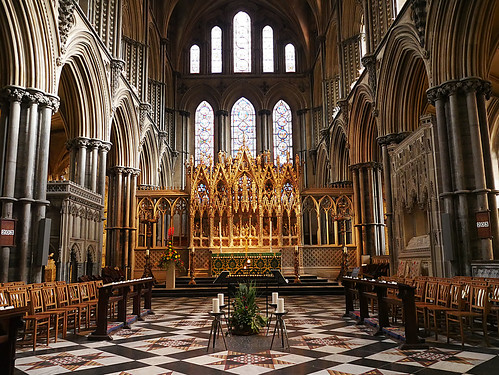
For centuries, Etheldreda’s shrine was the focus for vast numbers of medieval pilgrims. It was destroyed in 1541, but a slate in the Cathedral marks the spot where it stood.
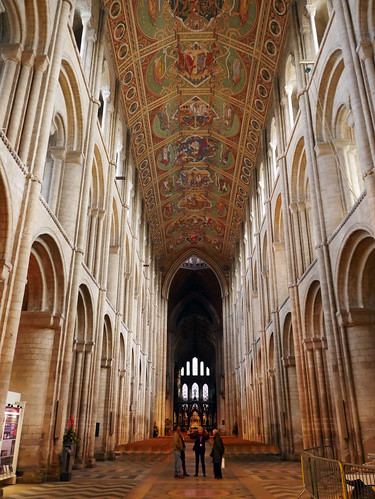
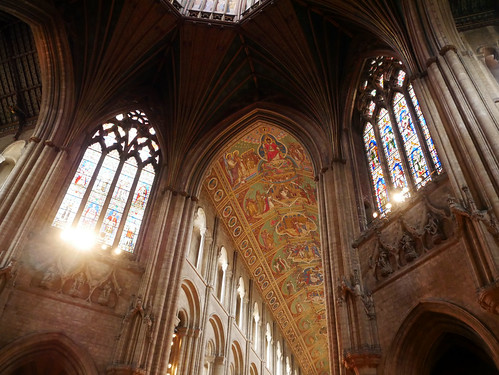
Work on the present Cathedral began in the 11th century under the leadership of Abbot Simeon, and the monastic church became a cathedral in 1109 with the Diocese of Ely being carved out of the Diocese of Lincoln. The monastery at Ely was dissolved by Henry VIII in 1539. Ely suffered less than many other monasteries, but even so, statues were destroyed together with carvings and stained glass.
14 Comments CherryPie on Nov 27th 2018
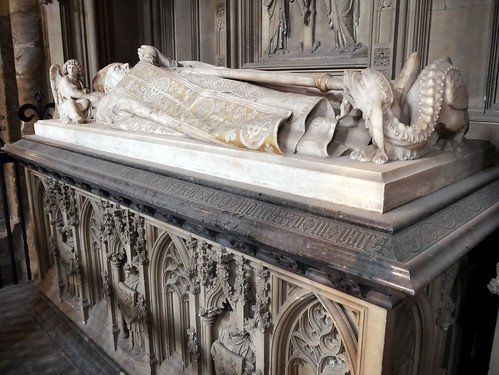
Bishop James Russell Woodford, Bishop of Ely 1873-1885 founded Ely Theological College, which offered training for the priesthood. The Diocesan Office and Retreat House, which stand in the grounds of the Old College on Barton Road, are named after him. His portrait along with a lock of hair is displayed in the entrance hall. Bishop Woodford is buried in Bishop West’s Chapel.
Bishop James Woodford was probably the Bishop who had more impact than any other on the modern shape of the Diocese of Ely.
This distinguished Victorian bishop established a theological college in Ely in 1876 which was responsible for training priests for several generations. However, in 1964 it was decided by the Church of England that the college should be temporarily closed due to the decline in the number of graduates and the difficulty of providing the opportunity for theological study in a small cathedral city in the middle of an East Anglian fen. The college was never re-opened and the buildings were consequently sold to the King’s School.
*Additional information from a sign next to Bishop Woodford’s monument.
12 Comments CherryPie on Nov 26th 2018
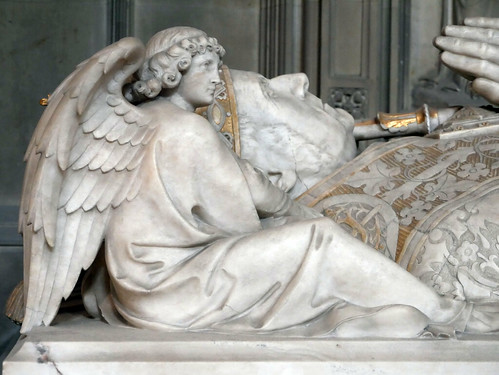
See I am sending you out like sheep into the midst of wolves; so be wise as serpents and innocent as doves.
Matthew 10:16
8 Comments CherryPie on Nov 25th 2018
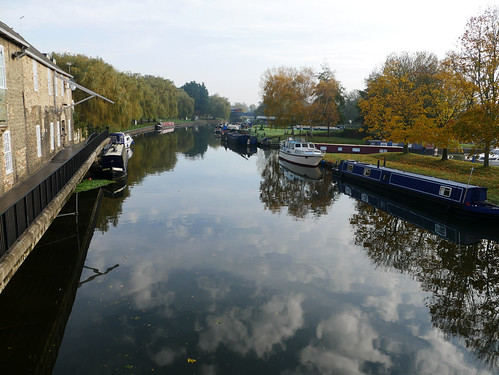
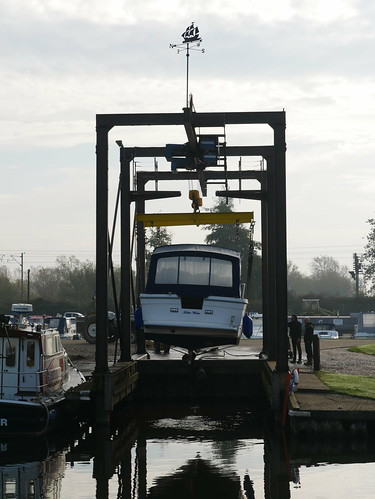
The name Ouse is from the Celtic or pre-Celtic *Udso-s,[2] and probably means simply “water” or slow flowing river.[3] Thus the name is a pleonasm. The lower reaches of the Great Ouse are also known as “Old West River” and “the Ely Ouse”, but all the river is often referred to simply as the Ouse in informal usage (the word “Great”, which originally meant simply big, or in the case of a river long, is used to distinguish this river from several others called the Ouse).
The old course of the river passes through Hermitage Lock into the Old West River. After joining the Cam near Little Thetford, north of Cambridge, the course passes the cathedral city of Ely and Littleport, to reach the Denver sluice. Below Denver the river is tidal and passes Downham Market to enter The Wash at King’s Lynn.
8 Comments CherryPie on Nov 24th 2018
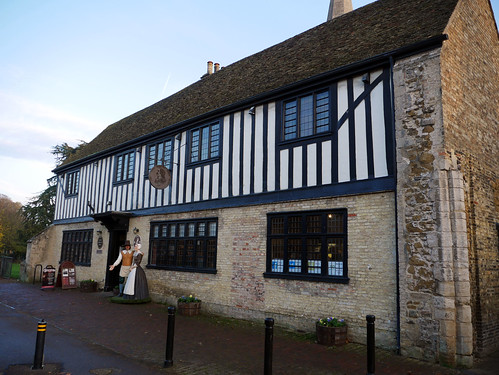
On the tour around Oliver Cromwell’s House we learned that this was the place where Oliver Cromwell and his family moved to after the lease (as part of his inheritance) was transferred to him by his uncle.*
Oliver Cromwell – a name that still divides opinions more than three hundred years after his death. But who was he and why is he so important to British history? From the point of view of a Parliamentary Soldier he was one of the greatest military leaders we have ever had. Without him, Parliament would not have won the Civil War. However, from the viewpoint of a Cavalier, he was seen as a traitor, as he ordered the King to be beheaded. A Puritan Gentlemen on the other hand would describe him as a Godly man who ruled this country justly. Such people believed he brought stability back after the war so that we could all live in tolerance and peace.
Oliver Cromwell was born in nearby Huntingdon on April 25th 1599. He was born into what had been one of the wealthiest families in Huntingdonshire but was of a junior branch and although he was a gentleman, he was not a rich one. His father died in 1617 and Oliver had to leave Sidney Sussex College at Cambridge to look after the estate, his widowed mother and then his wife Elizabeth and ultimately their nine children. Financially it was a struggle but Oliver’s fortunes changed when he was left leases on various properties in Ely by his uncle; this included the lease on the house in Ely, where Oliver moved to with his family in 1636 and remained for just over ten years. The lease carried with it the responsibility of collecting the local taxes.
Everything changed for Oliver Cromwell when he was in his early 40s. King Charles I began to make changes to the church in England that were unacceptable to men like Oliver. During his 20s or 30s, Cromwell had experienced a religious conversion and for the remainder of his life he was a zealous Protestant. He believed that God had chosen him for a purpose which would at some point be revealed to him. The changes that the King started to make to the Church were against Cromwell’s beliefs and he was convinced that God’s purpose for him was to prevent them. He criticised the King in Parliament, his passionate and often angry speeches, driven by his religious zeal. When war broke out between King and Parliament in 1642, Oliver Cromwell was one of the first MPs to take up arms and fight.
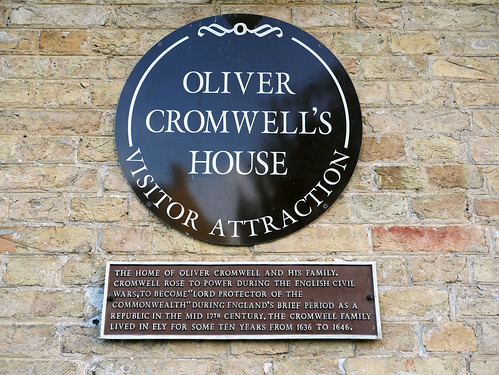
At the beginning of the tour we were asked to consider if Cromwell was a Villain or Hero. After consideration we concluded that he was neither; Cromwell was a man of his time.
*From Oliver Cromwell’s House Ely guidebook
20 Comments CherryPie on Nov 21st 2018