See I am sending you out like sheep into the midst of wolves; so be wise as serpents and innocent as doves.
Matthew 10:16
Random thoughts and photos of my journey through life…
See I am sending you out like sheep into the midst of wolves; so be wise as serpents and innocent as doves.
Matthew 10:16
8 Comments CherryPie on Nov 25th 2018
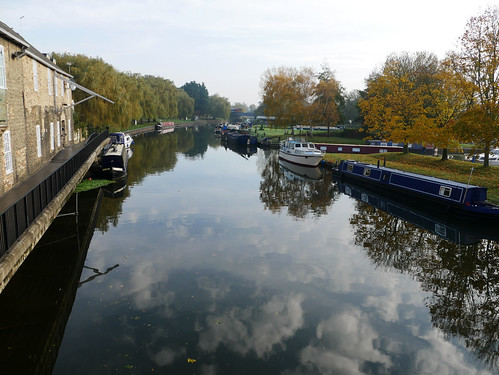
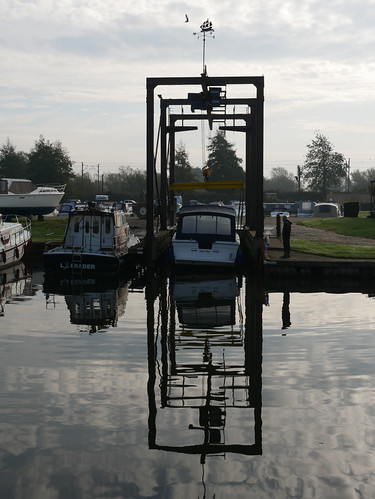
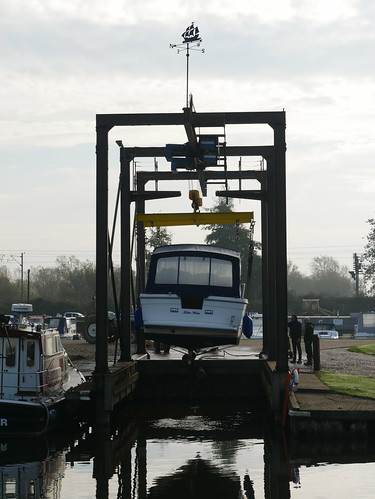
The name Ouse is from the Celtic or pre-Celtic *Udso-s,[2] and probably means simply “water” or slow flowing river.[3] Thus the name is a pleonasm. The lower reaches of the Great Ouse are also known as “Old West River” and “the Ely Ouse”, but all the river is often referred to simply as the Ouse in informal usage (the word “Great”, which originally meant simply big, or in the case of a river long, is used to distinguish this river from several others called the Ouse).
The old course of the river passes through Hermitage Lock into the Old West River. After joining the Cam near Little Thetford, north of Cambridge, the course passes the cathedral city of Ely and Littleport, to reach the Denver sluice. Below Denver the river is tidal and passes Downham Market to enter The Wash at King’s Lynn.
8 Comments CherryPie on Nov 24th 2018
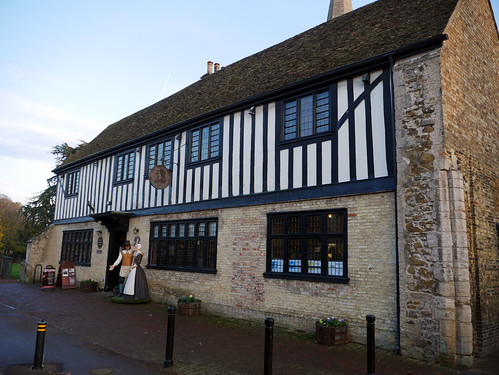
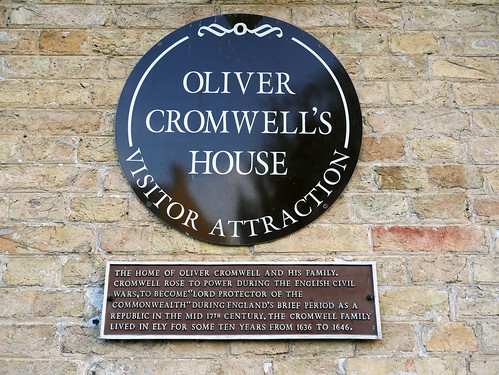
On the tour around Oliver Cromwell’s House we learned that this was the place where Oliver Cromwell and his family moved to after the lease (as part of his inheritance) was transferred to him by his uncle.*
Oliver Cromwell – a name that still divides opinions more than three hundred years after his death. But who was he and why is he so important to British history? From the point of view of a Parliamentary Soldier he was one of the greatest military leaders we have ever had. Without him, Parliament would not have won the Civil War. However, from the viewpoint of a Cavalier, he was seen as a traitor, as he ordered the King to be beheaded. A Puritan Gentlemen on the other hand would describe him as a Godly man who ruled this country justly. Such people believed he brought stability back after the war so that we could all live in tolerance and peace.
Oliver Cromwell was born in nearby Huntingdon on April 25th 1599. He was born into what had been one of the wealthiest families in Huntingdonshire but was of a junior branch and although he was a gentleman, he was not a rich one. His father died in 1617 and Oliver had to leave Sidney Sussex College at Cambridge to look after the estate, his widowed mother and then his wife Elizabeth and ultimately their nine children. Financially it was a struggle but Oliver’s fortunes changed when he was left leases on various properties in Ely by his uncle; this included the lease on the house in Ely, where Oliver moved to with his family in 1636 and remained for just over ten years. The lease carried with it the responsibility of collecting the local taxes.
Everything changed for Oliver Cromwell when he was in his early 40s. King Charles I began to make changes to the church in England that were unacceptable to men like Oliver. During his 20s or 30s, Cromwell had experienced a religious conversion and for the remainder of his life he was a zealous Protestant. He believed that God had chosen him for a purpose which would at some point be revealed to him. The changes that the King started to make to the Church were against Cromwell’s beliefs and he was convinced that God’s purpose for him was to prevent them. He criticised the King in Parliament, his passionate and often angry speeches, driven by his religious zeal. When war broke out between King and Parliament in 1642, Oliver Cromwell was one of the first MPs to take up arms and fight.
At the beginning of the tour we were asked to consider if Cromwell was a Villain or Hero. After consideration we concluded that he was neither; Cromwell was a man of his time.
*From Oliver Cromwell’s House Ely guidebook
20 Comments CherryPie on Nov 21st 2018

The Bishop’s Palace, Ely was one of the residences of the Bishop of Ely from the 15th century until 1941. It is a Grade I listed building.[1]
The palace was built in the 15th century by Bishop John Alcock however just two towers from the original building remain. He also completed the bishop’s palace (now Wisbech Castle) at Wisbech (where he died in 1500). Bishops over the following centuries expanded and remodelled the palace.[1]
In 1541, King Henry VIII founded a College of Canons at Ely Cathedral to replace the monks whose monastery had been dissolved in 1539

The Bishop’s Palace at Ely was used as a prison for Catholics between 1577 and 1597, and between 1588 and 1597 was exclusively a prison for lay recusants. Its inmates included Abbot John Feckenham between 1577 and 1580 and Thomas Tresham, who was imprisoned in Ely four times.
21 Comments CherryPie on Nov 20th 2018

Ely lies in the heart of the Fens and was once an island surrounded by marshland and water that contained many eels. It is thought that the abundance of eels led to the name that the city bears to this day.*
Eels were historically part of the local staple diet as well as a valuable source of income. Jellied eels were popular until recent times and clients would come from London such was the reputation of Ely’s eels.*
Eels are still caught in the Great River Ouse although only one commercial catcher still remains. *

The eel art pictured is a 3m high galvanised steel eel sculpture by local sculptor Pete Baker. It was a gift from Ely Rotary Club to the people of Ely to mark 100 years of Rotary International.*
36 Comments CherryPie on Nov 19th 2018
Greater love hath no man than this, that a man lay down his life for his friends.
John 15:13 (KJV)

12 Comments CherryPie on Nov 18th 2018


15 Comments CherryPie on Nov 17th 2018