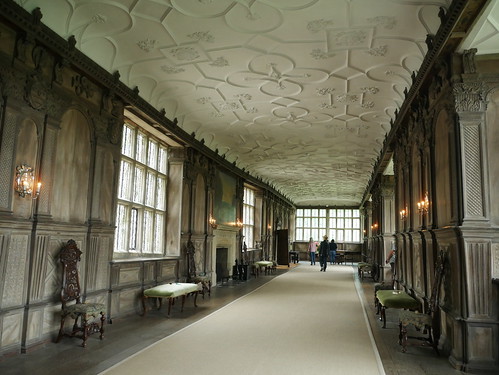
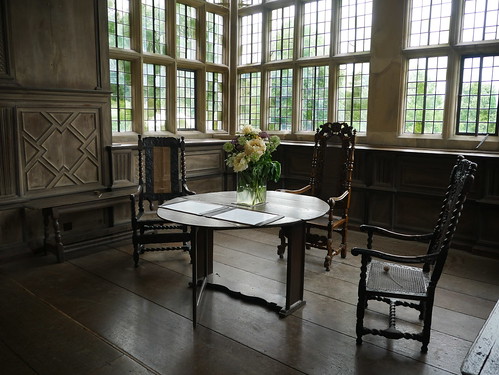
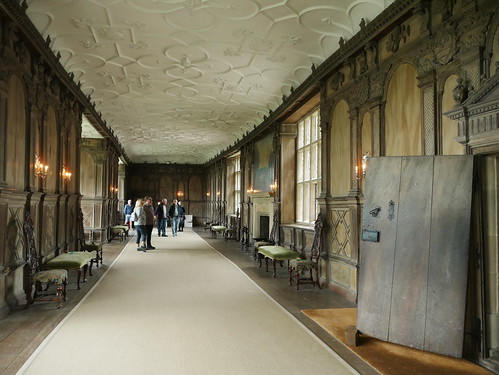
As you enter the long gallery, the predominant feeling is of light and space. The many windows, south facing to make the most of the sunlight, give on to a typical Elizabethan long gallery 110 feet long and 17 feet wide. *
* From the Haddon Hall guide book
Tags: Bakewell, Derbyshire, Haddon Hall, There's Always One
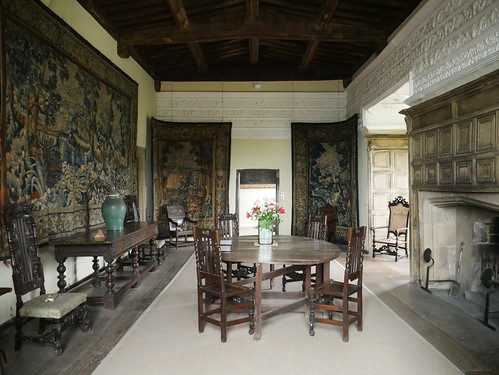
The 17th century tapestries which hand in the Great Chamber are either Flemish or French in origin. The tapestries are all that remain from the Great Chamber of a much larger collection that had remained in the hall for 200 years whilst the hall was unoccupied. The 9th Duke removed the tapestries from the hall to a room in the stable block for safety whilst restoration was taking place.
Sadly, in 1925 a fire broke out in a tea-room above the stables and approximately 60 tapestries were destroyed or damaged beyond repair.*
*From the Haddon Hall guide book
Tags: Bakewell, Day Trip, Derbyshire, Haddon Hall
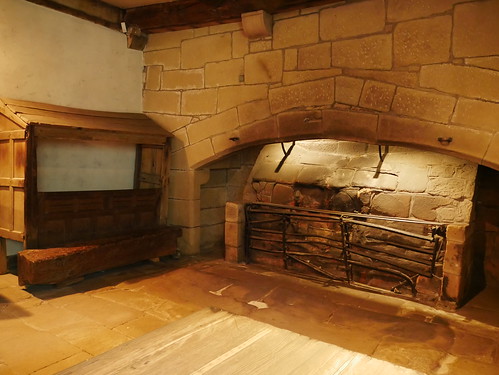
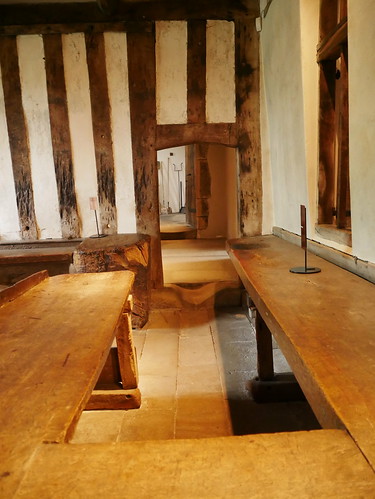
Haddon Hall has a fine example of a surviving Tudor kitchen:
Built in the 14th century, the Kitchen comprises a purely utilitarian set of rooms which originally stood apart from the other buildings to minimise the risk of fire spreading to the main house. The passageway linking the kitchen to the hall is thus a much later addition. *
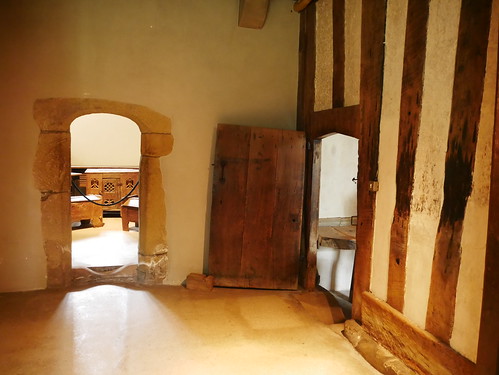
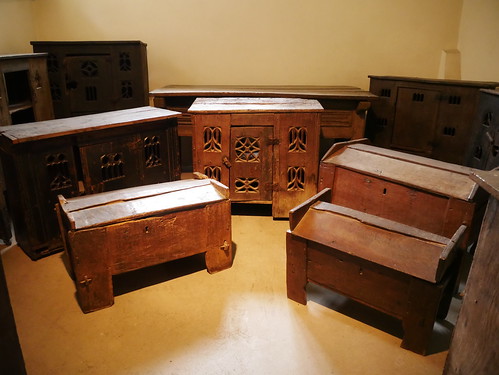
The Milk Larder now houses a fine display of ‘dole’ cupboards:
These were put outside houses such as Haddon for passing traders or Estate workers, and filled with food and leftovers from the kitchen. Made in the Gothic style, this collection is very rare as these wooden cupboards were left outside and exposed to the elements. Some are originally from Haddon and others bought by the 9th Duke. The modern phrase ‘on the dole’ (receiving assistance), stems from the purpose of the ‘dole’ cupboard.*
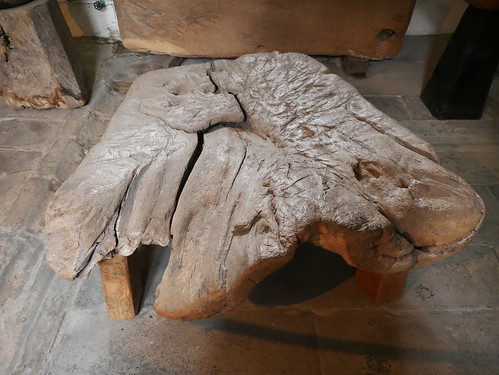
The oak block, stands on three short legs and was doubtless used for jointing meat in preparation for salting or for catching drops from hanging meat. *
*From the Haddon Hall guidebook
Tags: Bakewell, Derbyshire, Haddon Hall
Life’s picture is constantly undergoing change. The spirit beholds a new world every moment.
Rumi

Tags: Bakewell, Cherie's Place Thought, Derbyshire, Haddon Hall, Rose
… for unruly diners in the Banqueting Hall at Haddon Hall.

This manacle was used as a punishment for those who did not “drink fayre” – a medieval custom whereby those that did not drink their quota of ale were considered a potential threat – and the ale not consumed was poured down the offender’s sleeve. It was also used for restraining unruly revellers. *

*From a sign board next to the manacle
Tags: Bakewell, Derbyshire, Haddon Hall, Manacle

This would have been the communal living space when it was built in the 14th century. Both family and servants would have eaten and slept here. By the beginning of the 15th century however, the family would have begun to eat in the privacy of the Great Chamber and spend their leisure time in the Parlour which acquired the function of a private sitting room. Consequently the Great Hall became a room in which to entertain and hold social events and its name was changed to the Banqueting Hall.*


*From the Haddon Hall guide book
Tags: Bakewell, Day Trip, Derbyshire, Haddon Hall