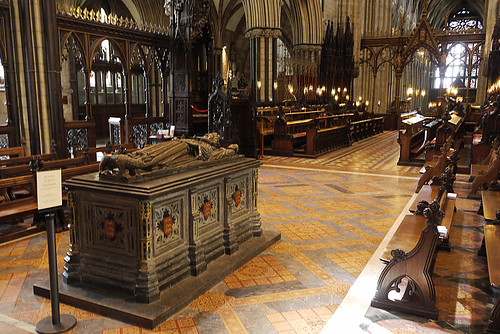
Arthur, Prince of Wales, eldest son of Henry VII and Elizabeth of York, was born in 1486 and baptized by the Bishop of Worcester. With his father and mother, and grandmother. the Lady Margaret, he visited Worcester in his boyhood. At the age of 15 he was married to Catherine of Aragon; the young pair were sent to keep court at Ludlow Castle, and there, less than five months after their marriage, Arthur died on 2 April 1502. Had he lived, he would have succeeded his father as King of England.
Prince Arthur’s body , after lying in state at Ludlow. was carried in solemn procession to Worcester. In the long series of funeral services in this Cathedral, three Bishops, eight Abbots, and the Prior of Worcester took part, and noblemen and men-at-arms made offerings.
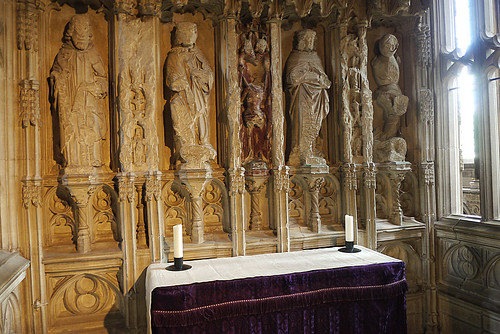
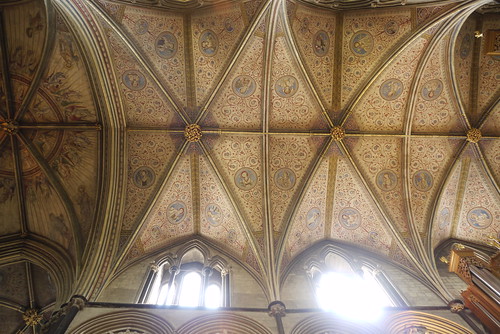
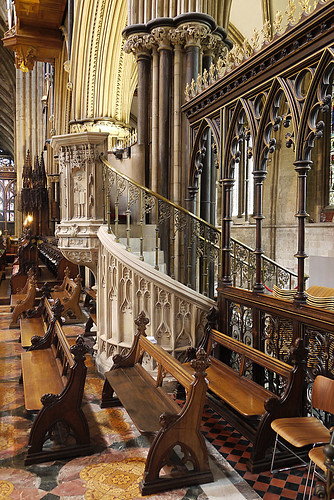
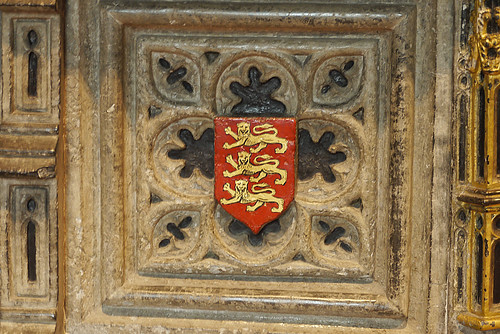
This chantry chapel was erected over Arthur’s tomb by Henry VII, and decorated with heraldic devices illustrating the union of the rival houses of Lancaster and York. At the reformation, fifty years later, the figures above the reredos were mutilated, though many of the 88 small figures escaped damage; then, in Elizabeth’s reign, the east wall was covered with plaster, on which was painted “Vivat Regina” with the Royal Arms. The plaster remained there until 1788.
When Queen Elizabeth visited Worcester in 1575, “she entered into the church with grett and solompne singing and musick, with cornetts and sackbutts, with a canapy boren over her; and so up into the chancell, where she diligently viewed the tomb of King John, together with the chapell and tomb of her deere uncle, lat Prynce Arther, all rycheley and bewtyfully adorned.”*
*From an information board outside the Chantry Chapel
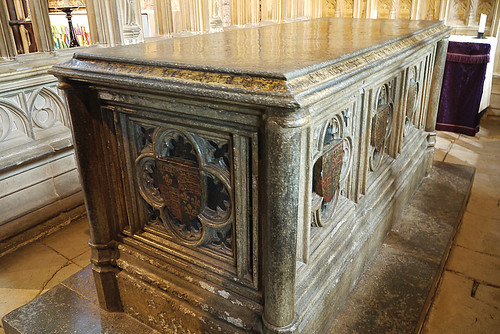
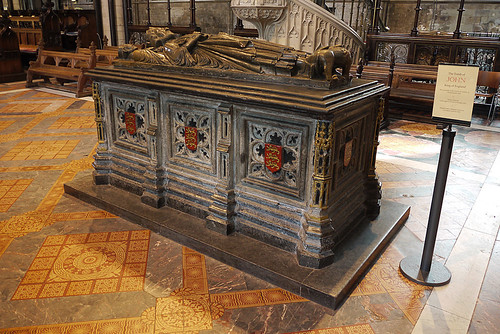
The tomb of King John rests on the pavement within the Quire at Worcester Cathedral.
In his will, made a few days before his death and preserved in the cathedral library, he asked to be buried in the ‘church of St Mary and St Wulfstan at Worcester’. In his lifetime, John had often visited Worcester and had contributed to the repair of the buildings after the fire of 1202. He had originally meant to be buried at Beaulieu Abbey in Hampshire, which he had founded, but at the time of his death that part of the country was in the hands of the rebel barons. Not surprisingly, his last thoughts turned to St Wulfstan. He died on the 19th October 1216 at Newark and was brought to Worcester for burial a few days later. After the rebuilding of the eastern arm of the cathedral, John’s tomb was moved further east, and surmounted by the recumbent figure, the oldest effigy of a king of England. This was marked by a splendid ceremony on 19th May 1232 attended by King Henry III. Originally the effigy lay on the floor; the present standing tomb was made in 1529.*
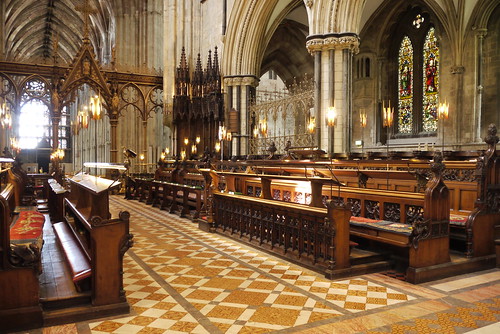
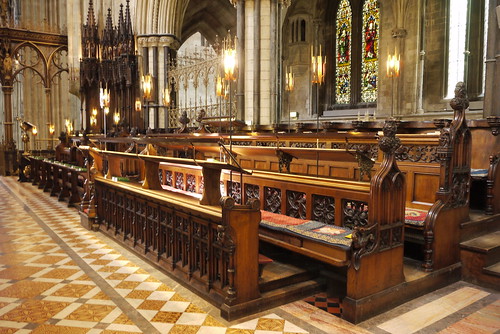
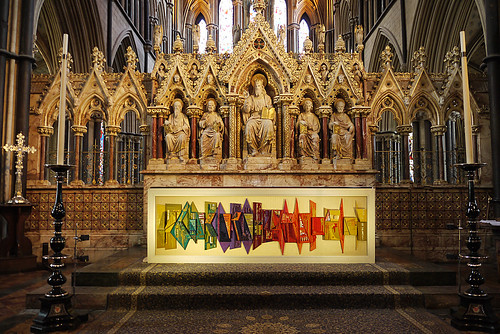
For 1300 years people have gathered around and altar here to break bread together in the Holy Eucharist. Still we come to hear the teaching of Jesus, to pray, to share the bread of life and the cup of salvation as did Worcester’s two great saints, Oswald (925-992) and Wulstan (c. 1008-1095), whose remains were interred in this sanctuary after their shrines were removed in 1538.
William Hamilton, the Royalist commander who died of wounds received at the battle of Worcester in 1651, also rests here. The screen behind the altar is Victorian and shows Christ in majesty seated between the four Evangelists. This screen replaced an earlier one which now stands across the entrance to the chapel of St George visible from here. The hanging in front of the altar made by local artists in 1969 shows the colours of the liturgical year and represents the Cathedral’s pinnacles reflected in the waters of the river Severn flowing nearby.
“Do this in remembrance of me”
“As often as you eat this bread and drink this cup you proclaim the Lord’s death until he comes”*
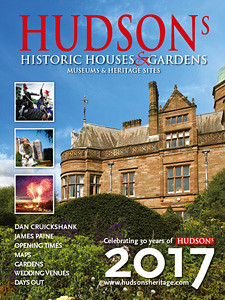
I picked up a copy of this book whilst I was on my recent holiday to Colwall. It was like welcoming back an old friend. I used to buy a copy of this every year, it was always an inspiration for new places to visit both at home and whilst on holiday. I used to buy it every year, but hadn’t bought it for a number of years due to a decline in the number of properties it included following the recession. I have to confess that I had forgotten to look for it in recent years so I was pleased to spot it on the bookshelf when I was visiting the town of Broadway.
This years edition is full of inspiration for places to visit and contains nearly 1000 listings of historic places. I have already started adding places to my to do list. Not everything is included in the guide and I noticed that a few of my own special places to visit are missing. That being said I thoroughly recommend the guide.
This year is the 30th anniversary of the Hudson’s guide and anyone who can provide a photograph of 20 or more editions of Hudson’s on their bookshelf will receive a free copy of the 2018 guide. I have bought many editions over the years, although probably not quite 20. There is only ever one on my bookshelf as I always pass on my previous editions to a friend when I buy a later edition so that they can enjoy the guidebook as much as I do.
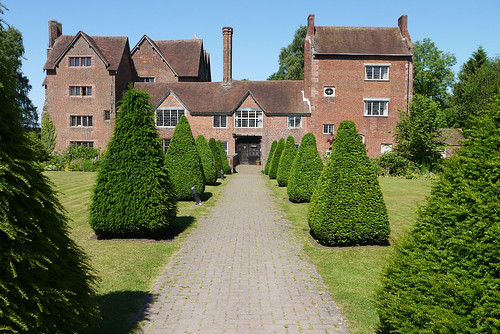
On Sunday, it was Father’s day so we took my Father-in-Law to Harvington Hall, a moated manor house with the largest surviving series of priest holes in the country. The weather was kind to us, the day was gloriously hot and sunny and a good time was had by all. When we arrived we had lunch before going a guided tour of the house. The tour isn’t compulsory but I would recommend it. Mr C and I had visited earlier in the year when, we also took a guided tour. Both tours were good but on this occasion we were taken round by a delightful young man who brought out points that were of particular interest to us.
As our guide, Phil Downing was showing us around he explained that he had spent twenty four hours in one of the priest holes and told us of some of his experiences. It was also fun to see the small children excited about exploring one of the priest holes in the property; one of them didn’t want to leave. You can watch an excellent short video of Phil giving a tour of the house on the video that follows.
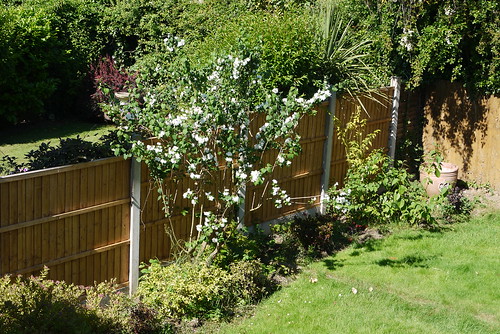
After we had returned home, later in the day we prepared a father’s day meal which we ate on the patio in the warm evening air. When we had finished the meal, as we sat and chatted for a while over a glass of wine I felt a pin prick near to my ankle. I thought no more of it until a little while later I felt a rather more piercing prick on the other ankle and when I looked there was a tell tale tiny black fly and I noticed a few others flying around at leg height.
The next day I noticed that I had five or six bite marks around my ankles and one higher up on the back of my leg. Later in the day my ankles got rather hot and red and my feet swelled up a little causing one of my shoes to rub my foot near to my ankle. When I got home from work I noticed shoe rubbing had caused a small blister. I put my feet up and the redness turned to a pinky tinge leading me into a false sense of security.
When I woke up the next morning my feet and ankles had swelled up and were bright red and there were darker red, itchy patches around the area of the bites. Even more alarmingly the blister had grown to the size of a large marble. The patches were reminiscent of the previous occasion when small black flies found me tasty. On that occasion I identified the culprit as ‘black fly’ more commonly known in the UK as the ‘Blandford Fly’, this lead me to suspect that the unpleasant little blighters are breeding in next doors pond.
I had been trying not to have any extra time of work this week (other than two days already booked), already cancelling one appointment and getting Mr C to help me out with another but it seems that was not to be. I phoned and made an appointment in the minor injuries clinic at my local GP surgery. It was noted that my temperature was a slightly high and so was my pulse rate and I was prescribed with antihistamine and antibiotics. A little later in the day I felt slightly shivery so I must have had a slight fever along with everything else.
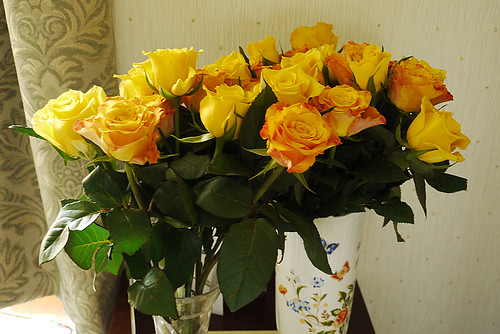
When I arrived at work everyone was quite shocked with what they saw and when Mr C came home from work he brought me some roses to cheer me up.