A Mystery Explained…
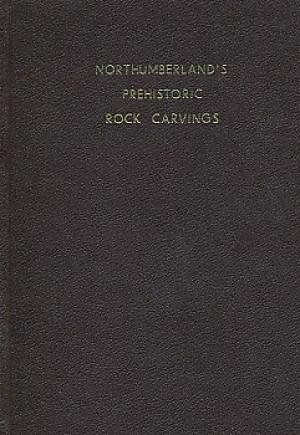
Synopsis: (from book preface by The Duke of Northumberland 1983)
It is approximately 4000 years ago that our remote ancestors, who are sometimes known as the ‘Beaker People’ because of the distinctively decorated cinerary urns they fashioned to contain ashes of the dead, incised markings on the sandstone rocks of Northumberland, which are generally but not always associated with burial sites.
It is these markings so similar yet varied in form, and the identification of the places where they may be found with which this interesting book details.
The book brings together not only the results of a long tradition of research in which my predecessors took great interest but also in the personal observations of the author who has devoted many years to the discovery of new examples and the careful assessment of sites and individual stones already recorded.
It is therefore a definitive work and has a great deal to contribute to the international study of rock carvings.
The title refers to ‘a mystery explained’, The mystery is certainly well explained but as the author states it is not solved and there in part lies the fascination of the subject. Clearly the form of the markings is symbolic rather than decorative but the question remains – symbolic of what?
Review:
The book is a comprehensive study of the rock art in Northumberland. The types of carvings on the rock and types of locations are explained followed by detailed descriptions of the rocks and where they can be found. The text is accompanied by black and white photographs of the stones and diagrams of the carvings. I found the book a fascinating read especially as, despite trying, I failed miserably to locate any of the stones on my most recent visit to Northumberland.
Tags: Book Review, Factual, Stan Beckensall

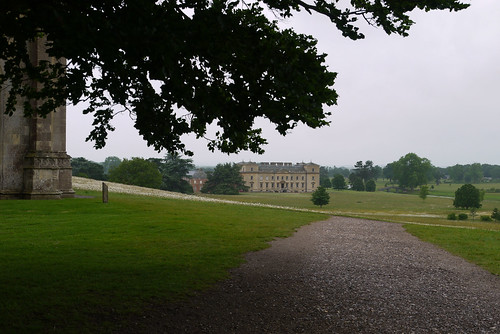
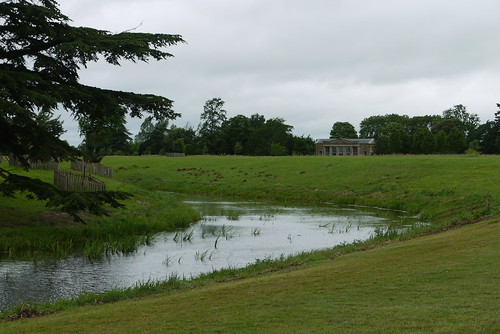
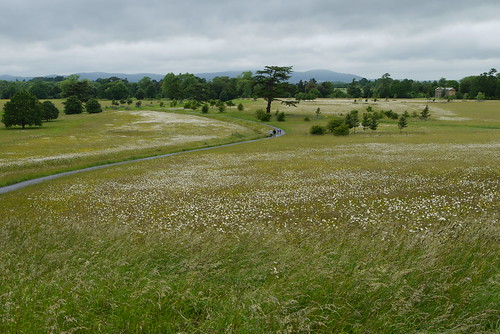
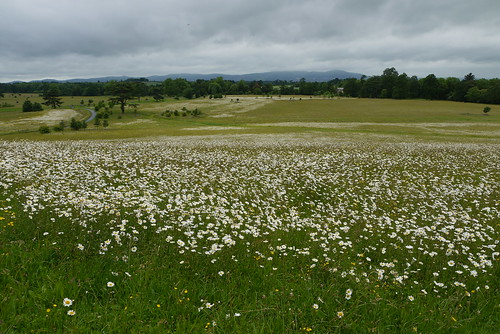
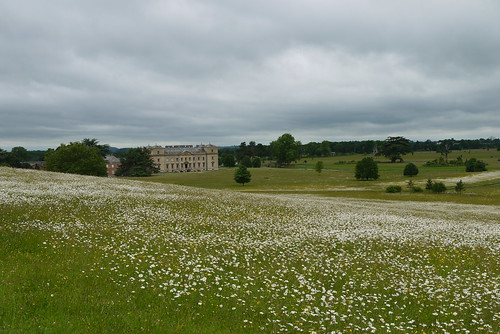
The Landscape at Croome was not made as an afterthought. House and garden here form an integrated design. The park may be in the naturalistic style, based partly on the landscape paintings of Claude Gellee ‘le Lorraine’ and Nicolas Poussin and partly on ‘Capability’ Brown’s native Northumberland scenery, replacing the formal patterns of earlier periods, but every element in it is in fact orchestrated. The house and the lake, the follies, temples and statues, the parkland and the river are all carefully arranged in relation to each other.*
*From the Croome guide book
Tags: Capability Brown, Croome, Croome Estate, Vacation
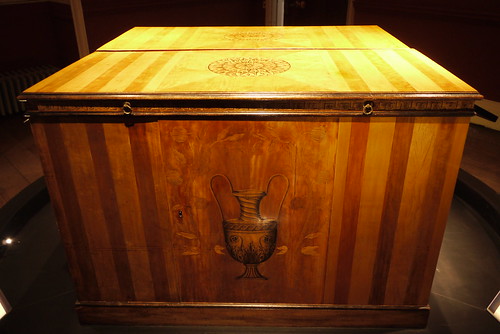
A signboard next to these carefully crafted and decorated wooden objects informs that they are a pair of commodes:
The name is taken from the French word for a chest of drawers. They were introduced during the reign of King Louis XIV (1638-1715) and the style was adopted in the mid-1700s when French fashions became popular in Britain.
The term usually describes cupboards with curved or ’serpentine’ fronts, supported by legs. In this case the shape is a very plain rectangular chest with all the emphasis being on its elegant decoration.
Commodes were used on the principle floor of a house, either in the main reception rooms or in bedrooms and dressing rooms.
Many commodes were not functional at all but simply a means of showing off the decorative skill of the maker and they sometimes formed part of a decorative scheme for a complete interior.
This pair was functional and designed for use in a bedroom to store clothes. One of the interiors is fitted with shelves and the other with sliding drawers. The top has a narrow shelf which could be slid out, traditionally for use as a flat surface for brushing clothes.

Tags: Chest of Drawers, Commode, Croome, Croome Court, National Trust, Vacation
Depth of friendship does not depend on length of acquaintance.
Rabindranath Tagore
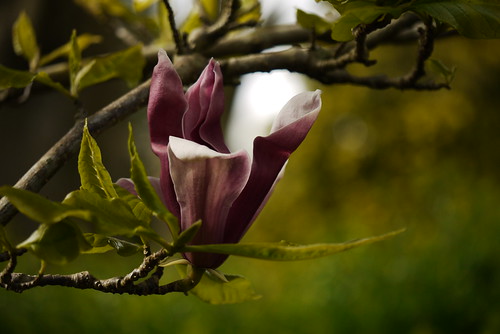
Tags: Cherie's Place Thought, Friendship, Love, Stobbery House, Vacation, Wells
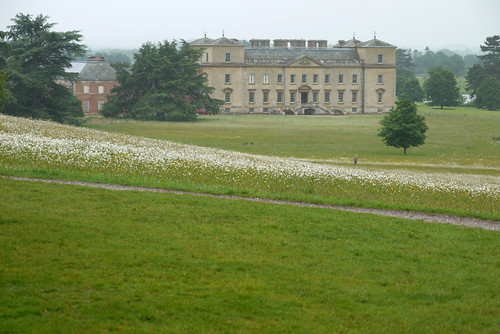
After Croome Court passed out of the hands of the Coventry family it had several owners each leaving their mark as can be seen in different rooms around the house.
In 1921 the 9th Earl set up the Croome Estate Trust, in order to ensure that the 15,000 acre estate would be preserved. However, in 1939, fate and the tragic circumstances of the Second World War intervened. The 10th Earl having volunteered when war was declared, was killed in the retreat to Dunkirk. A whole new chapter began when, after the war was over, such houses were not longer viable and had to be sold.*
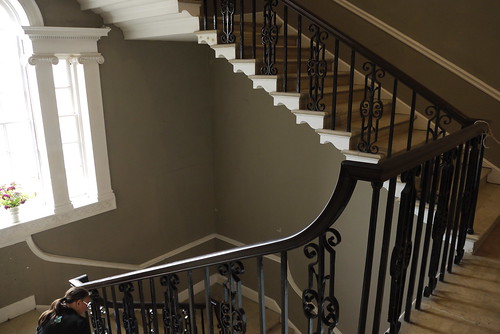
Initially the Croome Estate was sold to the Roman Archdiocese of Birmingham. The house was adapted to become a Catholic junior boarding school for disadvantaged boys who were taught by Nuns. This part of the house’s history lasted from the 1950s-1970s.
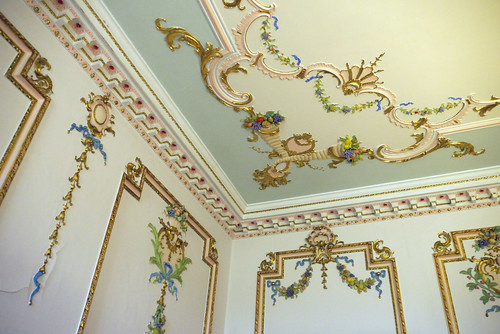
Croome subsequently became the headquarters for the Society for Krishna Consciousness. They provided a primary school for devotees and a worldwide centre for training students in Krishna Consciousness.
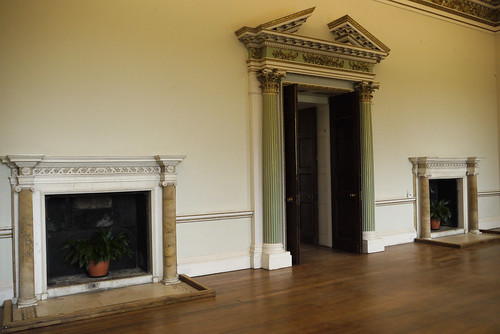
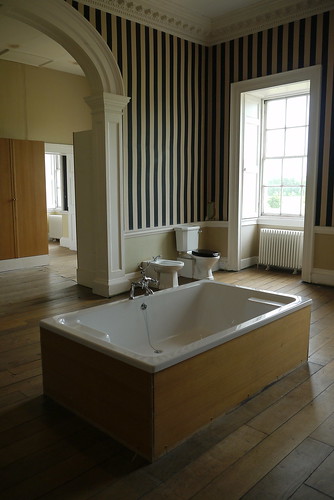
The house then became the base for various property developers until it came up for sale in 2004 when the Croome Trust were able to buy back the Coventry family’s ancestral home, whereupon they leased it to the National Trust for 999 years.
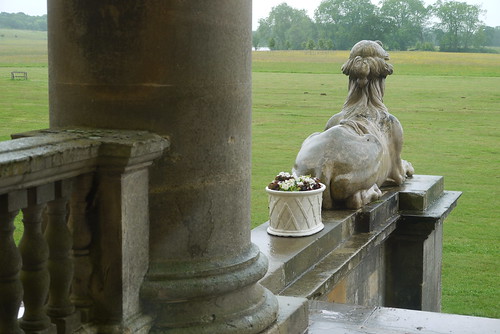
*Introduction to the National Trust Handbook of Croome (George Coventry, 13th Earl)
Source of information – National Trust Handbook of Croome
Tags: Croome, Croome Court, National Trust, Vacation

Within the Church of St Mary Magdalene shrubbery, the ice house that served Croome Court can be found. The ice house became overgrown and filled with rubble when it ceased to be used in 1915.
The thatched roof was partly a decorative touch to make the building blend in with its surroundings but it also fulfilled a practical function of keeping it cool. More than two thirds of the building is below ground. The depth of the Ice House is 24 feet which is a surprising drop. The Ice House worked rather like a thermos flask. The walls are double-skinned, and ice would have been taken from a nearby pond in winter and packed into the chamber, which was lined with straw for extra insulation. Throughout the summer the ice from the Ice House would have been used to preserve food and cool drinks as well as to create ice creams and sorbets.*
*From the National Trust Croome Handbook
Tags: Croome, Croome Estate, Ice house, National Trust, Vacation

Shortly after lunchtime the sun made a brief appearance so I grabbed my my camera and headed off to Buildwas Abbey. It is a perfect tranquil place to enjoy the sunshine.
As I a sat on a bench I was reminded of a previous visit when I was treated to the sounds of a Benedictine chant from the chapter house. Today, however it was not the sounds of chanting I could hear it was the sounds of tweeting from the parlour. A family of swallows were nesting in there. The two parents kept flying out through the doorway and low past my legs whilst searching for a tasty snack for the youngsters. I sat in the sun watching them for a while before retreating to a different bench for a different view of the Abbey before making my way home.
I decided to drive back via the scenic route and along the way I was surprised when a peacock stepped out into the road. Luckily it changed its mind rather quickly and strutted back off in the direction it came from.


Tags: Abbey, Afternoon Out, Buildwas Abbey, English Heritage, me, Portrait, Self Portrait, Shropshire