Saint Edmund (841 – 69) was brought up as a Christian, and became King of the East Angles in about AD 865.
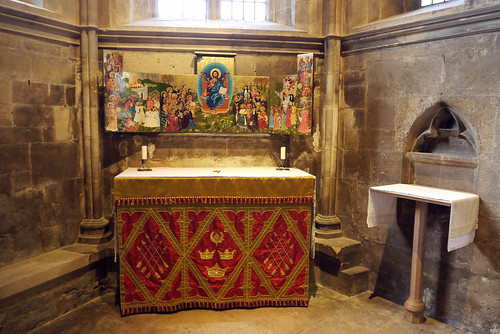
In 869 – 70. The Great Army of Vikings, under Ingwar, invaded East Anglia. Edmund led his army against them, but was defeated and captured. He refused to deny his Christian faith or rule as Ingwar’s vassal. He was killed, being shot with arrows, and beheaded, as a roof boss in this chapel depicts.*
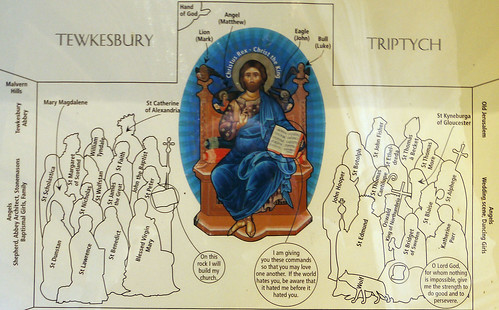
Within the chapel is a triptych depicting Jesus Christ, Jerusalem and Tewkesbury. The three-part painting features images associated with the town, such as mustard flowers and horseradish plants.
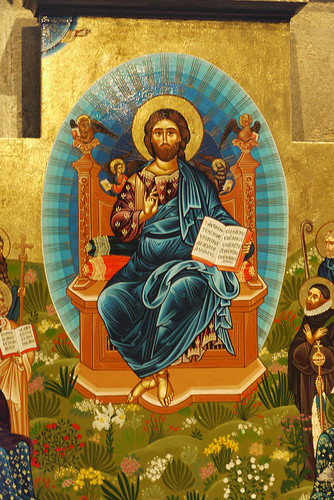
*From an information board next to the chapel
Tags: Mini Break, St Edmunds Chapel, Tewkesbury, Tewkesbury Abbey
Give light, and the darkness will disappear of itself.
Desiderius Erasmus
Tags: Cherie's Place Thought, Church, Gloucestershire, Mini Break, Tewkesbury, Tewkesbury Abbey
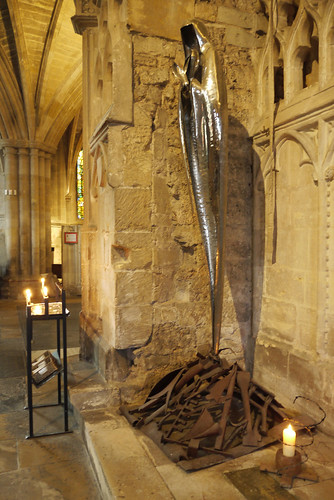
This statue, by Anthony Robinson, speaks of Mary in her sorrow and triumph. Mary, who stood at the foot of the cross, knew the depth of sorrow. Mary, whose son Jesus Christ rose from the dead, can today teach us of grief transformed to joy – of light after darkness.
The statue faces the site of the pre-reformation Lady Chapel, destroyed in 1540.
Who is he that stands perceiving
All the Holy Mother’s grieving,
And does not his shame express?
Who could yet, her sadness sharing,
Seeing Mary so despairing
Fail to join in her distress.
(from the Latin Hymn Stabat Mater)
Joy to thee, O Queen of Heaven, alleluia!
He whom thou wast meet to bear, alleluia!
As he promised, hath arisen, alleluia!
Pour for us to him they prayer, alleluia!
(from the Latin Hymn Regina Caeli)
*Information and quotes from the information board next to the statue of Mary
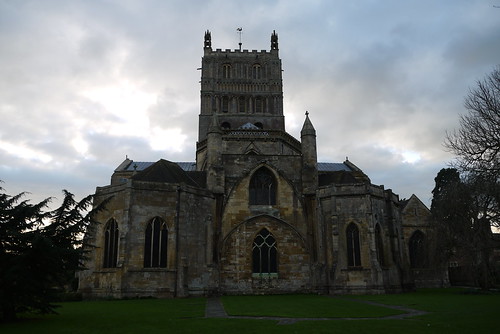
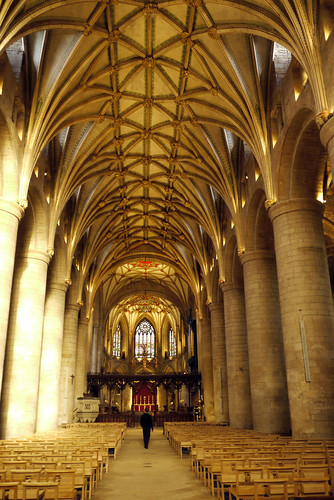
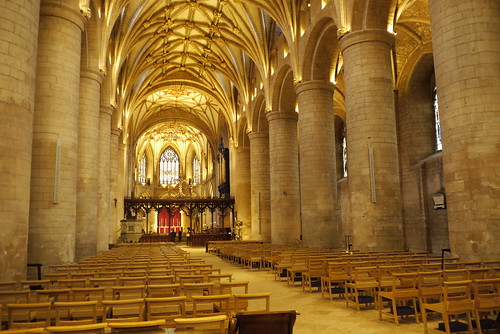
Although the Abbey was founded in 1087 by nobleman Robert FitzHamon, building of the present Abbey did not start until 1102. Built to house Benedictine monks, the Norman Abbey was near completion when consecrated in 1121.
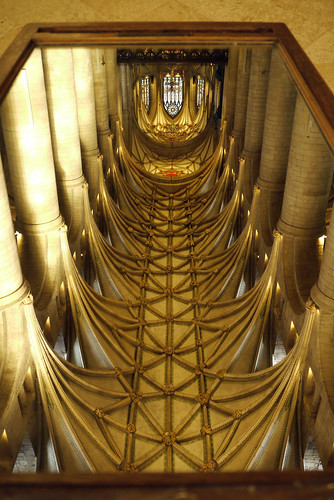
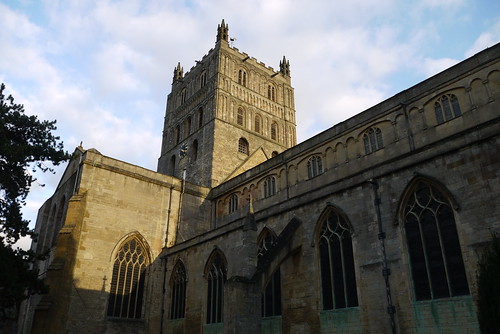
Embellishments to the long nave roof and the apsidal chancel were made in the first half of the 14th century in the Decorated style. After the dissolution in 1540 most of the claustral buildings and the Lady Chapel were quarried for their materials but the Abbey Church was sold to the parishioners for £453. Changes made since then to the internal configuration have developed to reflect contemporary styles of devotion, currently of the Anglo-Catholic persuasion.
Lying at the southern edge of the old town, the Abbey quietly dominates the land and skyline with its long nave and “probably the largest and finest Romanesque tower in England” (Pevsner). Vestiges of its social domination can be deduced from the layout of the streets and buildings, and the occasional relic; the Abbot’s gatehouse, the Abbey Mill, The vicarage and the Tudor-style dwellings in Church Street.
Tags: Church, Gloucestershire, Mini Break, Tewkesbury Abbey
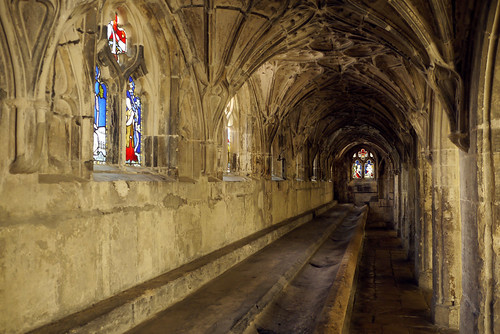
The lavatorium (‘washing place’) in the north walk of the cloister is decorated with a delightful small-scale fan vault. The trough with its drainage holes would have been lead-lined, and on the shelf behind there would have been lead tanks with taps at the front. The lavatorium was used for hand-washing before meals. The whole community of monks would line up in order of precedence to wash and dry their hands. They would then process in silence into the refectory. The open alcove opposite the lavatorium is where their towels were hung.*
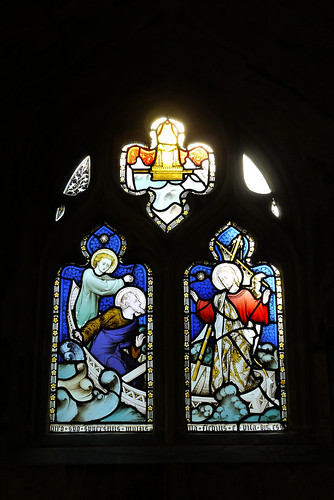
The cloister lavatorium was glazed in 1868 by John Hardman of Birmingham using designs by Powell.
The main lights, appropriately for the monastic washing area, illustrate episodes from Christ’s ministry associated with water, the one exception being the lights furthest east, which depict creation. The glass is of the highest quality and among the finest in the cathedral.*
*From Gloucester Cathedral FAITH, ART AND ARCHITECTURE: 1000 YEARS by Chapter of Gloucester Cathedral 2011
Tags: cloisters, Gloucester, Gloucester Cathedral, Lavatorium, Mini Break
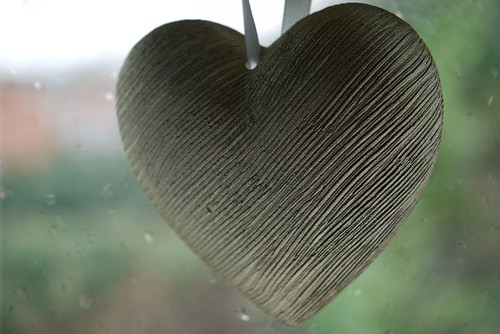
You learn to speak by speaking, to study by studying, to run by running, to work by working; in just the same way, you learn to love by loving.
SAINT FRANCIS DE SALES
Tags: Cherie's Place, Cherie's Place Thought, Heart, Love