Random thoughts and photos of my journey through life…
8 Comments CherryPie on Feb 27th 2016
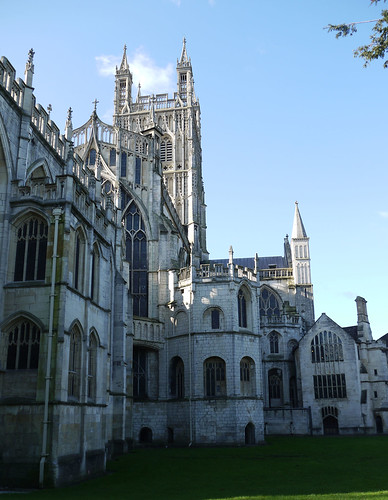
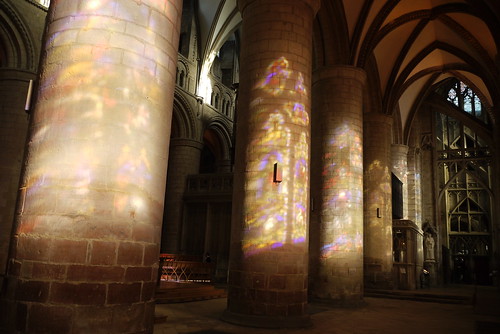
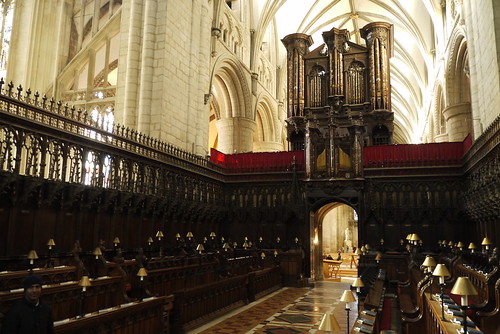
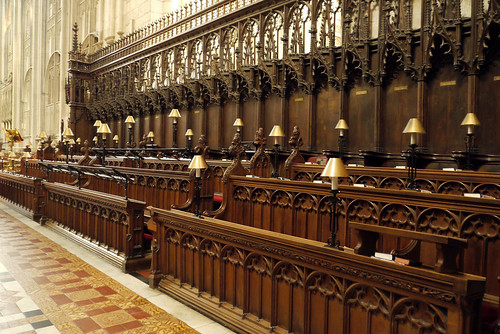
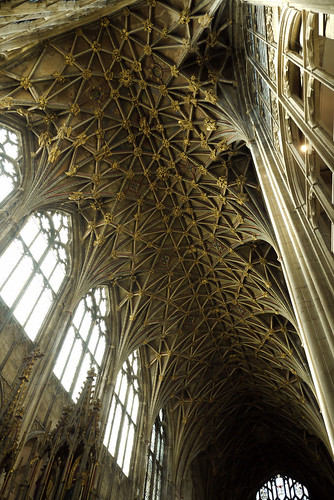
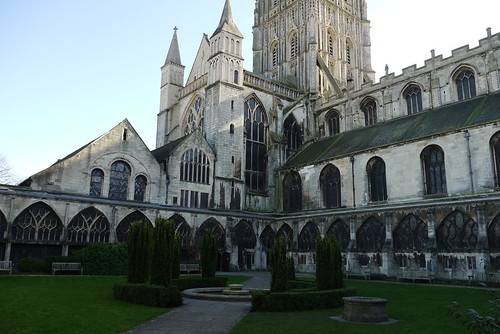
Gloucester Cathedral has been a place of Christian worship continuously for over 1,300 years, since Osric, an Anglo-Saxon prince, founded a religious house here in 678-9 AD. Little is known for certain about the communities which worshipped here or the buildings they used over the next 400 years although it is believed that the Benedictine Rule was introduced here early in the 11th century.
A record of the building fabric is made before and during stonework conservation, detailing the information that repair works uncover about building history and early building techniques. For a selection of archaeological reports concerning this, see www.bgas.org.uk/gcar.
At the time of the Norman Conquest in 1066, the monastery was not thriving and in 1072 King William I appointed Serlo, a monk from Mont St Michel in Normandy to be its Abbot. An energetic, charismatic and devout man, Serlo built up the wealth of the monastery to the point where in 1089 he was able to start building the magnificent abbey church which so impresses the visitor today.
A wealthy and powerful institution with extensive landholdings in Gloucestershire and South Wales, the Abbey of St Peter (as it was known) had significant royal associations.
In 1216, Henry III, who had succeeded to the throne at the age of only nine, was crowned here. Major building works in the 13th century included a first Lady Chapel and new Tower and refectory.
Most importantly for the subsequent history of this place, in 1327, King Edward II who had died in Berkeley Castle (in suspicious and, traditionally, gruesome circumstances) was buried here. A shrine-like monument was erected over the tomb of the dead king. Royal patronage and popular devotion led to funds flowing into the abbey, and these enabled the magnificent remodelling of the east end to be carried out in the very latest “Perpendicular” style.
In the 15th century further building work included the remodelling of the west end, the building of the south porch and of the present tower and finally, towards the end of the century, the present Lady Chapel.
Henry VIII ordered the monasteries to be dissolved and Gloucester Abbey surrendered in January 1540. The abbey buildings became Gloucester Cathedral, the seat of the Bishop of Gloucester in 1541. No longer a community of monks, it was to be led by a Dean and a chapter of canons.
The ideological and doctrinal struggles of the 16th and 17th centuries made their mark in Gloucester: Bishop Hooper was burned at the stake here in 1555 on the orders of the Catholic Queen Mary; in the 1620’s Bishop Miles Smith and his Dean, William Laud held profoundly different views on what the nature and style of Church of England should be.
Then under Oliver Cromwell there was a move to demolish the cathedral building altogether (it was saved by the intervention of the mayor and burgesses of the City of Gloucester).
With the restoration of the monarchy (after the civil wars and Commonwealth period) in 1660, the Dean and Chapter resumed the running of the Cathedral and that is how it is managed today.
Throughout the 18th, 19th and 20th centuries they have carried out repairs and conservation work rather than rebuilding or remodelling the building.
More importantly, Gloucester Cathedral has endured through the centuries as a place of Christian witness where God is worshipped and the gospel of Jesus Christ is proclaimed every day.
2 Comments CherryPie on Feb 26th 2016
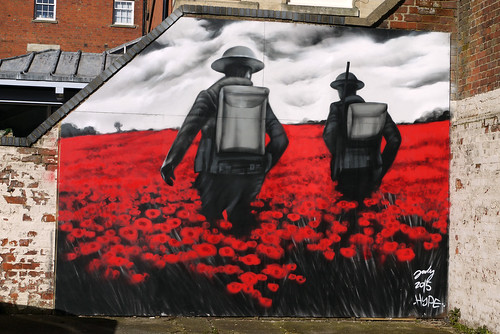
Seen on a wall next to the Soldier’s of Gloucestershire Museum.
8 Comments CherryPie on Feb 25th 2016
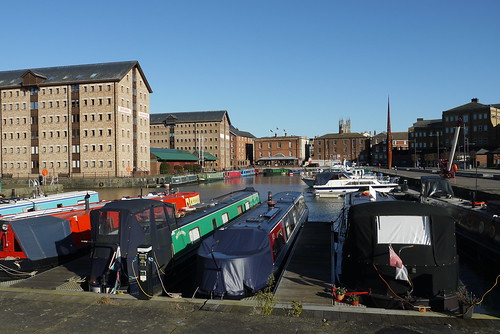
Fifteen Victorian warehouses stand as proud guardians to Britain’s most inland port. The former dock estate has become a popular destination where visitors can enjoy interesting views and a range of modern facilities while wandering around a remarkably complete example of a Victorian port. Views include many fine late Victorian era warehouses, a working dry dock, a Mariners Chapel and other dock-related buildings that have been found new uses.
Where ships once discharged their cargoes, there is now an ever-changing miscellany of visiting narrow boats, smart motor cruisers and the occasional yacht or tall ship.
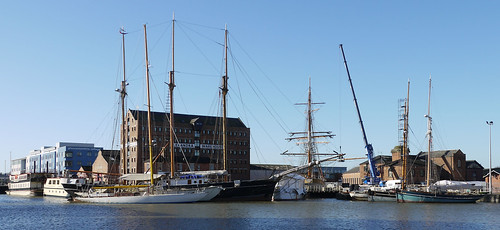
The Main Basin at Gloucester was constructed as the terminus of the ship canal with an entrance from the Severn estuary at Sharpness. As the work was nearing completion, there was concern that the basin would not be large enough for the trade expected, and so an additional Barge Arm was constructed to ensure that the Main Basin could be kept free for sea-going ships. In addition, the Canal Company built a warehouse at the north end of the basin. The canal was formally opened on the 26 April 1827, and a huge crowd gathered to watch the first two vessels enter the basin amid the firing of guns and the ringing of church bells.
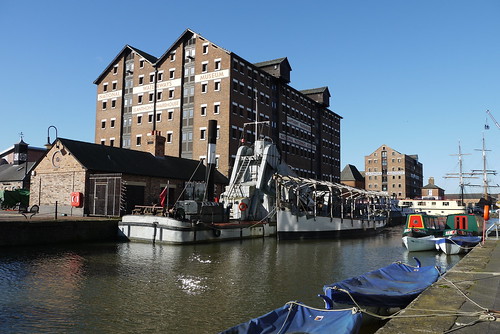
The Barge Arm was an early development for use by barges and narrow canal boats to keep them out of the way of the big ships in the Main Basin. Each side of the Arm was lined with yards handling such cargoes as coal, stone, timber or building materials, and each yard was initially served by a siding of horse-drawn tramroad to Cheltenham.
From here generations of Gloucester men went ‘up country’ to the Midlands in narrow canal boats that were 70 feet long and 7 feet wide. On the outward journey, most carried grain or timber imported through Gloucester, returning with goods for export or coal for local consumption. The master of each boat was paid by the trip and was expected to find his own crew, and many found it necessary to take their wife and/or children rather than employ another man. Children working on the boats had little opportunity to attend school, and their lack of education meant that most continued to work on the boats when grown up.*
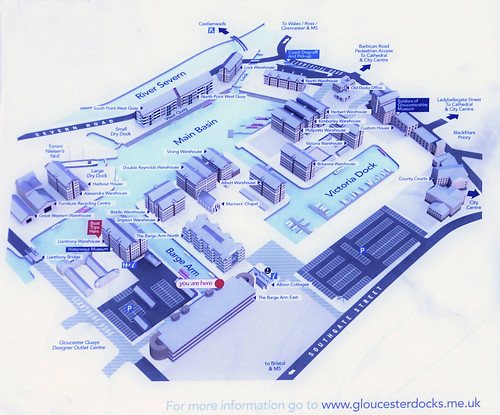
*From a sign board next to the Barge Arm
10 Comments CherryPie on Feb 24th 2016
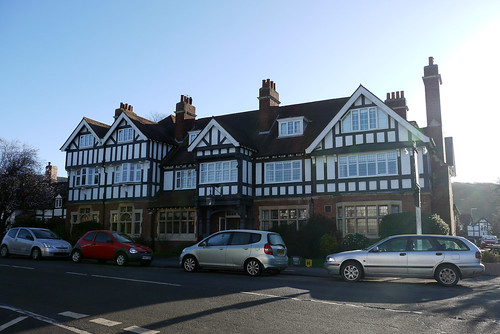
We booked an early morning call to make sure we were awake in time for breakfast. The early morning call didn’t happen, but luckily we were awake anyway!
I started breakfast with mixed fresh fruit, during which time our breakfast order was taken. Shortly afterwards a complimentary glass of Prosecco arrived, followed almost immediately by the cooked breakfast order. If we had known we would have delayed ordering cooked breakfast until after the Prosecco…
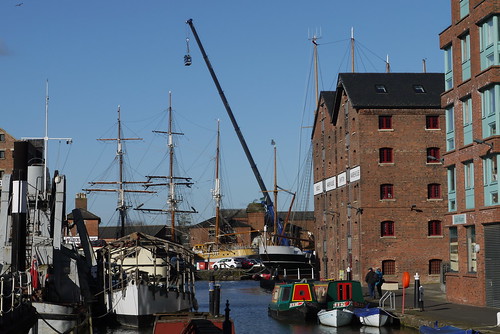
After breakfast I took a few photos of the outside of the hotel before we set off on our way to Gloucester, taking in a slight detour to allow for mistletoe photography. We were visiting to Gloucester to see the Cathedral but when we arrived Mr C was on a mission to visit the docks first. I let him have his way  When we arrived at the docks and stepped out of the car it was bitterly cold and one of my eyes started streaming. We made our way towards two tall ships that Mr C had seen on our arrival but as soon as he had seen the ships he started to rush off to visit a military museum that he had noticed whilst parking his car.
I had other ideas, now that I was at the docks, photos had to be taken. He had to persevere with the cold a bit longer whilst I explored the dock area. After my exploration we visited the military museum which ironically I enjoyed more than he did.
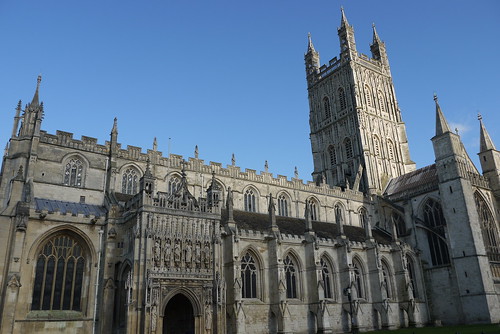
After the visit to the dock area we moved the car closer to the Cathedral, where we had lunch before visiting the Cathedral. We thoroughly enjoyed our visit to the Cathedral, it was every bit as good as I remembered it from my previous visit many years ago. Only the portable labyrinth was missing. We were informed that it is likely that it will return for the summer holidays.
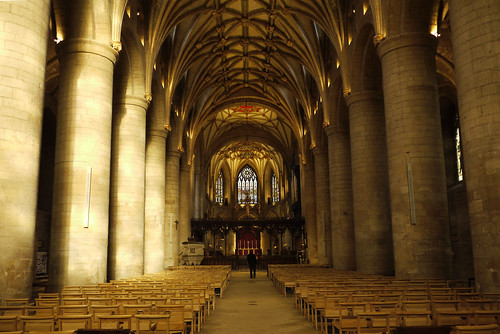
We then set off towards home, stopping off at Tewkesbury on the way. Being a Monday in rural Gloucestershire it was mostly closed, but eventually we found a nice tea shop where we enjoyed a cup of tea. After a refreshing cup of tea we spent some time in the Abbey before continuing on our journey home.
15th February 2016
14 Comments CherryPie on Feb 23rd 2016
The weather was gloriously sunny as we drove through the Shropshire and Herefordshire countryside for our overnight stay at Colwall village. When we crossed over the border into Herfordshire I noticed an abundance of Mistletoe in the trees. I can’t remember the last time I saw mistletoe growing in the UK and I have never seen so much before.
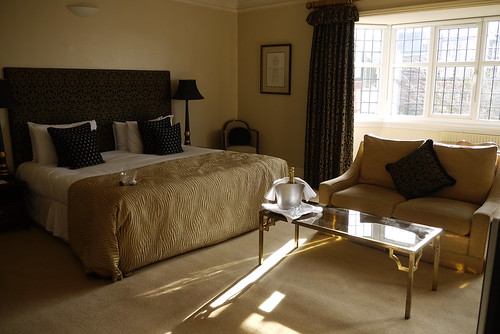
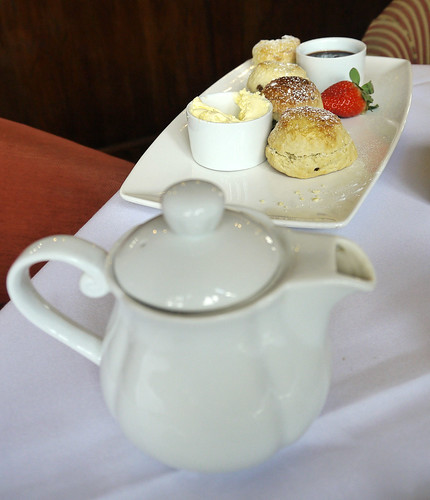
We arrived at the Hotel, Colwall Park just after one o’clock which was perfect timing for our lunch time cream tea which was part of the Valentines package which we had booked. After lunch we checked into our room to unpack our bags. When we made the booking we were advised that only one room was left and that it was a suite. When we opened the door to the room we realised that it was the bridal suite, it was very nicely appointed and had his and hers wardrobes. Handmade chocolates had been placed on the bed and the table a bottle of Champagne was sitting in a bucket of ice, glinting in the sunshine. The latter had been ordered by Mr C. We moved to the Champagne to a cool corner of the room and set off for a nearby craft village where we spent a couple of pleasant hours.
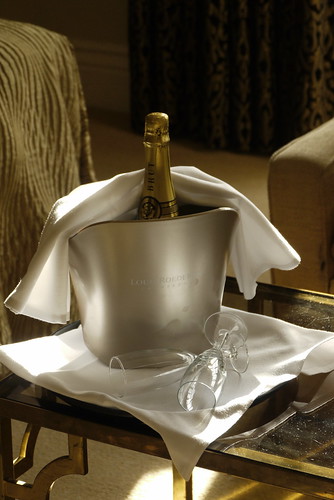
By the time we had returned to the hotel the Champagne had chilled to the perfect temperature and we enjoyed sipping it whilst relaxing with a good book. I also enjoyed a soak in the bath before getting ready to go down to dinner. There was a nice atmosphere in the restaurant and we enjoyed the food off the special Valentine’s menu. There was a slight hiccup when it came to dessert, the waiter got confused and brought us the wrong menu not once but twice which made us smile. After we had finished our meal we sat in the hotel bar until it was time to retire for the evening.
14th February 2016
14 Comments CherryPie on Feb 22nd 2016
Throughout my whole life, during every minute of it, the world has been gradually lighting up and blazing before my eyes until it has come to surround me, entirely lit from within.
Pierre Teilhard de Chardin
16 Comments CherryPie on Feb 21st 2016