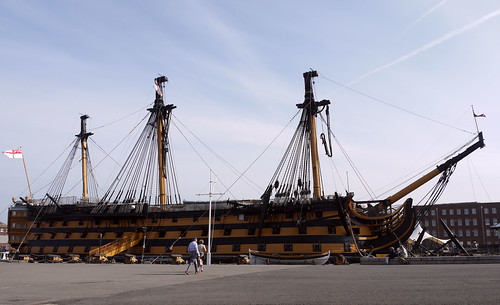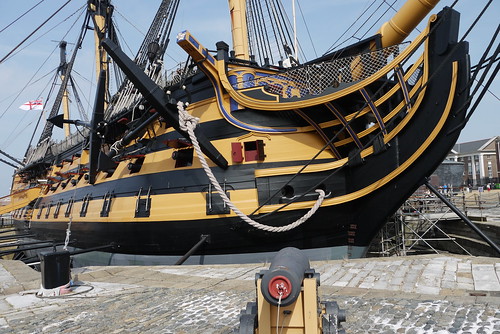
On 7 May 1765 a magnificent new ship of the line was floated out of the Old Single Dock in Chatham’s Royal Dockyard. She was HMS Victory, a first-rate battleship and the largest and most up-to-date ship in King George III’s Royal Navy. In the years to come, over and unusually long service, she would gain renown leading fleets in the American War of Independence, the French Revolutionary War and the Napoleonic War. She achieved lasting fame as the flagship of Vice-Admiral Lord Nelson in Britain’s greatest naval victory, the defeat of the French and Spanish at the Battle of Trafalgar.
It is almost impossible today to imagine the physical brutality of fighting at sea in sailing warships. These great wooden battleships, under acres of sail, confronted each other at point blank range, their crews intent on smashing and capturing the other ship. Their heavy guns blasted tons of iron, shattering hulls, splintering masts and yards, overturning gun carriages and filling the air with deafening noise and blinding smoke.
She may seem beautiful to our eyes, but Victory was built principally as a huge and complex machine of war. Every man in her 820 crew played a vital part in operating the ship and ensuring that ultimately she was in the right place and ready to fire her deadly broadside iron shot.*
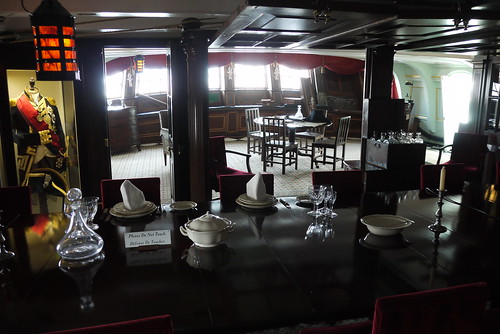
The Admiral’s Quarters
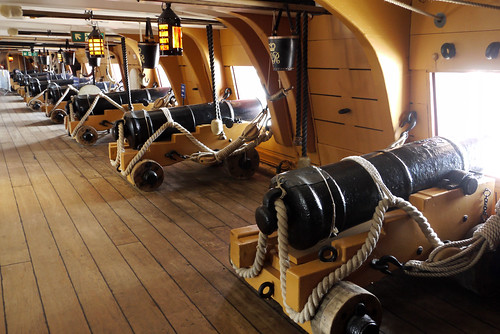
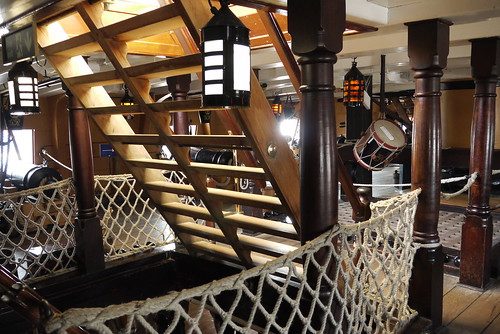
The Upper Gun Deck
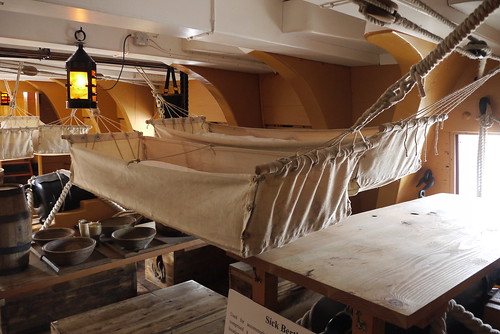
The Sick Berth
*From the Royal Navy HMS Victory guidebook
Tags: Defence Matters, HMS Victory, Portsmouth, Portsmouth Dockyard, Vacation
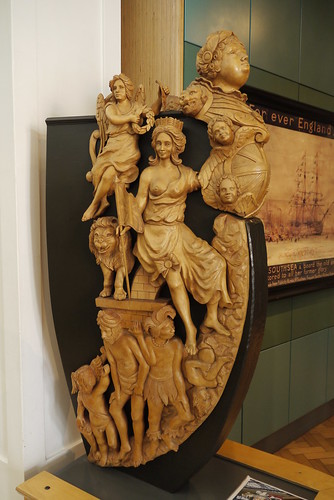
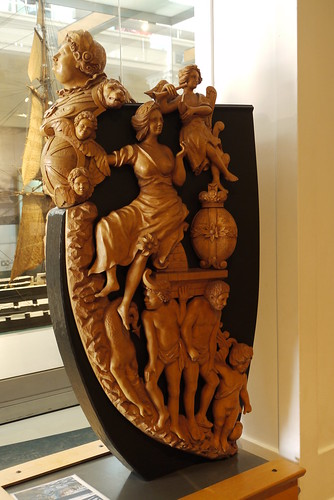
This quarter-scale replica of The Victory’s Original Figurehead was carved by Trevor Ellis.
When first launched the Victory had a most elaborate figurehead. It symbolised the many victories that Britain had won all over the world in 1759. In the centre is a bust of King George the Third.
On the starboard side (first photo) is a figure of Britannia. She is trampling on Discord and is being crowned by Peace. Below are two figures representing Asia and America.
On the port side (second photo) is a figure of Victory. She is trampling on rebellion. Above her Fame is sounding a trumpet to celebrate the victories. Below her are figures representing Europe and Africa.*
*From a signboard next to the figurehead.
Tags: Figurehead, HMS Victory, Portsmouth, Portsmouth Dockyard, Vacation

The upper floor of ‘The Victory Gallery’ houses the ‘Spirit of Figurehead’ display which showcases a wonderful collection of ship figureheads from the late 18th century.
Tags: Figurehead, Photoshop Elements, Portsmouth, Portsmouth Dockyard, There's Always One, Vacation

HMS Trafalgar:
Built as a First Rate of 120 guns at Woolwich and completed in 1841, 2694 tons. Took part in the bombardment of Sebastopol in 1854, being towed to her position in the line by the RETRIBUTION (paddle).
Converted to a two deck screw ship of 90 guns at Chatham in 1858-59 and in 1873 was renamed BOSCAWEN, when she became a seaman boy’s training ship at Portland. Sold in 1905, the year in which boy’s training became shore based at Shotley near Ipswich.*
*From a signboard next to the figurehead.
Tags: Defence Matters, Figurehead, Portsmouth, Portsmouth Dockyard, Vacation
What I know of the divine sciences and Holy Scripture, I learnt in woods and fields. I have had no other masters than the beeches and the oaks.
St Bernard of Clairvaux (1091 – 1153), France

Tags: Arley Arboretum, Cherie's Place Thought, Trees

THIS BRONZE STATUE AND FIELD GUN
COMMEMORATE THOSE MEN FROM PORTSMOUTH
COMMAND WHO COMPETED IN THE ANNUAL FIELD
GUN COMPETITION AT THE ROYAL TOURNAMENT
AND TRAINED AT “ROYAL NAVAL BARRACKS”
PORTSMOUTH FROM 1947 UNTIL CESSATION OF
THE TOURNAMENT IN AUGUST 1999
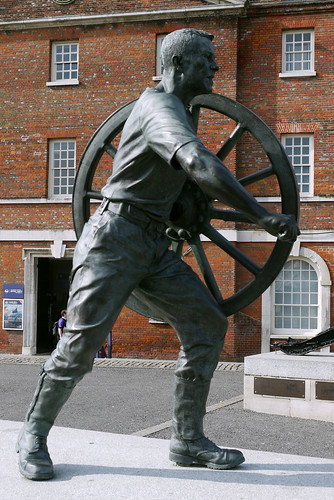
THE PANELS AROUND THE PLINTH DEPICT THE
HISTORY OF FIELD GUN AND COMMEMORATE THE
BRAVERY OF THE BLUE JACKETS WHO TOOK PART IN
THE RELIEF OF LADYSMITH 1899. THE SAME COURAGE
AND COMMITMENT WAS SHOWN THROUGHOUT THE
YEARS OF THE COMMAND FIELD GUN COMPETITION
UNTIL ITS CESSATION IN 1999.
Tags: Defence Matters, Field Gun Crew, Memorial, Portsmouth, Portsmouth Dockyard, Vacation