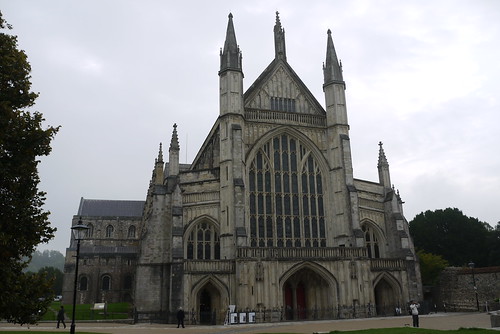
I invite you to read my post about Winchester Cathedral on the Broad Oak Magazine blog.
Random thoughts and photos of my journey through life…
I invite you to read my post about Winchester Cathedral on the Broad Oak Magazine blog.
12 Comments CherryPie on Dec 2nd 2014
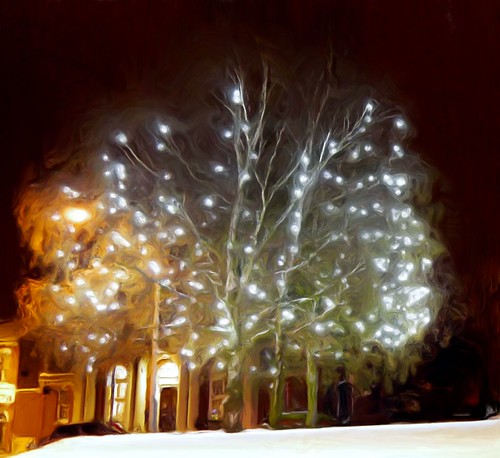
At the beginning of December many Rotary clubs throughout the United Kingdom launch their annual ‘Tree of Light’. The concept of the ‘Tree of Light’ was introduced into Shropshire from South Africa in the 1990s by a county Rotarian. For many years, since its inception, my father was a member of the small committee of Rotarians that run the Telford ‘Tree of Light’; these Rotarians are from the four Rotary clubs of Telford.
The name and symbolism of the ‘Tree of Light’ reminds us that there can be light and hope even in bleak circumstances. The main aim of the ‘Tree of Light’ is to serve the public and the community which is at the heart of the Rotary organisation whose motto is ‘service above self”.
People are invited to sponsor a light on the tree in memory of a loved one (or a cause dear to them) and the monies raised are divided between local charities. The commemoration of a loved one around the tree provides a sense of well being to those who take part.
The names of the nominees are displayed around the base of the tree, on the ‘Tree of Light’s web page and also published in the local newspaper. There is always one main charity to which half of the monies raised is donated; the other half is split equally between the Rotary clubs that administer ‘The Tree of Light’, for them to donate to a local charity of their choice. This year the charities are the Severn Hospice, Neo-Natal Unit Princess Royal Hospital, Wellington Cottage Care, Georgia Williams Trust and Telford Mind.
My father spent many a long hour in the run up to Christmas attending committee meetings or sitting upstairs at home processing names and lists for publication under the tree and in the local newspaper. His involvement included receiving phone calls from some of the sponsors who had queries about their request. He loved the premise and the concept of the ‘Tree of Light’ and that it provided a treasured service to people at this particular time of year.
8 Comments CherryPie on Dec 1st 2014
Thousands of candles can be lighted from a single candle, and the life of the candle will not be shortened. Happiness never decreases by being shared.
10 Comments CherryPie on Nov 30th 2014
In addition to the Wedding Gates and The Round Table there are other things of interest within The Great Hall.
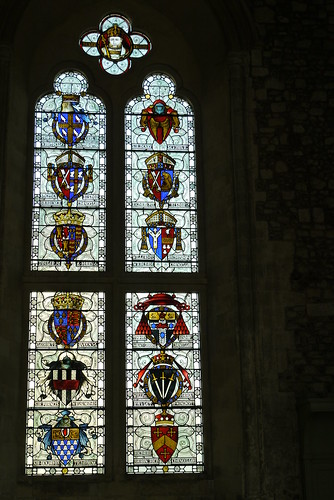
The stained glass windows were made in 1875-80. The glass features the arms of famous people associated with Hampshire. The portraits show significant kings involved with the history of Hampshire.
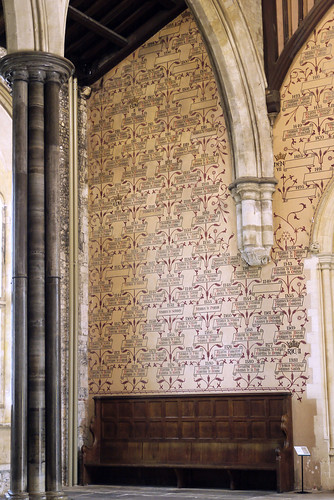
The east wall features a nineteenth-century painting showing the names of the members of parliament from 1283 (Edward I) to 1868 (Victoria).
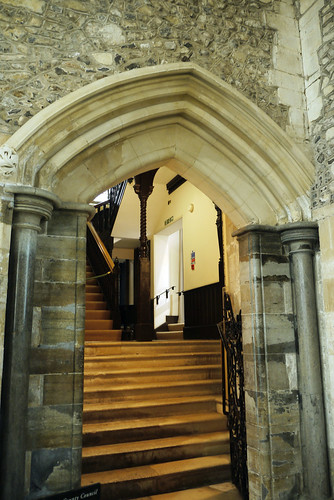
A doorway that originally led to the apartments of Queen Eleanor, wife of Henry III.
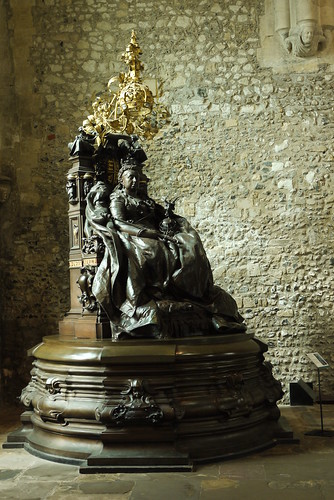
A bronze statue of Queen Victoria which is the work of Sir Alfred Gilbert R.A. It was presented to the County by the High Sherrif of Hampshire in 1887 to mark the Queen’s Golden Jubilee.
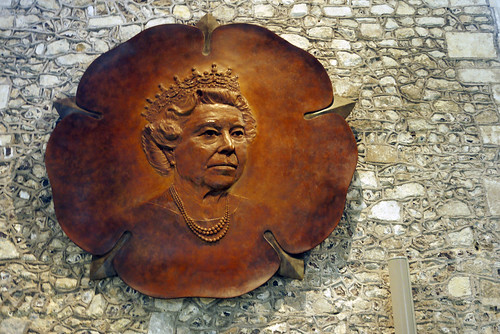
A bronze sculpture commissioned in 2012 to mark the Diamond Jubilee of Her Majesty Queen Elizabeth II is the work of Vivien Mallock.
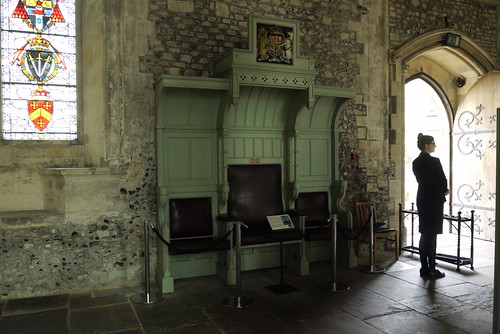
The Great Hall has been used for holding courts throughout history. This nineteenth century judge’s bench was used in the Assize Courts, then in the Crown Court, which moved to the adjoining building in 1974.
9 Comments CherryPie on Nov 29th 2014
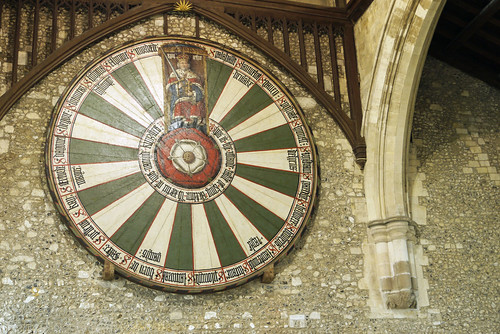
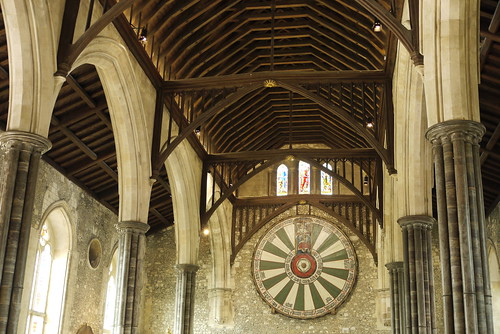
The Round Table ‘King Arthur’s Table’ is mounted on the west wall at one end of the Great Hall. It has hung there since 1873 when it was moved from the east wall to make way for arches that link the hall to the Assize Courts next door. The table is thought to have been built in the 13th or early 14th century, possibly for a tournament to celebrate the wedding of one of Edward I’s daughters.
On the table is the inscription ‘This is the round table of Arthur with 24 of his named knights’. It is 5.5 metres in diameter, weighs 1220 kilograms, and is made from 121 pieces of oak.
33 Comments CherryPie on Nov 28th 2014
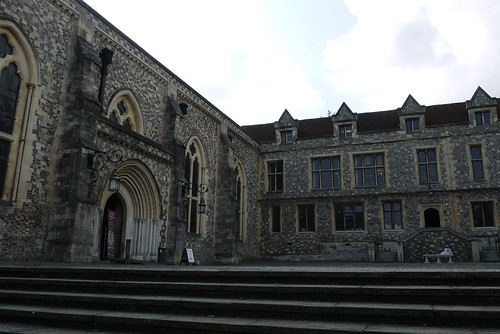
Apart from a few segments of foundations, all that remains of Winchester Castle is Henry III’s Great Hall. In 1066 Winchester surrendered without at fight to William the Conqueror and shortly after his coronation he gave orders for a castle to be built. The castle remained the seat of government under the early Norman kings.

During the reign of Henry III the castle was almost completely rebuilt. A fire in 1302 caused much damage and the castle ceased to be used as a royal residence, the monarchs moved to the nearby bishop’s palace of Wolvesey. In 1651 the castle was demolished but the Great Hall was kept as a venue for assemblies and county assizes.
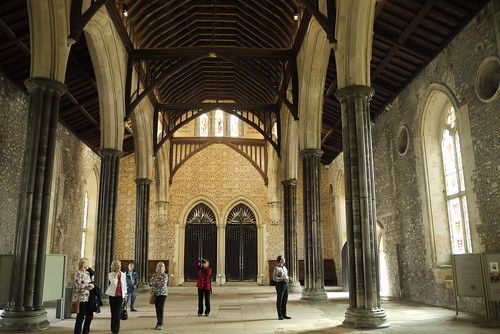
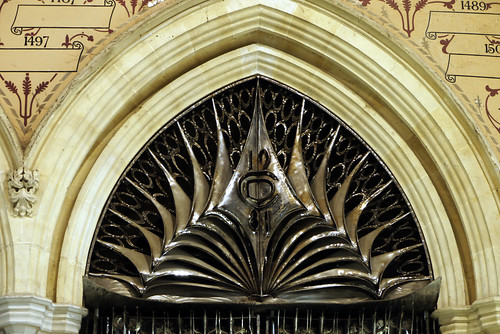
The Great Hall was used for the administration of justice until the 1970s and it was here that Sir Walter Raleigh was condemned to death in 1603. The Great Hall is now linked to the new court house by two archways. The arches lead to the judges’ gallery. In 1983 two pairs of wrought steel gates, designed and made by Antony Robinson were installed within the arches as a commemoration to the wedding of Prince Charles to Lady Diana Spencer in July 1981.
12 Comments CherryPie on Nov 27th 2014
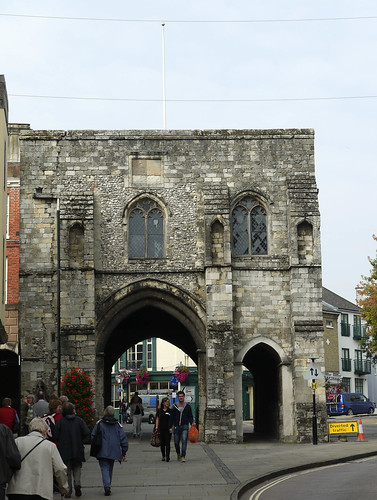
The Westgate is one of only two surviving medieval gateways that were one an integral part of the city wall. The other gate being Kingsgate and the church of St Swithun which featured in a previous blog post.
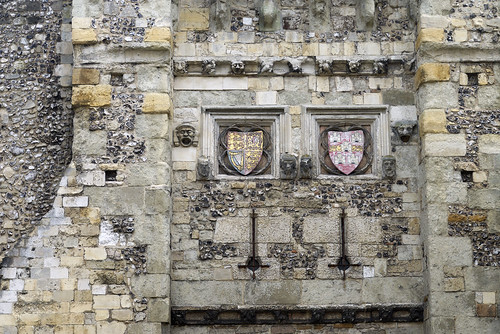
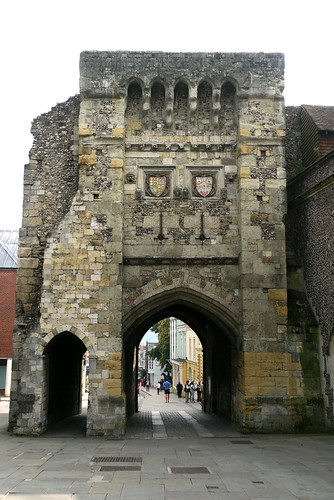
Originally built in the 12th century and later remodelled, the west face was added in the 14th century to defend the city against threatened invasion from France. The openings below the parapet on the west face of the gate were for dropping ammunition such as rocks, oil or even boiling lead on potential invaders. The loops below the shields were designed for primitive hand-held cannons, and the slots in the gateway arch held a portcullis. The little room above the arch, originally a guardroom, served as a debtors’ prison from the 16th to the 18th century, and is now a museum.*
The contents of the museum sound interesting but unfortunately it wasn’t open on the day we passed it on our route to the Great Hall.
*From the Pitkin City Guide to Winchester.
13 Comments CherryPie on Nov 26th 2014