If your actions inspire others to dream more, do more and become more, you are a leader.
John Quincy Adams
Random thoughts and photos of my journey through life…
If your actions inspire others to dream more, do more and become more, you are a leader.
John Quincy Adams
12 Comments CherryPie on Nov 9th 2014

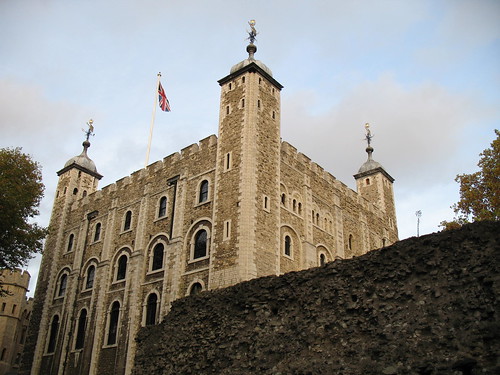
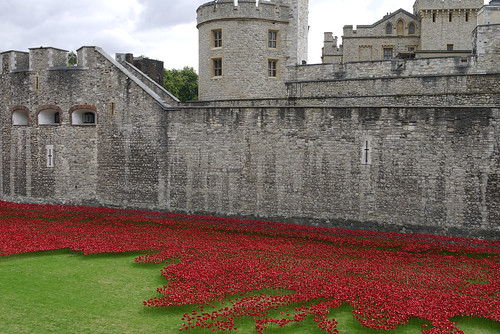
I have returned safely from The Tower! This years London trip ran a lot more smoothly that last years trip to London. On arrival we headed straight to the Tower of London. On the advice of the Tower of London website we avoiding using Tower Hill tube station, this meant we had a 10 minute walk from the tube station to The Tower. We picked up our prepaid tickets and admired the poppies in the moat whilst making our way to the drawbridge entry to to The Tower.
When we got inside we walked on the walls, looking out over London and glimpsing poppies through some of the windows. After the walk we took a break for lunch before continuing our tour of things that The Tower of London has to offer. We gave the Crown Jewels a miss, the queue was extremely long due to increased visitors there for remembrance weekend and to see the poppies in the moat. We did join the shorter faster moving queue to visit the White Tower which is the oldest part of the Tower. It houses the Royal Armories collection.
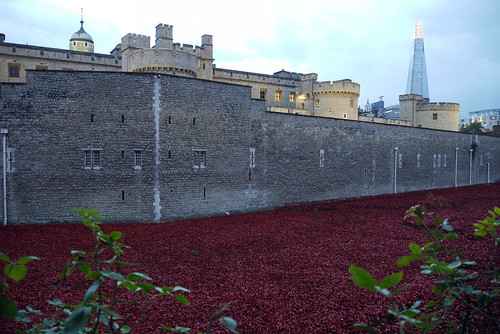
After our visit to The Tower we continued walking around the moat so we could see more of the poppies in the moat. It was fascinating to see how much the poppy installation had grown since our visit in August. Due to the sheer numbers of people it took us quite a while to make our way around the moat. We got to one of the corners at the front of The Tower as dusk turned this meant that we were able to witness the Roll of Honour being read. This was followed by a trumpeter playing The Last Post which is always moving to hear.
As the crowds slowly started to disperse we made our way to the other corner at the front of The Tower to see the wave of poppies cascading over the side of the drawbridge. Just as we arrived the heavens opened, it was just like someone had turned on a tap!!. We beat a hasty retreat and made our way towards the tube station whilst trying to locate a cab. We had no luck with a cab due to the sheer numbers of people. On the way back to the tube we experienced rivers of water flowing across the footpaths as the gutters deposited water to the downspouts. Water was also cascading down the steps in the underpasses. By the time we got to the tube station we were absolutely drenched.
We set off on our journey back to Marble Arch where the coach had dropped us off. The journey was beset with delays. At one point we queued inside the underground for thirty minutes before we could get onto the platform. At one point I felt most uncomfortable, there was a mass of people with no exit in site if something should suddenly go wrong. Of course nothing went wrong and every few minutes the crowd surged forward as people got on the tube that had arrived at the platform and more people surged to fill the gap they had left on the platform. We eventually got back to Marble Arch, grabbing as sandwich to eat on the coach as we made our way to the pick up point. We arrived with moments to spare. A few others were late due to them experiencing similar transport problems. The coach was also a little late due to roads being congested. The coach slowly made its way out of London but as someone pointed out, it was not as slow as it was on last years trip.
The driver of the coach we travelled on last year informed us that it spent six weeks in the Volvo garage where it was found that two pistons had broken through the engine block at a cost of £24.000 to replace!! OUCH!!
8 Comments CherryPie on Nov 9th 2014
10 Comments CherryPie on Nov 6th 2014
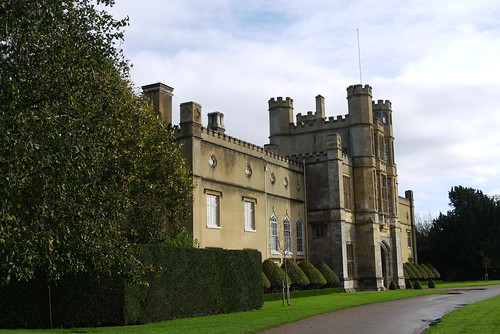
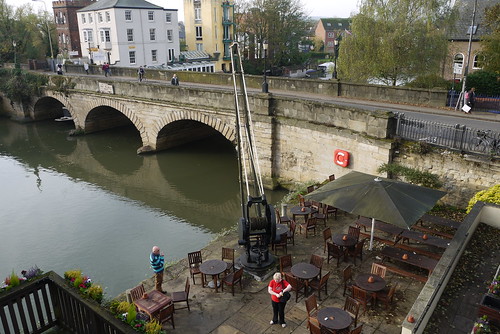
On the way home from my recent weekend in Oxford, we stopped off at Coughton Court. The beginning of November seems an appropriate time to visit Coughton Court because it and the Throckmorton family who owned it played a pivotal role in the Gunpowder Plot of 1605.
The plot was the climax of a series of Roman Catholic conspiracies against the Anglican Church and monarchy due to their persecution of Catholics and also the measures taken against them to stop them practicing their faith.
Catholic persecution started during the reign of King Henry VIII, who at the start of his reign was Catholic as was every Christian in England at that time. This changed when the Pope in Rome refused to annul Henry’s marriage to his first wife, Catherine of Aragon, in 1533. The request for annulment was made because Catherine had not produced an heir to the throne. The refusal from the Pope led to Henry declaring that his marriage to Catherine was over and him proclaiming himself as head of the English Church therefore breaking away from the Catholic Church.
During subsequent successions of monarchs the two competing denominations each learned to fear the other’s rise to power. The reigning monarchs of the day’s religious allegiance always led to suppression of the ‘other’ denomination. Heightened persecutions of Catholics were put in place when Elizabeth I re-established the Church of England after she came to power in 1558. Catholic Mass became illegal and attendance at Anglican Church services was mandatory with non-attendance leading to heavy fines. All recusants were listed and their names known by the Government. The heads of Catholic families were frequently imprisoned and in 1593 an act was passed that restricted the recusants’ mobility to a 5 mile radius from their homes.
Catholics who did not wish to renounce their faith continued to worship in secret. The sacrament was given by Jesuits who had trained in Europe and came illegally to England. These services took place in secret chapels within homes of prominent Catholics. These precautions were necessary as the houses were regularly searched and if the priests were discovered they would be sentenced to death.

Gunpowder Plot Parliament Cellar - Image source Wiki
Against this backdrop ‘The Gunpowder Plot’, a scheme to blow up the Houses of Parliament killing the King and his Government, was conceived and led by Robert Catesby. There were 13 major players in The Gunpowder Plot; all were ‘recusants’, devout Catholics who rejected the Church of England and wished to practice their faith without persecution. Many were kinsmen of the Throckmortons and other Old Catholic families. They believed that if the Protestant King James and his government were removed from power they could start a rebellion and restore England to a Catholic country. One of the plotters, Sir Everard Digby, moved into Coughton Court which was to be the base for the conspirators.

Guy Fawkes Confession - Image source Wiki
The plot, however, was foiled, at the turn of midnight on November 5th 1605 just hours before King James I was due to open Parliament. A bearded man dressed in a dark cloak was discovered acting suspiciously in the cellar beneath the House of Lords. When searched he was found to be carrying a watch and some matches. Closer inspection revealed 36 barrels of gunpowder hidden in bundles of firewood. The man, Guy Fawkes, was arrested and brought before the King for questioning where he admitted his intentions. Initially he refused to give his real name and denied the involvement of others. This led to him being tortured to reveal these facts leaving him a broken man hardly able to sign his confession.
Instead of the remaining conspirators using their planned route to join a Midlands uprising, the plotters now had to use the route as a means of escape. The conspirators were hunted down and captured. All were found guilty of high treason and sentenced to death. The Throckmortons were not directly implicated because Thomas’ permanent residence at the time was his house in Weston Underwood having rented Coughton Court to his cousin Digby in 1604. The heads of the so called traitors including those who had died trying to flee were placed on spikes as a chilling deterrent for any other would-be plotters to king and Government.
Each year before the annual state opening of Parliament the cellars of the Palace of Westminster are searched by the Yeoman of the guard. The legacy of a custom that was established after Guy Fawkes was discovered on the 5th November 1605.
12 Comments CherryPie on Nov 5th 2014
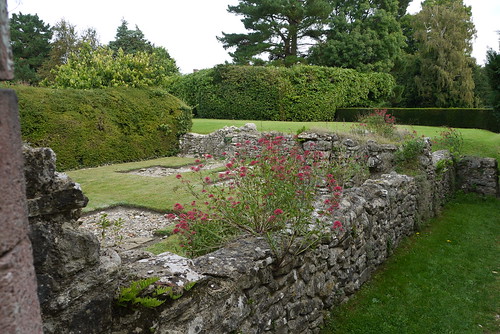
There is more to Beaulieu than the acclaimed motor museum. The footprint of the Cistercian Abbey church can still be seen next to the cloister and chapter house. One can only wonder what the building would have been like. One of only four monastic buildings to survive in tact is the Refectory which became Beaulieu Parish Church.
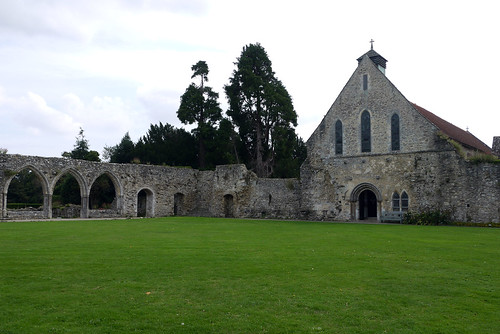
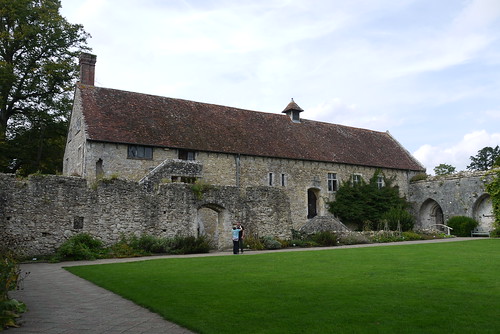
Another building that survived in tact is the Domus. This was used as the living quarters for the lay brothers.
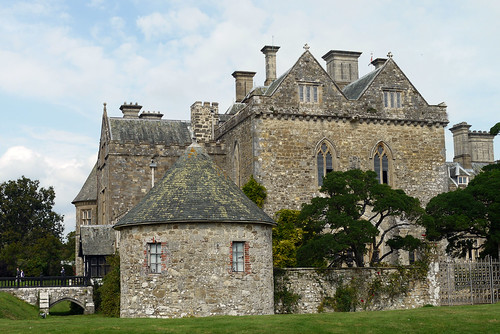
The Palace House, which is one of the best stately homes that I have visited houses houses a fine portrait gallery and retains its original medieval features.
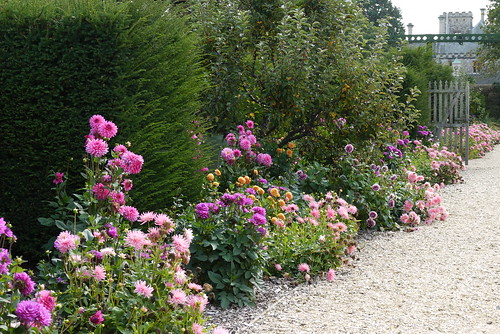
Just a short walk from the house is the Victorian’s garden which was created as a tribute to the Victorians’ immense contribution to our knowledge of plants and our enjoyment of gardens.
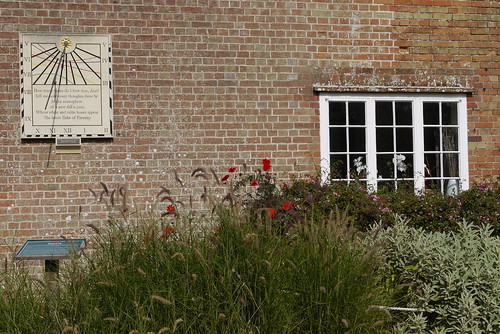
Within the garden is a sundial that was commissioned to mark the 50th birthday of Lord Montagu’s eldest son and his wife Ailsa, in 2011.
On significant dates, the shadow of the sphere will track along one of the curves crossing the hour lines. The dates are:
Winter solstice (purple), Ailsa Montagu’s birthday on 9th November (blue), Ralph Montagu’s birthday on 13th March (red), their wedding anniversary on 16th April (gold) and Summer solstice (green).
The sundial does not always agree with the clock. There are three reasons for this. First, Longitude: the sun takes four minutes to pass over one degree of longitude. Beaulieu is 1 deg 27′ West of the Greenwich meridian. The difference in longitude between Beaulieu and Greenwich makes a sundial at Beaulieu 5 minutes and 48 seconds slow to one at Greenwich. Second, the elliptical orbit of the earth round the sun and the tilt on the earth’s axis cause slight variations in the day length. This effect is known as the equation of Time and has a different value each day which makes the sundial up to 16 minutes fast for 15 minutes slow depending on the time of year. Finally, in summer clocks go forward an hour but sundials do not. The combined effects of the Equation of Time and longitude mean that the sundial at Beaulieu will be a maximum of 10 minutes fast in November and 20 minutes slow to the clock in February. The sundial will agree with Greenwich Mean Time in mid-September and mid-December.*
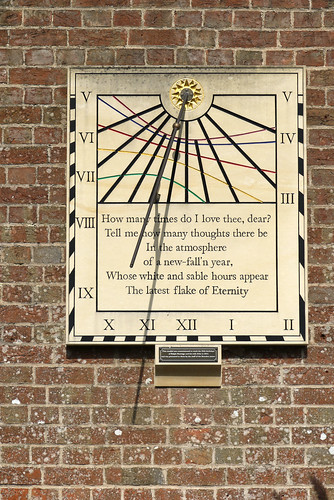
*from an information board next to the sundial
12 Comments CherryPie on Nov 4th 2014
…from her latest travels.
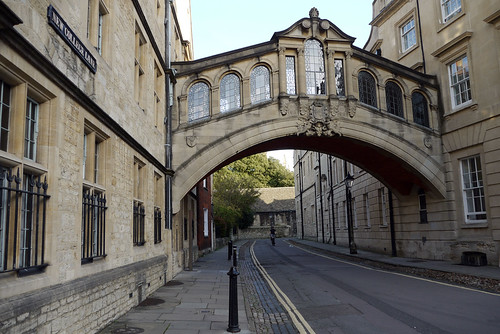
One year later our aborted 2013 trip to Oxford went ahead. I will be posting more on my Oxford travels soon…
14 Comments CherryPie on Nov 3rd 2014