The outbreak of the First World War was a cataclysmic event in world history. We know now that the enormous losses, huge economic cost and unprecedented political upheavals incurred by the conflict would change the world forever. With the benefit of hindsight, it seems extraordinary to us that no one was able to intervene to halt the slow descent into war triggered by the unexpected assassination, in distant Sarajevo, of a foreign royal by a 19-year-old terrorist. Were Europe’s statesmen blind to the catastrophe that they were bringing down upon the world?
The British Foreign Secretary, Sir Edward Grey, was among those to glimpse the enormity of the imminent war. For almost ten years he had aligned Britain into a deepening friendship with the great European powers of France and Russia. Although this new relationship had alienated Germany, Grey had tried to keep Britain free from any firm commitment to intervene should a wider European war break out. Yet in July 1914 he stood at the heart of the crisis as ultimatums came and went, and the political and military decisions were taken that made it increasingly likely that Britain would stand beside France and Russia if either was attacked by Germany or Austria-Hungary. The German invasion of Belgium en route to France finally tipped the balance, making Britain’s entry into war inevitable.
Late in the afternoon of 3 August, on the last day of peace, Grey stood at the window of his office in Whitehall and was overwhelmed by a sense of foreboding tragedy. As he looked out he saw that the streets lights were being lit down below. He turned to a visiting friend and observed, ‘The lamps are going out all over Europe; we shall not see them lit again in our lifetime.’
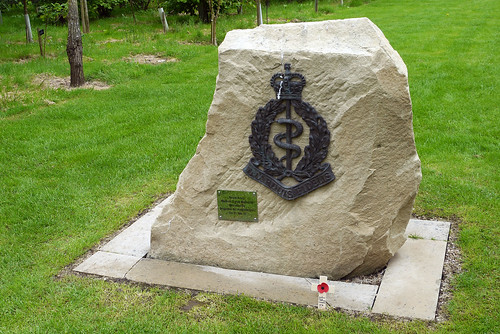
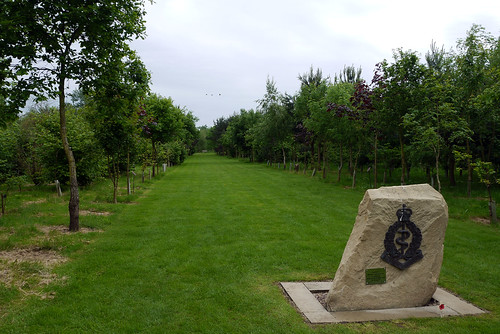
This large woodland has red and gold leaved trees individually dedicated to members of the Royal Army Medical Corps (RAMC).
A memorial plinth stands at the entrance to a central avenue of purple leaved trees planted as a tribute to the 29 members who were awarded the Victoria Cross, two of them gaining the award twice. HM Queen Elizabeth The Queen Mother was Colonel in Chief of the Corps and the RAMC planted a tree in the grove to commemorate her 100th birthday.*
*From the National Memorial Arboretum Guidebook Edition 4
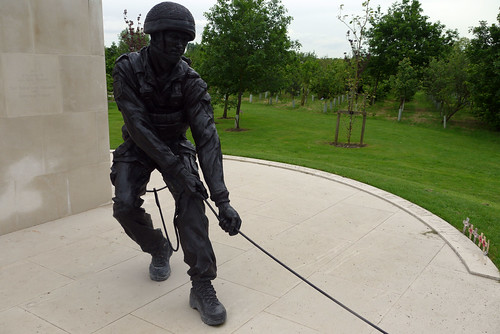
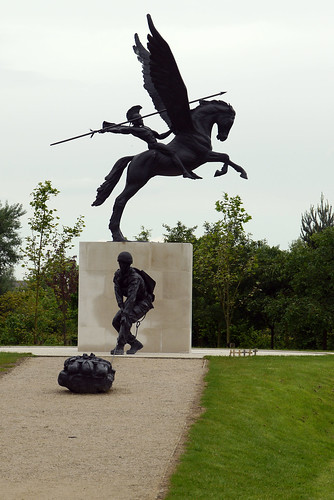
The Parachute Regiment and Airborne Forces National Memorial, which is located at the National Memorial Arboretum in Staffordshire, commemorates those members of the Regiment and Airborne Forces who have died on active service since 1940 and provides a place of pilgrimage, particularly to those who have lost family members overseas in inaccessible countries.
Around one thousand people attended the dedication ceremony on Friday 13 July 2012, including His Royal Highness The Prince of Wales, as the Colonel-in-Chief of The Parachute Regiment.
The five-metre-tall bronze memorial depicting Bellerophon mounted on Pegasus, with his spear in hand, together with a paratrooper pulling his Bergan up the mount to the statue, took sculptors Charlie Langton and Mark Jackson two years to complete.
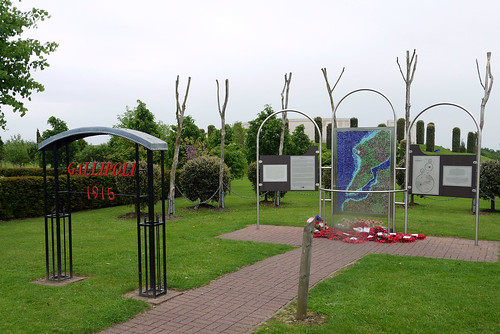
This memorial remembers the terrible loss of life which occurred during WWI when a force famously including the Australian and New Zealand Army Corps (ANZAC) attempted to land and defeat the armies of the Ottoman Empire. They were attempting to capture Constantinople and secure a sea route to Russia. There were huge cassualties on both sides.
The monument includes a tree sculpture of dead oak trees, pollarded to represent the arms and hands of injured soldiers reaching upwards in hope of rescue as they lay in the mud among the unburied dead.*
*From the National Memorial Arboretum Guidebook Edition 4
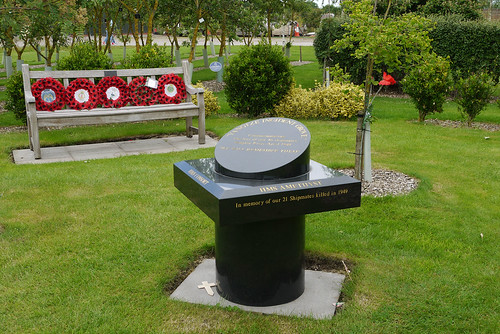
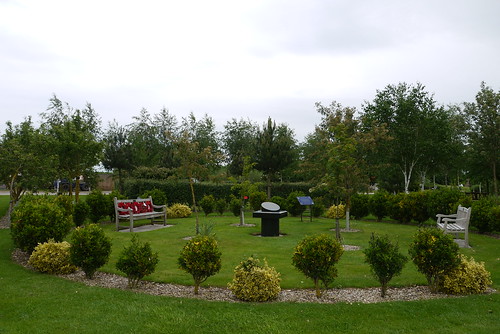
The circular planting of 46 Chinese euonymus plants commemorates each life lost during the Yangtze incident in China in 1949.
A plaque alongside the memorial tells the full story of the Yangtze Incident. Inside the circle are a black polished granite monument and trees planted as a tribute to HMS Amethyst, HMS Black Swan, HMS Consort and HMS London which were the four ships involved in the incident.
The human cost in the four ships was 46 dead and 68 injured. The tree planted just outside the circle remembers the RAF Sunderland flying boat named D-DOG ML772 from 88 Squadron that, on the fourth attempt, landed successfully on the Yangtze River alongside HMS Amethyst to deliver medical supplies and a replacement doctor.*
*From the National Memorial Arboretum Guidebook Edition 4
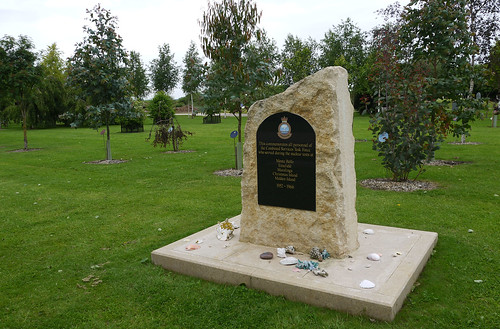
Formed in 1983, the Association is a focus for the men who served at the test sites and combines comradeship with the objective of recognition of the ill effects suffered by some veterans.
Beginning in 1952 and continuing until 1965 there were 21 major British nuclear tests and numerous minor tests at the sites listed on the memorial.*
The memorial (grotto) is a replica of a shell-decorated memorial situated on Christmas Island where some of the British nuclear tests took place.*
*From the National Memorial Arboretum Guidebook Edition 4
On arrival at work this morning I was greeted at the doorway and informed that most of the electrics in the building were not working. Hot and cold water were available and partial lighting in one of the ladies toilet facilities. I was also told that if I was not comfortable with these arrangements I could go to a nearby building to use the facilities there.
We moved office buildings in early 2011 to a building that had been newly refurbished. One of the features was state of the art water boilers for hot drinks. They are billed as having the capacity of providing 200 cups of boiling water per hour. They never quite lived up to expectations and broke down frequently and the temporary alternatives were less than adequate.
The decision was eventually made to provide wall mounted zip boilers in addition to the current facilities. These were fitted over a weekend two weeks ago. They did not get wired up for use that weekend because the electrician had fallen ill. The work was rescheduled for last weekend. The electrician turned up but an unfortunate incident occurred. He dropped his screwdriver shorting out most of the building’s electrical circuits and at the same time gave himself quite a ’shock’. We were informed that the electrician was alright (thank goodness).
The building facilities were back up and running mid morning but the computer systems took a little longer… And the hot drink facilities are still less than adequate.
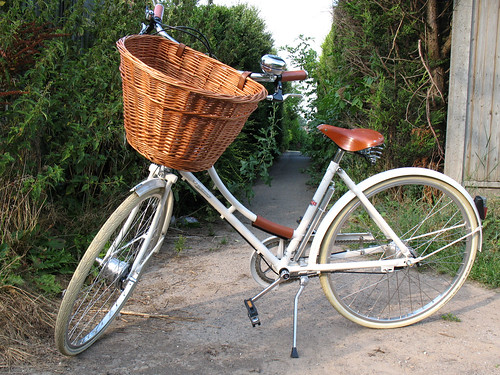
After a day like that it was an ideal opportunity to take advantage of the sunny weather and hop on my bicycle to enjoy a relaxing cycle ride. The experimental route I chose was rather overgrown (including lots of brambles and nettles). This was not ideal especially as the pathways are supposed to be part of the local cycle network. This meant I had to do a lot of walking in addition to the cycling. On the plus side, at least it gave me a bit of exercise