…Before we move on from Mechelen
Random thoughts and photos of my journey through life…
…Before we move on from Mechelen
13 Comments CherryPie on May 31st 2014

Filed under Faith Foundations, Heritage, Holidays, Mechelen 2014
8 Comments CherryPie on May 30th 2014
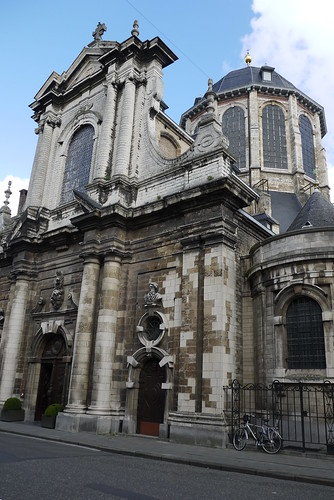
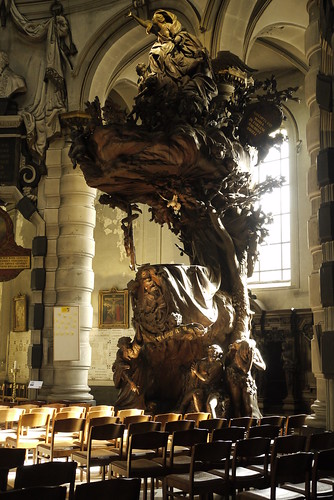
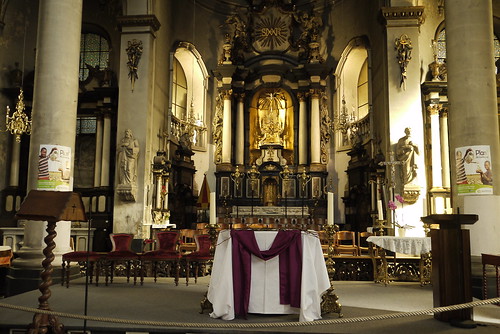
The inside of this church is spectacular and we felt blessed that we were able to visit. The church closed for restoration at the beginning of April, just two weeks after our visit. It will be closed for four years!
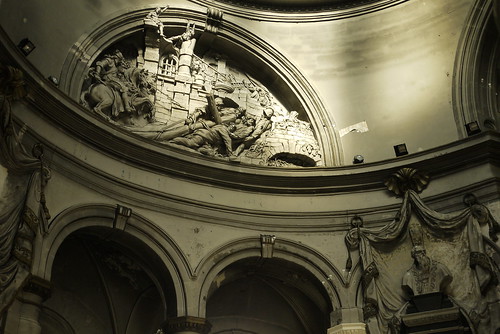
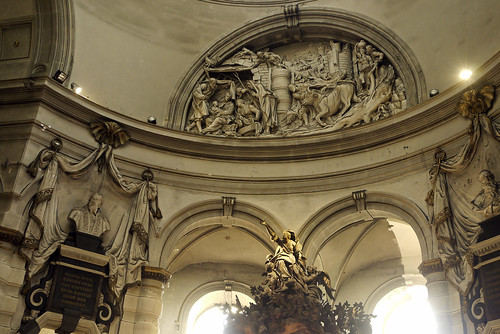
This baroque pilgrimage church designed by Lucas Faydherbe was one of the first domed churches in the Low Countries. The dome was to have been even higher, but the substructure proved not to be sufficiently robust. Architect and church engaged in a bitter battle about additional reinforcements.
Inside under the dome are two huge reliefs, also by Faydherbe, believed by everyone to be sandstone until the bombing raids in the Second World War. But sandstone would have been too heavy, so the resourceful Faydherbe had used gypsum. Only when the damaged reliefs were repaired did the deception come to light.
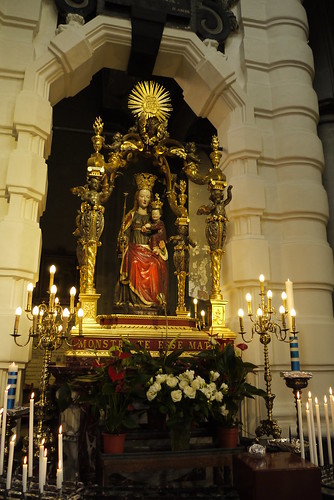
At the front of the church is a miraculous statue of the Virgin Mary which is carried in the annual Hanswijk procession. In 1985 the late Pope John Paul II prayed in this church, whose status was elevated to that of a basilica two years later.
10 Comments CherryPie on May 29th 2014
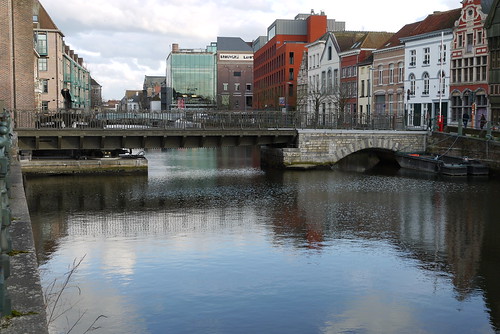
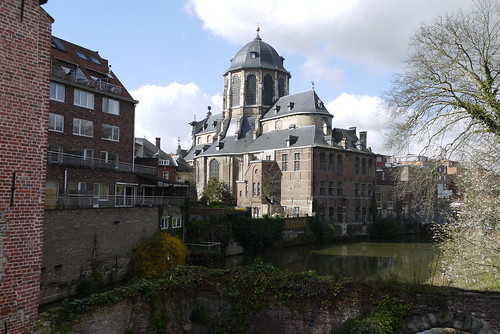
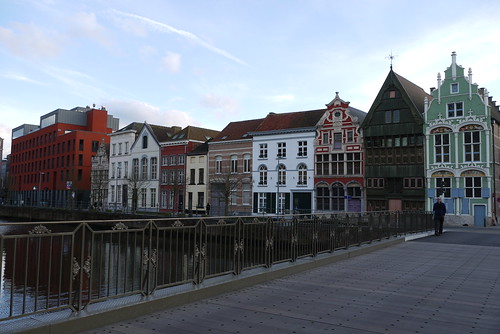
Originally oats were unloaded and traded here. Oats used to be synonymous with grain and Mechelen had the exclusive staple rights to grain. Boats carrying grain had to tie up in Mechelen and offer the whole cargo for sale for three whole days. Only what the merchants did not sell in Mechelen could be loaded back onto the boats and taken elsewhere.
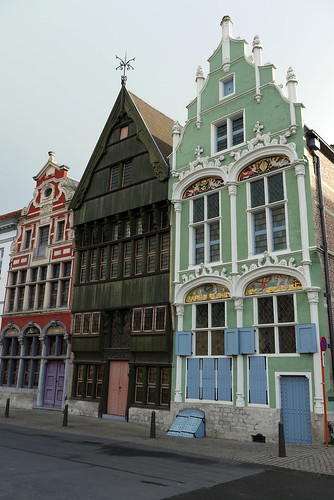
You can’t fail to notice the three houses near the bridge. They date from the sixteenth and seventeenth centuries and are what draws people to the Haverwerf.
The corner house is called Het Paradijske, Little Paradise. The reliefs above the windows depict the scenes ‘Earthly paradise’ and ‘The tree of knowledge of good and evil’. In the middle is De Duiveltjes, The Little Devils, one of the most beautiful facades in the country. We know that it used to be called De Verloren Zoon, The Prodigal Son, because the story is depicted above the front door. Now it is named after the little devils which act as pillars. On the left is the house known as Sint-Jozef; in the middle is a relief of St Joseph; in the middle is a relief of St Joseph with the Child Jesus.*
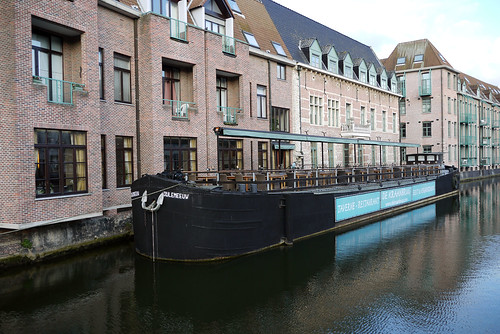
*From Hotelmagazine 2014-2015 Welcome in Mechelen
6 Comments CherryPie on May 28th 2014
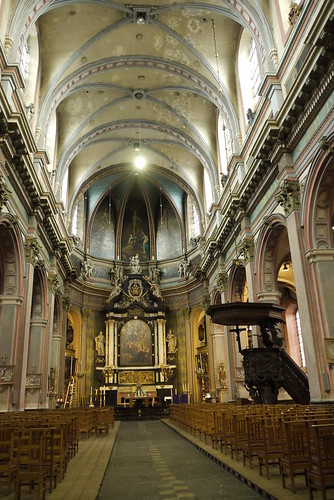
Jacques Francquart and Pieter Husseyns designed this imposing baroque church (1629 – 1647), which reflects the one-time wealth of the Large Beguinage. The paintings feature several female saints, evidence of the devotion of the beguines.*
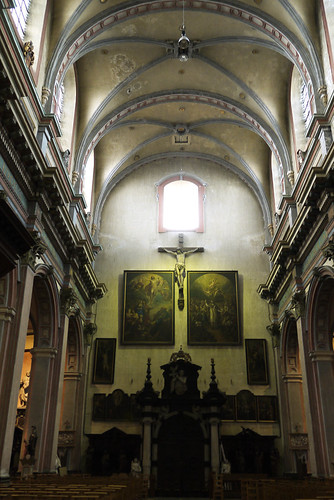
*From the signboard in front of the church.
8 Comments CherryPie on May 27th 2014
When I set off to visit The National Memorial Arboretum this morning I didn’t realise that it was Memorial Day in the United States. It was only later when I got back home and read Ginnie’s post at Vision & Verb that I realised I had picked a perfect day to visit the Arboretum. The Arboretum is a centre of remembrance to honor the fallen and recognise their service and sacrifice for their country.
The site covers over 150 acres and there are currently around 300 memorials. Far too much to see in one day. I picked one of the self guided First World War Centenary trails that had been launched earlier this year:
History enthusiasts will enjoy the more detailed Shot at Dawn Trail (2km), created to provide a deeper understanding of many of the trees and memorials connected to WW1 by fascinating stories and symbolism.*
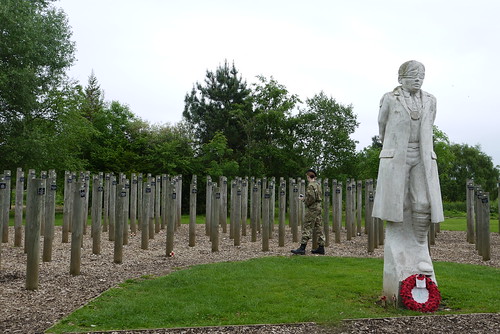
The ‘Shot at Dawn’ memorial is very moving and requires a few minutes silent contemplation. The memorial is situated on the eastern edge of the arboretum where dawn strikes first.
During World War 1 some 306 British and Commonwealth soldiers were shot for desertion or cowardice. Most of them were sentenced after a short trial at which no real opportunity for defence was allowed. Today, it is recognised that several of them were under age when they volunteered and that many of them were suffering from shell shock or post traumatic stress disorder.
Andy Decomyn’s statue ‘Shot at Dawn’ is modeled on Private Herbert Burden, of the 1st Battalion Northumberland Fusiliers, who was shot at Ypres in 1915, aged 17.
The names of Herbert Burden and those others who suffered the fate of being shot at dawn are listed on the stakes arranged in the form of a Greek theatre around the statue, symbolising the tragedy that these events signify. Many of the posts say ‘Age Unknown’ and this is because many young men lied about their age in order to enlist. Some of them had no representation at court-martial because most of the officers had been killed when they went ‘over the top’ first. (The average life expectancy of an officer on the front line was 10 weeks).**
I was sitting on a bench when I took this this photograph. Right behind the bench were six trees placed where the firing squad would have been.
The six trees facing the posts represent the firing squad, all aiming for the medallion around the statues neck and none of them knowing who had the fatal bullet. It must have been very traumatic for them too, having to shoot one of their own.**
The memorial makes you think and amongst other thoughts wonder why…
*From the National Memorial Arboretum website.
**From the National Memorial Arboretum guidebook edition 4
18 Comments CherryPie on May 26th 2014
Still round the corner there may wait, A new road or a secret gate.
J.R.R. Tolkien
8 Comments CherryPie on May 25th 2014