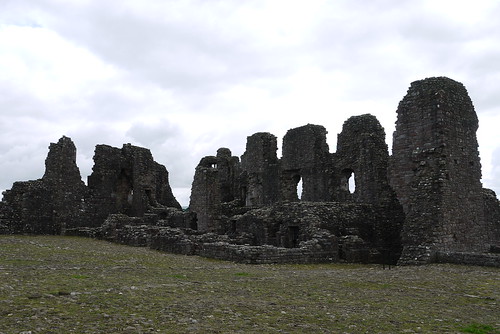
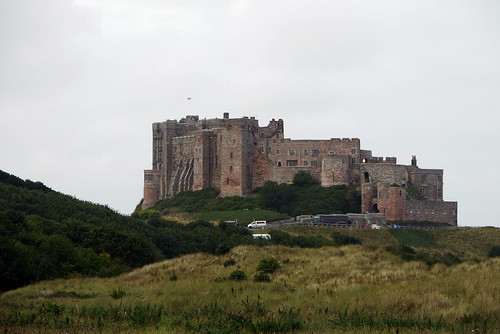
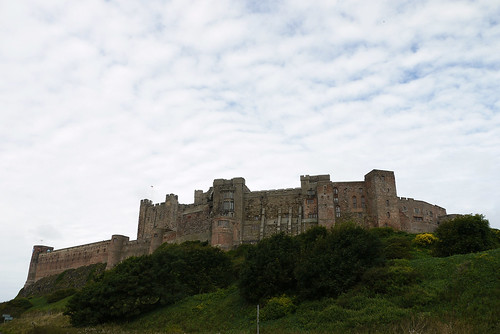
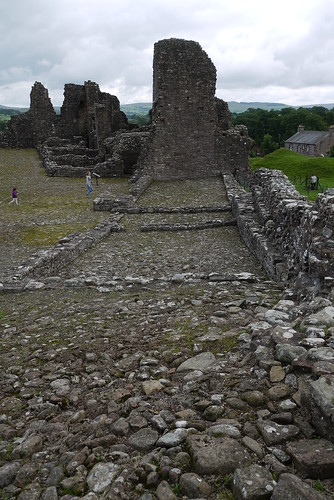
This ruined castle was situated next to a delightful tea-shop that we stumbled across on our way home from our Newcastle and Crookham holiday.

I have now come to the end of my Newcastle and Crookham posts and will be moving onto my recent adventures in Mechelen.

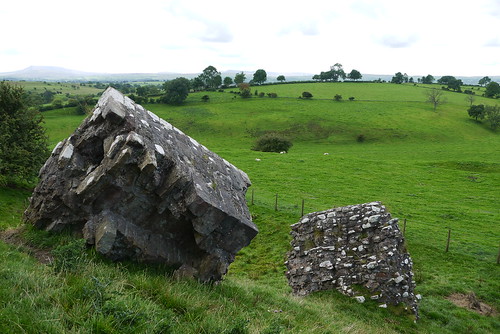
Brough Castle

The name ‘Brough’ comes from ‘Burg’ or ‘Burgh’ meaning fort, as the castle stands on the site of a Roman fort.

In 1092, King William 11, nicknamed William ‘Rufus’, conquered the northern half of Cumbria for England.  Around this time an earthwork castle was built here on the site of Brough’s ancient Roman fort.  The earlier defensive ditches were deepened and banks were formed on the line of the Roman walls.  These banks and ditches remain visible today.

This are of England was in constant danger of attack from Scotland and a stone keep and curtain walls were added to defend Brough’s inner bailey.

In 1203 King John gave Brough to Robert de Vieuxpont,, as part of much larger estates in the area.  The Vieuxponts held it until 1268 when most of their Westmorland estates passed by marriage to the Clifford family.  The Cliffords rebuilt the castle, maintaining it as a residence up to 1521.  Lady Anne Clifford, last of her line, restored the castle in 1689-62.  After her death in 1676 it fell out of regular use before finally being abandoned in 1713. *
Brough Castle

Brough Castle

Brough Castle

*From a signboard next to the castle.
10 Comments CherryPie on Mar 29th 2014

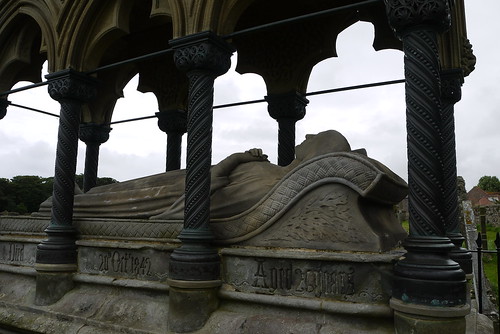
Grace Darling

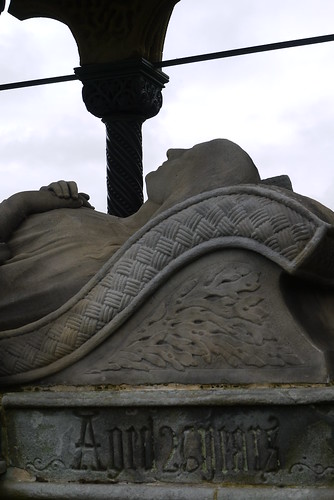
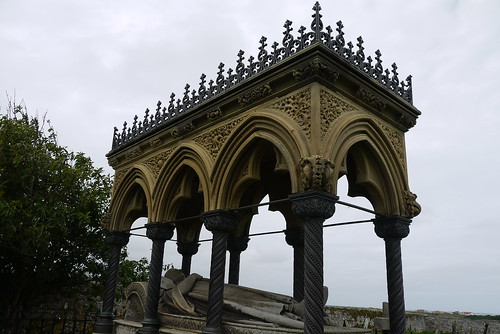
Within St Aidan’s churchyard stands an effigy to Grace Darling:

Grace Horsley Darling was born on 24th November 1815 in her grandfather’s cottage here in Bamburgh.  She was the seventh child of nine.  At only three weeks old she was taken to live on Brownsman Island, in the Farne islands, where her father, William was lighthouse keeper.  In 1816 the family moved to a new lighthouse on Longstone.

At four in the morning on 7th September 1838 during a violent storm, the steamship Forfarshire struck the Big Harcar rock on the Farnes, and over 40 lives were lost.

Grace saw the wreck, half a mile from the Longstone, and at 7 a.m. spotted survivors.  William Darling thought the conditions would prevent the launching of the Seahouses lifeboat, so together he and Grace launched their coble in the atrocious weather.  The strength of the tide and wind forced them to row nearly a mile to avoid the jagged rocks and reach the survivors.  Here William went ashore while Grace alone kept the coble in position.  Rowing against the tide and the gale, they took five survivors back to the lighthouse.  William and two of the crew then returned to fetch the rest.

National Heroine

Numerous newspaper articles reported the rescue and Grace soon became a national heroine.  The times asked the question, “Is there in the whole field of history, or of fiction even, one instance of female heroism to compare for one moment with this?”

Books and poems were written about her, portraits often painted and offers of marriage made.  The publicity she received was overwhelming.

On 20th October 1842, only four years after the famous rescue, Grace died of tuberculosis.  In 1844 the public raised money to build a monument in St. Adain’s Churchyard overlooking the sea.  Queen Victoria being the first to contribute to it’s cost.

The effigy of Grace with a coble’s oar was sculpted of Portland stone which weathered very quickly.  In 1885, at a cost of  approximately £100, it was replaced with a replica sculptured in local stone, and the original moved into the Church.  In 1893, the stone pitched canopied roof was destroyed in a violent storm.  This was replace with a canopy of a new design.

To this day Grace remains a national heroine and Nothumbria’s most famous daughter.*

Grace Darling

Grace Darling

*From a signboard next to the effigy.

8 Comments CherryPie on Mar 28th 2014

IMG_7276_edited-1

It is my turn at Vision & Verb today.  My post is about about the choice of a weekend away  in Mechelen as a Christmas gift.

I invite you to join me there.

Vision and Verb

12 Comments CherryPie on Mar 28th 2014

P1060252_edited-1

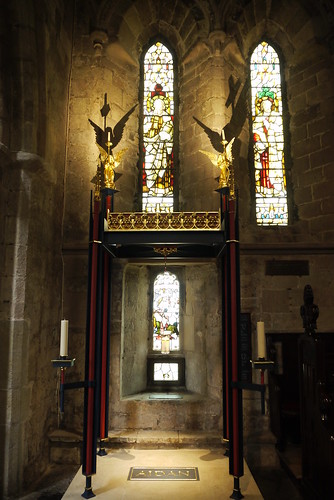
St Aidan’s memorial:

According to the Venerable Bede, St Aidan Bishop of Lindesfarne died near this place in AD. 651.

This memorial was dedicated in 2013 by John Sentamu Archbishop of York.

P1060247

P1060248

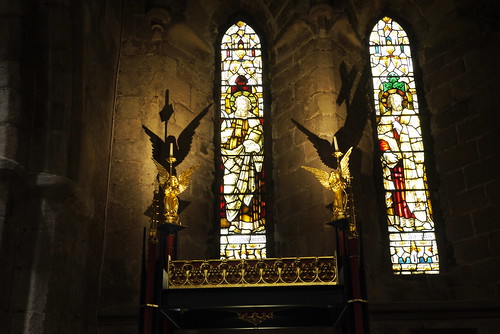
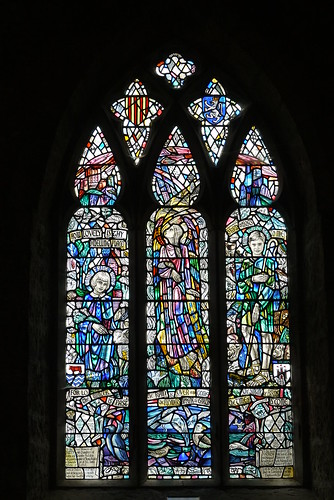
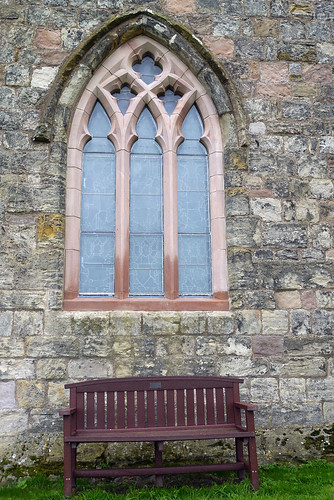
One of the churches stained glassed windows.

P1060251

6 Comments CherryPie on Mar 27th 2014

P1060236_edited-1

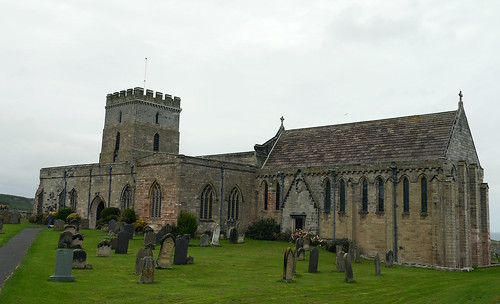
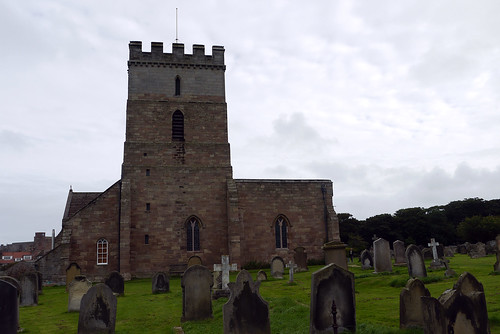
A place of worship was founded on the site of the present church in 635 by Saint Aidan. St Aidan was called to Bamburgh from Iona by King Oswald to establish Christianity in his newly united kingdom of Northumbria.

No trace of that wooden building can now be seen – other than perhaps a beam in the Baptistery. Tradition has it that this is the beam that St Aidan was leaning against when he died and it is said to have miraculously survived two fires.

The site of St Aidan’s death is marked by a simple shrine within the present church. The church building that is now seen dates from the end of the 12th century.

This parish church has been a focus of pilgrimage over the centuries and modern day visitors and pilgrims are very welcome.

As well as being the Apostle of Northumbria, Aidan is rightly regarded as the Apostle of England. This parish church is therefore not only the “mother church” of the modern dayDiocese of Newcastle but also central to the history of Christianity in this land.

The church works closely with the Grace Darling Museum, just across the road, and both in the church and in the churchyard memorials to the Victorian heroine can be found.

P1060244_edited-1

P1060246_edited-1

4 Comments CherryPie on Mar 27th 2014

…from a long weekend in Mechelen.

P1070128_edited-1

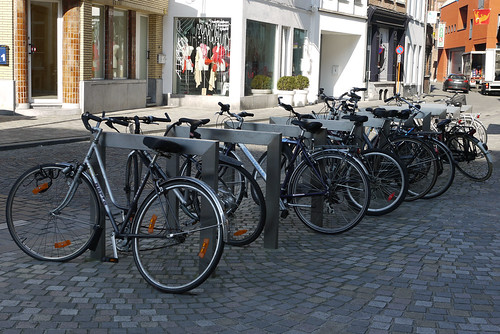
A city of art, architecture, history and bicycles.  Photographs and a diary of my adventures coming soon.

16 Comments CherryPie on Mar 26th 2014

Bamburgh Castle

Bamburgh Castle

8 Comments CherryPie on Mar 25th 2014

« Newer Posts - Older Posts »