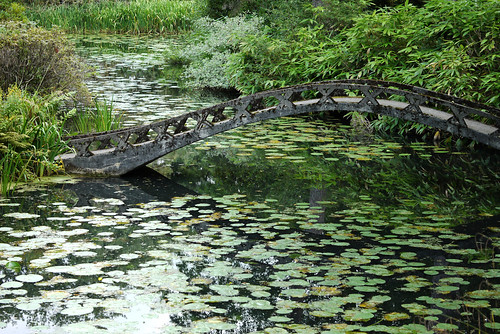
The Japanese Garden is thought to be the result of of Alan de Tatton’s visit to the Anglo-Japanese Exhibition at the White City in London in 1910:
Inspired by what he saw there, Alan de Tatton decided to introduce a Japanese garden to Tatton. A team of Japanese workmen arrived to put together what is now rated to be the “finest example of a Japanese Garden in Europe.”
The Shinto Shrine and artefacts contained within the garden are all reputed to have been brought from Japan especially for the construction of the garden.
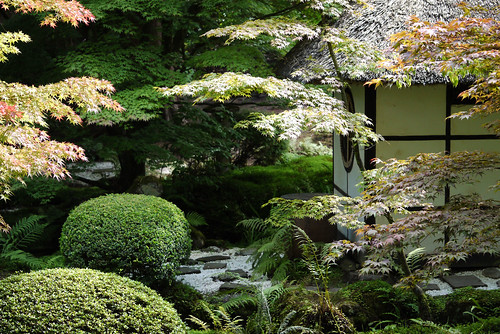
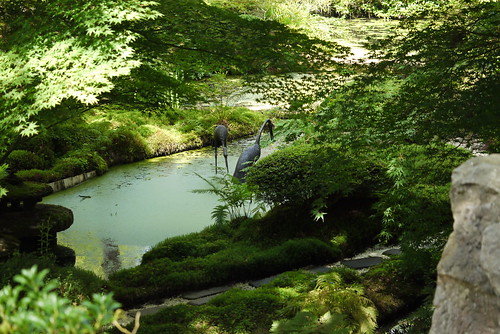
The garden itself is in the style of the tea garden which does not reflect the strict discipline of other Japanese styles, e.g. the dry garden or the stroll garden. In this form of art, the Japanese portray many scenes, both mythical and factual, but all must harmonise with nature. The important elements of plants, stones and rocks are carefully placed to produce a natural balance.
Stones and rocks are selected for their form, particularly their representative shape. It is not unusual for a mound to be built capped off with white stones representing the sacred snow-capped Mount Fuji, the most important mountain in Japan. Lanterns come in all shapes and sizes having different functions such as the specially shaped snow viewing lanterns, designed to trap as much snow as possible on the top of the lantern to add to the beauty of the garden in Winter.
Flowers as such are not given as much consideration, however tree shapes are of great importance and as a result pruning techniques are critical and take many years to develop. This garden uses many Japanese Maples or Acers which you would not always find in the true Japanese gardens. Attention is always paid to the form and shape of the plants as can be seen from the Bamboo at the west end of the garden. Many evergreen plants are also included here which add to the winter interest.
The garden was restored in 2000/2001 for the Japan Festival and was the result of over 14 years of research with input from various Japanese specialists. The project restored the garden to its original state when first created for the Egerton family in Japanese ‘style’ with a heavy western influence.*
*Information from the Tatton Garden website.