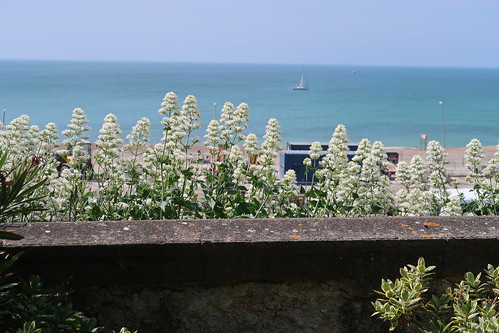
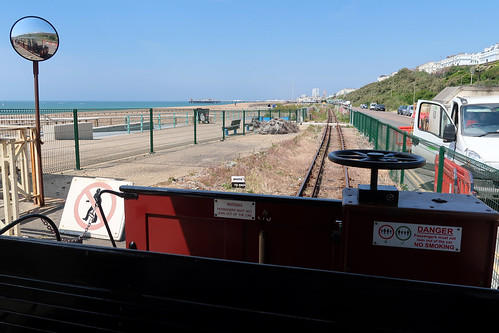
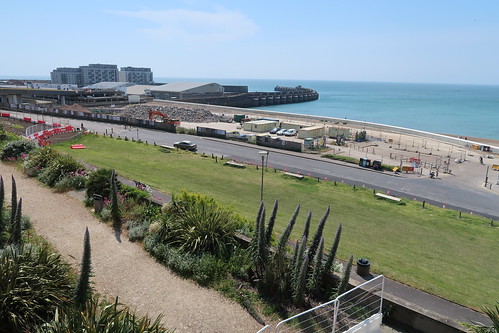
Following our walk from Brighton pier to Marine Parade we planned to return to the pier on the Volks Electric Railway, however accessing the station proved problematic. All walkways to the station platform were blocked off due to regeneration of the area. Rather than walk a very long way round we decided to follow the example of a local jogger and scramble down a grassy bank.
From Wiki:
Volk’s Electric Railway (VER) is a narrow gauge heritage railway that runs along a length of the seafront of the English seaside resort of Brighton. It was built by Magnus Volk, the first section being completed in August 1883, and is the oldest operational electric railway in the world, though it was not the first electric railway to be built. It was preceded by electrification of Miller’s line in 1875, Werner von Siemens‘ 1879 demonstration line in Berlin and by the Gross-Lichterfelde Tramway of 1881, although none of these remain in operation.
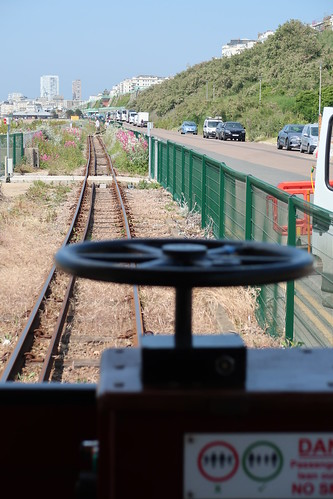
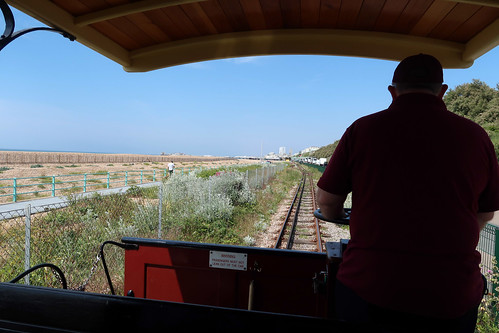
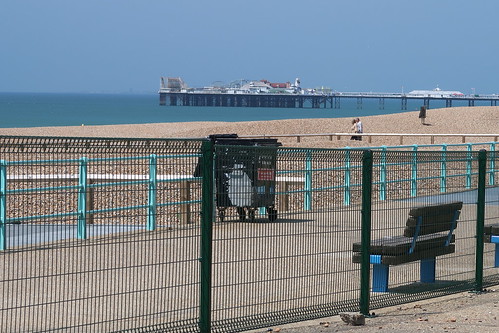
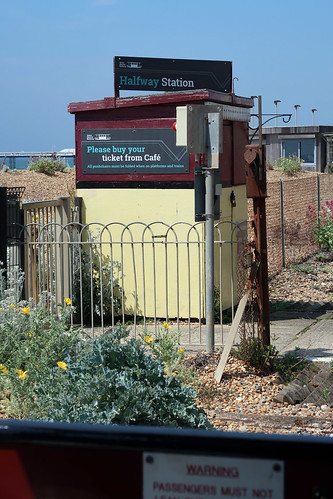
Today the line runs between terminal stations at Aquarium (a short distance from the Palace Pier) and Black Rock (at Black Rock, not far from Brighton Marina), with an intermediate station and depot at Halfway.
The line has a 2 ft 8+1⁄2 in (825 mm) narrow gauge, is electrified at 110 V DC using a third rail, and is one mile (1.6 km) long.
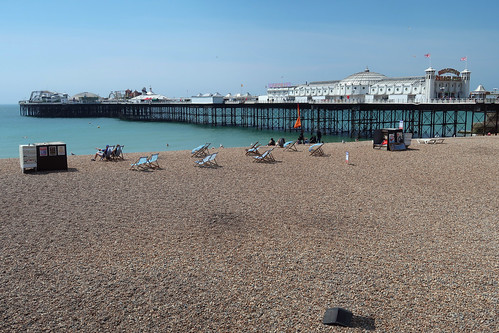
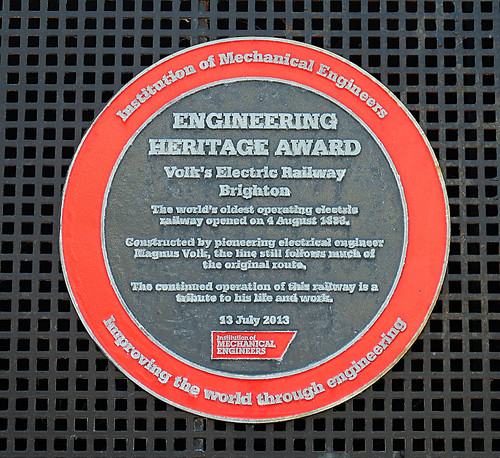
Tags: Brighton, Brighton East Pier, East Sussex, Marine Parade, Volks Electric Railway
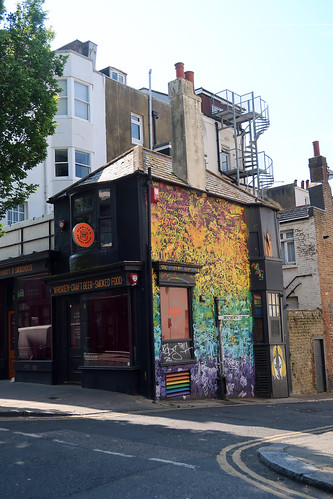
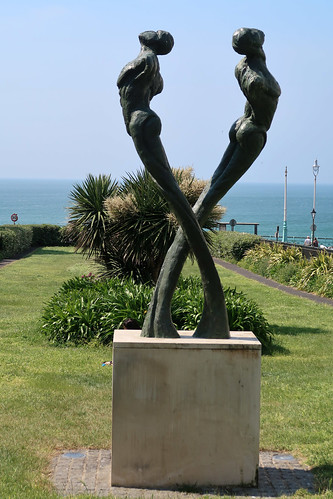
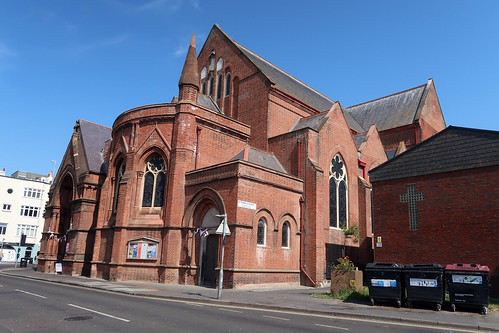

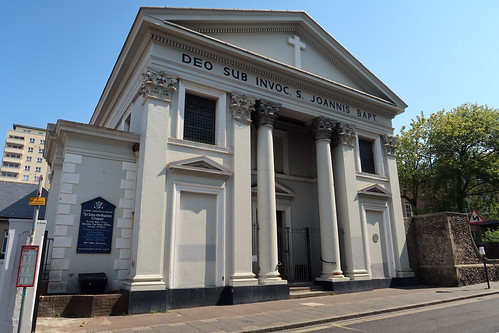
St John the Baptist’s Church was the first Catholic Church in Brighton. The building of the church was funded by Maria Fitzherbert a wealthy widow from Shropshire who became the secret first wife of George, Prince of Wales who later became King George IV. The marriage was kept secret because at that time it was illegal for a Royal heir to marry a Catholic
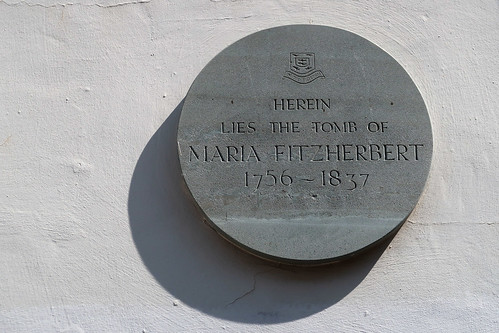
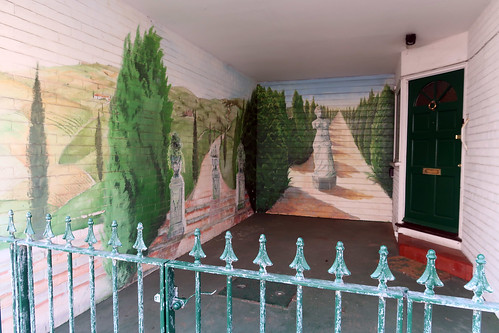
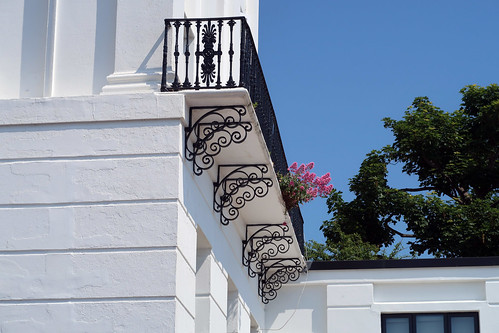
Tags: #walk1000miles, #walk1000miles2023, Brighton, East Sussex, King George IV, Maria Fitzherbert, Marine Parade, Street Art, Vacation
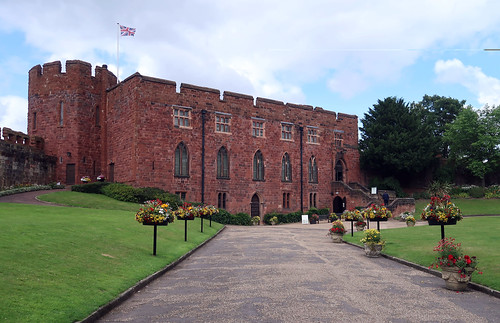
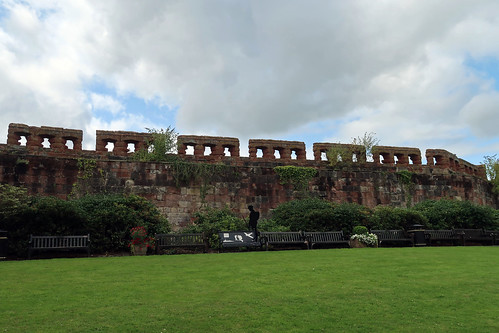
The castle motte dates from 1068 and was built with three sides protected by the River Severn but the stone walls date from the 12th to 13th centuries. There was originally a wooden keep on the motte but it collapsed in 1271 when half of the motte was washed away into the river. The castle was allowed to decay from the middle of the 14th century until in 1565 a local merchant converted it into a residence. Even though it was re-fortified during the Civil War it was beseiged and captured by Parliament in 1645. After the wwar it was used as a private residence and it was then restored in the 18th century by Thomas Telford. Laura’s Tower was erected on the motte in 1790 as a summer house.
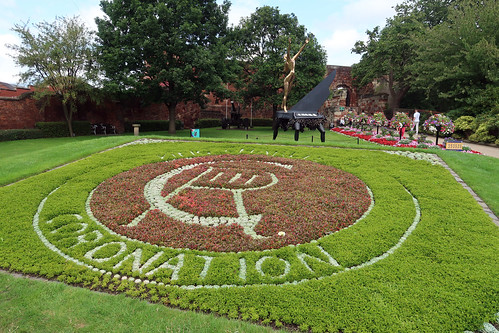
The castle currently houses the Soldiers of Shropshire Museum, a host to a journey through nearly 300 years of British Army Evolution, seen through the eyes, campaigns and sacrifices of Shropshire Soldiers.
The Museum displays the significant collections of the Shropshire regiments between 1755 and 1968, including the formation of the Light Infantry & Rifles regiments, and the Royal Mercian and Lancastrian Yeomanry, (Shropshire Yeomanry) Squadron.
Tags: Art Trail, Salvador Dali, Shrewsbury Castle, Shropshire, Soldiers of Shropshire Museum, There's Always One
Use what talents you possess; the woods would be very silent if no birds sang there except those that sang best.
Henry Van Dyke

Tags: Brighton, Cherie's Place Thought, East Sussex, Portrait, Self Portrait, Vacation

Brighton i360 was designed by the architectural company Marks Barfield, which also designed the London Eye. The building was conceived as a “vertical pier”. The tower is located at the shore end of the ruined West Pier, and the design recreated the original Italianate ticket booths of the West Pier, placed on either side of the entrance, serving as ticket office and tea room.[4] The design also includes a beachfront building that allows access to the tower and houses a brasserie, café and gift shop.[9]
The tower is designed as a 162 m (531 ft) tall needle structure with an ascending and descending circular viewing platform with capacity for 200 people.


Tags: Brighton, Brighton i360, East Sussex, i360, Vacation

The Brighton bandstand is the sole survivor of the many bandstands from the Victorian era:
It is the sole survivor of the dozen bandstands which graced the parks and promenades of Brighton and Hove in Victorian times. They fell out of favour in the 1960s when traffic noise began to drown out the music, but this one, sometimes called The Birdcage because of its delicate ironwork, has been restored by local heritage enthusiasts *


*from Rough Guides; Brighton, Sussex & The South Downs – The Best Walks and Tours
Tags: Brighton, Brighton Bandstand, Vacation