…Then much later ‘Fine Dining’ at Chez Nous


8 Comments CherryPie on Oct 21st 2021


10 Comments CherryPie on Oct 19th 2021

Newcastle Cathedral is Grade I listed and dates from the early 14th century. For over 900 years it has been at the centre of the city’s spiritual and civic life as evidenced by its memorials and ledger stones (grave covers) which, together, reveal much of the heritage of Newcastle and the wider region.
The Cathedral boasts one of the finest lantern towers in the country, dominating the skyline since the 15th century. Pevsner describes it as “Four flying buttresses leaning against each other and holding up a tall square lantern, battlemented and pinnacled – a rare form of medieval crown in Britain”. The building retains substantial elements of medieval fabric as well as evidence of its development over a number of historical periods, with examples of work by prominent architects including Daniel Garrett, John and Benjamin Green, John Dobson, and George Gilbert Scott.
Internally the Cathedral contains one of the largest collections of monuments and ledger stones in northern England; it also boasts medieval heraldic bosses and a fine medieval font with a contemporary wooden cover with elaborate gothic tracery, and a stone effigy of an unknown medieval knight. The 19th century chancel embellishments showcase wood and stone working skills by Ralph Hedley, Robert Beall and J S Westmacott. The whole presents a beautifully integrated appearance, displaying superb artistry and craftsmanship executed in the medieval style.


12 Comments CherryPie on Oct 18th 2021
The goal of life is to make your heartbeat match the beat of the universe, to match your nature with nature.
Joseph Campbell

6 Comments CherryPie on Oct 17th 2021


4 Comments CherryPie on Oct 17th 2021

It is probable that the steep sided valley we know as Jesmond Dene has always been wooded, but gradually, industries crept in and by the 19th century the Dene was home to watermills, various quarries and pits and an iron foundry. Prior to the mid 1800s the woodland was probably more straggly than today and interspersed with a heavy undergrowth of gorse, brambles and the like.
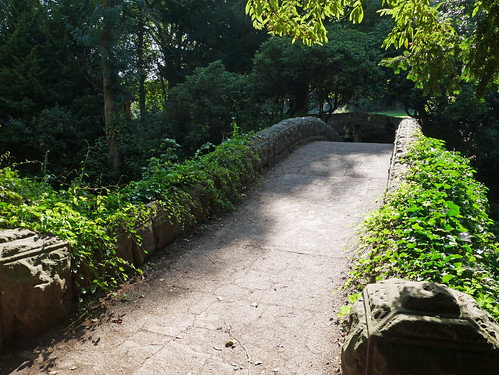
In the 1850s William George Armstrong (later Lord Armstrong) the armament manufacturer, (later Lord Armstrong of Cragside, Northumberland) bought up large areas of the valley. With his wife, he enclosed the land and transformed it into the landscaped parkland that we know today. With his fascination for water it is no surprise that he altered the river. A large waterfall, weirs and rock islands were created near to the mill, along with several bridges including the one from which to view the waterfall, and a network of footpaths. The waterfall is the biggest alteration to the river and was a result of blasting out the river bed downstream, while building up the area upstream. He also had a bridge installed to enable viewing of the waterfall. They additionally introduced exotic non-native species of trees and shrubs such as cedars, junipers, Californian Redwoods and the rhododendron.
In the 1850s, William George Armstrong (later Lord Armstrong) the armament manufacturer, acquired at various times the land which now forms Jesmond Dene. He enclosed the land and planted it with exotic trees and shrubs, laid paths and built bridges. Lord Armstrong used the Dene as his own private parkland but allowed access to it by the public twice weekly, on payment of a small entrance fee which went to the local hospital.
In 1883 Lord Armstrong presented the main area of Jesmond Dene to the Corporation of Newcastle upon Tyne for the benefit of its citizens and in 1884, the park was formally opened by the Prince and Princess of Wales. To commemorate the occasion, the Princess planted a turkey Oak near the Banqueting Hall. This tree, now mature, can still be seen adjacent to the South end of the Banqueting Hall, near to a second tree planted by Alderman H Benson in 1933 to mark the 50th anniversary of the occasion. Since then, the Dene has remained a popular resort for the citizens of Newcastle and, despite heavy pressures put upon it, still retains a particular charm of its own.


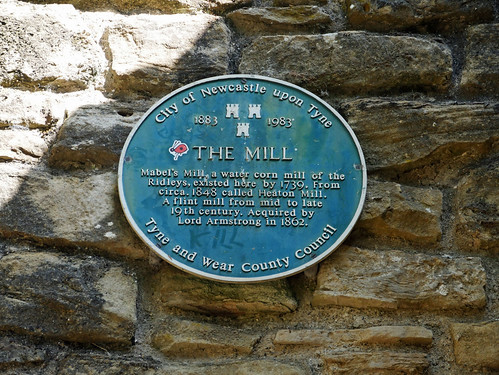


More history of Jesmond Dene and a history walking trail can be found on the following link:
4 Comments CherryPie on Oct 16th 2021