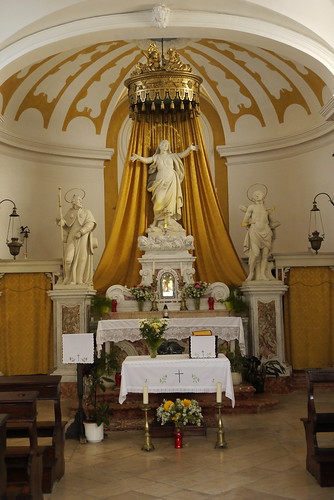
Cerkev SV. Roka

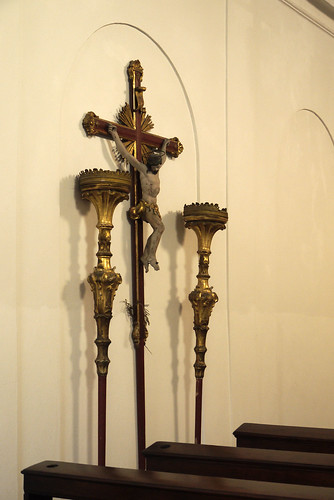
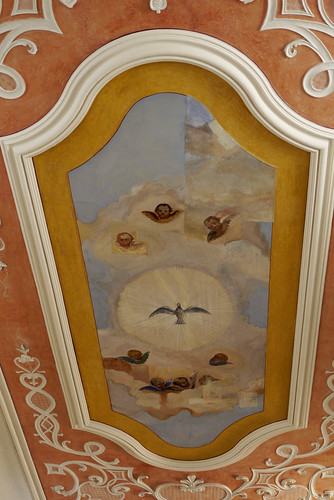
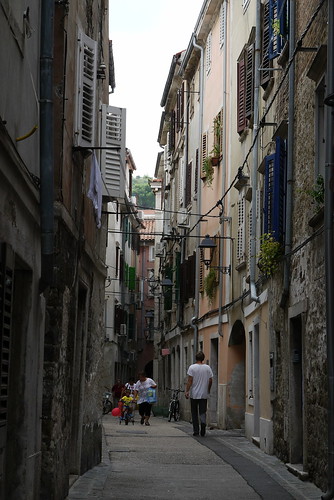
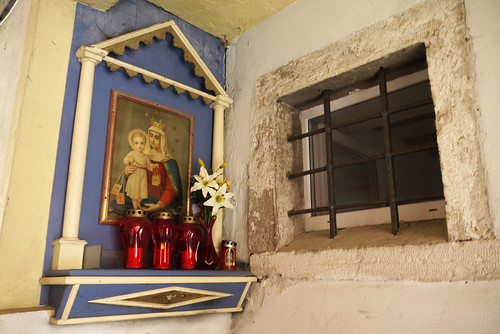
The end of the alleyway in my previous post opens up into a small square when one of many small hidden churches can be found. The Square of Fraternity is also know as the Rok market. The church was built at the end of the sixteenth century and is dedicated to St. Roch.

He went on pilgrimage to Rome and devoted himself to caring for the victims of a plague that was ravaging Italy. He became a victim himself at Piacenza but recovered and was reputed to have performed many miracles of healing.

Cerkev SV. Roka

Cerkev SV. Roka

4 Comments CherryPie on Dec 2nd 2015

…leads to hidden wonders.

The Road Less Traveled

A Hidden Wonder

6 Comments CherryPie on Dec 1st 2015

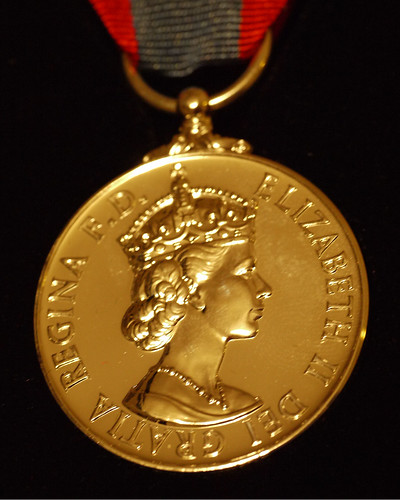
Imperial Service Medal

Earlier this year I was informed that I had been awarded the Imperial Service Medal. My name along with a number of my colleagues names was published in the London Gazette 2nd June 2015.

Madam,

I am commanded to forward the Imperial Service Medal which Her Majesty The Queen has been graciously pleased to award to you in recognition of the meritorious services which you have rendered.

I have the honour to be, Madam,

Your obedient servant,

J M Vernon

Registrar of the Imperial Service Order
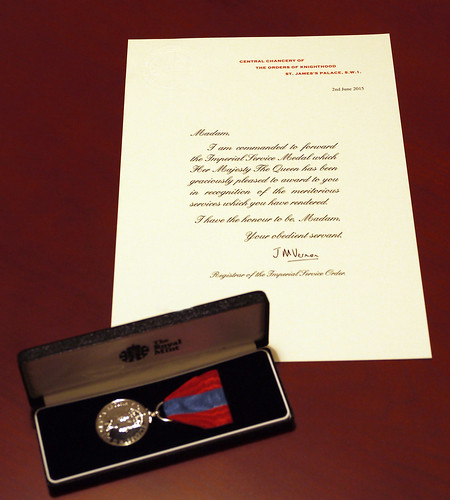
Imperial Service Medal

On Friday 27th November 2015 a of few of those colleagues awarded with the medal, accompanied by family members gathered together for a formal award ceremony where we were presented with our medals. After the formal proceedings and presentation of medals there was a buffet which allowed us to socialise and enjoy the occasion.

The Imperial Service Medal Citation

Throughout history Monarchs and governments have realised the value and indeed the necessity, of giving some kind of reward as a token of their appreciation of loyal and devoted service or gallantry in battle.

In earlier times this might have taken a tangible form such as gifts of land and money; honours were often given in the form of gold chains, badges or medallions, and awards for gallantry in the form of accoutrements and weapons.

Since the middle ages these have gradually been replaced by peerages, knighthoods and the Insignia of Orders of Chivalry.

The Imperial Service Medal is an award within the Imperial Service Order which was created and instituted on 8th August 1902 by King Edward VII who wished to recognise more fully the faithful and meritorious services rendered to him by members of “The Civil Service of various parts of the Empire’”.

The Imperial Service Medal is governed by statute and is awarded to those employees in industrial and certain non-industrial grades who, on retirement from the Civil Service, have completed not less than 25 years faithful and meritorious service.

The obverse of the medal bears the effigy of the Sovereign and the reverse the words “For Faithful Service” and a design symbolising:

“The enjoyment of well-earned retirements” from the Civil Service.

24 Comments CherryPie on Nov 30th 2015

We need time to dream, time to remember, and time to reach the infinite. Time to be.

Gladys Taber

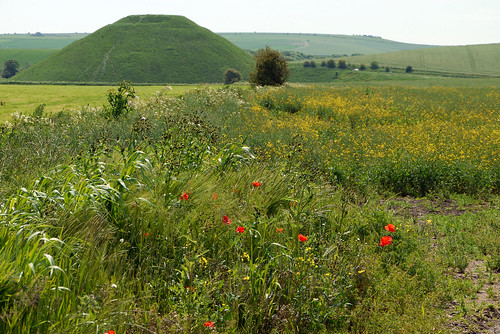
Silbury Hill

16 Comments CherryPie on Nov 29th 2015

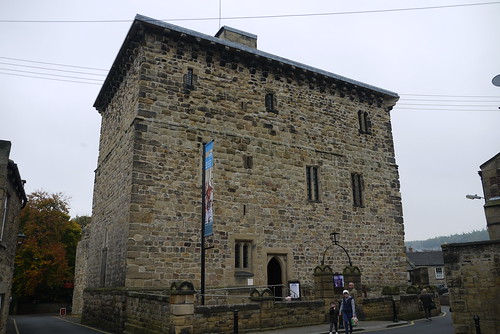
The Moot Hall

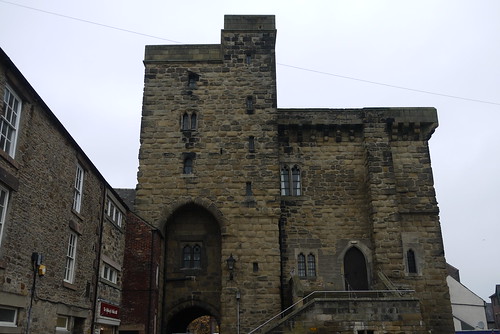
This Gatehouse guarded the Hall of the Archbishops of York. The were Lords of the Manor of Hexham for nearly 500 years until 1545. These were troubled times on the Scottish borders. This late mediaeval  tower was heavily fortified with three sets of doors, overhanging parapets and murder holes. In the first-floor courtroom the Archbishop’s Bailiff administered justice. From the raised dais he heard pleas, settled disputes, delivered judgements and consulted with tenants.

In later centuries the gatehouse became the setting for the Quarter Sessions of county magistrates and for meetings of the town’s Borough Courts. Since then it has been know as the Moot Hall.*

The Moot Hall

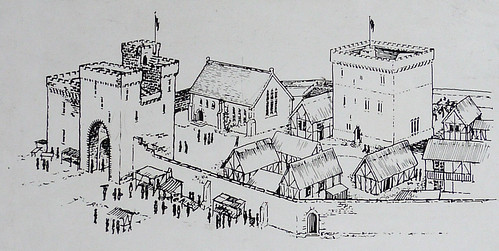
This drawing shows the possible appearance of the Archbishop’s Hall in about 1450. The two larger buildings, the Moot Hall on the left and the Old Gaol on the right, still remain.*

The Old Gaol

*From a signboard next to the Moot Hall.

4 Comments CherryPie on Nov 28th 2015

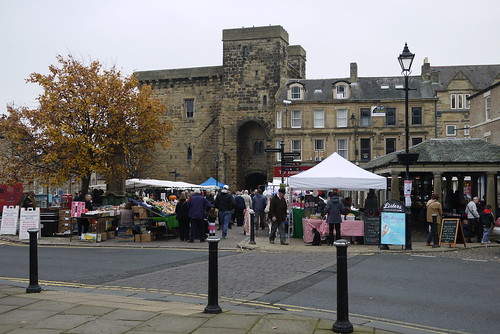
Hexham Market

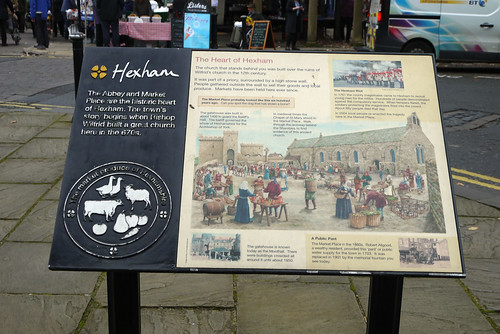
The church of Hexham Abbey as we see it today was built over the ruins of Wilfrid’s church in the 12th century. It was part of a priory surrounded by a high stone wall. People gathered outside the stone wall to their goods and local produce. Markets have been held in the place ever since.

The gatehouse (in the centre of the photo) was built about 1400 to guard the Bailiff’s Hall. The bailiff governed the whole of Hexhamshire for the Archbishop of York. The gatehouse is know today as the Moothall. There were buildings crowded all around it until 1950.

The Heart of Hexham

2 Comments CherryPie on Nov 27th 2015

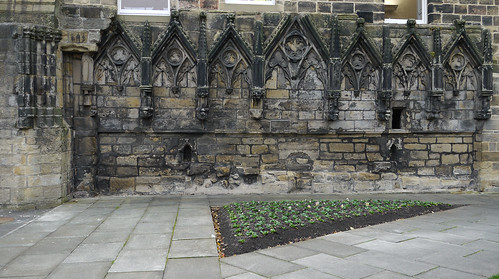
The Lavatorium

All that remains of the lavatorium in the west walk of the cloister are these decorative arches. The monks would have washed their hands here before entering the refectory to eat.

2 Comments CherryPie on Nov 26th 2015

« Newer Posts - Older Posts »