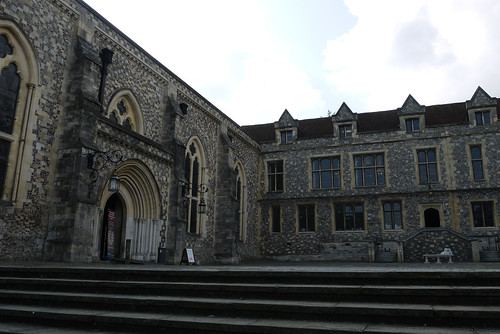
Apart from a few segments of foundations, all that remains of Winchester Castle is Henry III’s Great Hall. In 1066 Winchester surrendered without at fight to William the Conqueror and shortly after his coronation he gave orders for a castle to be built. The castle remained the seat of government under the early Norman kings.

During the reign of Henry III the castle was almost completely rebuilt. A fire in 1302 caused much damage and the castle ceased to be used as a royal residence, the monarchs moved to the nearby bishop’s palace of Wolvesey. In 1651 the castle was demolished but the Great Hall was kept as a venue for assemblies and county assizes.
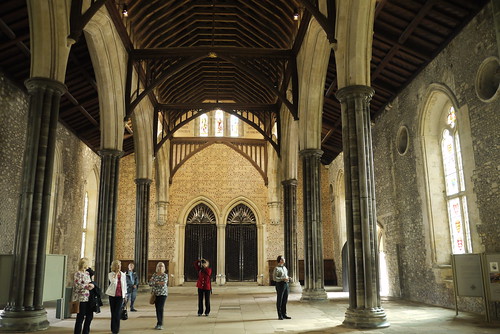
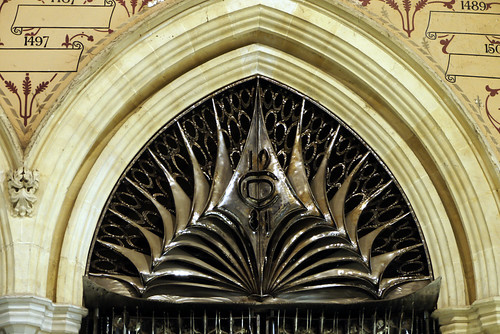
The Great Hall was used for the administration of justice until the 1970s and it was here that Sir Walter Raleigh was condemned to death in 1603. The Great Hall is now linked to the new court house by two archways. The arches lead to the judges’ gallery. In 1983 two pairs of wrought steel gates, designed and made by Antony Robinson were installed within the arches as a commemoration to the wedding of Prince Charles to Lady Diana Spencer in July 1981.
Tags: The Great Hall, There's Always One, Vacation, Wedding Gates, Winchester
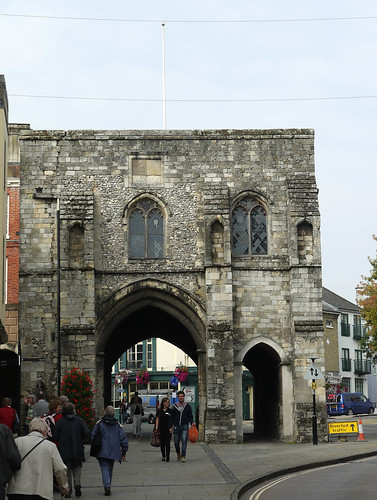
The Westgate is one of only two surviving medieval gateways that were one an integral part of the city wall. The other gate being Kingsgate and the church of St Swithun which featured in a previous blog post.
Originally built in the 12th century and later remodelled, the west face was added in the 14th century to defend the city against threatened invasion from France. The openings below the parapet on the west face of the gate were for dropping ammunition such as rocks, oil or even boiling lead on potential invaders. The loops below the shields were designed for primitive hand-held cannons, and the slots in the gateway arch held a portcullis. The little room above the arch, originally a guardroom, served as a debtors’ prison from the 16th to the 18th century, and is now a museum.*
The contents of the museum sound interesting but unfortunately it wasn’t open on the day we passed it on our route to the Great Hall.
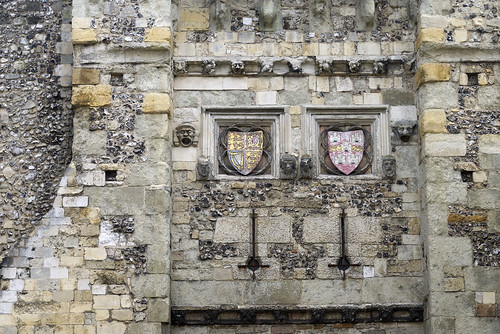
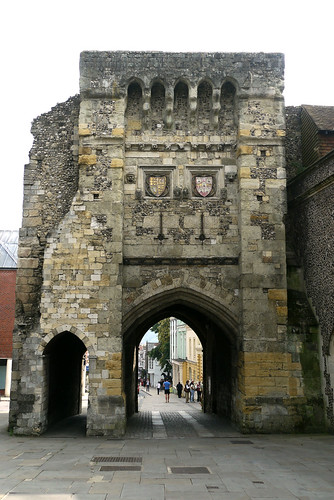
*From the Pitkin City Guide to Winchester.
Tags: History, The Wesgate, Vacation, Winchester
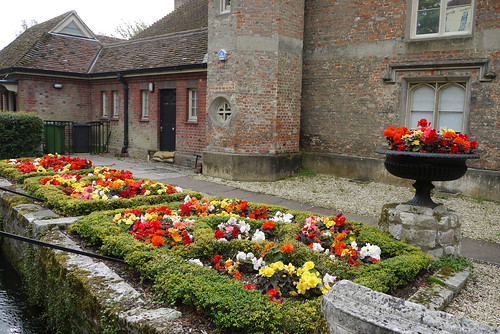
Abbey house stands on the sight of St Mary’s Abbey. It was built about 1750 and originally faced the gardens to the rear. The present castellated front was added after the widening of Broadway in 1771. Benedictine nuns, fleeing the disturbances of the French Revolution, made their homes here in the 1790s. The house now serves as the official residence of the Mayor of Winchester.*
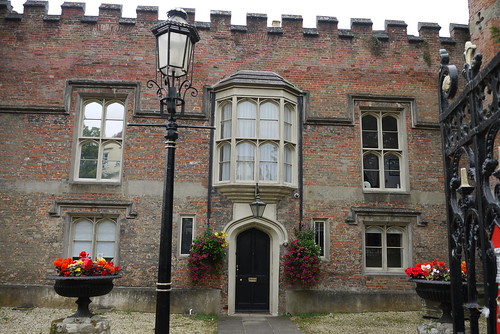
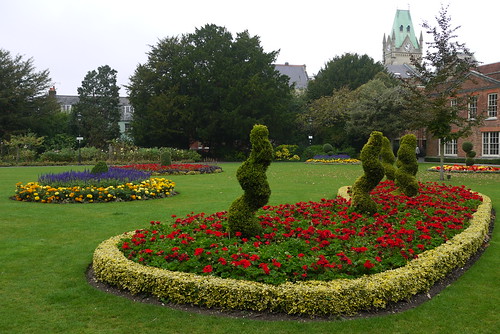
The gardens with the guildhall to the right:
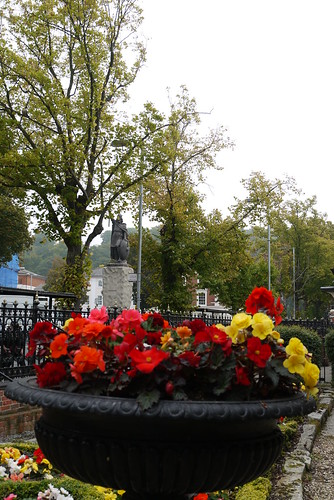
The statue of King Alfred as seen from the front of Abbey House:
*From a signboard next to the house.
Tags: Abbey House, Abbey House Garden, Alfred the Great, Gardem, King Alfred, Vacation, Winchester
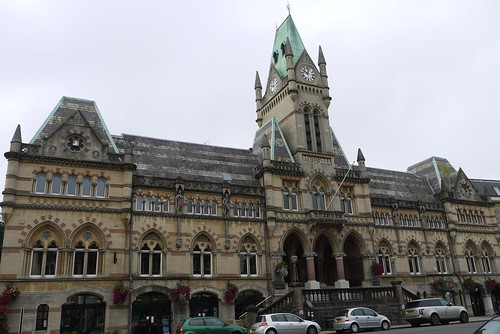
Winchester Guildhall stands on part of the site of an estate granted by Alfred the Great to his wife Ealswith probably as a coronation gift in 871 AD. After his death she retired there and founded a nunnery known as Nunnaminster. Known in the later medieval ages as St Mary’s Abbey, it was one of the foremost nunneries in England. In 1539 Henry VIII dissolved the abbey and the site passed to the crown. The land came into the City’s hands to help cover its costs for hosting the wedding of Mary Tudor and Philip of Spain in Winchester Cathedral in 1554.
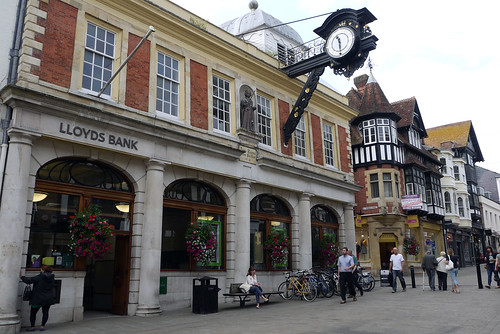
Old Guildhall
Winchester’s earliest guildhall was located next to the Butter Cross in a small chamber above the passageway leading from the High Street to the cathedral. In 1712 the guildhall occupied the upper chamber of the Old Market House on the High Street, while the ground floor served as a covered market. This remained the site of the guildhall until late Victorian period and the building is now occupied by Lloyds Bank. The expansion of civic responsibilities following the Local Reform Act of 1835 markedly changed the role of guildhalls and Winchester needed a newer and larger building.
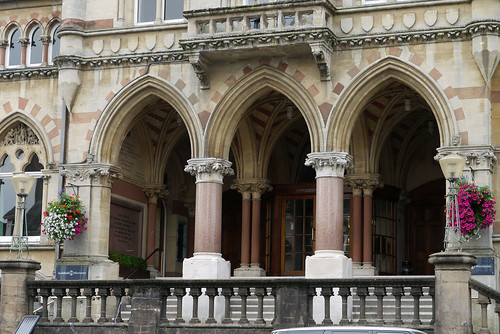
The New Guildhall
The Hastings architectural firm Jeffrey and Skiller submitted a design in the Gothic revival style and on 22nd December 1871 Viscount Eversley laid the foundation stone. Nearly a year and a half later in May 1873 the new Guildhall was opened by Lord Selborne. The Guildhall was part of a larger complex, housing the law courts, police station and fire brigade but the greater part was given over to civic roles. Events for large public audiences occurred on the Broadway where the Guildhall grand façade formed a backdrop to the podium on the staircase. These included the victory celebrations following World War I and royal visit of George VI and Queen Elizabeth on the 17th May 1946.
For a building of Gothic revival design, the Guildhall façade is relatively uncluttered. Its decoration includes four statues of kings and bishops with Winchester connections. Placed in the arches above the principle windows are sculpted panels showing events reflecting the ancient dignity of the mayor and major events in the city’s history. In pride of place is the central panel below the clock tower that shows the mythical 1st mayor of Winchester Florence de Lunne receiving the city’s charter from King Henry II.
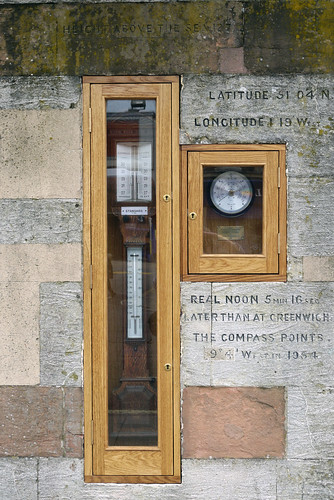
These interesting instruments are inset into the guildhall wall. So far I have been unable to find out their history…
Tags: Guildhall, Lloyds Bank, Vacation, Winchester
A person who never made a mistake never tried anything new.
Albert Einstein
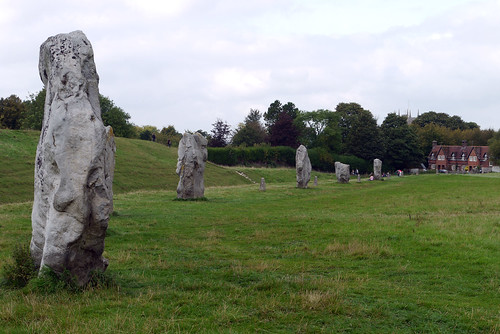
Tags: Avebury, Cherie's Place Thought, Vacation
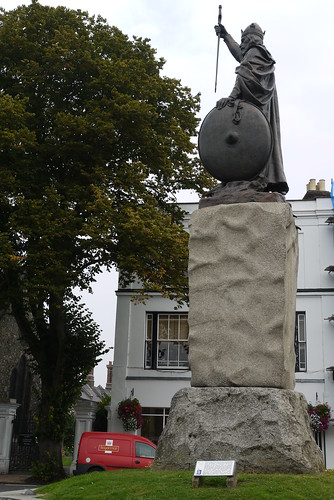
Alfred. king of the West Saxons (AD 871-889) drove the Danish invaders from Wessex. He created fortified centres, of which Winchester, the largest was his capital. During his reign, the streets in use today were first established. Alfred was the most esteemed of English kings. He encouraged the revival of learning and monastic life, and laid the foundation for a single kingdom of England. This statue by Hamo Thorneycroft, was erected in 1901.*
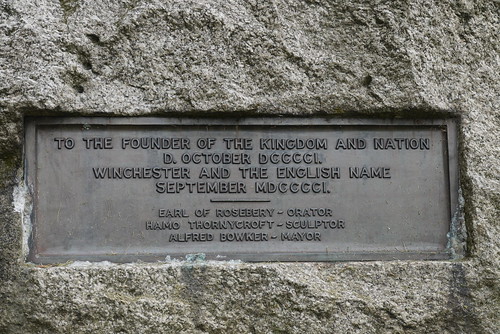
*From the signboard beneath the statue.
Tags: Alfred the Great, King Alfred, Vacation, Winchester
From the Three Saints website:
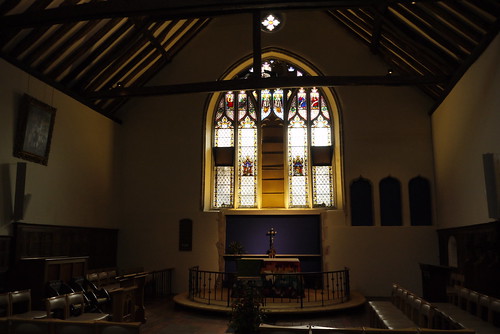
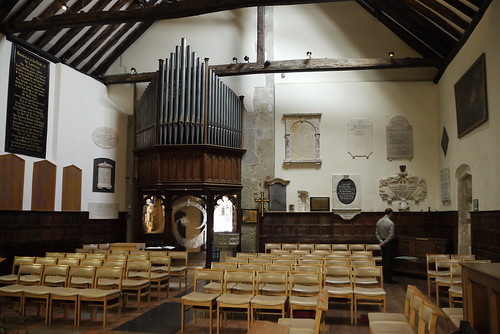
The medieval church of St Lawrence in the Square is of great interest, not only for its unusual square design but also for its fine 17th-century ‘king-post’ roof and its ancient site. There was a church on the site before the Norman conquest, and it was incorporated into William the Conqueror’s palace as the royal chapel.
After the palace and chapel were destroyed by fire, St Lawrence Church was rebuilt in about 1150. The church was badly damaged by fire in 1978 and after restoration re-opened in 1980, with seating for about 120 people. St Lawrence is still referred to as the Mother Church of Winchester, for it is the only surviving parish church of Norman foundation within the city walls. When a new Bishop of Winchester is on his way to his enthronement in the Cathedral, it is at St Lawrence Church that he is presented to the Mayor, clergy and citizens.
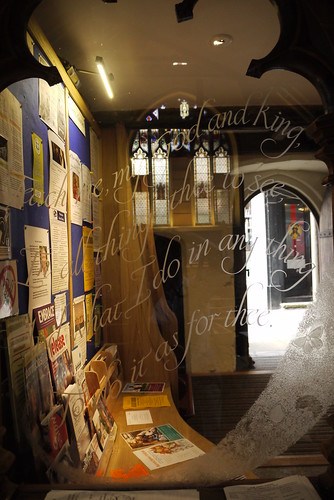
In 2012 a project to enhance the porch of the church saw the installation of a beautiful glass screen.
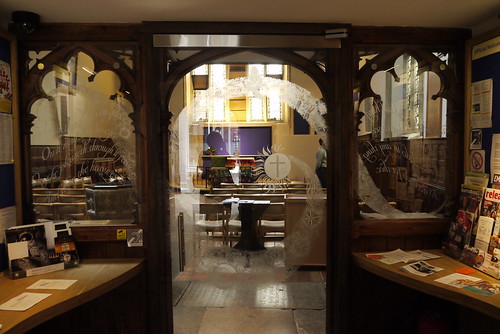
Words from The Elixir by George Herbert
Teach me, my God and King,
in all things thee to see,
and what I do in anything
to do it as for thee.
A man that looks on glass,
on it may stay his eye;
or if he pleaseth, through it pass,
and then the heaven espy.
Tags: Church, Church of St Lawrence, Self Portrait, There's Always One, Vacation, Winchester