Baby Model

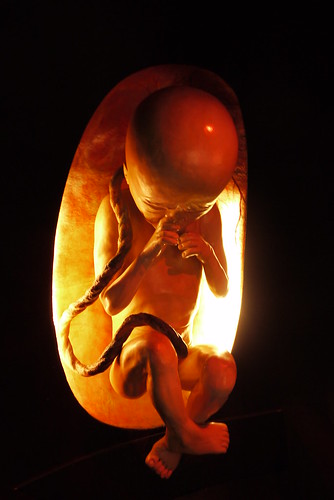
One of the exhibits in the Human Biology section of the the Natural History Museum is this eight times lifesize model of a seven month old baby living with in its mother’s uterus. The baby will soon turn over so it’s head faces downwards ready for birth.

The sound of a mother’s heartbeat as heard from inside the uterus accompanied the display.

8 Comments CherryPie on Aug 30th 2014

Blue Whale

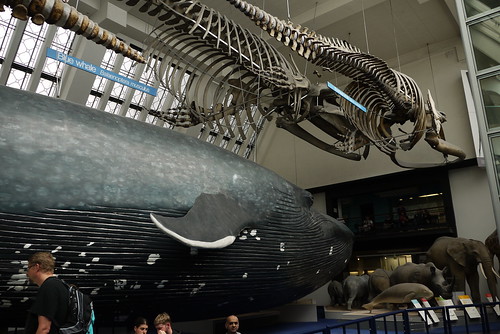
I remember being rather disappointed with the Natural History Museum on my first visit there on a school trip.  There were lots of tired looking stuffed animals that didn’t capture my imagination.  There was however one part of the museum that blew me away and that was the museum’s Whale Hall. At the time it was possible to walk underneath and alongside the ‘Blue Whale Skeleton’ and the life sized model replica and  wonder in awe at the size of the Blue Whale.

New Scientist reported that last year the iconic model celebrated it’s 75th birthday:

Created in the 1930s, the life-size model blue whale at London’s Natural History Museum has lost none of its ability to thrill crowds

THIS month, thousands of people will fall under the spell of a giant.

But this is no fairy tale or pantomime giant. It’s a life-size model of the blue whale, the world’s largest mammal. Now celebrating its 75th birthday, the 28.3-metre-long model dominates the mammal gallery at London’s Natural History Museum, dwarfing whale skeletons and other mammals.

Richard Sabin, the NHM’s principal curator of vertebrate collections, says the model was “incredibly ambitious” when it was built in the 1930s. He saw it as a 10-year-old on his first trip to London, nearly 40 years ago. “I was absolutely blown away,” he recalls. Back home, he raided school and local libraries for whale books.

When the model was unveiled at the end of 1938, it was the world’s only life-size replica of a blue whale. But other museums soon wanted to copy it. Some museums in the US made a point of making their version fractionally longer.

The giant was created by Percy and Stuart Stammwitz, a father and son team in the museum’s zoology department, using photographs and measurements made by scientists on British whaling fleet vessels in the south Atlantic. Although it was accurate for its time, modern underwater photography shows the model doesn’t match reality, says Sabin, probably because it was based on carcasses that became distorted as they were dragged on to ships.

Built in situ in the museum’s Whale Hall, the model drew on technology used to make first-world-war planes. The general foreman, William Sanders, suggested building a wooden frame, covering it in lightweight wire meshwork, then coating it with plaster and painting over that, rather than using traditional plaster casts.

The replica whale has gone on to feature in books and movies, and is also the stuff of urban legend. Some of the best stories concern what went on inside its hollow belly before the trapdoor was sealed shut forever. They feature everything from hidden time capsules to romantic trysts and gambling dens. Only one story is true, Sabin reckons: that workmen used to take their lunch and cigarette breaks inside the whale.

The whale remains a magnet for children. Sometimes when Sabin overhears chattering school parties, he hopes that among the more excited children lurks the next generation of marine biologists who will keep the magic of the whale alive.

Shaoni Bhattacharya
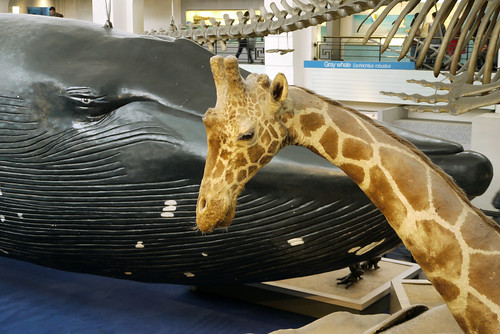
Blue Whale

The blue whale is the largest creature known to have existed it is bigger than the largest dinosaur. Now it is not possible walk underneath it in the same way as I did as a child, but it can be viewed from different levels on the gallery floors around the exhibit which now includes other large mammals giving it a sense of scale. The Blue Whale still hasn’t lost it’s sense of wonder and awe.
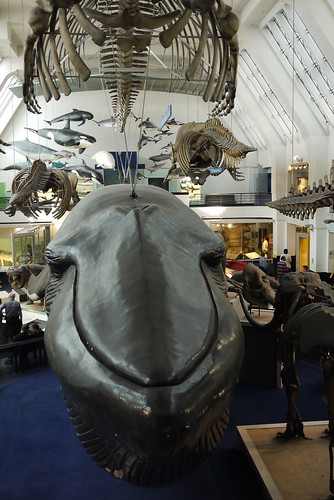
Blue Whale

13 Comments CherryPie on Aug 29th 2014

Satellites

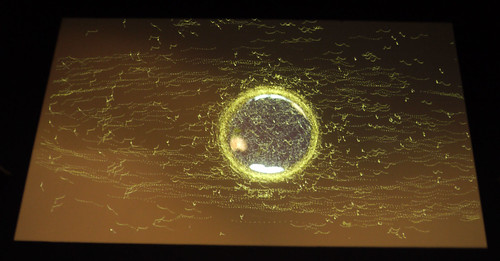
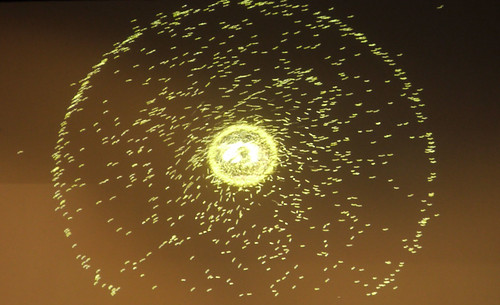
Thousands of pieces of debris are orbiting the Earth, travelling at over 27,000 km/h.1 This space junk can collide with and destroy essential satellites, knocking out communications – and in turn creating even more junk. As the layer of junk gets thicker, it’s becoming more dangerous to launch satellites and send astronauts into space. Our lifestyle depends on satellites in orbit, but space junk poses a real danger.

Space junk includes old dead satellites, fuel tanks, everyday rubbish from past space stations, lost tools from spacewalks, and even astronauts’ gloves, along with natural debris from space. Junk can range in size from dust to very tiny fragments (called ‘bullets’) to full-size satellites (‘cars’).

Low Earth orbit is 500 km above the Earth’s surface. This is where most of the junk is, and is also the region where we have had most manned spacecraft and many scientific satellites.

Middle Earth orbit is about 2000 km above the Earth’s surface. This is where you find the GPS system of satellites, orbiting twice a day.

Geostationary orbit is 36,000 km above Earth. Satellites here stay above a fixed point on the Earth and are usually for communications, television signals and monitoring the weather. They orbit once a day.

Satellites

15 Comments CherryPie on Aug 28th 2014

Apollo 10 Command Module

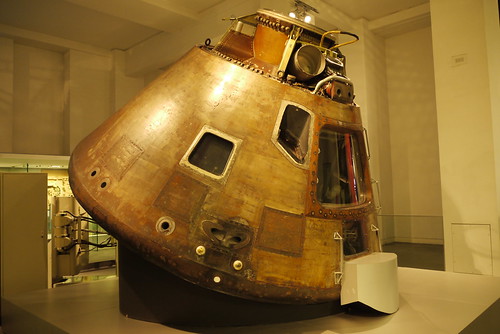
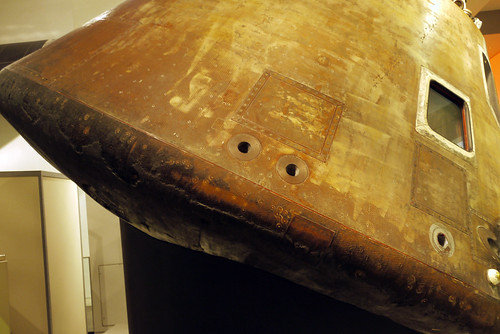
One of the exhibits in the London  Science Museum is the command module from Apollo 10. It is quite fascinating to see it in person rather than in black and white on a television screen.  The scorch marks caused when re-entering the earth’s atmosphere are distinctly visible.

Apollo 10, carrying astronauts Thomas Stafford, John Young and Eugene Cernan, was launched in May 1969 on a lunar orbital mission as the dress rehearsal for the actual Apollo 11 landing. Stafford and Cernan descended in the Lunar Module to within 14 kilometres of the surface of the Moon, the closest approach until Neil Armstrong and Edwin ‘Buzz’ Aldrin in Apollo 11 landed on the surface two months later. The craft, which had the call sign ‘Charlie Brown’, travelled approximately 500,000 miles (800,000 km) during the eight-day mission and exceeded 24,790 mph (39,887 km/h) on its return to Earth, faster than any other crewed vehicle before or since.

Apollo 10 Command Module

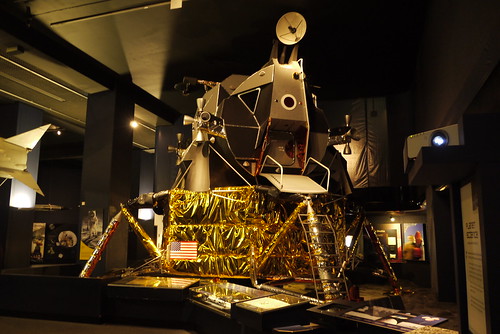
Housed in a different part of the museum is a full sized replica of the Apollo 11 lunar module that landed the first humans on the moon in July 1969:

The Eagle has landed – Apollo 11 was the first mission to land people on the moon. It’s lunar module, nicknamed, Eagle transported Neil Armstrong and Buzz Aldrin to the moon’s surface while Michael Collins piloted the command module in lunar orbit.

This full-sized replica of the lunar module shows the lower ‘descent’ stage, with a rocket engine (just visible underneath) that slowed the module to a safe landing, plus storage space for experimental equipment to use on the moon. The upper ‘ascent’ stage included the crew’s cabin and another rocket engine that blasted it off from the top of the descent stage when the mission was over. The descent stage was left behind on the moon.*

Apollo 13 Lunar Module

*Information from a signboard next to the lunar module

10 Comments CherryPie on Aug 27th 2014

Patio Colour

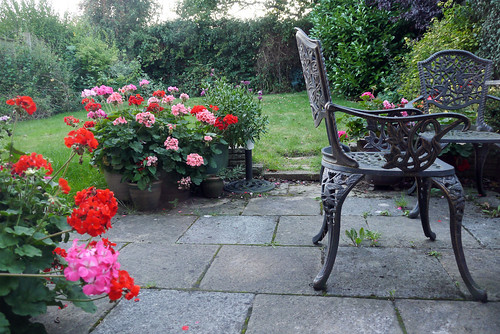
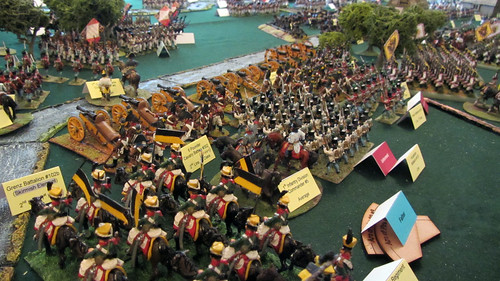
This bank holiday was a strange one for me.  It started off with a houseful and I was more or less confined to upstairs at my home.  The boys had taken over my living room once again for a two day Napoleonic war-game. They no longer have to crawl on the floor as two 8ft tables have been procured to save aching backs and knees. The boys arrived to set up on Thursday evening and the soldiers and tables were finally packed away on Saturday evening.  During this time there were various comings and goings with other friends turning up including a lady I didn’t even know. She gave me a very strange look when I came downstairs to say hello. Not at all what I expected from a visitor in my own home!!

The two day war-game was part of the continuing celebrations of a gentleman becoming a certain age. One of the gifts he received from the boys was a miniature model of two soldiers playing cards on an upturned barrel with discarded wine bottles to the side. This tied in with their war-game hobby and made reference to late night board games evenings accompanied by a glass of wine ‘or two’.  Luckily I had a planned hair appointment which took me out of the house for a while. My hairdresser has been absent for a few months and my hair had drifted into a style I haven’t been happy with.  I arrived at the hairdressers with photographs of how it should be, to get it back on track. When I arrived back home I was greeted with some sad news. The father of one of the boys passed away peacefully after suffering a long term  illness.

1809 Danube Big Summer Game

Photo copyright TAG.

On Sunday, we had been invited to some other friends’ for lunch for a double birthday celebration. It was only right that we should provide a bottle of bubbly to toast the occasions. After a delicious lunch, we sat and chatted for most of the afternoon before returning to what seemed like a very quiet house.

On Monday the weather had turned decidedly autumnal and damp. I had been looking forward to the possibility of a cycle ride but that was not to be. However the wet weather gave me the chance to catch up with a few chores and to sit and read a book in the restored tranquility of my living room.

16 Comments CherryPie on Aug 26th 2014

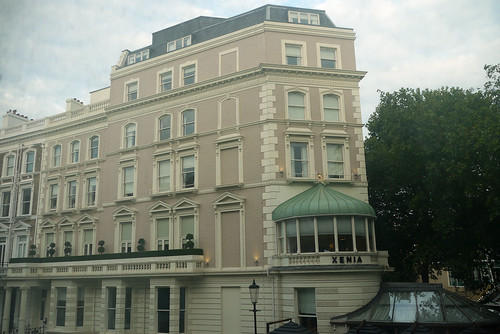
Lexham Gardens

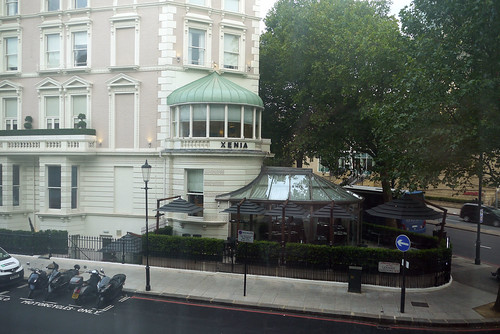
Lexham Gardens

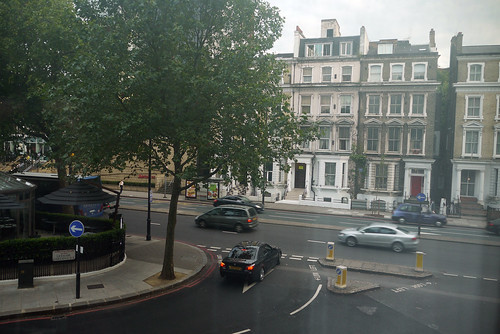
Lexham Gardens

8 Comments CherryPie on Aug 25th 2014

Treat your friends as you do your pictures, and place them in their best light.

Jennie Jerome Churchill (1854 – 1921)

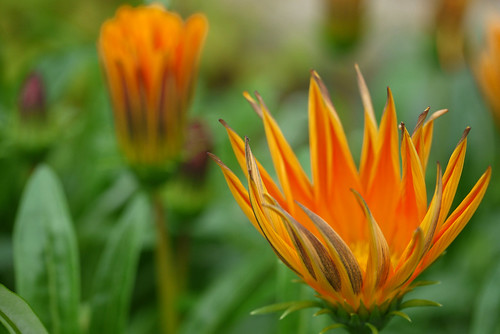
Golden Glow

10 Comments CherryPie on Aug 24th 2014

« Newer Posts - Older Posts »