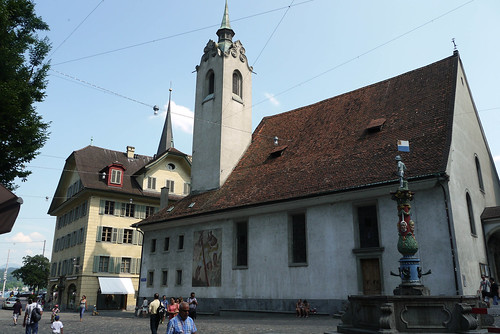
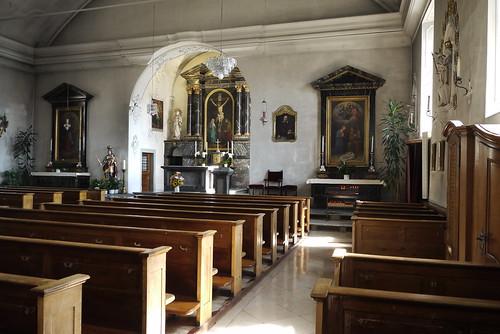
Just before we depart from Lucerne and move onto Christmassy things I will show you St Peter’s Chapel which is the last place we visited on our day of departure.
St Peter’s Chapel is a Lucerne landmark and of considerable historical importance. It is Lucerne’s oldest church and was built in 1178 when a priest was appointed to take care of the population. Always subservient to the 8th century Benedictine St Leodegar monastery and the Hof Church, it never became the parish church.
Kapellplatz was named after St Peter’s and, more importantly, so was the city’s best known attraction, the nearby 14th century Chapel Bridge (Kapellbrücke). The chapel was for several hundred years the citizen’s meeting place and was subject to alterations in 1750.
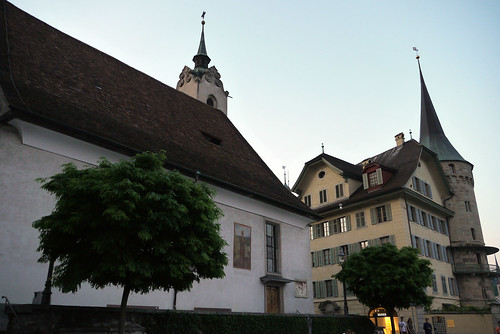
The Kapellplatz surrounds tiny St. Peterskapelle, an 18th-century church that was built over a 12th-century predecessor. This chapel also lends its name to the Kapellbrücke, the charming wooden bridge synonymous with Lucerne.
The exterior walls of St. Peter’s are adorned with several interesting works of art. An alabaster carving of the Mount of Olives remains from the previous church building. The fresco of Brother Klaus dates from the late 19th century, and the painting of St. Christopher is from the early 20th century.
Tags: Lucerne, Luzerne, St Peter's Chapel, Switzerland, There's Always One, Vacation
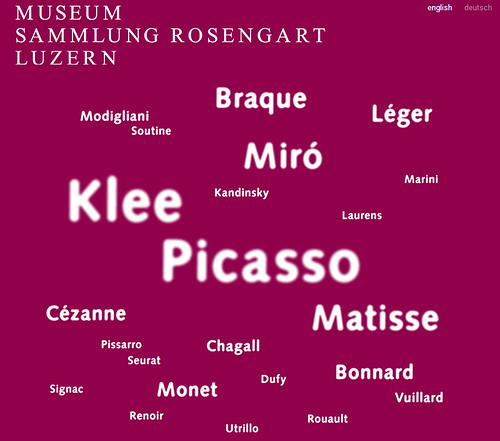
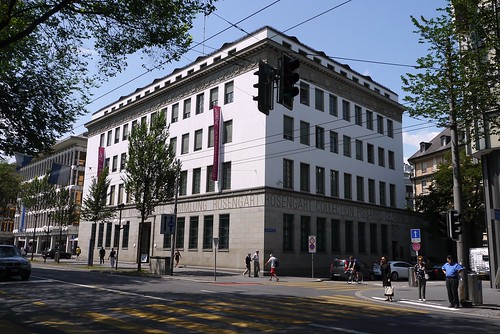
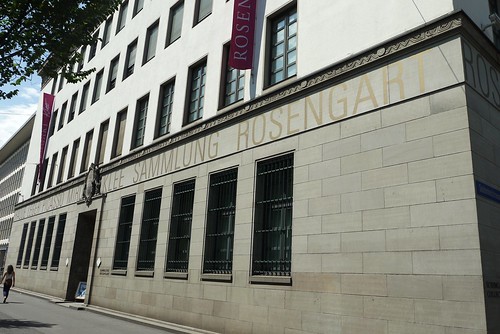
The Rosengart Collection (property of a foundation established by Angela Rosengart in 1992) has been accessible to the public in its entirety – f0r the first time ever – since March 2002. The collection, which comprises some 220 works and focuses primarily on French painting from 1870 to the 20th century, is presented over an exhibition area of some 1250 square metres.
The exhibits are arranged around three main themes. The ground floor is home to the Pablo Picasso collection, with a special focus on the artist’s later work; the lower ground floor accommodates the Paul Klee collection; and the first floor is devoted to important works by more than 20 further artists from the Impressionist and Classic Modernist movements. *
*From the museum guide pamphlet.
Tags: Lucerne, Luzern, Rosengart Collection, Switzerland, Vacation
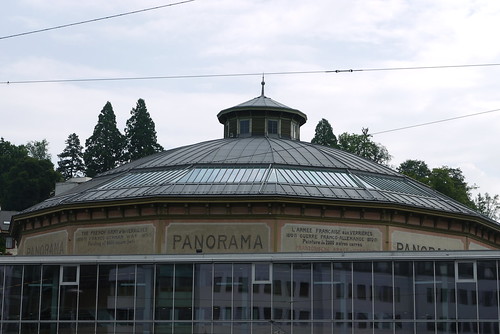
The Bourbaki Panorama is the best example I have seen of this type of artwork.
The 112 x 10 m large-scale panorama depicts the French Army of the East under General Bourbaki crossing the border into Switzerland and being disarmed in February 1871. The picture is complimented by 21 figures that tell the soldiers’ story. Sound effects and an audio presentation, in which a contemporary witness describes his experience of the Bourbaki army’s internment, draw you in. A multi-media exhibition expands on the theme.*
The Artist:
Edouard Castres witnessed the Franco-Prussian war as a volunteer with the Red Cross. His sketches and pictures portray the fate of the Bourbaki army in the bitter cold of February 1871. An entrepreneur commissioned Castres to depict the internment of the Bourbaki army in a large-scale panorama. He and his team of artists completed the work in Geneva in 1881. It has been hanging in Lucerne ever since 1889.*
You can get a flavour to the painting here and here. Be sure to check out the interactive mode for best effect.
*From mini guide provided on entry to the panorama.
Tags: Bourbaki Panorama, Lucerne, Luzern, Switzerland, Vacation
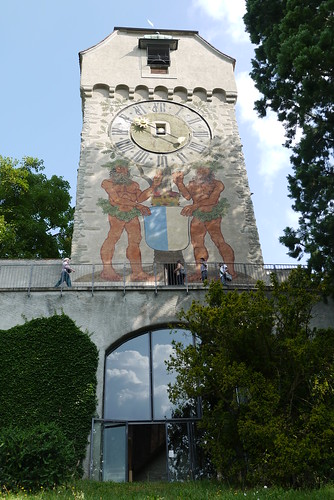
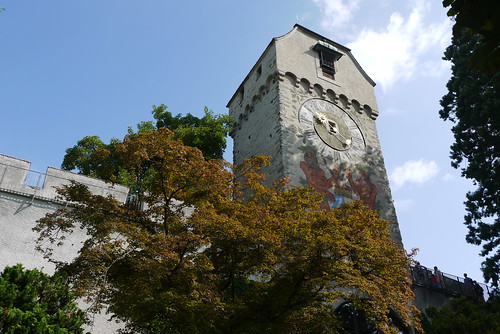
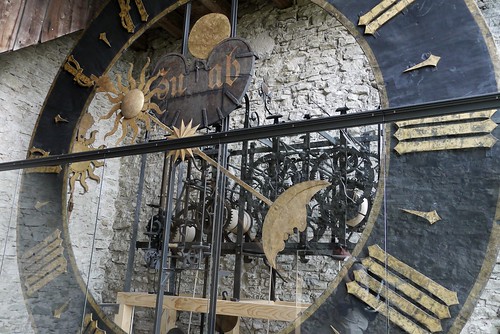
The oldest city clock built by Hans Luter in 1535 is on the Zyt tower. This clock is privileged to chime every hour one minute before all the other city clocks. Unique collection of old tower clocks (1526 t0 1820) is in Lucerne’s clock tower. Experience the huge clock face and rhythmic movements of the 9 metre pendulum.*
The website Turmuhren Luzern provides detailed information about the tower clock, the tower and the clock exhibition:
The clock-tower was the only tower whose purpose was not for defence. Thanks to its big clock-face and bell the people in the city and the boat crews out on the lake could read the accurate time. Still today the stroke of the clock-tower clock is one minute before the chime of the church bells (privilege of first stroke).
In 1579 the clock-tower was hit by lightning and on 16th August 1583 the bell and the clockwork as well as the top platform were hit again. Smoke billowed but the tower as well as the clockwork remained undamaged.
Painting on the façade
In 1511 the painting on the façade was copied for the first time by the town clerk Diebold Schilling in his chronicle. It shows two red men holding bell clappers standing on both sides of the opening in the wall and the clock-face with two giants (: wild men). The giants were the symbol of strength and power of the soldiers and mercenaries of Lucerne. In 1547 the tower was redecorated in fresco technique. In 1596 the fresco was renewed by Joseph Moser and in 1939 Karl F. Schobinger (1879-1951) designed the actual painting on the façade where the two giants still hold the coat of arms of Lucerne.
Schobinger was a pupil of Ferdinand Hodler in Geneva. From 1911 to 1914 he taught the art of painting at the academy of arts in Breslau (today: Wroclaw / PL).
More interesting information about the Zytturm clock can be found here.
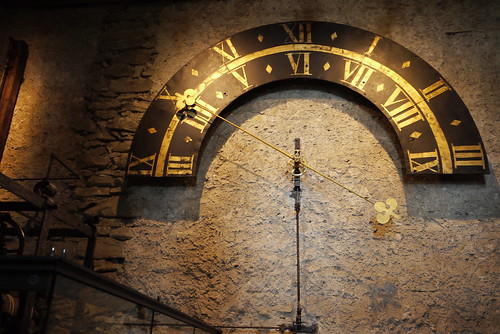
*Lucerne city guide 2013
Tags: Lucerne, Luzern, Switzerland, The Old Town Walls, Vacation, Zyt Tower, Zytturm Clock
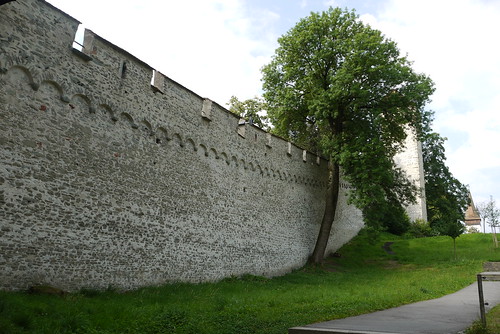
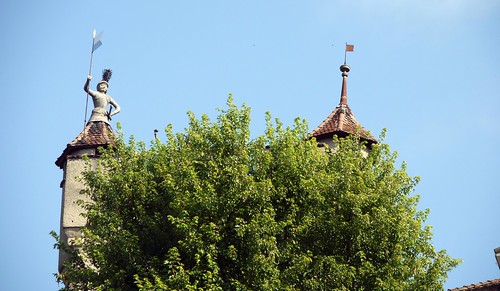
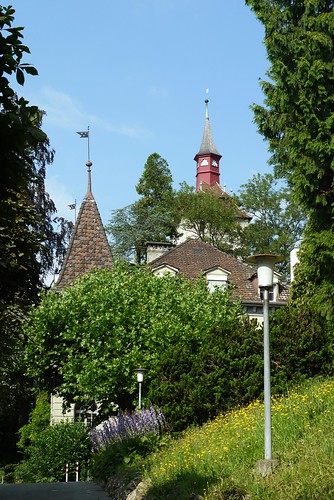
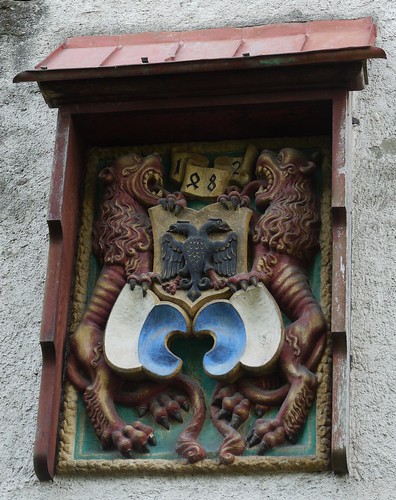
Part of the rampart walls that were built in 1386 survive almost entirely intact. Three of the wall towers are open to the public.
Tags: Lucerne, Luzern, Old Town Walls, Switzerland, Vacation
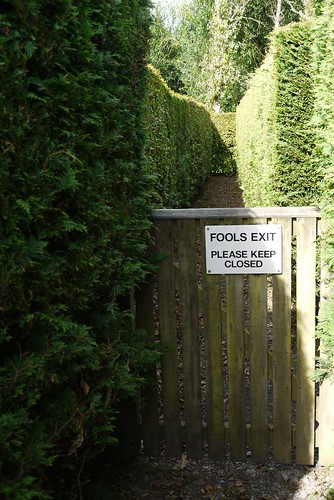
When you lay out all possible pathways, no matter how ridiculous or counter intuitive they may seem, and sort the multitude of data, events, and actions upon their appropriate piles, a new reality may emerge to compete against your own bias. It is your ability to believe and amend your belief system, which separates you from the masses. The task is not so much to see what no one yet has seen, but to think what no body yet has thought about that which everyone sees.
Arthur Schopenhauer (1788 – 1860)
Tags: Cherie's Place Thought, Maze, Scotland, Traquair House, Traquair Maze, Vacation
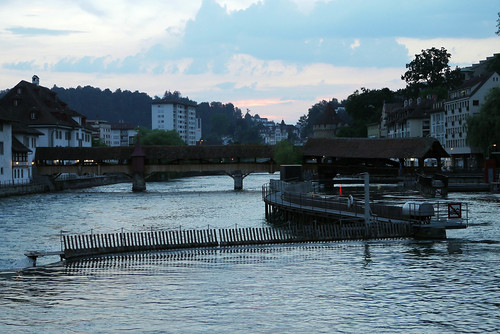
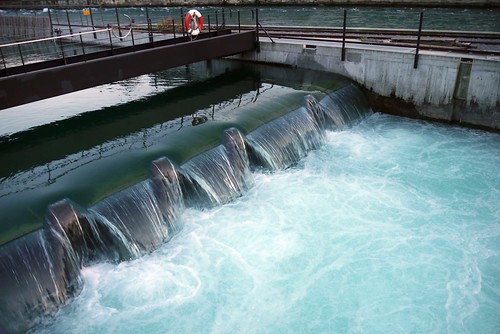
Built in 1859/1860 following the clever style developed by Poiree, the Needle Dam is a unique attraction in terms of both technology and history. From 2009-2011 the facility was renovated and the city’s flood protection was improved. Even today, the level of Lake Lucerne is regulated by hand through the removal and placement of the co-called needles (wooden posts).*
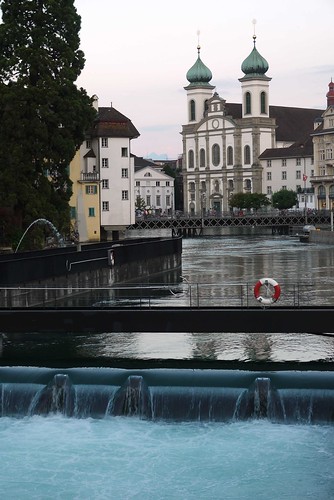
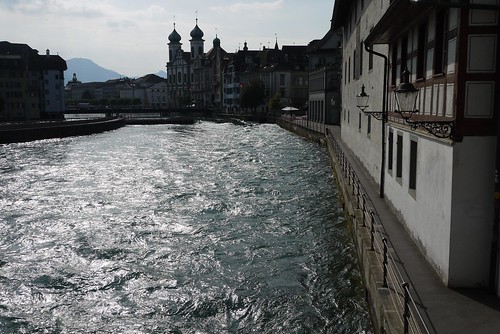
*Lucerne City Guide 2013
Tags: Lucerne, Luzern, Needle Dam, Switzerland, Vacation