
Random thoughts and photos of my journey through life…
10 Comments CherryPie on Apr 18th 2013
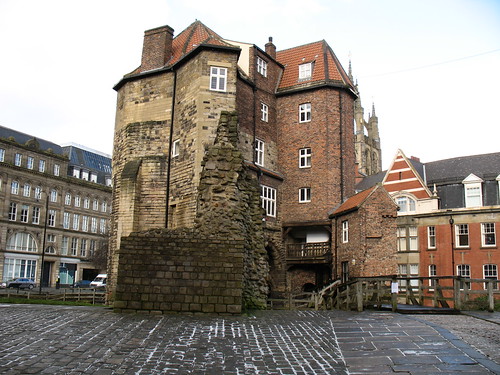
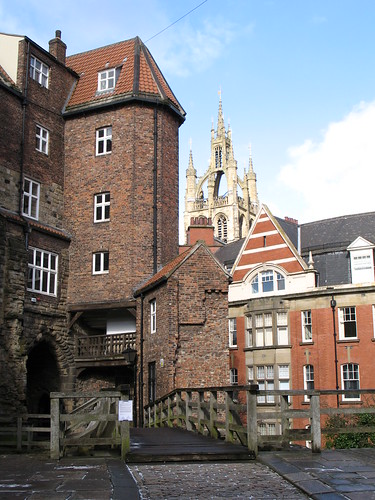
Taken from a signboard located in front of the Black Gate:
Built between 1247 and 1250 during the reign of King Henry III, the Black Gate was the last addition to the medieval Castle defences. Now a scheduled Ancient Monument and Grade I Listed Building it was the gatehouse of the barbican, a walled defensive entrance passage leading to the Castle’s North Gate. The gatehouse could be sealed by portcullis (latticed grille or gate made of wood, metal or combination). Mounted in vertical grooves in the walls that are still visible today it could be raised or lowered quickly by means of chains or ropes attached to an internal winch. The narrowness of the barbican passage and its angle to the rest of the Castle wall meant that attackers were restricted in their means of attack, and were left exposed to fire from the Castle’s defenders.
At the front and rear of the original gate were turning bridges. Both have since been replaced with wooden footbridges. These bridges could be closed quickly using counterweights.
Due to its continuous occupancy and alteration from the 17th century right up until the present day very little remains of the medieval layout, except the vaulted chambers on either side of the passage through the Black Gate which are thought to have been guardrooms.
The original height and the original appearance of the roof of the Black Gate remain unknown. The present top two floors, roof and additional arch over the passage were added by Alexander Stephenson in the 17th century.
Stephenson leased the Castle in 1619 including the Black Gate (with the exception of The Keep, Moot Hall and gaoler’s house) from King James I and turned the Black Gate into a house. Upper parts of the Black Gate were extensively remodelled to give the building its present appearance. John Pickell, whose name and the date 1636 appear on a stone high up on the south of the building, used the Black Gate as a tavern.
Popularly thought to describe its appearance, the ‘Black Gate’ derives from Patrick Black, a London merchant who occupied the building in the first half of the 17th century.
10 Comments CherryPie on Apr 17th 2013
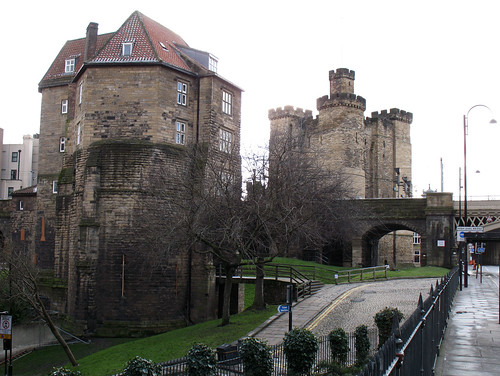
In this photograph The Castle Keep is situated behind The Black Gate. The Castle Keep website has this to say about the keep:
The Castle Keep of Newcastle upon Tyne was built by Henry II between 1168-1178, it is one of the finest surviving examples of a Norman Keep in the country.
It stands within a site that also contains: an early motte and bailey castle built by Robert Curthose, the son of William the Conqueror: an Anglo-Saxon cemetery and a Roman Fort (Pons Aelius).
The Castle Keep is a Grade 1 listed building, a Scheduled Ancient monument, and is open to the public 361 days of the year as a heritage visitor attraction.
14 Comments CherryPie on Apr 16th 2013
12 Comments CherryPie on Apr 15th 2013
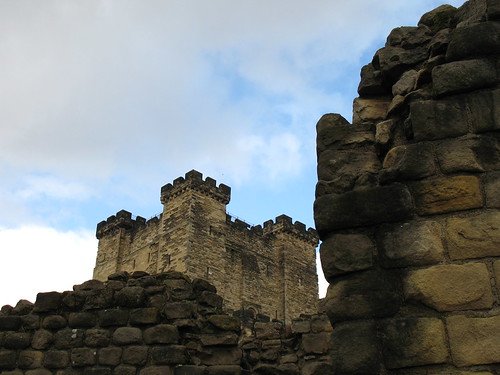
Believe one who knows: you will find more in woods than in books. Trees and stones will teach you that which can never learn from the masters.
St. Bernard of Clairvaux (1641 – 1712)
12 Comments CherryPie on Apr 14th 2013
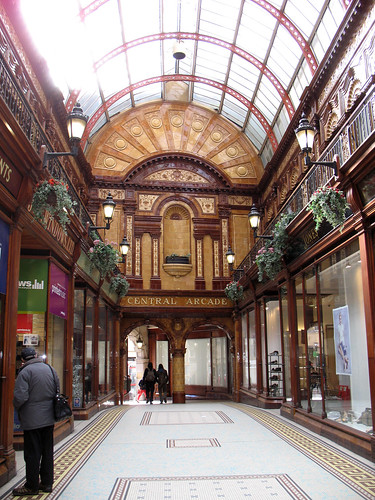
The Central Arcade in Newcastle upon Tyne, England is an elegant Edwardian shopping arcade built in 1906 and designed by Oswald and Son, of Newcastle. It is contained within the Central Exchange building, which was built by Richard Grainger in 1836-38 to the designs of John Wardle and George Walker. The Central Exchange is a triangular building which was intended to be a corn exchange but became a subscription newsroom. The building was ravaged by fire in 1867 and again in 1901, and in 1906 the Central Arcade was created within the original building.
The building is bounded by Grainger Street, Grey Street, and Market Street with entrances serving all three streets. It houses several shops
14 Comments CherryPie on Apr 14th 2013
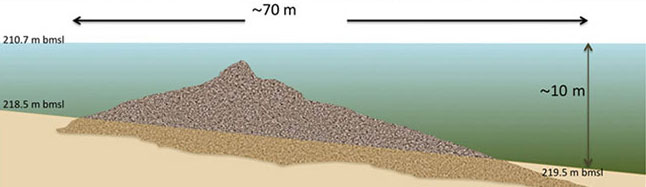
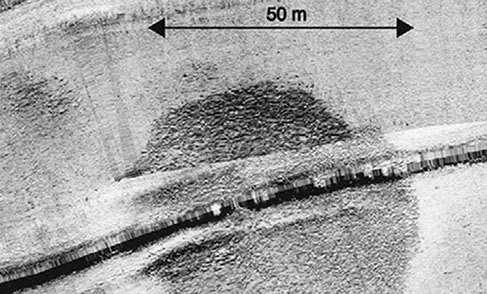
The International Journal of Nautical Archaeology reports of a submerged monumental structure underneath the sea of Galilee, Israel.
From News.Com.au:
The mysterious rock pile is 10 metres high and 70 metres in diameter – about twice the diameter of Stonehenge. The basalt boulders weigh a total of about 60,000 tons.
Researchers believe the structure is a giant cairn, or rock pile that is often used to mark burials.
But its age and purpose are are not yet certain.
“The shape and composition of the submerged structure does not resemble any natural feature. We therefore conclude that it is a man-made and might be termed a cairn,” researchers wrote.
4 Comments CherryPie on Apr 13th 2013