
Random thoughts and photos of my journey through life…
Now that I have finished sharing my Paris travels and photos I decided to look back at some of the days out that I had during 2012. I realised that there were quite a few places that I haven’t posted about properly yet.
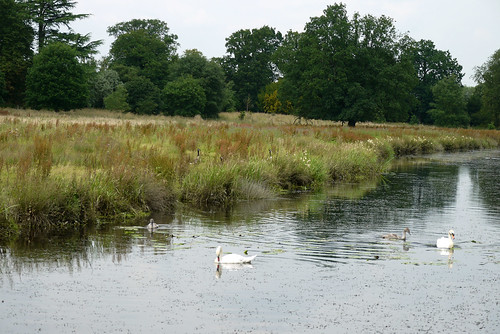
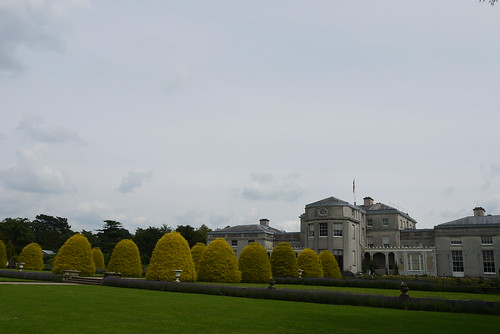
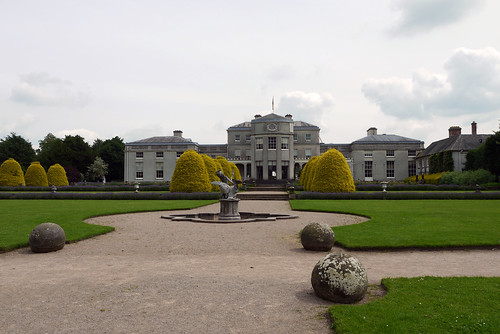
So now I will take you back to a sunny day in July when I took advantage of one of 2012s rare moments of sunshine. The venue is the Shugborough Estate in Staffordshire.
The Mansion that we see today was developed from a three-storied house that was built in 1693 after the demolition of the original manor house. The transformation of the three story house into a Georgian Mansion took place between 1745 and 1748 by the architect Thomas Wright, who added the pavilions either side of the 17th century block.
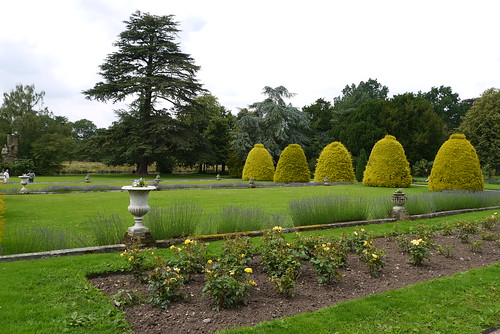
In between the house and the River Sow, stand the formal terraces with borders of lavender and ‘Bright Smile’ roses.
16 Comments CherryPie on Feb 12th 2013
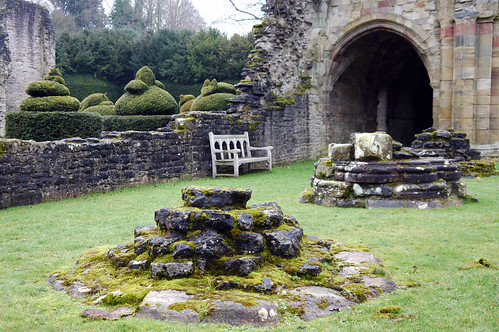
I have always loved seeing lichen on stone walls and in churchyards but until I read Katherine Swift’s The Morville Year I had no idea how fascinating it really is:
A lichen consists of not one but two organisms living in symbiosis: a fungus, capable of withstanding extremes of temperature and drought but unable to photosynthesis, and an alga, which – Dalek-like – inhabits the protective structure provided by the fungus and in return manufactures enough food for its own needs and those of the fungus. Every lichen partnership is unique, and neither partner can survive without the other.
There are some seventeen hundred British lichen. Many churchyards have well over a hundred, cohabiting on individual gravestones in what lichenologist Dr Vanessa Winchester calls ‘miniature, self maintaining gardens’. Churches and churchyards are important havens for lichen, even where stone is common, because the churchyard may include gravestones made from different sorts of stone, not necessarily native to the area, each of which will support a different population of lichens.
Lichens are extremely sensitive indicators of environmental pollution: a rich bloom of lichen means clean air. They also grow infinitesimally slowly – half a millimeter a year is fast – so lichen growth is also an indicator of age. Many lichen will be as old as the tombstones on which they live. So don’t scrub them off (it is a misconception that they destroy the stone) but do keep the surrounding undergrowth cut, as lichens need sunlight in order to thrive
So now I know…
18 Comments CherryPie on Feb 11th 2013
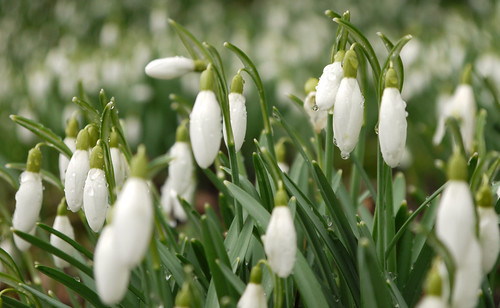
The real voyage of discovery consists not in seeking new lands but seeing with new eyes.
Marcel Proust (1871 – 1922)
20 Comments CherryPie on Feb 10th 2013
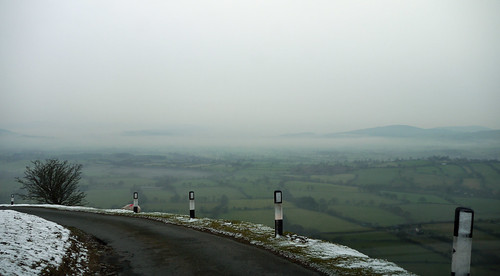
I have to confess I am not a very good passenger whilst travelling down this road, due to the sheer drop. It is two way traffic but only room for one car on the road.
12 Comments CherryPie on Feb 9th 2013

This weeks theme is an obvious choice for this time of year with February 14th the date for love, just around the corner.
But what is love and what does it mean?
Here are some thoughts from some inspirational people:
- When one has fully entered the realm of love, the world – no matter how imperfect – becomes rich and beautiful – it consists solely of opportunities for love.
- Take away love and our earth is a tomb.
- The law of love could be best understood and learned through little children.
- Whether humanity will consciously follow the law of love, I do not know. But that need not disturb me. the law will work just as the law of gravitation works whether we accept it or not.
- Love draws forth love.
- As love grows in you, beauty grows too. For love is the beauty of the soul.
So what do you think love is?

PS: The ‘Hearts’ gallery can be found here.
4 Comments CherryPie on Feb 8th 2013

One of the books I am currently reading is ‘The Perfect Heresy: The Life and Death of the Cathars‘ by Stephen O’Shea. At the beginning of the chapter on Carcassonne there is a perfect description of what I saw and how I felt when I caught my first fleeting glimpse of Carcassonne as I traveled from Toulouse airport:
TO APPROACH CARCASSONNE for the first time is to dream with your eyes open. the turrets and bastions of the old city stand on a deceptive rise in the valley of the River Aude, so the crenelated citadel appears suddenly, floating in the middle distance, a visitor from another time. The tan stone blocks of the ramparts turn auburn, then mauve in the late afternoon sun.
8 Comments CherryPie on Feb 7th 2013