Guess Where?

  1. What is unusual about Richard’s Castle on the Shropshire/Hereford border?
  2. What was significant about the fall of Bamburgh Castle in 1464?
  3. What do Deal, Pendennis, Hurst and Walmer Castles have in common?
  4. Which English castle underwent a major siege in 1266?
  5. Of what type of castle is Beaumaris an example?
  6. What did Sir Walter Scott call Norham Castle, which overlooks the Scottish border?
  7. Which English king died in Pontefract Castle?
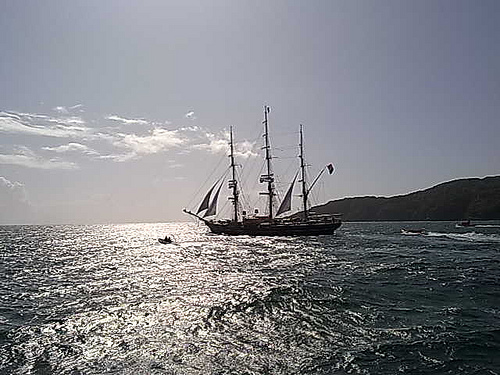
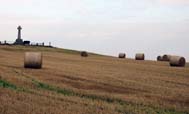
  8. Name the castle in the picture above.

Questions (apart from No. 8 ) courtesy BBC History mag. Highlight below for answers:

1) It is one of only 3 or 4 English castles to have been built before the Norman Conquest. 2) It was the first castle in England to fall to gunpowder artillery. 3) They were all built in the reign of Henry VIII to guard against invasion. 4) Kenilworth. 5) A concentric castle. 6) The most dangerous place in England. 7) Richard II. 8 ) Alnwick.

23 Comments CherryPie on Sep 5th 2009

photohunt

Sunshine on a Rainy Day

For more of this weeks PhotoHunt pictures check out tnchick.

34 Comments CherryPie on Sep 4th 2009

…Or the Murder at Road Hill House.

the-suspicions-of-mr-whicher

Synopsis (from book cover):

It is midnight on 30th June 1860 and all is quiet in the Kent family’s elegant house in Road, Wiltshire.  The next morning, however, they wake to find their youngest son has been the victim of an unimaginably gruesome murder.  Even worse, the guilty party is surely one of their number – the house was bolted from the inside.  As Jack Whicher,  the most celebrated detective of his day, arrives at Toad to track down the killer, the murder provokes national hysteria at the thought of what might be festering behind the closed doors of respectable middle-class homes – scheming servants, rebellious children,  insanity, jealousy and loathing.

This true story has all the hallmarks of a classic gripping murder mystery.  A body, a detective, a country house steeped in secrets and a whole family of suspects – it is the original Victorian who done it.

Revue:

Kate uses documentary evidence and newspaper articles of the time to explain the details of the case.  There are wonderful descriptions of life in a well to do Victorian household.  It also gives incite into policing and detective work which is in sharp contrast to it’s modern day equivalent.

The book starts off just before the child goes missing and explains how the murdered child is found.  It then goes on to describes in detail the horrific wounds that were inflicted upon the body.

The book then details the different members of the household and how most of them could be considered as having a motive for the murder.  The police made a lot of mistakes at the beginning of the case which led to vital clues and evidence being lost.  Even the great detective Mr Whicher is brought in to solve the case cannot bring a case against the person he supects.   Kate pieces together the evidence and the case unfolds over a number of years leaving the reader with more questions than answers and wondering if the case had really been solved…

The Moonstone by Wilkie Collins and other crime novels of the era used many ideas from this crime.

For a personal read I would give the book 4 stars and for a reading group 5 stars.

4 Comments CherryPie on Sep 3rd 2009

07-28_thumbPosting pictures of sailing ships reminded me of the work of Frank Meadow Sutcliffe who used the medium of photography as art.  He was born in  Headingly, Leeds in October 1853 and started work as a portrait photographer in Tunbridge wells before moving to Whitby where he set up a photographic business.  When in Whitby he extensively photographed the town, the people and local villages which ultimately led to a photographic documentary of the social history of Victorian Whitby.

One of his most famous works Water Rats was controversial and led to him being excommunicated by the local clergy.

Water Rats caused a little comment at the time as it featured naked children, but the image is not erotic. Sutcliffe was using the conventions of the academic nude to show how photography can approach art. He was, however, excommunicated by his local clergy for displaying it, as they thought it would ‘corrupt’ the opposite sex.

Copies of his work can be purchased from the Sutcliffe Gallery in Whitby which cites the following about his work:

All the sepia photographs you see on this website were taken in and around Whitby by Frank Meadow Sutcliffe (Hon. F.R.P.S.) between 1875 and 1910. His large camera was made of mahogany with brass fittings and took ‘whole plate’ glass negatives (6.5″x8.5″).
Photography in Victorian times was not an easy craft to master and people were often content to produce an acceptable image which was sharp and well exposed – but there were a handful of photographers who wanted to lift their pictures into the heady realms of ‘Art’.
Frank Meadow Sutcliffe was one of these artists! He became World famous as one of the greatest exponents of pictorial photography, winning over 60 gold, silver and bronze medals from exhibitions in Tokyo, Vienna, France and the U.S.A. as well as Great Britain.
He was made an honorary member of The Royal Photographic Society in 1935, the highest award attainable.

I am very fond of his work, probably because one of my ancestoral lines lived in the Whitby area.  The photographs give me the chance to see where my ancestors lived and worked bringing their world alive for me.  I have four Sutcliffe  photographs on my wall at home:

28-12

b171

26-28

17-22

30 Comments CherryPie on Sep 2nd 2009

Filed under This & That

Photo Meme

Liz has tagged me with this photo meme. I am not sure what you will make of the picture…

This was a work related visit where we were treated to a mad ride in a Warrior. We were encouraged to stand up whilst we were driven over what is called the knife edge. I ended up with dust behind my contact lenses and it looked like I was crying, much to the amusement of everyone!!

When I noticed the year (1999) I realised how quickly time flies by…

app0002

These are the rules:
1. Open the fourth file where you store your photos.
2. Pick the 4th photo.
3. Explain the photo.
4. Pass challenge onto 4 other bloggers.

Well I have adhered to the first three, but I shall leave number 4 open to anyone who fancies giving the challenge a go.

4 Comments CherryPie on Sep 2nd 2009

vpro-beagle

Photo from from VPRO Beagle on Flickr – click on picture for more photos.

The Clipper Stad Amsterdam set sail from Plymouth harbor today following the steps of Darwin’s famous voyage of discovery.  The people involved in the project hope to retrace the route of Darwin’s 5 year voyage on HMS Beagle in a single year.

During the voyage the participants are hoping to assess where the world stands today in light of Darwin’s theory of evolution.  The journey will form the basis of a 41 episode documentary that is being filmed for VPRO Dutch TV.

Journalist and historian Chris Lloyd, who wrote the book What on Earth Happened? will be joining the voyage for the first leg of the journey to Tenerife.  Other participants include, Sarah Darwin, great-great-granddaughter of Charles Darwin, palaeontologist Peter Ward, anthropologist Michael Heckenberger, geneticist and anthropologist Spencer Wells and Daniel Dennett, one of today’s most prominent and influential American philosophers. They will be joined by fossil-hunters, DNA researchers, geologists and archaeologists.

From the Beagle website:

To celebrate Charles Darwin’s 200th birth year, and the 150th anniversary of his publication of “On the Origin of Species”, VPRO is preparing a 35-part series called Beagle: On the future of species. Life on earth is under continual change. Is there reason to worry about the future? Can science offer us sufficient answers to some of our most compelling questions? Are we leaving behind an inhabitable world for future generations?

Our VPRO-Beagle ship the Clipper Stad Amsterdam is an experiment in itself. This three mast sailing ship will be rigged with advanced scientific measurement equipment. Scientists from various disciplines and from all over the world will execute experiments on board this sailing science lab. The ship also has a built-in TV studio from which parts of the series will be produced and broadcast.

Beagle will take viewers on a journey across magnificent landscapes, vulnerable regions, endangered areas and adventurous locations, stretching from Patagonia to the South Pacific, and from Australia to St. Helena. En route one recurrent question will be asked: “Will the earth survive mankind?”

You can follow the journey on the interactive website, where Chris will be blogging daily during his part of the voyage.

13 Comments CherryPie on Sep 1st 2009

Yesterday I visited Daniels Mill which has the largest working waterwheel in England that powers a corn mill.  It is also the third largest within the UK, the largest being Laxey Wheel on the Isle of Man.  Daniels mill is a fascinating place and has been owned by the same family for 250 years.  It sits in a wooded valley and you feel like you have stepped back into a bygone era with the viaduct which carries the Severn Valley Railway towering above.

The workings of the mill were explained and demonstrated in great detail.  At the end of the tour, as if to order, a steam train chuffed its way across the viaduct.  This was a queue to visit Highley Station on the Severn Valley Railway.  A few minutes after getting there another train arrived to order giving me the perfect photo opportunity.

I won’t mention the large slice of coffee cake I had for lunch, because I am on a diet!  Nor that I rather stupidly left my camera at home, luckily my phone takes pictures.

Daniels Mill

Highley Station

14 Comments CherryPie on Sep 1st 2009

« Newer Posts - Older Posts »